


Red Arrows cutback exposes RAF’s ageing Hawk trainer problem

5 min read
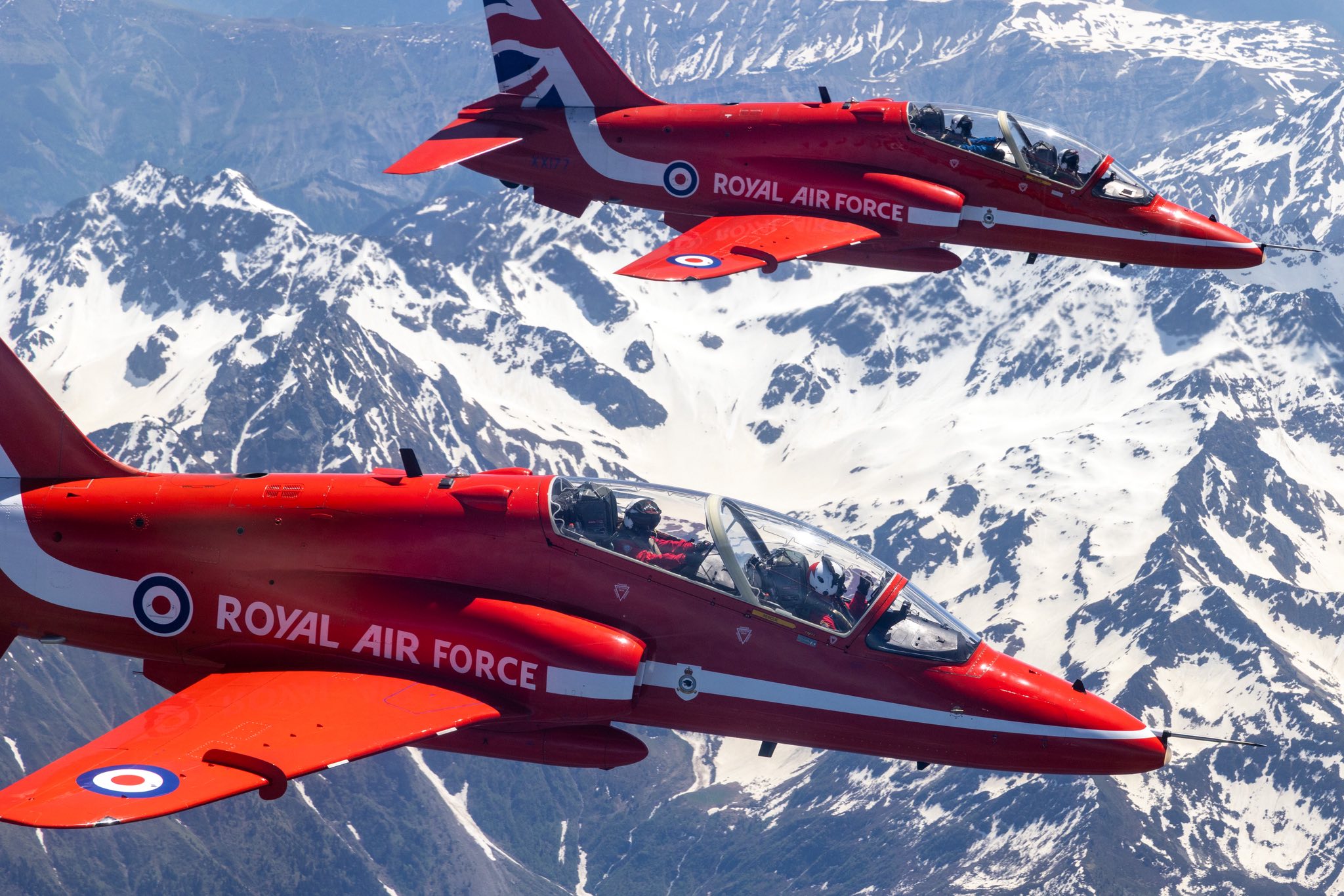
For decades, the Red Arrows’ nine-aircraft ‘Diamond Nine’ formation has symbolised British airpower at airshows around the world. But for the remaining years of Hawk T1 service, most displays will feature only seven jets as the RAF works to keep its ageing fleet flying.
The decision reflects mounting pressure on ageing Hawk T1 aircraft, engine availability and the RAF’s effort to stretch the fleet safely toward retirement.
The RAF confirmed the reduction is intended to “support the sustainable management of the Hawk T1 fleet and prepare the team for a transition to a future aircraft type”.
In a video released by the RAF, Air Vice-Marshal Mark Jackson said the service needed to balance maintaining the Red Arrows’ public role with preserving the remaining Hawk T1 fleet for the years ahead.
He said the team would continue delivering “high quality” displays while preparing for an eventual transition to a future aircraft type.
The Red Arrows began in 1964 with seven Folland Gnat aircraft before moving to the iconic ‘Diamond Nine’ in 1966. The team flew the Gnat until 1979, before transitioning to the Hawk T1 for the 1980 display season.
Reducing the routine to seven aircraft is therefore operationally and symbolically significant, even if the RAF insists the display season will continue largely unchanged.
Ageing Hawk T1 engines force Red Arrows seven-jet displays
The Hawk T1 entered RAF service in the 1970s and has been flown by the Red Arrows since the 1980 display season. Although most RAF Hawk T1s were withdrawn from operational use in 2022, the Red Arrows retained the aircraft because no immediate replacement for the aerobatic role was available.
The aircraft now require extensive maintenance work, while critical spare parts, including engines, are becoming harder to source.
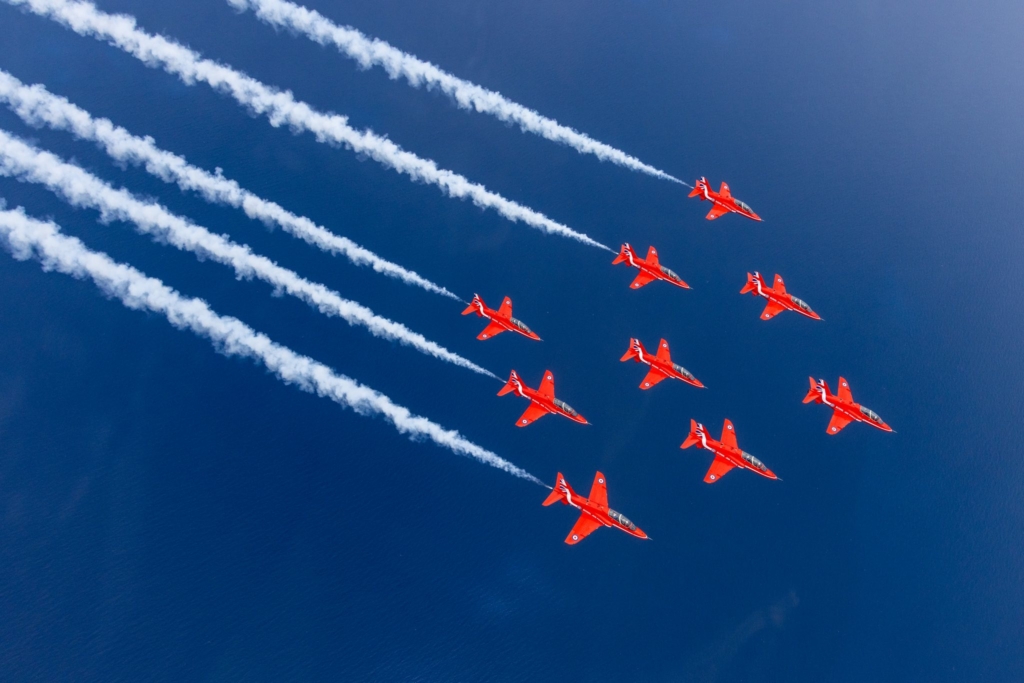
In RAF-released remarks, Air Officer Commanding No. 1 Group, Air Vice-Marshal Mark Jackson, acknowledged the pressure directly, saying the RAF needed to manage the aircraft carefully because “their engines are so old”.
He added that engines are effectively being rotated across the fleet to keep enough aircraft airworthy for displays and ceremonial flypasts.
The RAF is understood to have approved the smaller formation to avoid overstretching engineering resources while preserving sufficient flying hours until retirement of the type around the end of the decade.
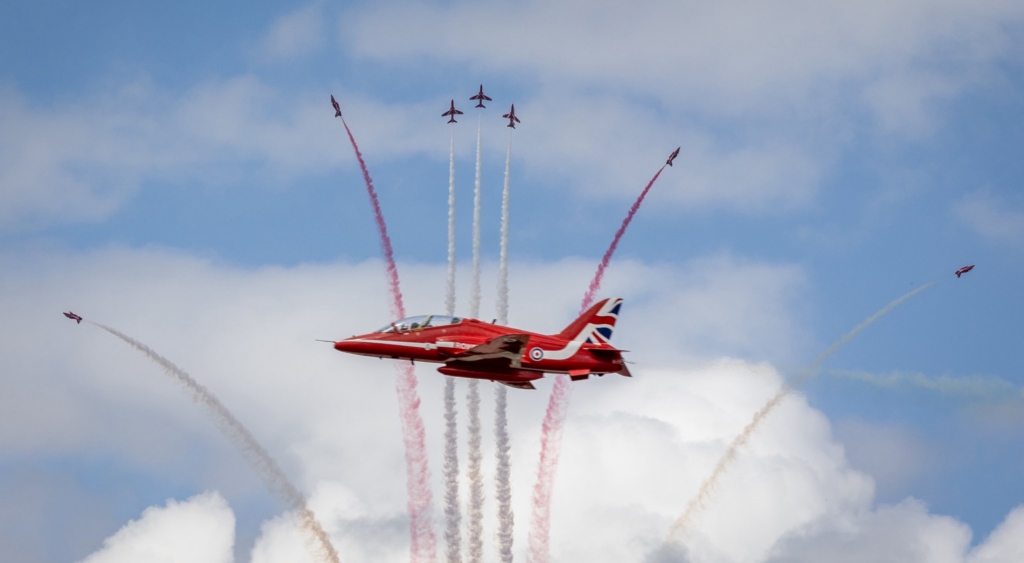
However, the Red Arrows will still fly all nine aircraft during major national events, including King Charles III’s birthday flypast and commemorative appearances linked to the 250th anniversary of American independence in the United States.
Red Arrows cutback raises RAF trainer replacement questions
The move has also renewed attention on the RAF’s wider uncertainty over future fast-jet training aircraft.
The Hawk T1 was originally expected to leave service earlier, but its retirement date was extended in 2021. At the same time, questions have emerged around the long-term future of the newer Hawk T2 fleet, which has experienced reliability and availability issues.
The RAF is now examining options under its future fast-jet trainer programme, with industry proposals already taking shape.
BAE Systems has partnered with Boeing and Saab on a T-7-based proposal, while Leonardo’s M-346 is also likely to be viewed as a potential contender.
That has created an unusual situation in which Britain’s national aerobatic team is operating an aircraft that has already largely disappeared from wider RAF service while the replacement process remains unresolved.
Historically, the Red Arrows have also served as a highly visible showcase for the British aerospace industry and pilot training standards. Any future replacement aircraft will therefore carry industrial and export implications beyond the display role itself.
RAF says Red Arrows display season will continue with seven jets
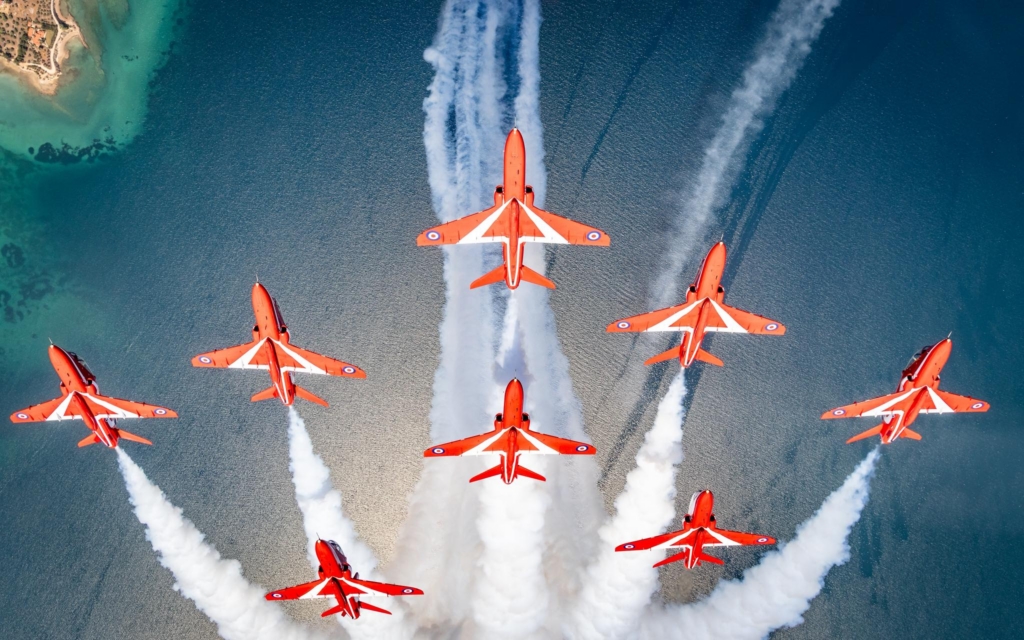
The announcement comes as the Red Arrows begin their 2026 international display season following months of winter training in the UK and Greece under Exercise SPRINGHAWK.
Wing Commander Sasha Nash, the first woman to command the Red Arrows, said the team had completed seven months of intensive preparation before being granted Public Display Authority for the season.
“PDA is the culmination of seven months of intensive winter training, including the design and refinement of a new, dynamic display, the challenge of operating through prolonged periods of poor weather and the continued maintenance and preparation of our Hawk T1 aircraft,” she said.
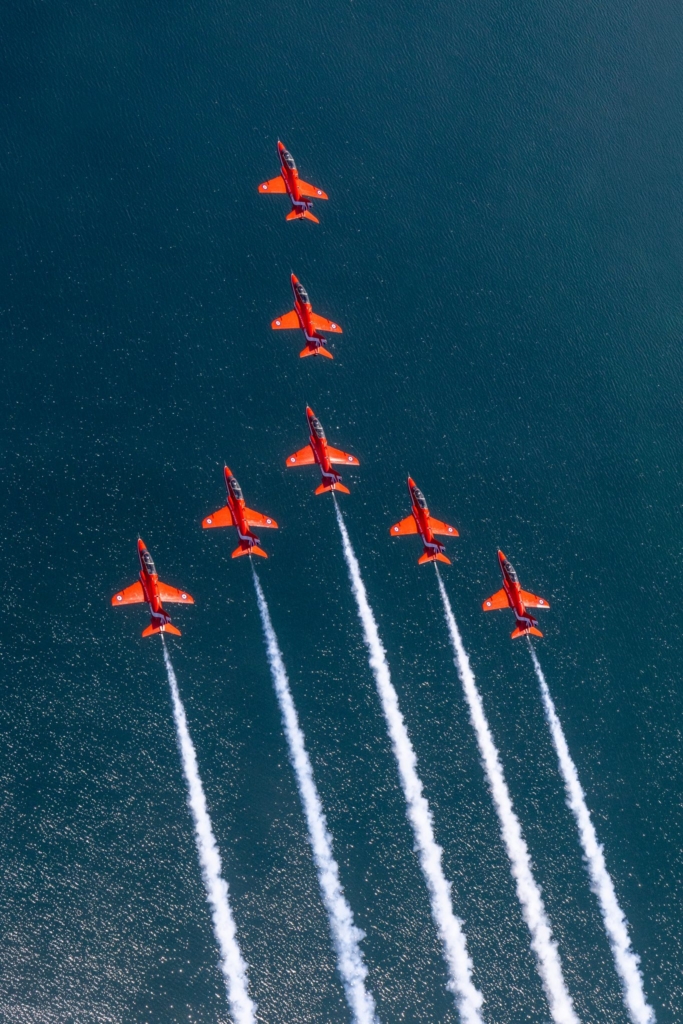
The 2026 display season itself is expected to remain ambitious despite the reduced formation size. The team plans performances across the UK, Europe and the United States, including a month-long American tour linked to Independence Day commemorations.
Wing Commander Jon Bond, the team’s leader and Red 1, said the new routine would include manoeuvres not seen for three decades.
“The 2026 show has manoeuvres not performed for 30 years, with dynamic additions and very complex flying for the pilots,” Bond said.
He added that the routine would feature a revived ‘Cascade’ manoeuvre, last flown in 1997, involving a high-energy loop and coordinated fan-out directly in front of spectators.
RAF officials have also stressed that the revised seven-aircraft routine was designed to retain the visual impact associated with the Red Arrows despite the smaller formation size.
Even with seven aircraft, the team is expected to retain modified versions of several signature formations, including adapted diamond patterns.
But behind the display smoke and ceremonial flypasts, the decision has exposed a more serious reality facing the RAF: Britain’s iconic aerobatic team is now operating at the edge of an ageing fleet’s remaining life while the service continues searching for its next generation of trainer aircraft.
Featured image: RAF
Sign up for our newsletter and get our latest content in your inbox.


More from


October 25, 20266 min read

October 25, 20265 min read


