


Robot dogs are coming to Pittsburgh Airport to spot spills and monitor air quality

5 min read
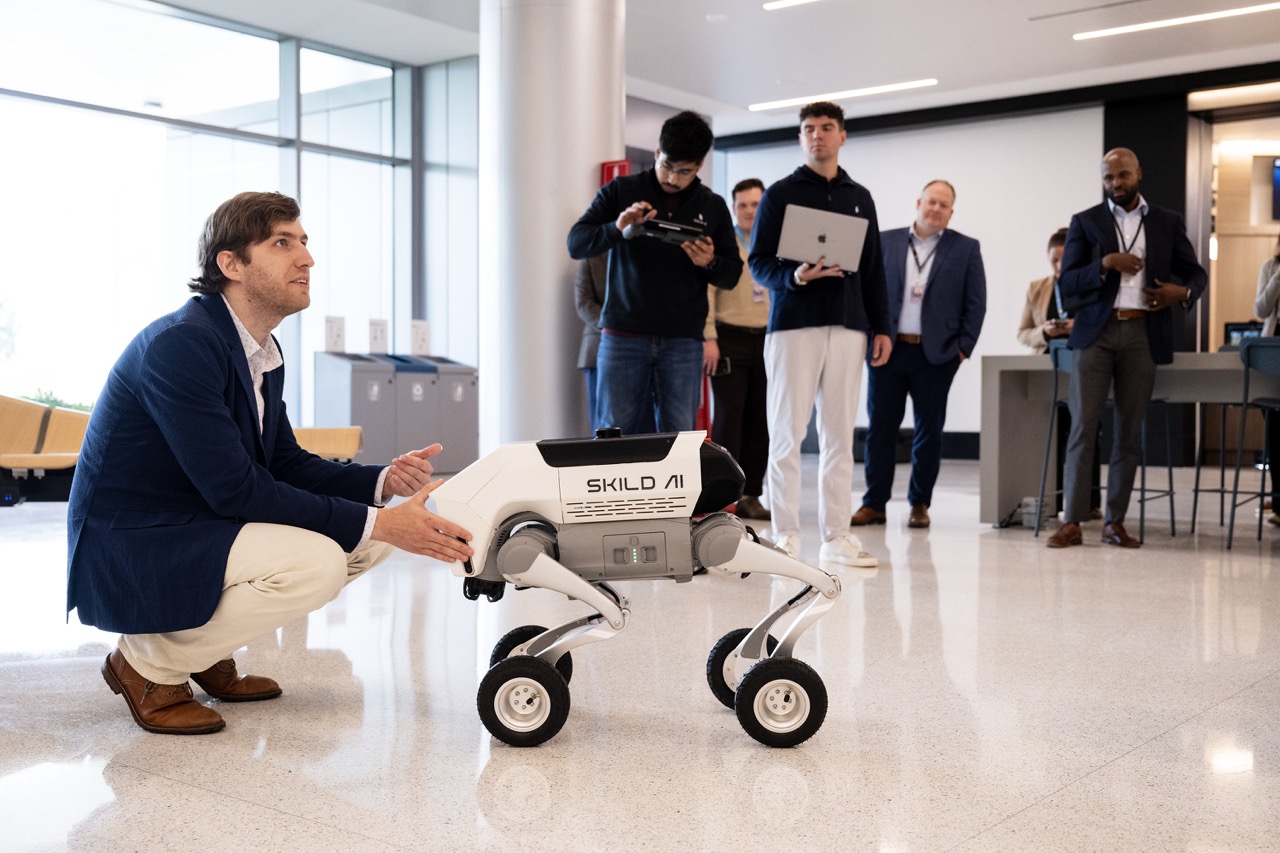
Passengers at Pittsburgh International Airport could soon encounter autonomous four-legged robot dogs at the terminal. The airport is preparing to deploy up to four quadruped robots as part of a new trial with Pittsburgh-based Skild AI. They will be used to spot spills, overflowing bins, and even problems with the air passengers breathe.
The robots will first collect indoor air-quality data. The airport plans to test them on more complex tasks, including crowd monitoring, biological threat detection and delivering food and drinks around the terminal.
The project is the latest trial conducted through Pittsburgh International Airport’s xBridge programme, which gives technology companies a working airport environment to test new products.
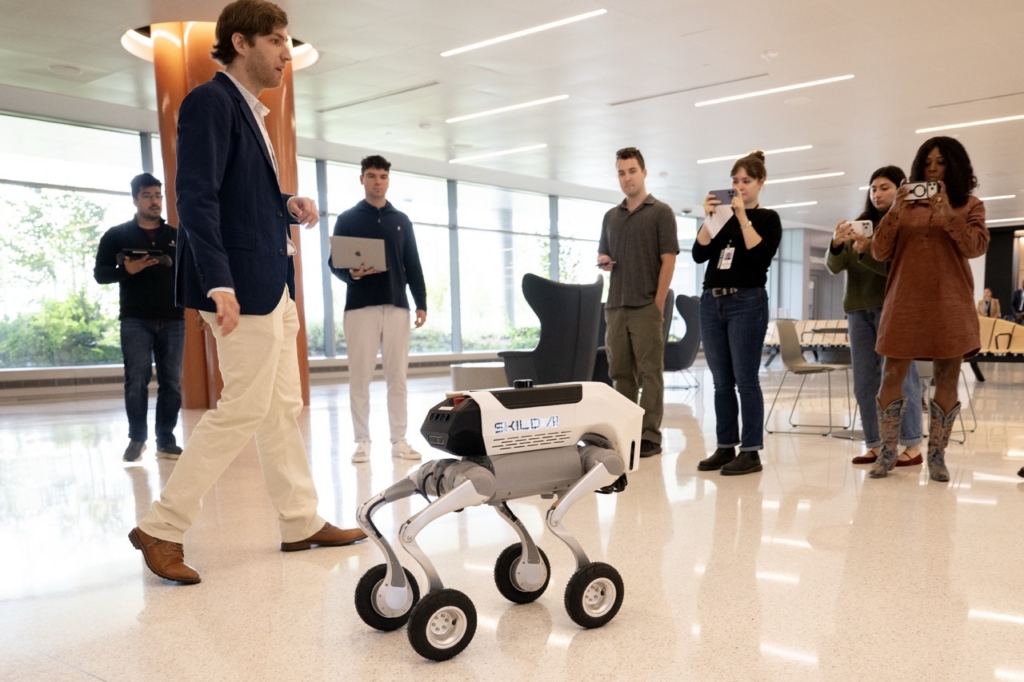
According to Pittsburgh International Airport, the robots use Skild AI’s adaptive autonomy software. Cameras and sensors let them navigate the terminal, identify anomalies and relay information to airport operations staff.
“Pittsburgh is a global leader in robotics and AI. Through xBridge, we’re creating a place where that innovation can move from the lab into the airport environment and ultimately help shape the future of the industry,” said Deepak Nayyar, Executive Vice President and Chief Technology Officer at PIT. “We’re looking at how the latest technology can work alongside our staff and airline partners to enhance efficiency, improve operations and provide an additional level of customer service.”
Pittsburgh Airport deploys four autonomous robot dogs
PIT plans to deploy up to four robots and two charging stations across its Airside Terminal.
Each robot will operate within a defined area with designated keep-out zones. Skild AI will handle installation, mapping, supervision, and monitoring, and train airport employees to use the technology.
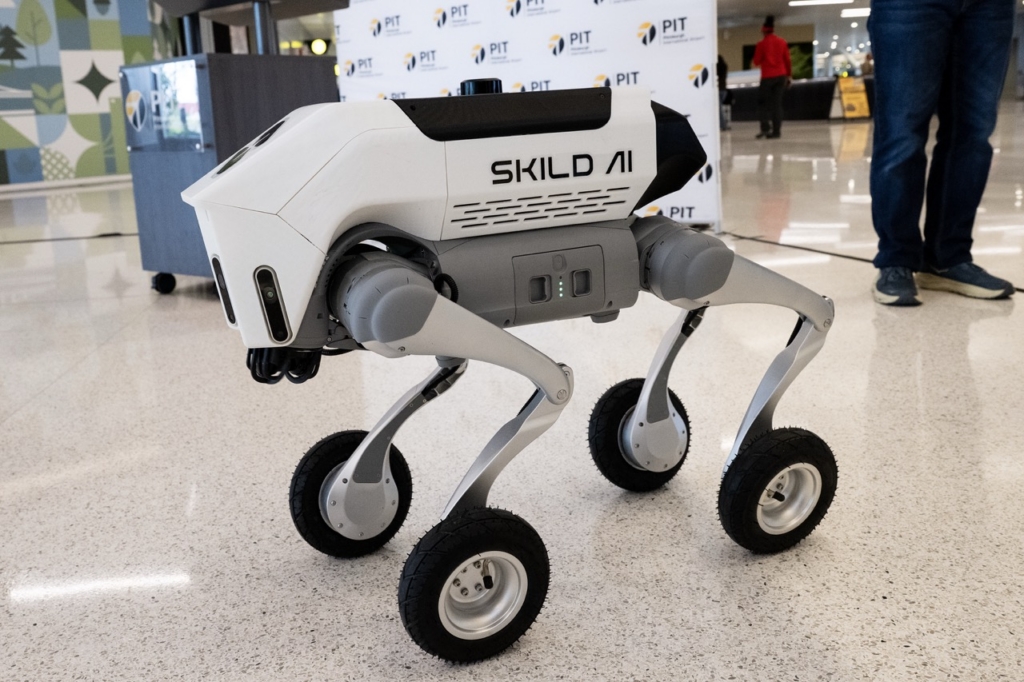
The first assignment for PIT’s robot dogs is mobile air-quality monitoring. A robot equipped with environmental sensors will travel through the terminal collecting location-specific readings. It will compare those readings against predetermined thresholds and alert airport employees when measurements fall outside acceptable parameters.
Robot dogs to detect spills and overflowing bins
A second phase will put the robots to work supporting PIT’s custodial and terminal operations teams.
Potential applications include detecting full or nearly full rubbish bins and alerting staff so they can prioritise collection. The robots could also identify spills, allowing airport teams to respond quickly to a potential passenger safety hazard.
PIT also wants to examine whether the machines can monitor passenger congestion and give its operations centre better information about areas where crowds are building.
Their sensors and mobility could give human teams a continuously moving set of eyes around the terminal and direct employees to where they are needed.
Could airport robot dogs detect biological threats?
PIT has more ambitious ideas for the third stage of trials. One possibility is equipping the quadruped robots with airborne biological threat detection technology developed by BioFlyte.
Pittsburgh has already worked with BioFlyte through xBridge. The company began testing its BioTOF z200 bioaerosol detection technology at PIT in 2023. In 2025, the two organisations signed a five-year agreement to deploy and promote the technology in aviation environments.
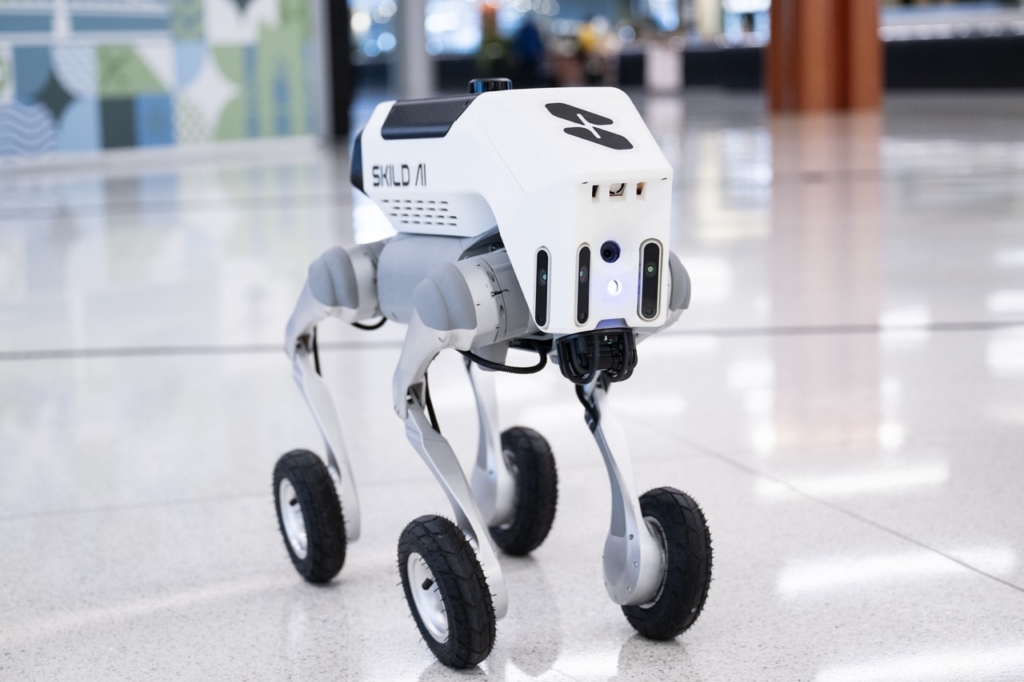
BioFlyte says its system can detect and identify biological and chemical particulate threats, including bacteria, viruses and biotoxins.
Pairing that technology with a mobile robot could potentially extend monitoring beyond fixed sensor locations.
The airport and Skild AI will also examine using the robots for autonomous delivery. Robots could transport food and drinks or move items for airport employees, reducing the time staff spend carrying supplies around the terminal.
The $14 billion AI company behind PIT’s robot dogs
The trial also gives Skild AI a complex real-world environment in which to test its technology. The company was founded in Pittsburgh in 2023 by Carnegie Mellon University faculty members Deepak Pathak and Abhinav Gupta.
Skild is developing general-purpose AI software intended to work across different robotic platforms and tasks.
The company announced a $1.4 billion Series C funding round in January 2026, led by SoftBank with participation from NVentures, Macquarie Capital and Jeff Bezos through Bezos Expeditions. Skild said the investment valued the business at more than $14 billion. Its investors also include Sequoia Capital, Lightspeed, Coatue and Felicis.
The airport trial provides a different test from a controlled laboratory or factory. The robots must navigate a public terminal containing passengers, baggage, airport employees, and constantly changing obstacles.
“As a Pittsburgh company, we’re proud to partner with xBridge to make Pittsburgh International a pioneer in airport robotics,” said Sara Ahmadi, head of product at Skild AI. “We share the belief that robots will transform how public infrastructure operates.”
PIT also tests AI to predict overhead bin space
Robot dogs are not the only new technology being tested through xBridge.
PIT is separately working with Southwest Airlines and startup Arrow Analytics on technology designed to tackle another familiar airport problem: passengers discovering there is no room left for their carry-on bags.
Arrow’s EZ-Board system has been installed at Southwest’s Gate A7. It uses ceiling-mounted depth cameras and real-time analytics to track carry-on bags during boarding and estimate how much overhead bin capacity passengers will require.

Gate agents can use that information to decide when passengers may need to check bags rather than waiting until overhead compartments are already full.
“We are excited to work with the innovative team at PIT as we continue to develop our EZ-Board product and computer vision offerings for airports and airlines,” said Valerie McNeill, Chief Operating Officer of Arrow Analytics.
For Skild AI’s robot dogs, the trial is an opportunity to learn whether machines that can navigate factories and laboratories can also cope with an airport full of people.
Sign up for our newsletter and get our latest content in your inbox.


More from


September 25, 20264 min read


