


NASA reveals powerful Roman telescope to map the universe like never before

5 min read
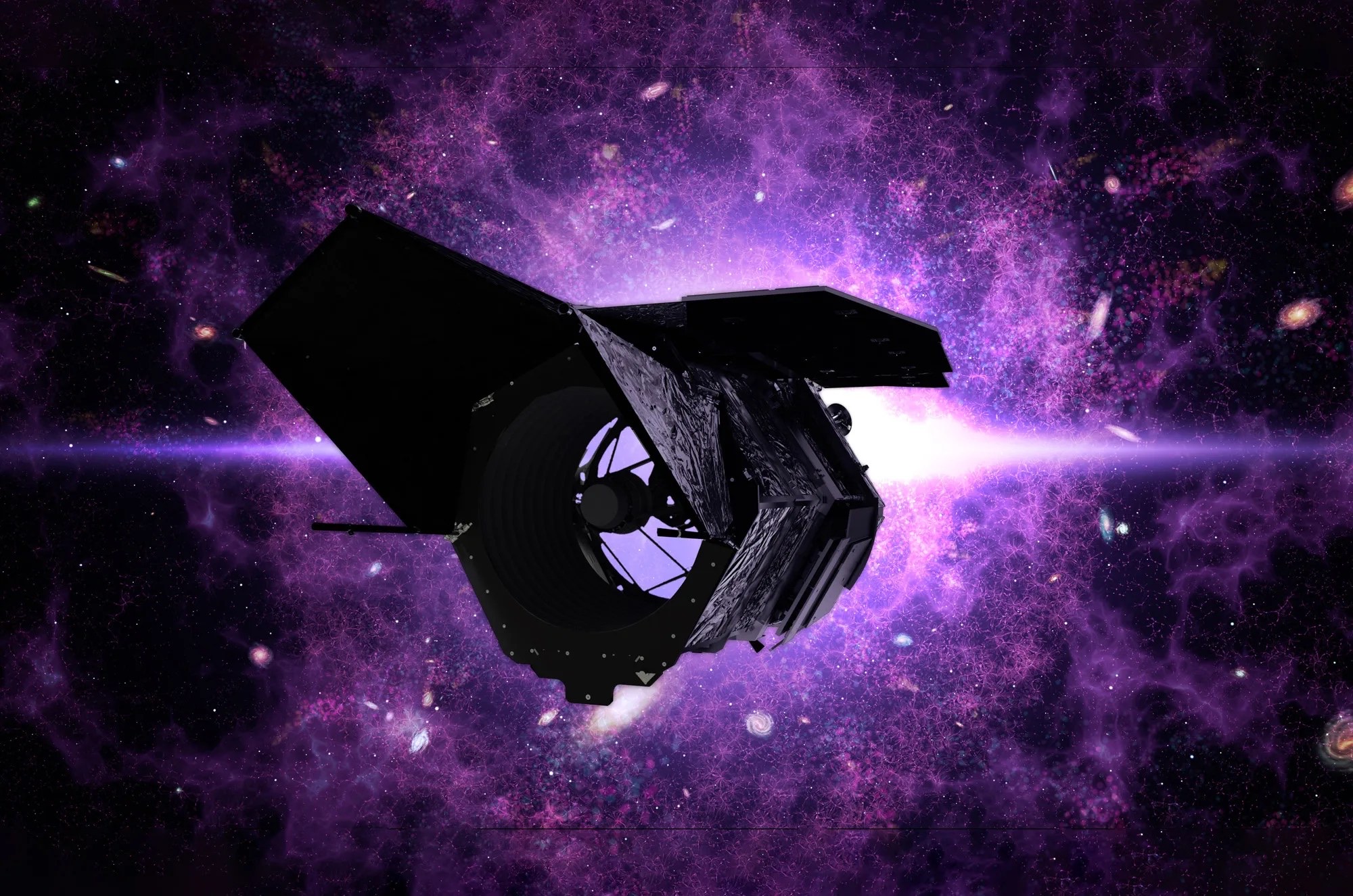
The Nancy Grace Roman Space Telescope, NASA’s next great observatory, is finally complete, with the agency unveiling the spacecraft on 21 April as a powerful new instrument designed to map the universe and search for distant planets.
More than a successor to Hubble or a companion to the James Webb Space Telescope, Roman signals a shift in how space astronomy will be conducted by moving from narrow, deep observations to wide, data-rich surveys that capture the universe at scale.
Roman Space Telescope’s wide-field capability will map the universe faster than ever
Roman’s defining advantage is its ability to combine high resolution with an enormous field of view.
The telescope can image areas of the sky around 100 times larger than Hubble while maintaining comparable clarity, allowing it to map vast regions of space in a fraction of the time.
“What would take Hubble 2,000 years to do, Roman will do in about one year,” said Julie McEnery, the mission’s senior project scientist.
Where the James Webb Space Telescope looks deeper into small patches of the universe, Roman is designed to look wider by capturing the broader structure of the cosmos and providing the context needed to interpret Webb’s discoveries.
3 key surveys will map galaxies, dark energy and exoplanets
At the core of Roman’s scientific programme are three large-scale surveys, each targeting a different frontier in astrophysics.
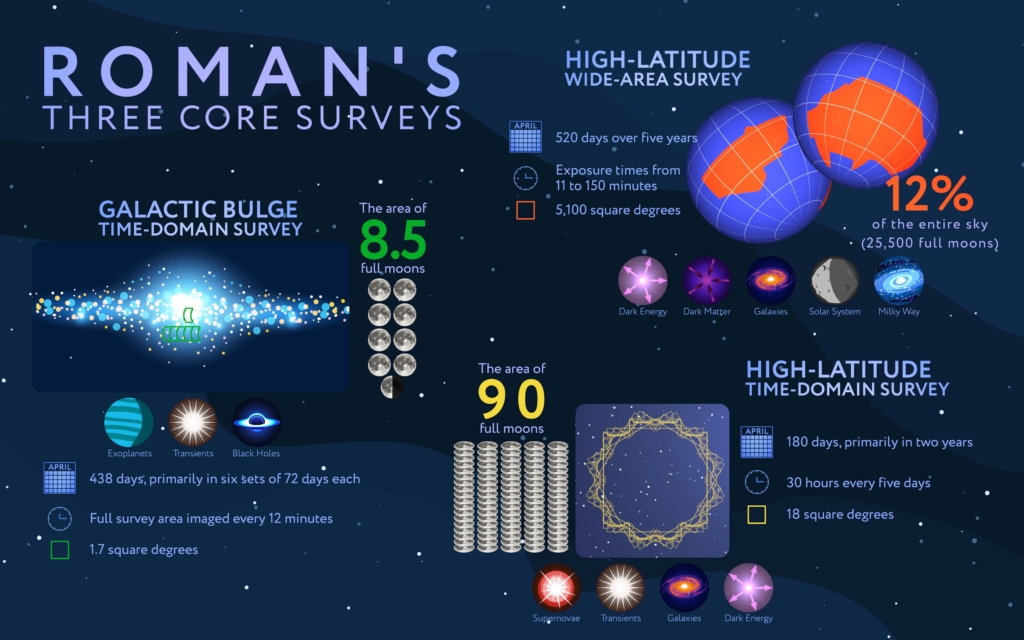
The High-Latitude Wide-Area Survey will map around 5,000 square degrees of the sky, roughly 12%, capturing images of hundreds of millions of galaxies and measuring distances to tens of millions more.
A second survey will focus on supernovae, using these exploding stars as cosmic markers to track how the universe has expanded over time.
The third, known as the Galactic Bulge Time-Domain Survey, will monitor dense star fields at high cadence, searching for exoplanets through microlensing events.
Together, these surveys will produce an unprecedented three-dimensional map of the universe stretching back more than 11 billion years.
Roman Space Telescope to probe the dark universe with precision mapping
One of Roman’s central goals is to understand dark matter and dark energy, which together make up about 95% of the universe.
“We’ll use Roman’s enormous, deep 3D images to explore the fundamental nature of the universe, including its dark side,” said Ryan Hickox, a professor at Dartmouth College in Hanover, New Hampshire, and co-chair of the committee that shaped the survey’s design.
The mission will rely heavily on weak gravitational lensing, tiny distortions in galaxy shapes caused by unseen mass.
“It’s like looking through a cosmic funhouse mirror,” Hickox explained.
Roman will also measure baryon acoustic oscillations-subtle patterns in the distribution of galaxies that act as a “cosmic ruler” for tracking the expansion of the universe.
By combining these methods, Roman is expected to provide the most precise measurements yet of how the universe has evolved.
Roman Space Telescope to discover thousands of exoplanets using microlensing and imaging
Roman’s impact will extend far beyond cosmology.
Using microlensing, the telescope is expected to detect thousands of new exoplanets, including those that orbit far from their stars or drift freely through space.
The mission will repeatedly observe the galactic bulge, capturing changes in brightness every few minutes, an approach that could increase detection rates several-fold.
In addition, Roman’s coronagraph will allow direct imaging of exoplanets by blocking starlight, achieving contrast levels far beyond current capabilities and paving the way for future missions targeting Earth-like worlds.
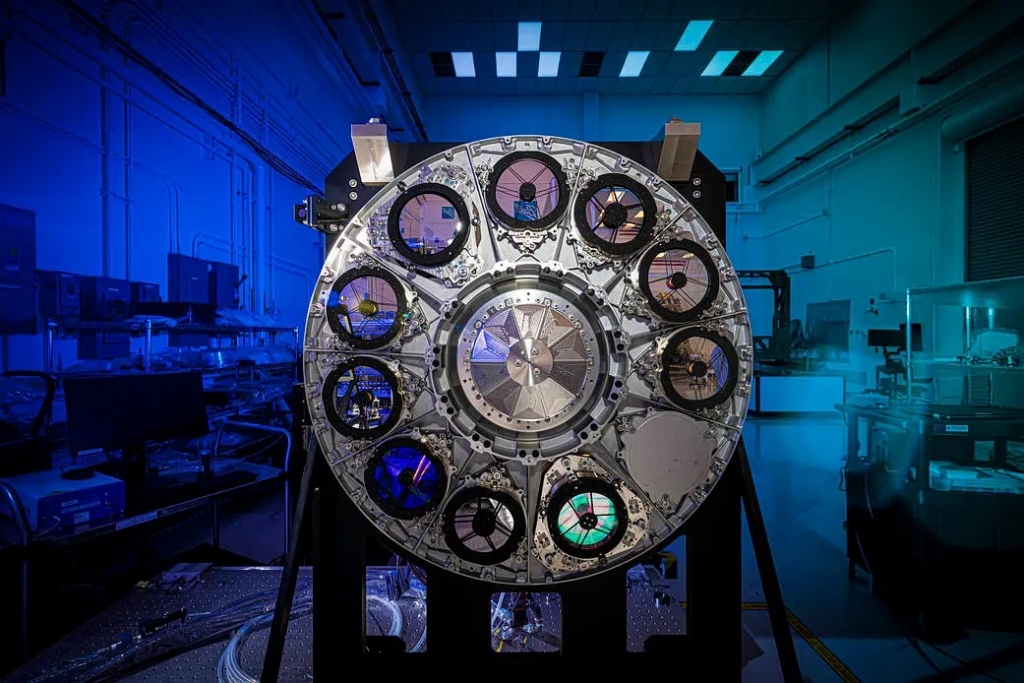
Roman’s Wide Field Instrument (WFI), a 300-megapixel imaging system, sits at the centre of its capabilities.
It combines high-resolution imaging with a slitless spectrometer, allowing astronomers to measure distances and properties of galaxies across large areas of the sky in a single observation.
The scale of data generated will be unprecedented. Roman is expected to return around 11 terabytes of data each day.
“In the first year, we’ll have sent down more data than Hubble will have for its entire life,” said systems engineer Mark Melton.
This shift will allow astronomers to move from individual discoveries to large-scale statistical science.
NASA completes Roman Space Telescope testing ahead of Falcon Heavy launch
The completed observatory has undergone extensive environmental testing, including vibration, acoustic and electromagnetic trials designed to simulate the stresses of launch and operation in space.
“All of the testing went smoothly, and progress is well ahead of schedule,” said Jack Marshall, Roman observatory integration and testing lead. “The team has done a great job putting the observatory together, and the tests show that everything is lining up with expectations.”
Roman is now on track for launch as early as late 2026 aboard a SpaceX Falcon Heavy rocket.
A decade-long mission built on international collaboration and a legacy of discovery
The Roman telescope has taken more than a decade to develop and has cost over $4 billion.
It also reflects international collaboration, with contributions from the European Space Agency, including detectors, star trackers and ground infrastructure.
Named after Nancy Grace Roman, often called the “Mother of Hubble”, the mission continues a lineage of observatories that have reshaped humanity’s understanding of the universe. Once launched, Roman will operate from the Sun-Earth Lagrange Point 2, about 1.5 million kilometres from Earth.

From this vantage point, it will join other major observatories such as the James Webb Space Telescope and Europe’s Euclid mission, enabling complementary observations of the cosmos. Roman’s wide surveys will identify targets, while telescopes like Webb will study them in greater detail.
Despite its ambitious scientific goals, researchers expect Roman’s greatest discoveries to be those that cannot yet be predicted. That uncertainty reflects the history of space astronomy, where each new observatory has expanded the boundaries of knowledge in unexpected ways.
Featured image: NASA


