Pride of Africa under pressure as Kenya Airways tackles losses, fleet changes and CEO change

5 min read

George Kamal, Acting CEO of Kenya Airways, announces his resignation after the airline posted KSH16bn losses and strikes affect operations at Jomo Kenyatta International Airport.
Less than nine months after stepping into the role as Acting Group Managing Director and CEO of Kenya Airways, George Kamal has announced his departure. He is expected to remain with the airline until 30 September, 2026.
Leadership Transition Update: Kenya Airways Ag. Group Managing Director & CEO Capt. George Kamal resigns for personal reasons. Company Secretary and Director of Legal Services & Regulatory Compliance Habil Waswani will take over in an acting capacity.#ThePrideOfAfrica pic.twitter.com/BqM9xUHa4v
— Official Kenya Airways (@KenyaAirways) September 1, 2026
All change for Kenya Airways as it appoints new CEO
The airline has already begun the process to select a permanent replacement for Kamal. In the meantime, it has named Habil Waswani as Kamal’s replacement. Currently Kenya Airways’ Company Secretary and Director of Legal Services and Regulatory Compliance, Waswani will take on his new role as Acting Group Managing Director and CEO from 15 September. The 15-day overlap between the two Acting CEOs will enable a smooth transition.

In a statement confirming Kamal’s departure, Kenya Airways said: “During his tenure, George Kamal brought extensive aviation expertise to bear in stabilising the airline’s operations and successfully steered the company through the most executive leadership transition.”
Having previously served as Kenya Airways’ Chief Operating Officer for three years, Kamal took on the role as Acting CEO in December 2025, after the departure of Allan Kilavuka.
Who is Kenya Airways’ new Acting CEO?
Kiprono Kittony, Kenya Airways’ Chairman, describes Waswani as a “distinguished corporate and commercial legal practitioner with over 24 years of multi-sectoral experience and more than five years of service at the airline.”
Waswani, who has 24 years of experience in corporate and commercial law, holds a Bachelor of Law degree from the University of Nairobi as well as a Global Executive MBA from the United States International University. Before Kenya Airways, he held senior corporate governance roles at leading banking and insurance institutions.
What’s next for George Kamal?
While the reasons for George Kamal’s departure from Kenya Airways are cited as “personal”, no announcement has been made as to where he will go or what he will do next.
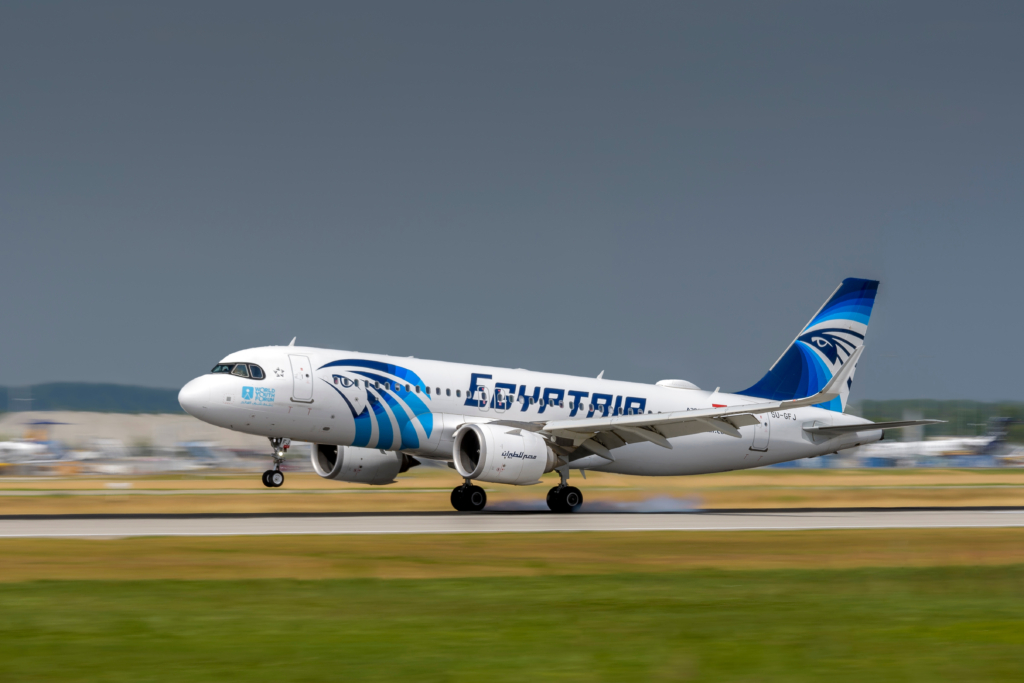
Originally from Egypt and a pilot by background (he holds the rank of Captain), with COO- and CEO-level airline experience at carriers, Kamal started his career as a pilot with EgyptAir. He has also served with Emirates, Air Arabia, as a consultant for the International Air Transport Association (IATA), and for Iraqi Airways. He may pursue a role with another airline in operations or an executive role.
Kenya Airways reports financial losses in H1 2026
Kamal’s departure follows the airline’s latest financial results, which show a KSH 16.08 billion net loss in the first half of 2026.

The airline’s losses came despite higher total income, which rose 9% from KSH 74.50 billion in the first half of 2025 to KSH 81.25 billion in the six months ended June 2026.
Higher costs pushed the airline’s operating loss to KSH10.64 billion, up from KSH6.24 billion in the first half of 2025.
Spike in jet fuel prices and supply chain constraints have impacted operating costs
During the first half of 2026, jet fuel prices rose sharply, increasing by 66%. According to the airline, this was driven principally by geopolitical tensions in the Middle East.
The increase resulted in a 32% rise in KQ’s fuel costs compared with the same period last year, with fuel accounting for around 32% of total operating expenses and 52% of direct operating costs.
At the same time, critical global supply-chain constraints have also affected aircraft availability and operational reliability. Operating costs rose 14%, putting significant pressure on margins.
“Our focus is now on recovery and building a stronger Kenya Airways,” said Kittony.
“We will continue to manage costs rigorously, conserve cash, restore fleet capacity, reduce leverage and complete our capital raising. These actions are designed to create a more stable platform from which the airline can pursue long-term growth,” he continued.
Kenya Airways to restore aircraft capacity
Since the end of the reporting period, Kenya Airways has returned additional aircraft to service. This includes a Boeing 787-8, which resumed operations in mid-July, and a Boeing 777-300 ER, which was also redelivered to the airline.
The restoration of aircraft capacity is expected to strengthen network resilience, improve operational flexibility and enable the airline to capture additional demand as market conditions improve.
In addition to restoring fleet capacity, immediate priorities for the airline according to Kittony, include accelerating cost reduction initiatives while strengthening liquidity, improving operational resilience and aircraft utilisation and completing the planned capital raising for a more sustainable financial foundation.
He remains confident in the long-term prospects of the airline and focused on “strengthening our operational and financial foundations while continuing to deliver reliable connectivity to our customers and supporting the broader economic and tourism ecosystem in the markets we serve.”
ATC strikes at Jomo Kenyatta International Airport
The airline faced further woes over the weekend after industrial action caused by operational constraints within Air Traffic Control (ATC) Services at Jomo Kenyatta International Airport in Nairobi.
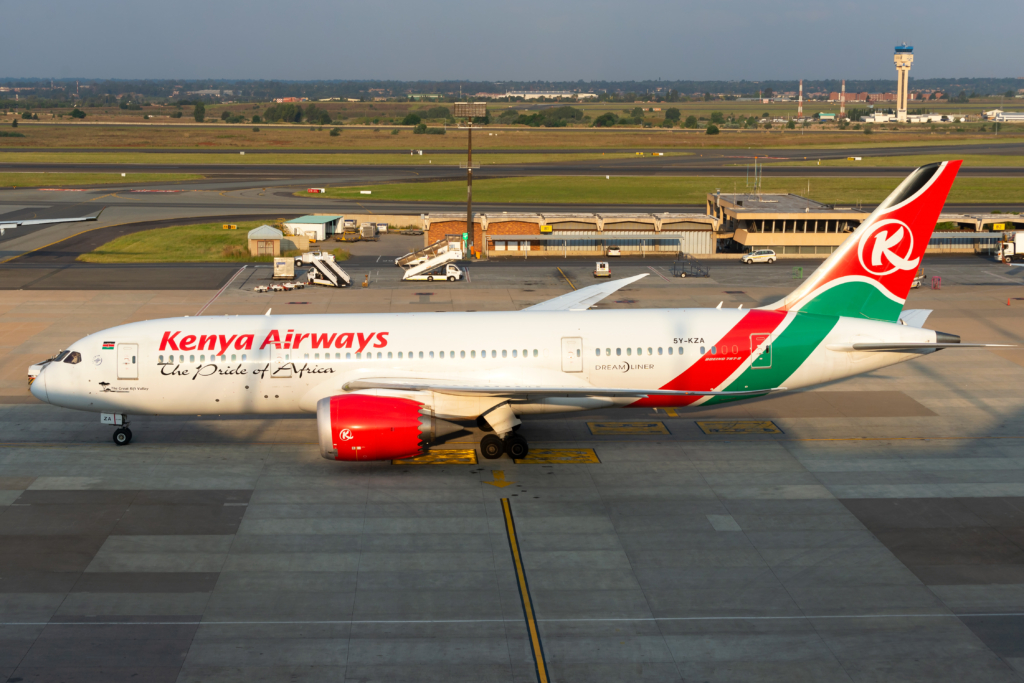
Flights were departing with an average two- to three-hour delay. The situation had, however, normalised by the morning of Tuesday 1 September, with the Kenya Airports Authority (KAA) confirming that all airports are now operating normally, following the full resumption of ATC services. The airport operator is working closely with all aviation stakeholders to support the progressive restoration of flight schedules and ensure the smooth movement of passengers and cargo.