


Japan Airlines to trial humanoid robots for ground handling at Tokyo Haneda

3 min read
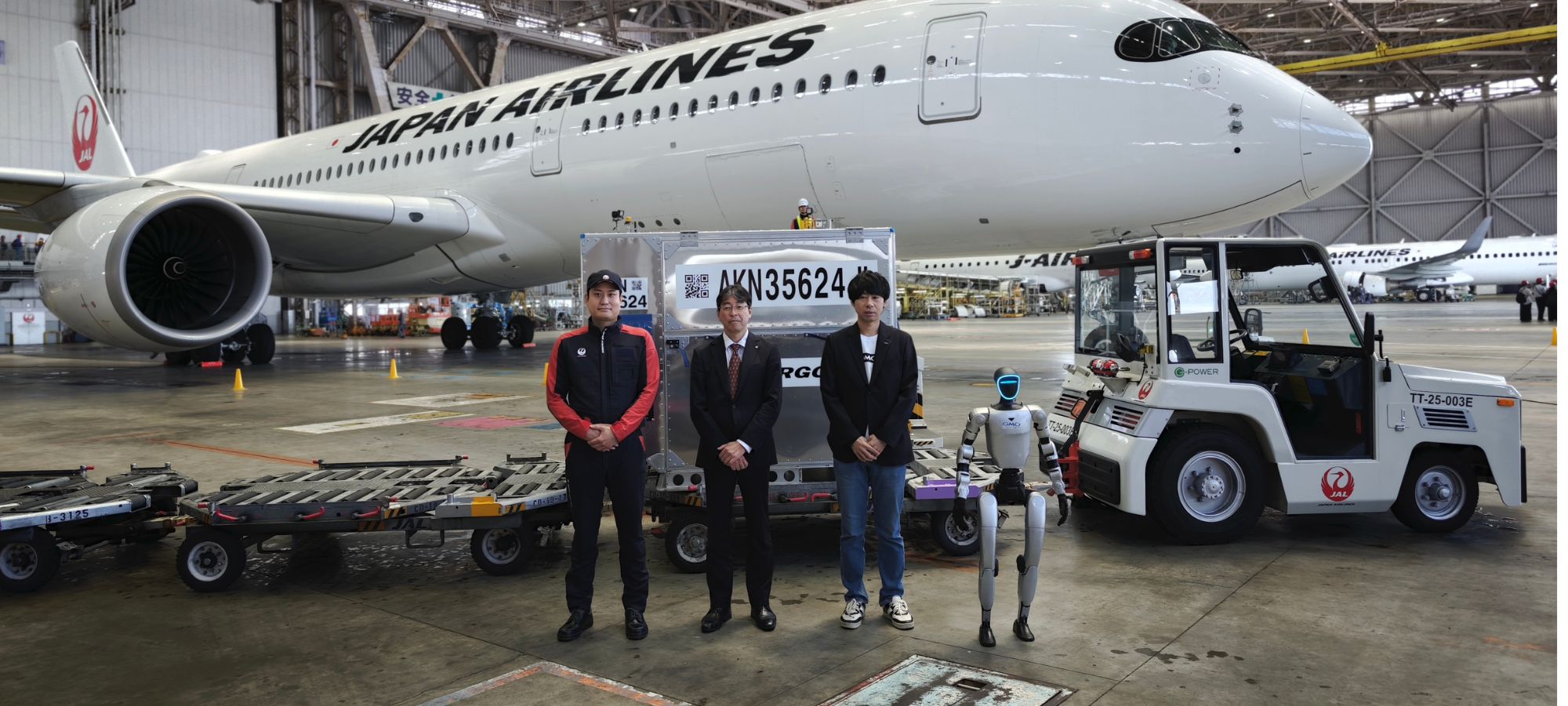
With mounting pressure to accommodate rising traffic demand amid a workforce shortage, Japan Airlines (JAL) has collaborated with GMO AI & Robotics (AIR) to trial humanoid robots at Tokyo’s Haneda Airport.
JAL’s two-year trial using Chinese-made humanoid robots for ground handling will begin in May, following a presentation to the media on Monday. The trial has been described as the “first of its kind in Japan.”
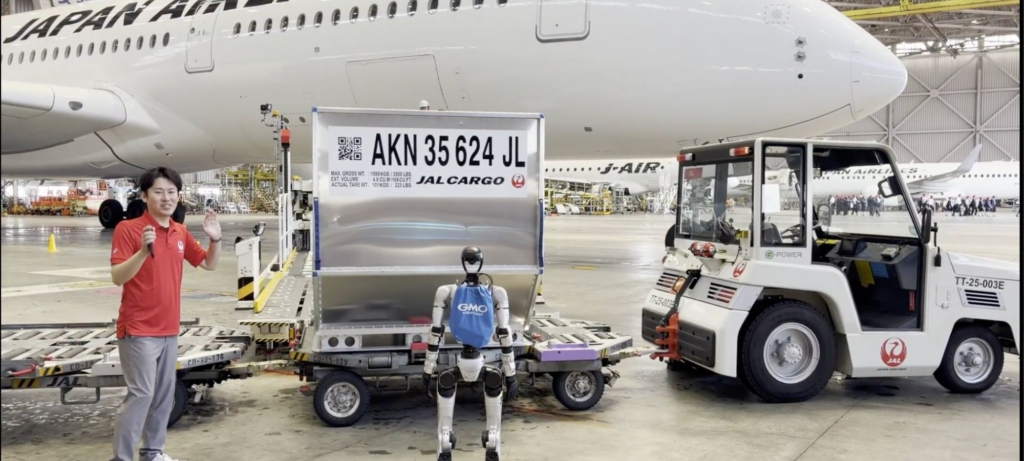
The study will see the 130cm tall humanoid robots deployed across a range of ground-handling tasks, including loading and unloading baggage and cargo, and cabin cleaning.
Initial phases will focus on mapping the airport environment to identify safe operating zones for the robots, before moving to repeated operational simulations that mirror real-world conditions.
Japan Airlines trials humanoid robots amid workforce challenges
JAL cited mounting workforce pressures as the primary driver of the robot rollout. The airline currently employs around 4,000 ground handling staff but warns that the industry is struggling to keep pace with surging passenger and cargo traffic, alongside a declining workforce.
Japan’s airports received more than seven million foreign visitors in the first two months of 2026 alone, according to Japan’s largest travel agency, JTB Group.
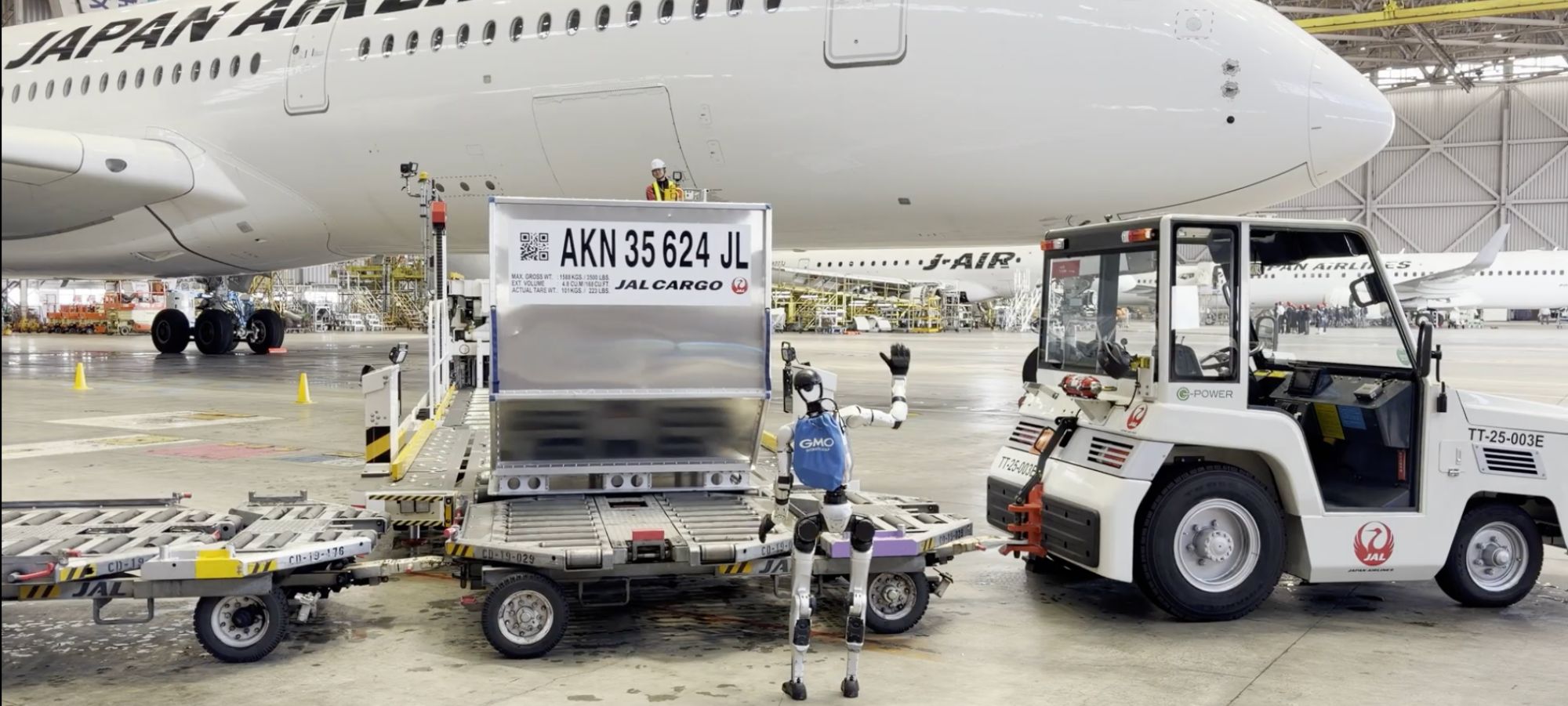
The aviation industry is “facing a serious challenge” in ground handling labour shortages due to an increase in inbound tourism coupled with a declining working-age population, the Japanese carrier said in a statement.
The airline’s partnership with GMO AIR will explore whether humanoid robots can deliver meaningful labour savings and workload reductions in ground handling operations. The sector is known for its physically demanding roles, such as aircraft marshalling and baggage handling.
Looking further ahead, JAL hopes the robots will be able to clean aircraft cabins and operate ground support equipment (GSE).
JAL(日本航空)とJALグランドサービス、GMO AI&ロボティクス商事(GMO AIR)、羽田空港で中国製のUnitree Robotics(ユニツリー・ロボティクス、杭州拠点)人型ロボットの実証実験 pic.twitter.com/zC32sLQ6mH
— Tokyo.Tweet (@tweet_tokyo_web) April 29, 2026
While the robots, which run for up to three hours on a single charge, are expected to deliver significant benefits to staff in physically demanding roles, stakeholders have stressed that safety-critical duties such as safety management must remain under human control.
JAL has framed the trial as part of a broader ambition to accelerate the social adoption of humanoid robots across industries, working towards a society where robots and humans coexist through collaboration.
Robots at airports: A growing global trend
The trial with JAL and GMO AIR at Haneda is the latest in a wave of robotic deployments at major airports worldwide.
In Asia, Haneda already uses robots for customer service automation, while Singapore Changi introduced indoor patrol robots in 2025 to carry out surveillance and reshape frontline policing at the airport. It has also deployed autonomous baggage tractors to transfer passenger bags between Terminals 1 and 4. At Seoul Incheon International Airport in South Korea, AirStar Robot (a guidance automation assistant) uses AI and voice recognition to assist passengers.

European airports have been active in the space for several years. Munich Airport was an early pioneer of robotic services to enhance operations. It trialled a multilingual humanoid Josie Pepper robot in Terminal 2 as early as 2018, and last year partnered with Lufthansa to introduce Ottobots to engage with travellers through intuitive interactions.
Frankfurt Airport rolled out AI-enabled security scanners in 2025 to cut checkpoint wait times, while Dublin Airport introduced four luggage-carrying robots in 2024. Named Sir Bot a Lot, Bilbot Baggins, Handler Bing and K2DC, the four robots assisted passengers with carry-on luggage and wayfinding in Terminal 1.
In the US, Halifax Airport deployed passenger experience robots last year to help passengers find their way, joining other air transport hubs across the country that have put robots to work.
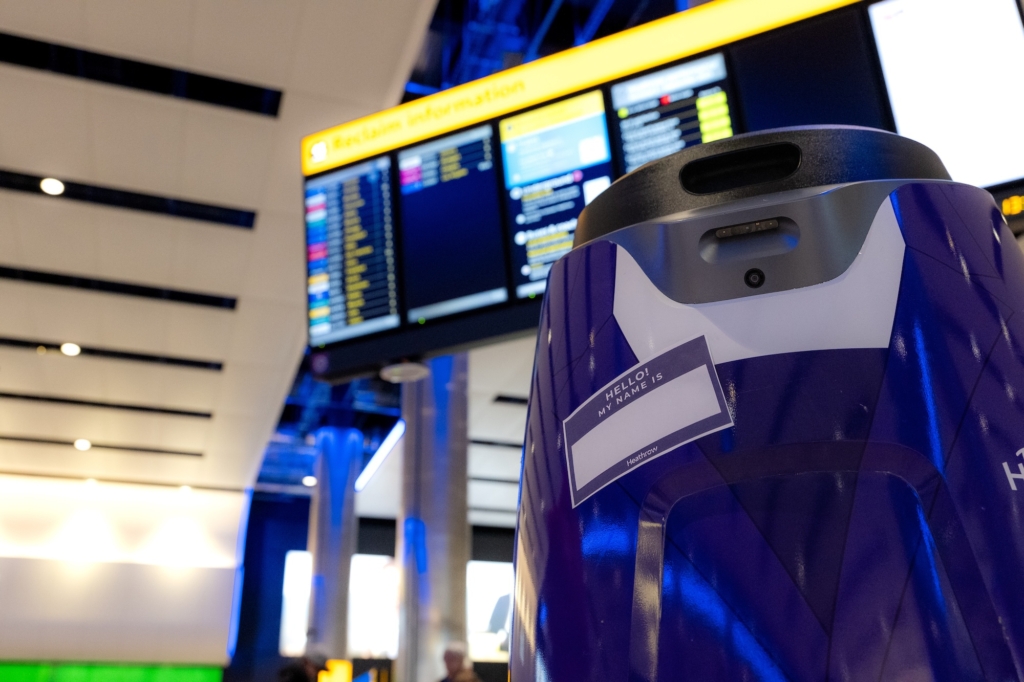
Cleaning robots have also been deployed at airports across the globe, including London Heathrow in the UK, Fort Wayne International in the US and Ahmedabad Airport in India. Airports using integrated robot fleets have reported reductions in overall operational costs of between 15-25%, according to facilities management platform Oxmaint.
Featured image: GMO AI & Robotics Corporation


