


HTT-40: India’s long-awaited basic trainer prepares for delivery as HAL ramps up production for 2026 entry to service

7 min read
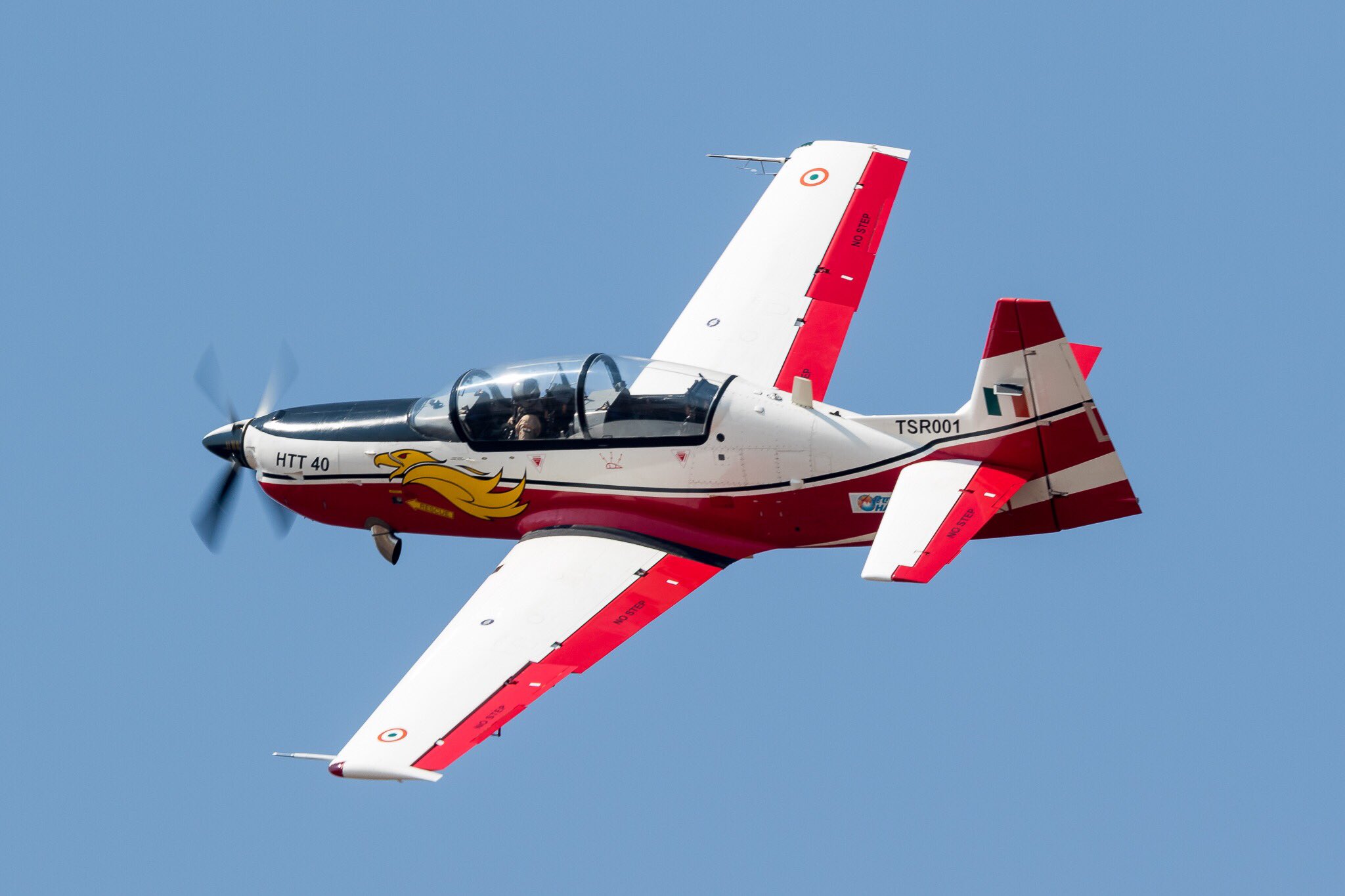
If all goes to plan, the first batch of India’s Hindustan Turbo Trainer-40s (HTT-40) will leave the factories of Hindustan Aeronautics Limited (HAL) early next year, drawing a line under one of the longest-running stories in India’s military aviation sector.
The aircraft itself is modest in size and straightforward in purpose, but its arrival represents something far larger: the restoration of an indigenous basic trainer to the Indian Air Force’s frontline training syllabus, after years of uncertainty, debate and delay.
HTT-40 development: how HAL pushed ahead despite delays
The HTT-40 is by no means a new idea. HAL began work on the aircraft more than a decade ago, often pushing ahead even when support was lukewarm or inconsistent. Over the years the programme endured supply bottlenecks, shifting procurement priorities and, more recently, global strain on engine production.
Yet the aircraft is now within touching distance of service entry. With production lines running in Bengaluru and Nashik and engine deliveries finally picking up pace, this is a good moment to step back and look at what HAL has built — and where it is headed.
How the HTT-40 fills the Indian Air Force’s basic trainer gap
The Indian Air Force has relied heavily on the Swiss-made Pilatus PC-7 MkII since 2009, when the earlier HPT-32 Deepak was grounded after a series of fatal crashes.
The Pilatus fleet stepped in quickly and has proved dependable, but the original order never covered the IAF’s full requirement. More than a hundred additional aircraft were needed to complete the basic flying syllabus.
The HTT-40 is intended to close that gap.
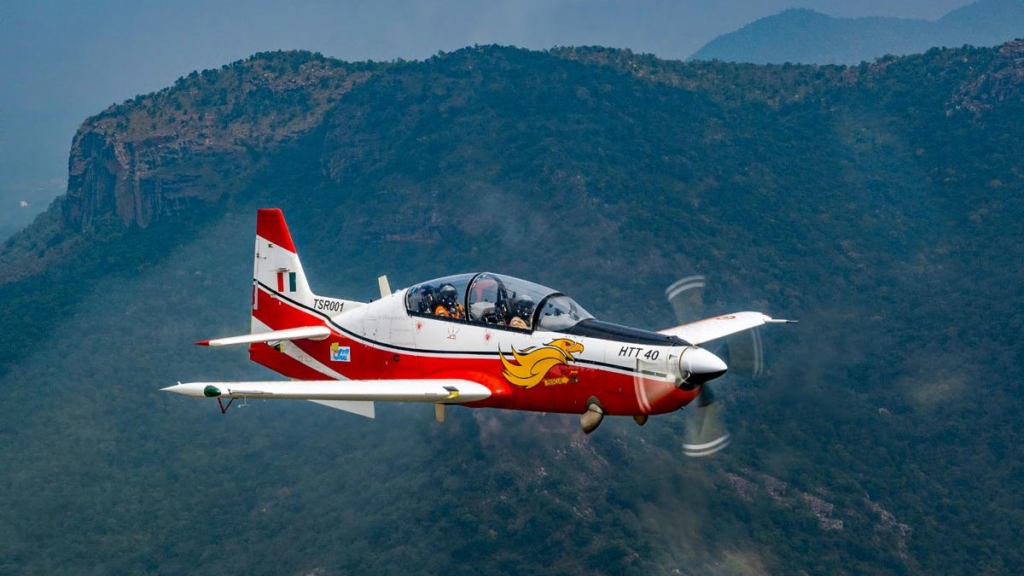
Under a contract worth INR 68.5 billion ($770 million), HAL is committed to supplying 70 aircraft, with the option for 38 more. With two production lines now active, HAL expects to be able to build around 20 aircraft a year once the programme reaches its stride. If the schedule holds, the first set of trainers will begin entering service from early 2026.
HTT-40 features and specifications: what HAL’s new trainer offers
At its core, the HTT-40 is a straightforward aircraft: a turboprop trainer with tandem seating, designed to take rookie pilots through their first hours of military flying.
But the details matter.
The aircraft uses Honeywell’s TPE331-12B engine, part of a widely used turboprop family, and is designed to be forgiving for beginners while responsive enough for aerobatics. Below are the key specifications for the HTT-40:
| Feature | Specification |
|---|---|
| Glass cockpit | Modern digital cockpit layout |
| Avionics | Indigenous communication and navigation systems |
| Ejection seats | Zero-zero Martin-Baker ejection seats |
| Hot-refuelling | Capability for rapid turnaround refuelling |
| Cockpit design | Layout mirrors logic of IAF’s newer fighters |
| Top speed | 450 km/h |
| Ceiling | 6,000 m |
| Range | Just over 1,000 km |
| Endurance | A little more than three hours |
| G limits | +6 / -3 |
| Take-off run | 785 m |
| Landing run | 987 m |
| Powerplant | Honeywell TPE331-12B (approx. 1,100 shp) |
HAL had to fly the first series-production aircraft using a used “Category B” engine owing to delays at Honeywell, but the US manufacturer has now promised to accelerate deliveries from 2026.
“Once the new engines arrive in steady numbers, the production tempo should improve,” an HAL official said.
For instructors, the HTT-40’s appeal lies in its slow-speed behaviour and the ease with which students can recover from mishandled inputs, qualities that matter far more in a basic trainer than outright performance.
The aircraft meets the FAR-23 standard, giving it an internationally recognised certification base. HAL has already raised indigenous content to 56%, with plans to push that figure above 60%.
HTT-40 programme timeline: The long path to certification
That the HTT-40 exists at all is notable. When HAL first proposed it as a replacement for the Deepak, the Air Force preferred expanding its order for PC-7s, arguing — not unreasonably — that a proven foreign design carried less risk. HAL nevertheless pressed ahead, funding the project internally and flying the first prototype in May 2016.
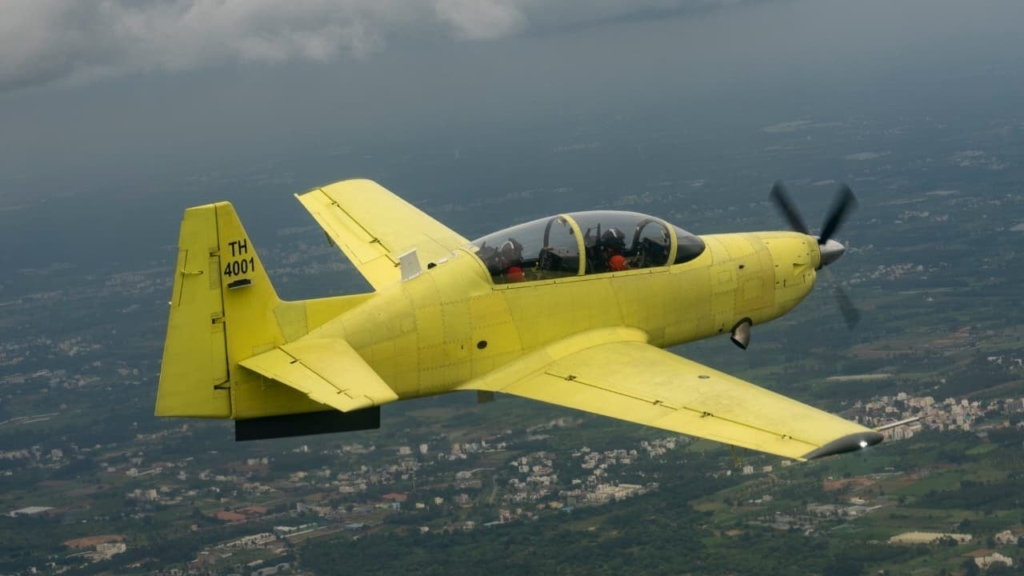
The turning point came when the aircraft cleared its six-turn spin tests, a demanding requirement for any trainer. With spin performance proven and the government’s broader push for defence self-reliance gathering momentum, the project gained political backing.
Certification followed in 2022 after a comprehensive programme of hot-weather, crosswind and user-assisted trials.
HTT-40 vs PC-7, T-6 and KT-1: how India’s trainer compares
Most air forces today buy from a small group of established trainer aircraft, so comparisons are inevitable. The HTT-40 sits in the same broad category as several other aircraft; here’s how it compares:
| Trainer aircraft | Key performance | Comparison with HTT-40 |
|---|---|---|
| Pilatus PC-7 MkII (Switzerland) |
Max speed: ~500 km/h Ceiling: 10,000 m Power: 700 shp (PT6A-25C) Highly reliable with low operating cost |
Faster and higher-flying, but HTT-40 offers a more modern cockpit, better low-speed handling and a fully Indian support ecosystem. |
| Beechcraft T-6 Texan II (United States) |
Max speed: ~585 km/h Ceiling: 9,400 m A proven NATO trainer with higher acquisition cost |
More powerful overall, but sits in a higher cost bracket. HTT-40 provides affordability and easier maintenance. |
| KAI KT-1 Woongbi (South Korea) |
Max speed: ~580 km/h Ceiling: 11,600 m Exported to Indonesia, Turkey and Peru |
More headroom for advanced training, but HTT-40 offers comparable endurance and a strong indigenous industrial base. |
The HTT-40 is not designed to outclass high-end Stage-I/II crossover trainers. Its purpose is narrower but vital: to provide a safe, robust and modern platform for ab-initio flying within India’s training environment.
HAL’s HTT-40 production ramp-up: Bengaluru and Nashik lines expand
In a recent conversation with Aerospace Global News, HAL chairman Dr D. K. Sunil said the company had now “scaled up production of the HTT-40” and that both the Bengaluru and Nashik lines were on track to produce 12 aircraft in 2025–26, increasing to 18–20 a year thereafter.
The choice of Nashik is symbolic. A factory that once built MiG-series fighters is now assembling India’s future trainers. Around 38% of the HTT-40’s components are sourced from small and medium suppliers, a network HAL hopes to expand as production grows.
Each aircraft will carry a TH-4000 series tail number, beginning with TH-4001, which made its maiden flight in October 2025.
HAL plans to deliver three aircraft by February 2026, followed by 11 more before March, provided engine deliveries stabilise.
HTT-40 export potential and future variants under study
HAL has begun exploring what might come next for the airframe. Potential developments include:
- A lightly armed version for border patrol or counter-insurgency
- A simplified export model for cost-sensitive markets
- Deeper integration with ground-based training systems and simulators
Several air forces in Africa and Southeast Asia have expressed early interest, attracted by the combination of low operating cost and long-term support assurance — a persistent concern in this category.
India’s pilot training pipeline and where the HTT-40 fits
For years, India’s trainee pilots have had to bridge a widening gap between the aircraft they learn on and the sophisticated jets they eventually fly. The IAF’s training stages — basic, intermediate and advanced — are still built around ageing platforms designed long before today’s digital cockpits and high-performance systems.
The numbers reveal the strain: the Air Force operates around 260 trainer aircraft, though its assessed requirement is 388. The shortfall has meant longer hours, tighter scheduling and reliance on aircraft nearing the limits of their useful life.
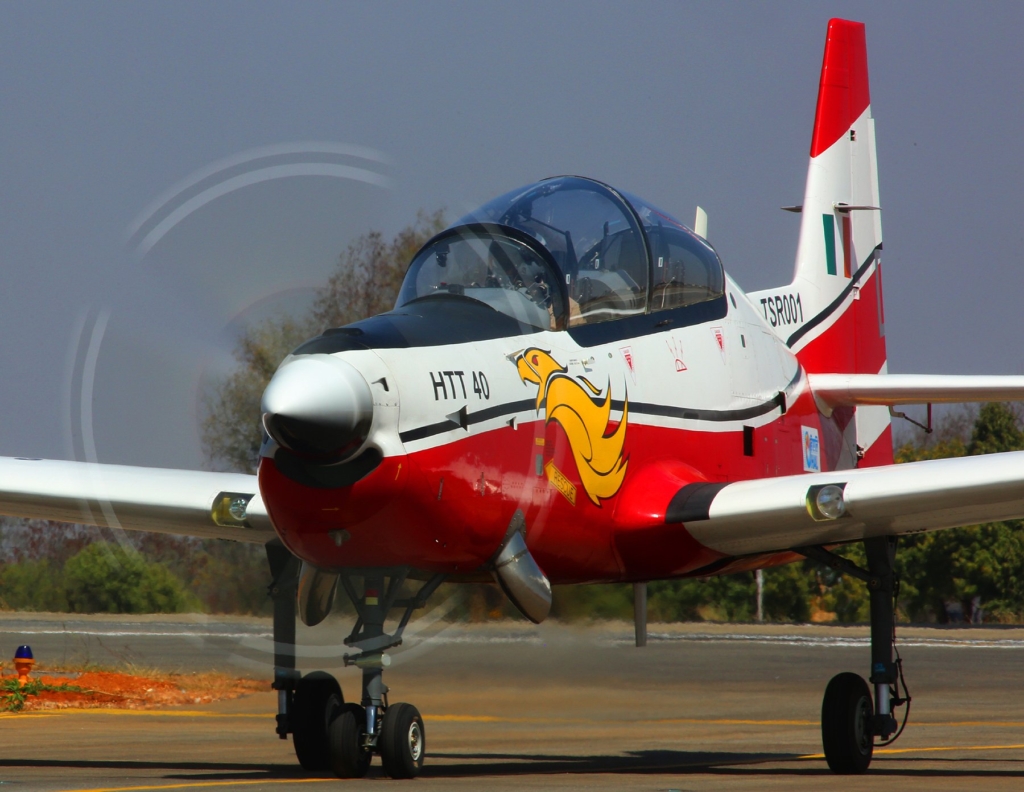
A cadet’s path begins on a basic turboprop trainer. After roughly 80 hours, they graduate to the Kiran Mk II intermediate jet trainer, then to the Hawk advanced jet trainer, before moving on to frontline fighters such as the Sukhoi-30MKI or the Rafale.
Why the HTT-40 matters for India’s next generation of pilots
Basic trainers rarely make headlines, yet no aircraft shapes a pilot more than the one in which they take their first hours. A reliable, modern trainer reduces instructor workload, cuts maintenance downtime and lays the foundation for safe progression to jets and helicopters.
For India, the HTT-40 closes a chapter that began with the grounding of the Deepak and continued through years of debate over foreign versus indigenous solutions. Its entry into service will mark the return of an all-Indian platform at the foundation of the IAF’s flying ladder.
In a year’s time, the first group of cadets will strap into an aircraft that reflects that journey. HAL will see one of its most determined projects finally in Air Force hands, and India’s aerospace industry will gain a programme that strengthens skills far beyond a single production line.


