


Flyte’s regional air mobility vision is taking off ahead of the eVTOL revolution

5 min read
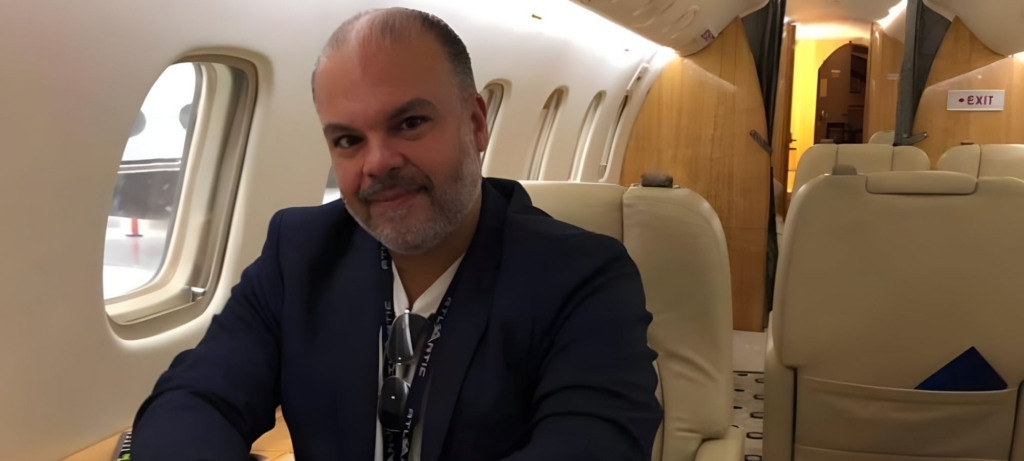
Mark Sellouk, CEO of Flyte, explains why he is prioritising a regional aviation network over urban electric air taxi services.
As a private pilot hopping between small airports up and down the East Coast of the US, Sellouk kept noticing the same thing – rows of private aircraft lined up and waiting to cater for the “who’s who.” It reminded him, he says, of the black-car services that used to idle outside five-star hotels waiting to transport guests. Then Uber came along and upended the whole business.
“When Uber came into the marketplace, it essentially leveraged technology to create a terrestrial ride-sharing network, and brought this type of service to a mass market,” he told Aerospace Global News. “It dawned on me, then there was an opportunity to mimic that model aerially.”
That paved the way for Sellouk to found Flyte as an on-demand regional air mobility company in 2018. Eight years later and with a current fleet of five Cirrus Vision Jet aircraft and two years of commercial service, Flyte is quietly doing what the much-hyped eVTOL industry has yet to achieve: flying paying customers on that last-mile connectivity.
Flyte’s regional network model
While electric vertical take-off and landing (eVTOL) developers like Joby and Archer Aviation chase billion-dollar valuations on the promise of electric air taxi services landing on rooftops, Flyte has taken a deliberately less futuristic path, explains Sellouk. It is pairing proven aircraft platforms with an on-demand booking model.
“My mission is to bring regional air mobility with a suitable conventional aircraft as a precursor to eVTOLs”, he said. “Realistically, that’s still a way off; I don’t see an eVTOL landing in Times Square anytime soon.”
Flyte’s northeast network currently operates within a 500-nm radius of New York, with a two-hour call-out window and flight hours typically between 8am and 8pm. “Our objective is to offer a service that’s lower cost than your typical private jet.”
At a typical one-way flight costing around US$4,900, pricing reflects a positioning between commercial and full private-jet charter.
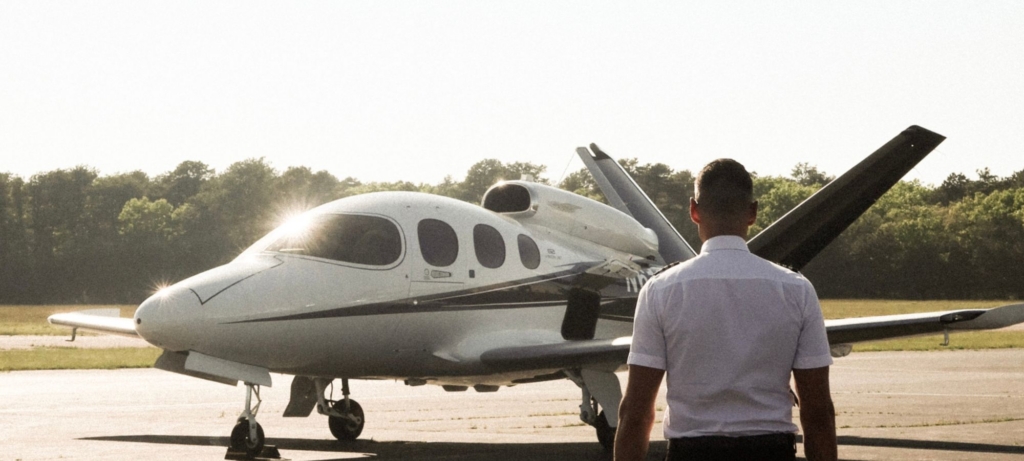
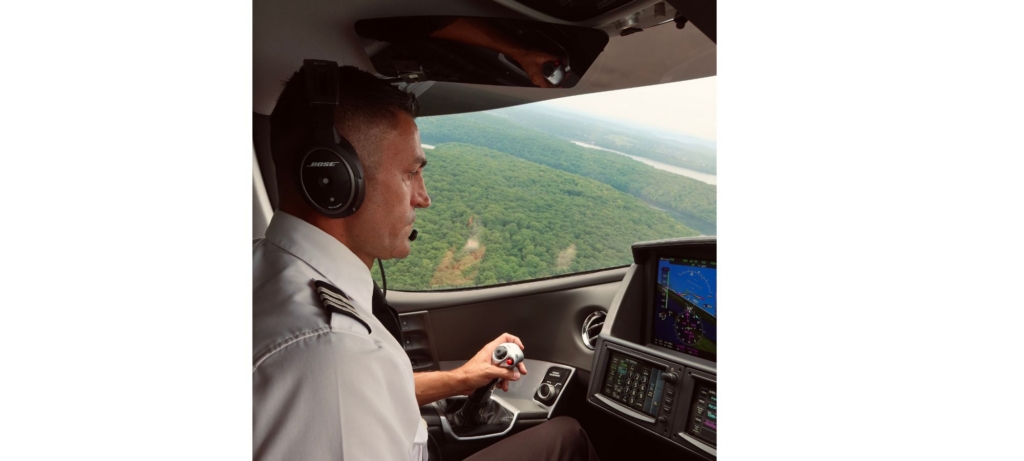
Currently operating a fleet of five Cirrus Vision Jets – seating a pilot and up to four adults and two children. “The Vision Jet is the safest aircraft in the sky,” according to Sellouk. He pointed to Cirrus’ Airframe Parachute System, which, in a catastrophic structural failure, will deploy a parachute to bring the entire aircraft down to land safely. A separate autonomous safe-return system can also land and taxi the jet on its own if the pilot becomes incapacitated.
Leveraging a network of regional airports
One of Flyte’s biggest opportunities, Sellouk states, lies in the thousands of regional airports that most travellers don’t know exist. “There are roughly around 19,500 airports across the US, of which only around 400 handle commercial traffic – and around 5000 are largely idle,” he said. As regional carriers increasingly pull back from smaller routes, that creates an opening for Flyte.
“If I’m a business person travelling from Boston to DC for an 11 am meeting, realistically I have to leave at 5 am, to be at the airports two hours ahead of my flight and proceed through the airport. It’s a whole day of travelling,” Sellouk explained. “When you can show up ten minutes before your flight and be back in time for a late lunch, what better product than a regional air mobility model that flying one of the safest aircraft in the world.”
Scaling Flyte’s operations
While the business currently operates five aircraft, demand says Sellouk will soon outstrip supply. He is, however, resisting the urge to scale too fast, saying the business is well capitalised and has the ability to acquire more aircraft at pace.
“I’m a big believer in haste makes waste,” he said. The company has raised more than US$15 million privately and expects to be trading on the New York Stock Exchange (NYSE) shortly. This, he said, “will unlock further capital for expansion.”

Over the next two years, the roadmap points towards a “star” pattern of growth, radiating from the Northeast to Florida and Texas, followed by California, Washington State and Illinois. Flyte has also secured approval to operate as a licensed carrier in the Bahamas and is awaiting approval in Canada.
“That’ll give us the ability to facilitate flights to places outside of the domestic US market,” he said. “The long-term vision is to be in every major US city operating in the fashion that we have been and have been successful with.”
On the potential for eVTOL aircraft to eventually be integrated into the fleet, Sellouk isn’t dismissive, but he is firmly of the belief we are still a long way off commercial scale for eVTOL operations. He points to the unresolved issue of charging infrastructure, favouring a hybrid combustion-electric approach in the near term.
“You can’t pull over in the air,” he noted. Should the economics eventually work, however, he is open to the idea of adding electric aircraft to Flyte’s own operating certificate rather than treating eVTOL makers as competitors.
For now, the biggest constraints though are the ones being felt by operators across the industry: keeping five (and growing) aircraft on a tight maintenance schedule helped by Cirrus’ Jet Stream programme – and finding enough qualified pilots to keep up with demand.
“We’re well-capitalised, and we’ll evolve in line with demand,” he reiterated. “But we’ll do it at the pace that’s right for us,” he concluded.


