Falcon 10X makes first flight – but what does the next-gen business jet offer?

3 min read
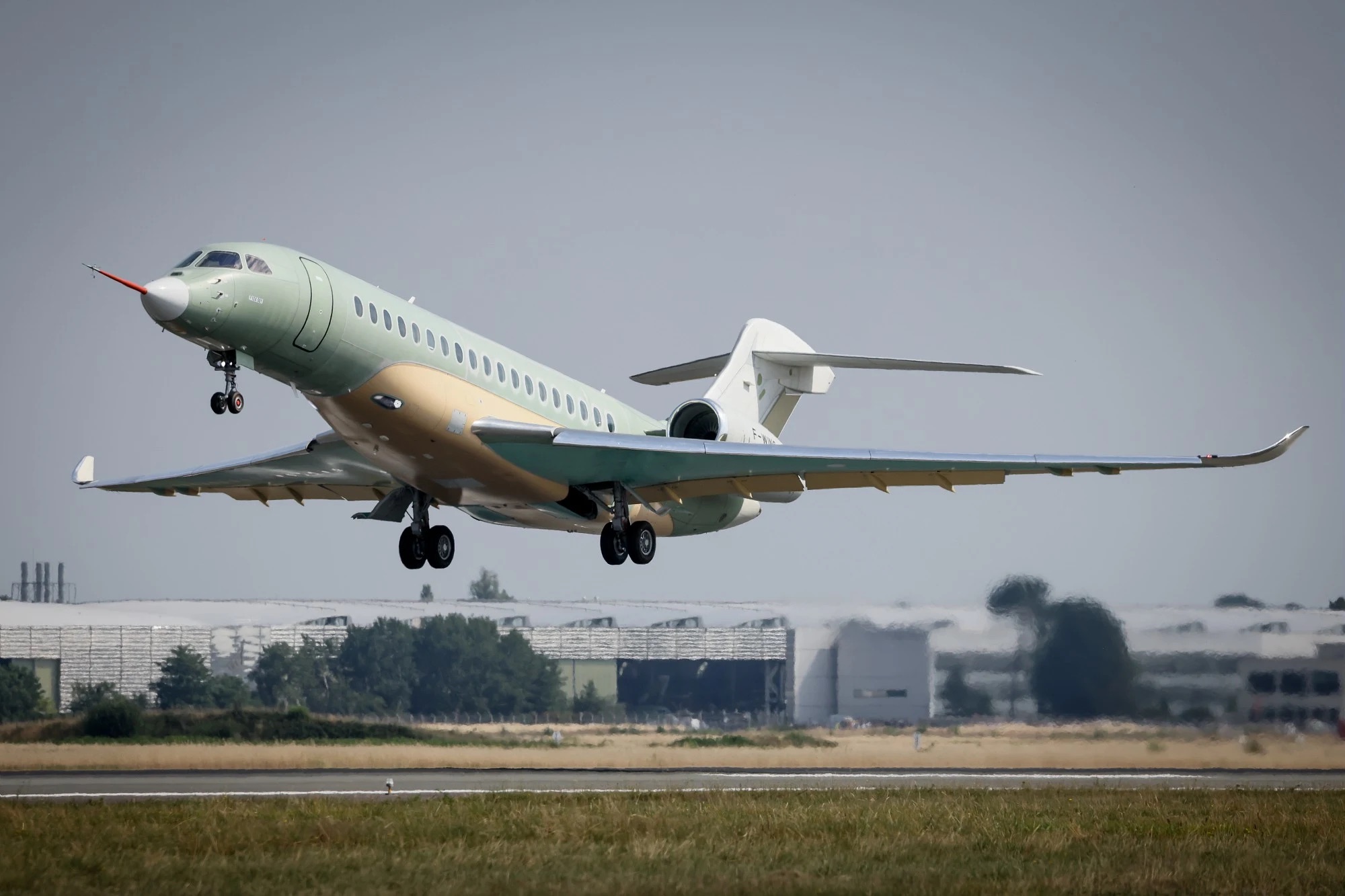
Dassault Aviation’s Falcon 10X has taken to the air for its first flight, marking the start of a long-awaited test campaign for the French manufacturer’s next business jet.
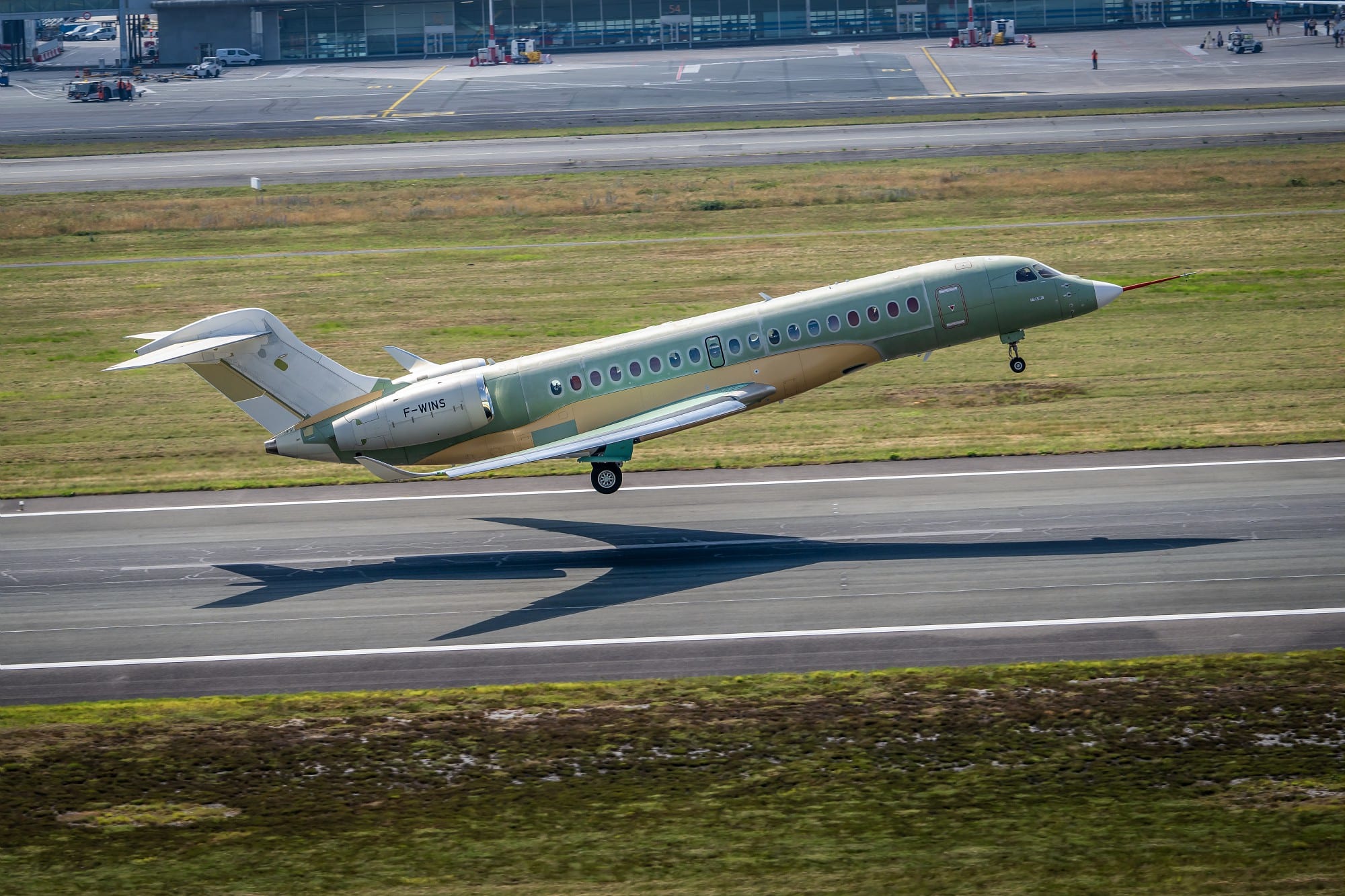
The aircraft completed a two-and-a-half-hour maiden flight on June 19, from Bordeaux-Mérignac Airport, reaching 40,000 ft and Mach 0.82, while crews evaluated basic handling qualities and onboard systems.
The aircraft will be followed by a second test aircraft nearing completion, and by a third, that is being outfitted with a full interior and will be used mainly for systems and cabin functionality and reliability testing.
“This inaugural flight is another milestone for Dassault,” said Chairman and CEO Eric Trappier.
“It is a reflection of the dedication and high skill of our engineering, production, and flight teams, and also the quality of our global network of partners. All of us are excited to see this day as we launch into a new phase for the 10X.”
What does the Falcon 10X offer over its predecessors?
For a programme announced back in 2021, the first flight comes later than originally expected.
The attention is now shifting to what the Falcon 10X might mean for Dassault’s position in the ultra-long-range market.
The Falcon 10X is larger than the Falcon 8X (the current longest range aircraft in the family, reaching 6,450 nm versus 7,500 nm for the 10X).
But it is also effectively a clean-sheet aircraft and the most significant design change for the Falcon family in decades.
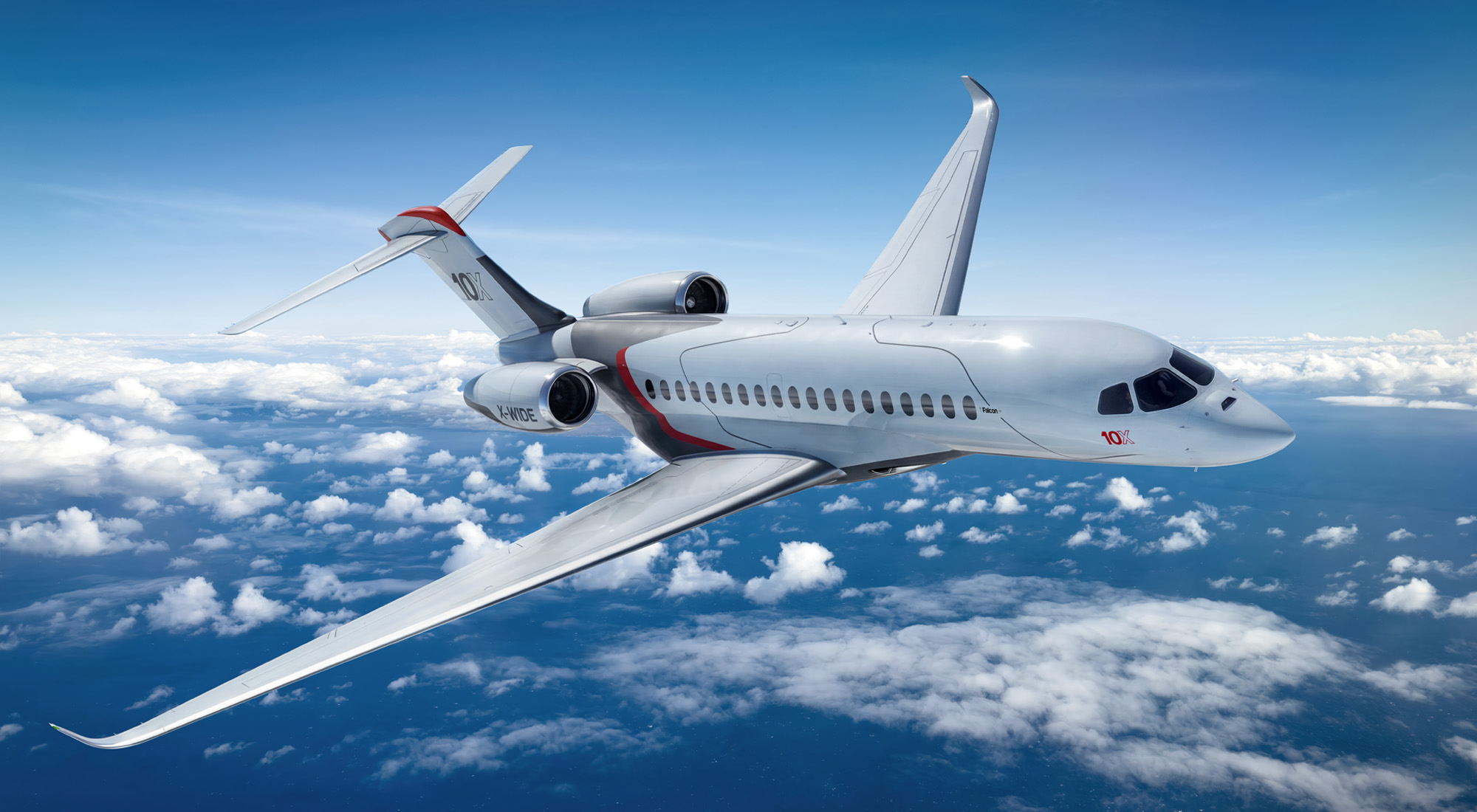
The most obvious difference is size – the 10X will offer the largest cabin ever fitted to a Falcon, and what Dassault says is the largest in business aviation.
A larger fuselage allows for more flexible cabin layouts and multi-zone interiors, which are increasingly expected on aircraft designed to spend 12 hours or more in the air.
Dassault describes the design as “modular”, which allows owners to “move the walls” and create their own customised spaces.
The 10X’s windows are almost 50% larger than those on the 8X.
Falcon 10X innovations in structures, aerodynamics, flight controls and powerplants
The 10X also introduces an entirely new high-speed wing, made of composite materials and developed using aerodynamic expertise drawn from Dassault’s military programmes.
The wing saves approximately 900 pounds in weight and is thinner and more aerodynamic than would be possible with a metal wing.
Compared with previous Falcons, the 10X’s wing has a higher aspect ratio and greater sweep – 33.7 degrees versus roughly 30 degrees on the 8X.
The combination reduces drag and improves efficiency, particularly at high cruise speeds.
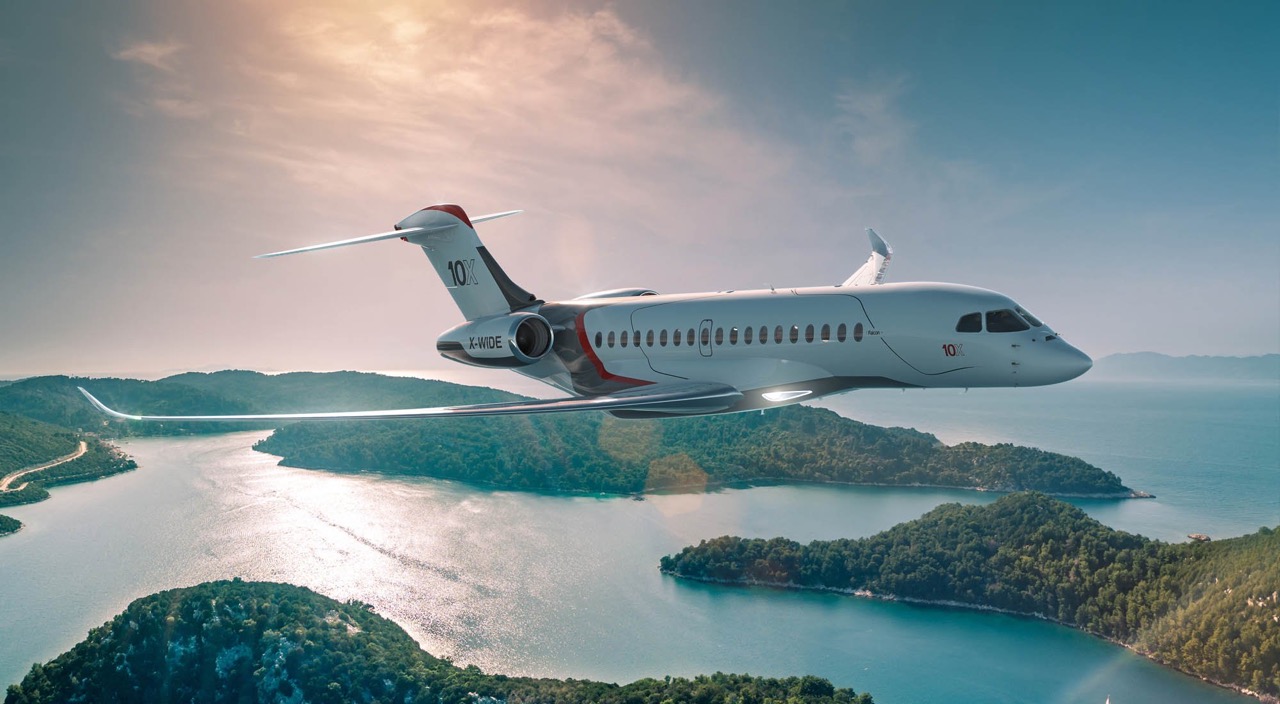
“To achieve its ambitious design objectives, the company concluded a derivative aircraft would not suffice,” the company said. “That is why it elected to design a 100-percent new aircraft, which further entailed a series of new production facilities sized for the 10X.”
Combined with Rolls-Royce Pearl 10X engines, the aircraft is designed to deliver greater efficiency and range than previous Falcons while maintaining the short-field performance.
Integrating next-gen flight deck technology
Dassault has also been working on next-generation flight deck technology.
The 10X’s NeXus flight deck uses touchscreens to simplify the crew operation and enhance safety. This is achieved through new capabilities, such as emergency checklists that pop up automatically as needed and close as pilots follow the suggested actions.
The number of buttons and switches on the flight deck has been reduced, making for a simplified overhead panel. There are fewer overhead starting switches, for example, and they have an automated start sequence.
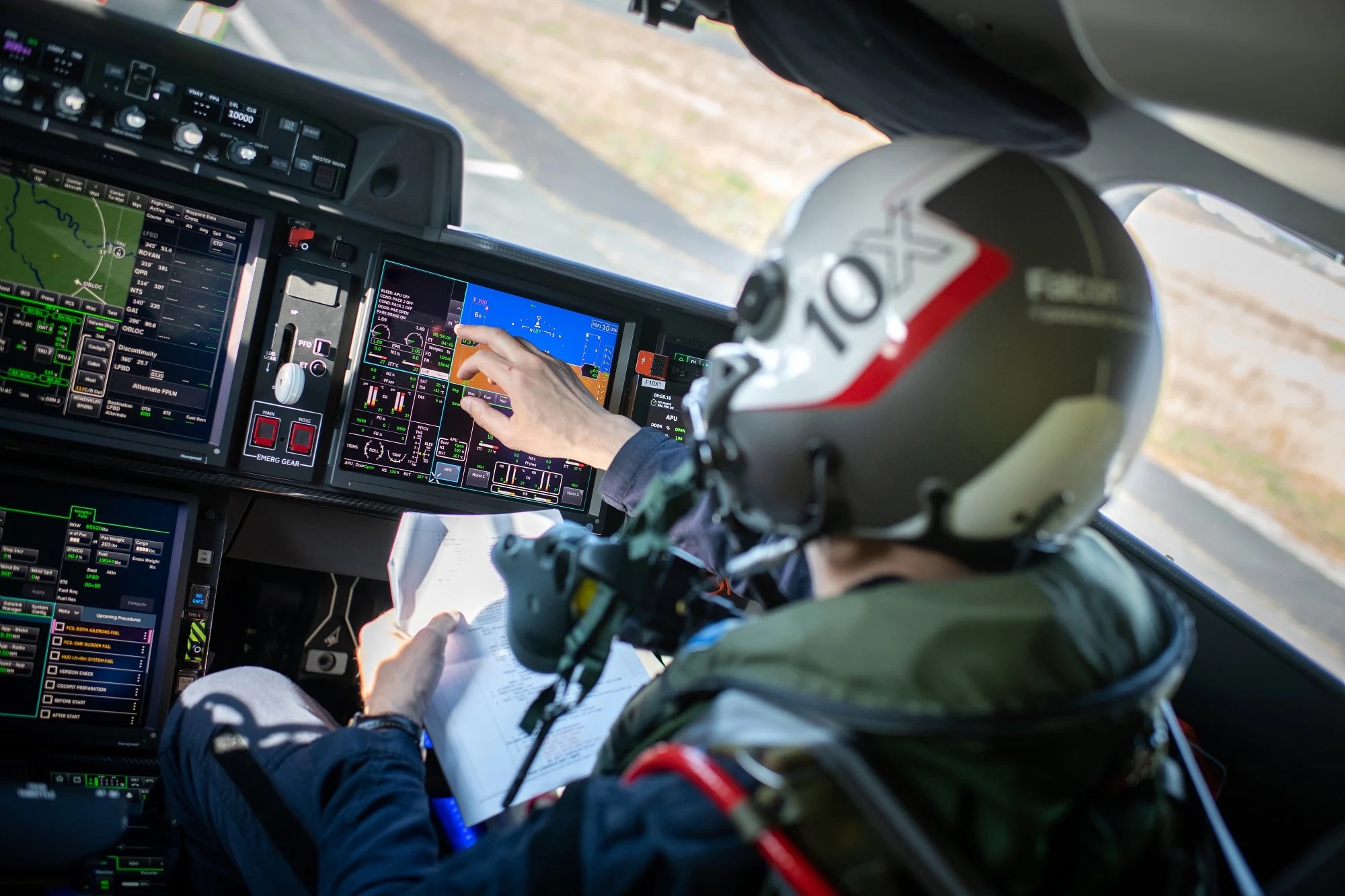
Dassault has also integrated HOTAS (Hands-On-Throttle-And-Stick) technology, allowing pilots to fly with dual HUD displays and fighter jet-inspired symbology.
Another addition is an automatic recovery function that allows pilots to return the aircraft to stable flight at the push of a button.
Enabled by the integration of the Smart Throttle and digital flight-control system, the technology can recover the 10X from extreme attitudes, including inverted flight.
Featured image: Dassault Aviation – M. Douhaire