China delays Chang’e-7 Moon mission after launch setback

6 min read
China has postponed its ambitious Chang’e-7 mission to the lunar south pole, potentially pushing the flight into 2027 and delaying an attempt to search directly for water ice in some of the Moon’s permanently shadowed craters.
The mission had been preparing to lift off aboard a Long March 5 Y14 rocket from the Wenchang Spacecraft Launch Site on Hainan. The fully assembled spacecraft and rocket had already been rolled vertically to the launch pad on 19 August, only for Chinese authorities to call off the attempt days later.
China’s space authorities said a “comprehensive assessment” had determined that Chang’e-7 no longer met the conditions required for launch and could not fly during its planned launch window this year. No new launch date was announced and officials did not identify a specific technical problem.
Bad weather appears to have played an important role. Tropical Storm Narra developed near Hainan as launch preparations entered their final stages, bringing conditions unsuitable for a launch from the coastal Wenchang spaceport. Thailand’s National Astronomical Research Institute (NARIT), which has an instrument aboard Chang’e-7, said the mission had been delayed by about a month because of the storm.
The picture, however, remains less clear than a straightforward weather delay. China’s official announcement said only that the planned launch window this year could not be used. It did not confirm whether another opportunity will be available later in 2026.
Chang’e-7 was already sitting on the launch pad
The postponement came unusually late in the campaign.
Chang’e-7 and its Long March 5 had reached the pad at Wenchang on 19 August, with launch preparations entering their final phase. Airspace notices pointed to an attempt around 24 August.
Narra then began developing over the waters west of Hainan. The launch was initially pushed back, but the weather threatened to outlast the available window.
That matters more for Chang’e-7 than it would for many satellite missions.
Its trajectory must place the spacecraft into lunar polar orbit before an eventual landing near the south pole. The mission also needs favourable illumination at the landing site, making the relationship between launch date, orbital reconnaissance and surface lighting particularly important.
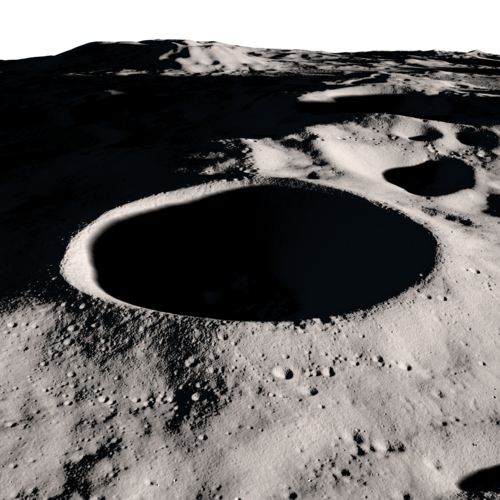
Chang’e-7 is expected to spend weeks or potentially months in lunar orbit examining candidate landing areas before descending. One candidate is the Peak Near Shackleton, an elevated region close to Shackleton Crater where some areas can receive extended periods of sunlight.
So clearing skies over Wenchang does not necessarily mean the rocket can simply be launched the following morning. A suitable Earth-Moon trajectory and conditions at the eventual landing site also have to line up.
NARIT said the next opportunity could be roughly a month later, while other reports have pointed towards 2027. Chinese authorities have yet to settle the question publicly.
A four-spacecraft mission built to hunt lunar ice
The delay matters because Chang’e-7 is considerably more ambitious than a conventional lunar lander.
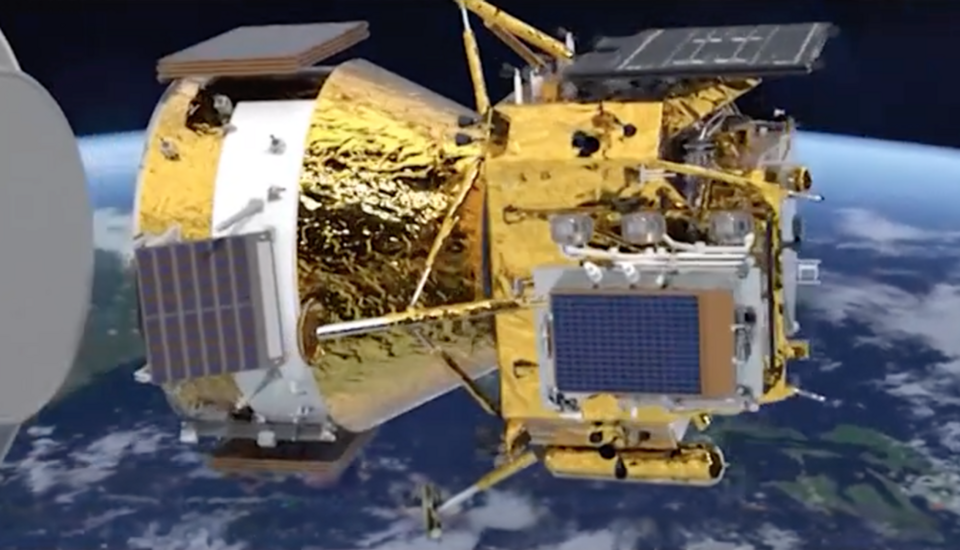
The mission consists of an orbiter, lander, rover and a small flying or hopping probe. Together, they are intended to survey the lunar south pole and investigate whether water and other volatiles trapped inside permanently shadowed regions are present in quantities that could eventually be useful.
The hopper is particularly important. Permanently shadowed craters present a difficult problem for conventional solar-powered rovers. A small mobile spacecraft capable of hopping into these areas offers another way of reaching terrain where sunlight may not have touched the surface for extremely long periods.
Chinese authorities say the mission is intended to demonstrate technologies including high-precision soft landing, legged movement, hopping and exploration of permanently shadowed craters.
The target is not merely to establish whether water exists around the south pole from orbit. Chang’e-7 is designed to investigate its presence, distribution and accessibility much closer to the surface.
That makes it an important precursor to China’s longer-term lunar plans.
Why everyone wants to know what is inside the Moon’s darkest craters
Water ice has become one of the most valuable potential resources in the new race to explore the Moon.
Some craters near the lunar poles receive virtually no direct sunlight.
Temperatures inside these permanent shadows can remain low enough for volatile compounds, including water, to survive for extremely long periods.
Scientifically, those deposits could preserve information about how water and other material reached the Moon and the inner Solar System.
They could also have practical value.
Water could potentially support astronauts and, if separated into hydrogen and oxygen, contribute to propellant production.
Finding accessible deposits would therefore have consequences for any country hoping eventually to maintain a sustained human presence rather than repeatedly carrying everything from Earth.
Shackleton Crater, about 21km across and close to the lunar south pole, is among the areas attracting particular attention.
Lunar geologist Clive Neal of the University of Notre Dame told SpaceNews before the planned launch that the ice could also contain prebiotic organic material and said Chang’e-7 offered a sophisticated way of assessing the volatiles using its combination of orbiter, lander, rover and hopper.
Thailand has its first lunar science instrument aboard Chang’e-7
Chang’e-7 also carries an international scientific contribution.
Thailand’s CE-7 MATCH, or Moon-Aiming Thai-Chinese Hodoscope, was developed by NARIT and Mahidol University and will operate aboard the lunar orbiter.
The instrument is designed to study cosmic rays and other high-energy particles and investigate radiation in the Sun-Earth-Moon environment. It is the first scientific instrument designed and developed by Thai researchers to travel beyond Earth as part of an international lunar exploration mission.
NARIT said the instrument remains installed aboard Chang’e-7 and that the postponement has not changed its scientific objectives.
The international payloads underline a wider purpose for the mission. Chang’e-7 is intended as a precursor to the China-led International Lunar Research Station, or ILRS, which Beijing is developing with international partners.
Chang’e-7 follows China’s historic far-side sample return
The postponement interrupts a run of increasingly ambitious Chang’e missions.
China landed Chang’e-4 on the lunar far side in 2019, the first spacecraft to accomplish that feat.
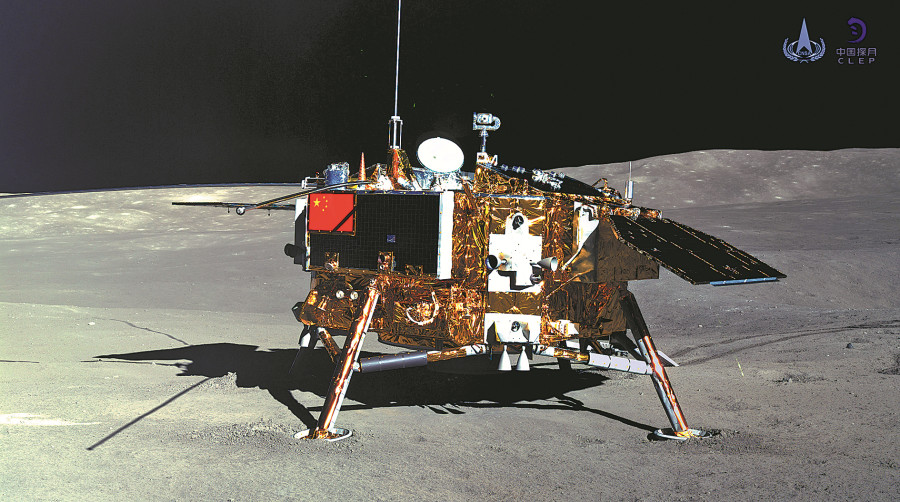
Chang’e-5 returned samples from the Moon in 2020, giving China its first lunar material brought back to Earth.
Then, in June 2024, Chang’e-6 returned samples collected from the lunar far side, another world first.
Chang’e-7 shifts the focus towards the south pole and the resources needed for sustained exploration. It is expected to be followed by Chang’e-8, with the two missions forming important building blocks for the ILRS.
China has separately said it intends to land astronauts on the Moon before 2030. The United States is pursuing its own return through NASA’s Artemis programme, while robotic missions from both countries are increasingly focused on the same strategically and scientifically valuable south-polar region.
That makes the timing of Chang’e-7 more than a scheduling matter.
A delay of several weeks would leave the wider programme largely intact. A slip into 2027 would narrow the gap between Chang’e-7 and other planned south-polar missions, including Blue Origin’s Blue Moon Mark 1 lander.