


Breeze becomes an all-A220 airline as final Embraer E190 retires

6 min read
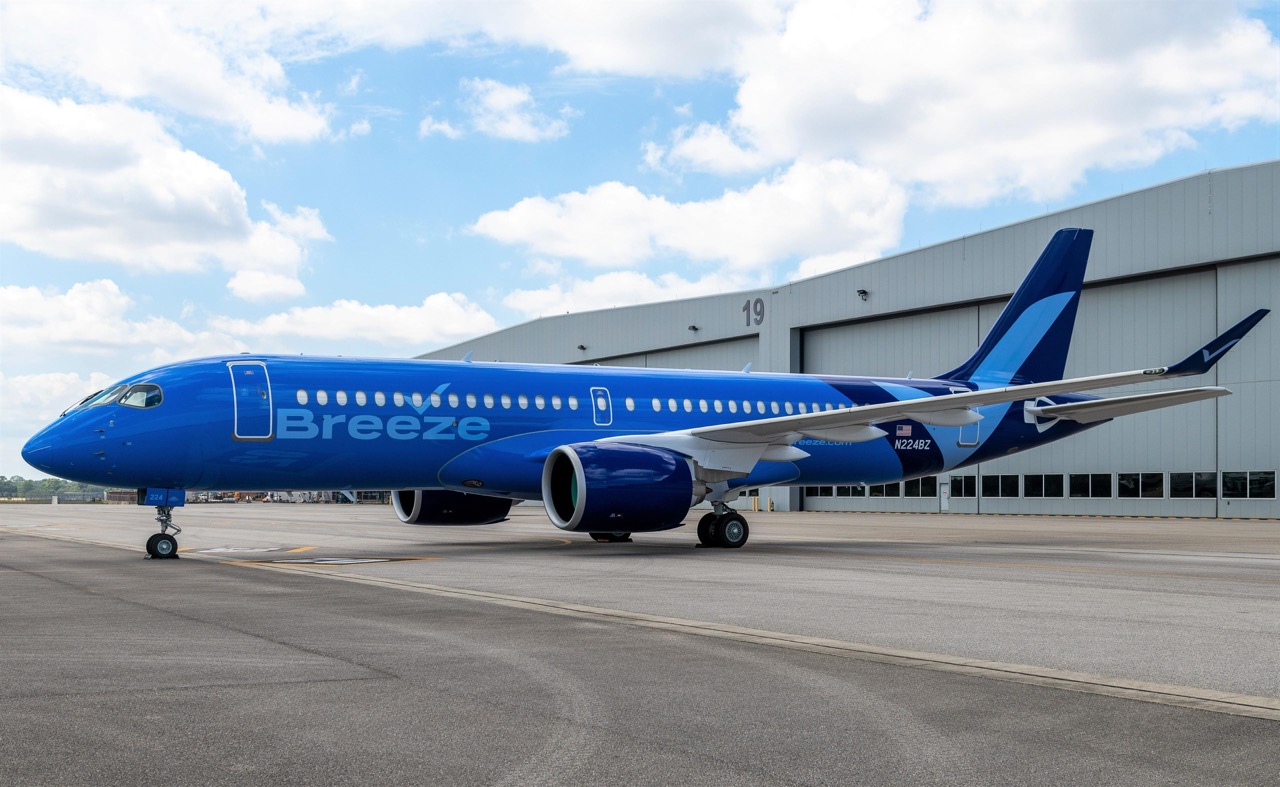
Breeze Airways has completed its transition to an all-Airbus A220-300 fleet, retiring the last Embraer E190 that helped launch the US carrier five years ago.
The airline operated its final E190 flight on 7 September, ending a gradual fleet transition that began when it received its first A220-300 in December 2021.
How Breeze completed its transition to an all-A220 fleet
Breeze launched commercial service in May 2021 with 10 E190s and three larger E195s. The Embraer aircraft operated more than 5,000 flights before the first A220 arrived.
“Our long-term strategy has always been to leverage the strengths and efficiencies of the Airbus A220-300 to help us cost-effectively scale our unique business model which centres around offering affordable, nonstop flights from unserved and underserved markets,” Breeze founder and CEO David Neeleman said in the airline’s announcement.
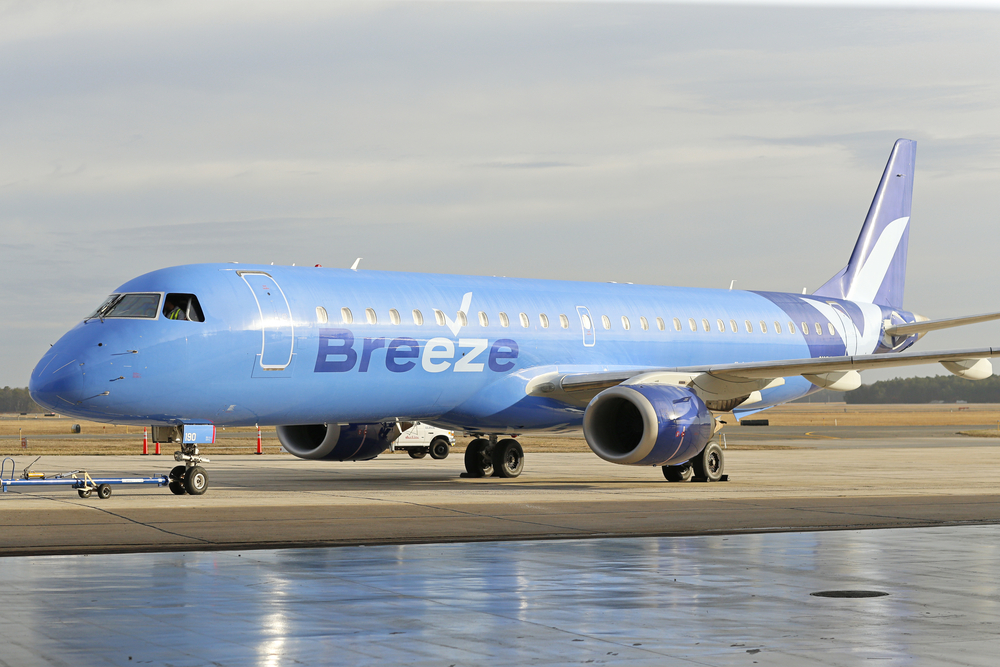
“That being said, the Embraer 190 literally got Breeze off the ground in 2021 and has served Breeze and our Guests well – and so – it is with a bit of nostalgia and a lot of gratitude that we bid farewell to our final Ejet.”
The retirement leaves Breeze operating a single-aircraft family as its network expands across smaller and underserved US markets and into international leisure destinations.
Breeze has taken delivery of 55 aircraft from its firm order for 90 A220-300s. It also holds options for another 30. The airline also operates leased A220 aircraft. Planespotters.net currently lists 64 A220-300s in the Breeze fleet.
Why Breeze has built its business around the A220
Moving to one aircraft type provides operational advantages. Training, maintenance, spare parts and crew scheduling become simpler when an airline no longer has to support two unrelated aircraft families.
But the A220’s importance to Breeze goes beyond fleet commonality.
The airline’s business model is built around flying nonstop routes that larger carriers often cannot economically justify. Breeze currently operates more than 300 year-round and seasonal routes serving 91 cities in the US, Caribbean, Central America and Mexico.

The economics of smaller next-generation narrowbody aircraft are particularly well suited to that strategy.
An April 2026 analysis by Visual Approach Analytics argues that airlines have traditionally focused heavily on reducing cost per seat, a strategy that has encouraged low-cost carriers to move towards increasingly large aircraft.
Larger aircraft spread their operating costs across more passengers, lowering the cost assigned to each available seat. That has contributed to the growth of aircraft such as the A321neo, which can accommodate around 240 passengers in a high-density configuration.
However, while larger aircraft may offer lower costs per seat, they still cost more to operate on each flight. Visual Approach describes this as the seat cost versus trip cost paradox. The lowest seat cost does not necessarily produce the best economics if an airline cannot consistently fill the additional seats. As aircraft grow larger, fewer markets can support them.
How the A220 can make thinner routes work
New-generation smaller narrowbodies such as the A220-300 and Embraer E195-E2 change that calculation.
Visual Approach’s analysis found that previous smaller derivatives of larger narrowbody families did not always generate enough trip-cost savings to compensate for their higher cost per seat.
For example, its modelling found that a 156-seat A319neo would have a 15% lower trip cost than a 240-seat A321neo but a 31% higher cost per seat.
The economics shift with aircraft designed around smaller capacities.
Visual Approach calculated that a 146-seat E195-E2 would have an 18% higher seat cost than the A321neo in its example, but a 28% lower total trip cost.
Airlines don’t need to make every seat inexpensive to operate. They need enough passengers and revenue to cover the cost of operating the entire flight.
Visual Approach estimates that, assuming $100 in revenue per passenger, including fares and ancillary revenue, its representative small narrowbody begins generating a profit with 106 passengers. The 240-seat A321neo requires 148 passengers under the same assumptions.
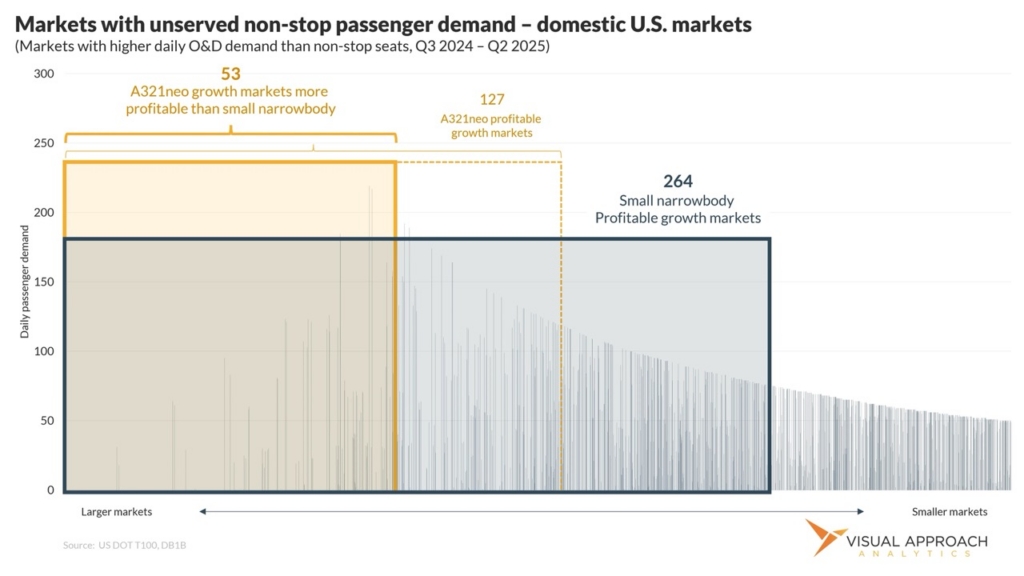
That potentially opens a much larger pool of routes. Its analysis identified 264 potential US growth markets where a small narrowbody could be the most efficient option, compared with 53 for a large narrowbody. Many of those smaller markets had no nonstop competition.
Visual Approach specifically identifies Breeze as an example of this strategy in practice, noting that the carrier has been opening new low-cost markets with the A220-300. At the same time, some larger US ultra-low-cost airlines have struggled to find enough growth opportunities for bigger narrowbodies, as shown by Spirit Airlines’ collapse this year.
How the A220 makes underserved routes viable
Breeze frequently connects secondary cities directly instead of funnelling passengers through large airline hubs. Around 85% of its routes have no direct competition.
Lower trip costs mean an airline needs fewer passengers to cover the cost of operating each flight. That could give Breeze more freedom to experiment with relatively thin city pairs where consistently filling an A321-sized aircraft would be harder.
It is a different approach to the traditional low-cost formula.
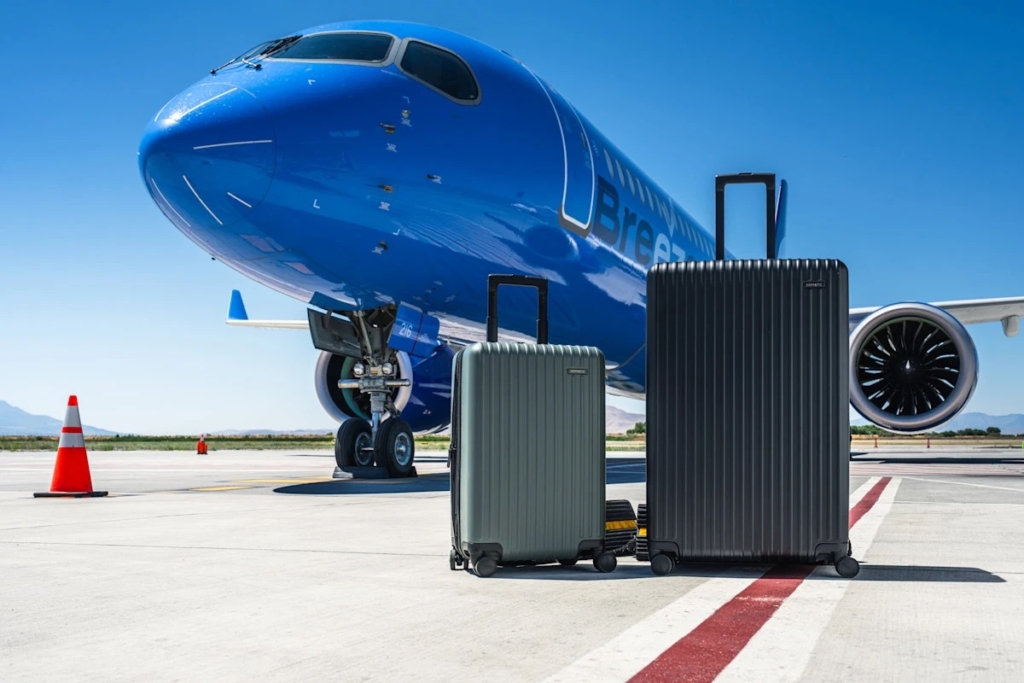
Large narrowbodies remain extremely efficient when airlines can fill them. Breeze is instead betting that hundreds of US city pairs offer a bigger advantage: operating fewer seats at a lower total trip cost.
That strategy also aligns with how Airbus has positioned the aircraft. The manufacturer says the A220 was purpose-built for the 100-150-seat market and offers up to 3,600 nautical miles of range. Airbus claims 25% lower fuel burn and CO2 emissions per seat than previous-generation aircraft.
A small aircraft with a premium opportunity
Breeze is also not treating the A220 as simply a high-density, low-cost aircraft.
Its current aircraft have 137 seats, including 12 Breeze Ascent premium seats offering 39 inches of pitch, according to Aviation Week. The cabin also includes Extra Legroom and standard economy seats.
That premium cabin is becoming another part of Breeze’s economics.

Neeleman said earlier this year that Breeze sells its 12th premium seat considerably faster than its 137th seat, according to Aviation Week. This suggests there may be room to devote more of the cabin to higher-paying passengers. As a result, the airline is considering adding more premium seats.
It gives Breeze another potential advantage in markets where filling a 200-plus-seat aircraft at sustainable fares could be difficult. Instead of relying exclusively on maximum seat density to lower unit costs, the airline can combine the A220’s relatively low trip cost with higher revenue from premium seating.
Breeze retires its final Embraer E190
The E190 played an important role in getting Breeze off the ground without waiting for its large A220 order to arrive.
Breeze ultimately operated both E190s and E195s. The final scheduled passenger operation took place on September 7, ending the Embraer era. Breeze did not identify the final E190 flight in its announcement.
Their departure leaves Breeze with a unique fleet strategy among US low-cost airlines. Rather than building its network around the larger Boeing 737 or Airbus A320 families, it has committed entirely to the smaller A220.
This strategy has proven successful in Europe with airBaltic, the world’s first all-A220 operator.
Visual Approach’s analysis suggests that choice could become increasingly important as US low-cost carriers search for new markets after decades of growth. The A321neo and other large narrowbodies are best suited to markets where airlines can fill them, and fewer such markets remain, while ample opportunities exist on thinner routes.
Breeze is finding routes where a lower cost per flight, rather than simply the lowest cost per seat, can make nonstop service viable. With the last E190 gone, Breeze is now betting its entire fleet on that proposition.


