Boeing settles $3.1 million FAA fine over widespread safety violations

4 min read
Boeing paid more than $3.1 million to the Federal Aviation Administration (FAA) earlier this year to settle penalties for widespread production and safety violations, including failures related to the Alaska Airlines 737 MAX 9 door-plug blowout.
The FAA first proposed the $3,139,319 civil penalty in September 2025. At the time, the regulator said it had used its “maximum statutory civil penalty authority consistent with law.”
However, neither the FAA nor Boeing publicly announced when the penalty was settled.
The FAA has now confirmed to Reuters that Boeing paid the full $3.139 million fine in January 2026. Boeing separately confirmed the payment to the news agency.
The violations occurred between September 2023 and February 2024, during a period of intense scrutiny of Boeing’s manufacturing and quality-control systems.
FAA investigation found hundreds of Boeing quality violations
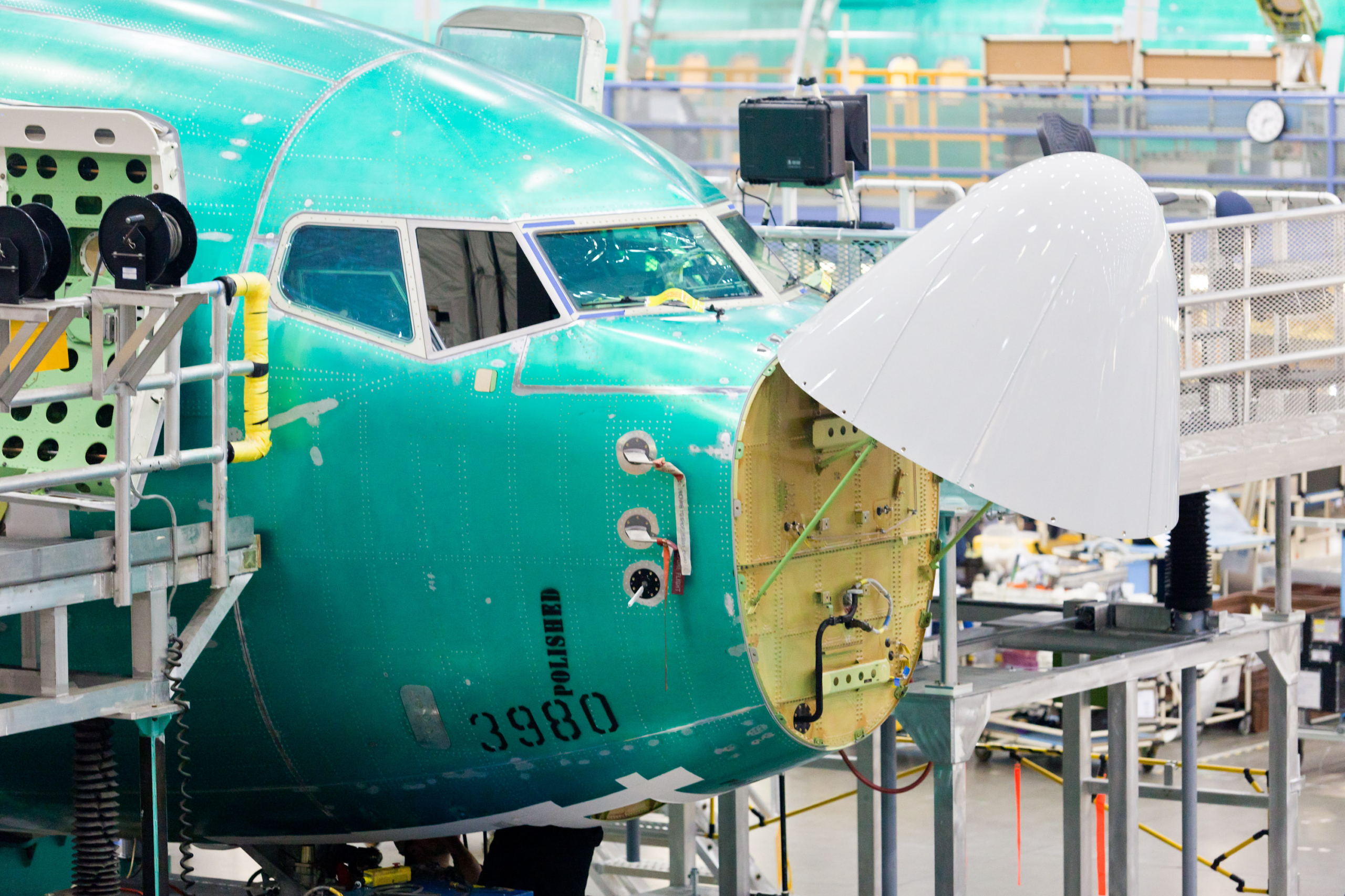
The FAA said its investigation identified “hundreds of quality system violations” at Boeing’s 737 production facility in Renton, Washington, and at the Wichita, Kansas, 737 fuselage factory, then operated by Spirit AeroSystems, originally a Boeing division sold in 2005. Boeing re-acquired Spirit AeroSystems in 2025.
The regulator also found that Boeing had submitted two aircraft to the FAA for airworthiness certificates despite not being airworthy.
The planemaker also failed to follow its own quality system, according to the FAA.

One of the regulator’s most serious findings concerned Boeing’s Organisation Designation Authorisation (ODA) system.
Under the ODA programme, the FAA authorises qualified employees within manufacturers such as Boeing to perform certain certification functions on the regulator’s behalf. Although employed by Boeing, ODA unit members are expected to exercise those delegated regulatory responsibilities independently.
The FAA found that a Boeing employee who was not part of the ODA unit pressured an ODA representative to approve a 737 MAX to help Boeing meet its delivery schedule.
The ODA representative had determined that the aircraft did not comply with applicable standards.
The finding raised questions over the independence of Boeing’s delegated safety representatives, who have been under scrutiny for years.
FAA penalty linked to Alaska Airlines Flight 1282 investigation
The $3.1 million penalty also covered violations associated with the January 5, 2024, accident involving Alaska Airlines Flight 1282.
A door plug separated from the Boeing 737 MAX 9 shortly after departure from Portland International Airport, causing rapid decompression and leaving a large opening in the side of the aircraft.
The aircraft returned safely to Portland, and there were no fatalities.

Investigators later determined that four bolts intended to prevent the door plug from moving upward were missing when Boeing delivered the aircraft.
The accident led the FAA to ground 171 Boeing 737 MAX 9 aircraft for inspections. It also prompted the regulator to increase its oversight of Boeing’s manufacturing operations.
The FAA initially capped Boeing’s 737 MAX production at 38 aircraft per month and increased its presence at Boeing and Spirit production facilities.
Was the maximum $3.1 million FAA penalty enough?
The FAA stated that it had imposed the maximum civil penalty available to it under applicable law. But the fine has still faced criticism, with some questioning whether it is meaningful for one of the world’s largest aerospace companies.
Senator Richard Blumenthal told Reuters, following the disclosure of the payment, that the amount was insufficient to deter unsafe behaviour.
“For Boeing, such fines are easily absorbed as the cost of doing business, not a meaningful deterrent to dangerous behaviour,” Blumenthal said.
The $3.1 million payment relates specifically to the FAA’s civil enforcement action covering the violations identified between September 2023 and February 2024.
Boeing has faced other financial and legal consequences following the two fatal 737 MAX accidents and subsequent production-quality problems, in addition to reputational damage which it has worked to reverse.
FAA restores Boeing certification authority after safety review
Boeing’s regulatory position has changed significantly since the violations occurred.
On July 17, 2026, the FAA announced that Boeing would again be permitted to issue airworthiness certificates for all newly manufactured 737 MAX and 787 aircraft.
The regulator said the decision followed eight months of data showing consistent production quality.
The FAA had stopped allowing Boeing to issue airworthiness certificates for 737 MAX aircraft in 2019 following the Lion Air and Ethiopian Airlines crashes. It removed the same responsibility for the 787 aircraft in 2022 due to production-quality concerns.
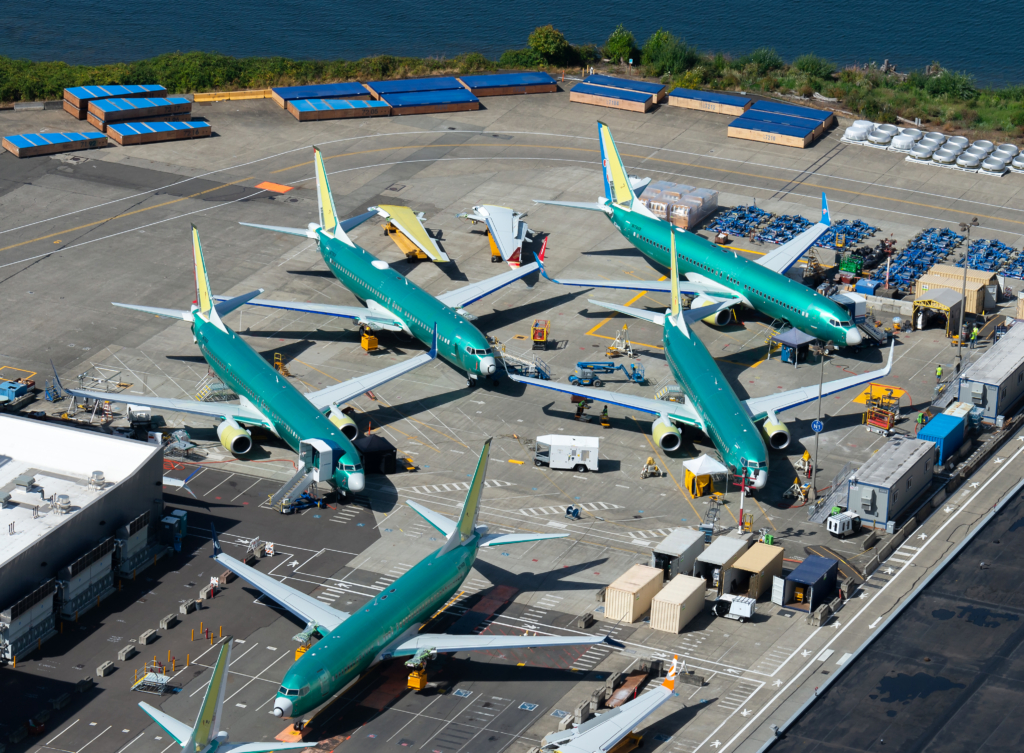
A partial return of the authority began in September 2025, when Boeing and the FAA alternated responsibility for issuing certificates.
According to the FAA, the regulator found comparable levels of production-quality findings regardless of whether Boeing or FAA personnel issued the certificates during that eight-month evaluation.
“Safety drives everything we do, and this step forward is only possible because we are confident it can be done safely,” FAA Administrator Bryan Bedford said when announcing the change.
The FAA stressed that returning certification authority did not mean the regulator was ending its heightened scrutiny of Boeing.
FAA inspectors will continue audits, inspections and monitoring of Boeing’s production system, including critical assembly work, quality trends, engineering compliance, the company’s Safety Management System and its safety culture.
The $3.1 million payment closes one enforcement action stemming from Boeing’s earlier production failures, though the manufacturer remains under enhanced federal oversight.