Australia deploys Boeing E-7A Wedgetail to UAE amid Iran conflict

March 11, 2026

The ongoing air campaign over Iran has engulfed the Gulf, leading some to call it the Third Gulf War. It is even drawing Australia and New Zealand, with the latter’s involvement largely restricted to repatriation flights.
Australia to dispatch E-7A Wedgetail
According to reporting by Australian Aviation yesterday, Australia’s Prime Minister, Anthony Albanese, has confirmed the country will deploy military support aircraft to the UAE in the Middle East. The aircraft will remain there for an initial period of four weeks.
Albanese said, “We are not protagonists; what we are doing is providing for the defence of the UAE and of Australian citizens.”
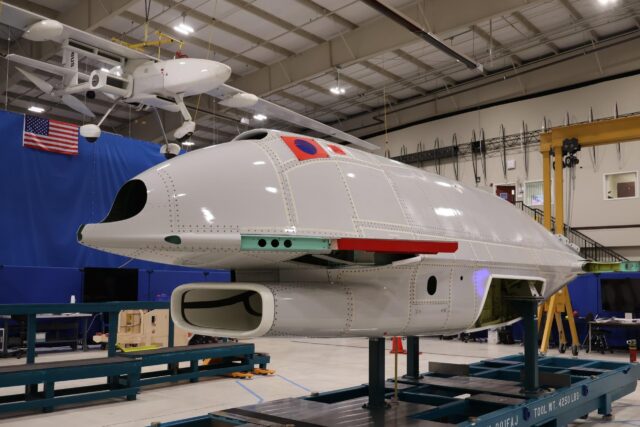
The E-7A Wedgetail would take part in combat operations, working to assist in the defence of Gulf states. The US has deployed many of its remaining rickety old E-3 Sentries to the Middle East, and the E-7 would likely play a complementary role.
The USAF had intended to purchase a fleet of Wedgetails to replace its Sentries, but it then decided to cancel the order, planning instead to eventually move capabilities into space.

The RAF has retired and sold its E-3 Sentries to Chile and is currently receiving its Wedgetails, but these are not yet in operational service. This means that of the three allies, Australia is the only country with next-generation E-7As in operation.
Australia has previously deployed a Wedgetail to assist in intelligence gathering around Ukraine. Australia has a fleet of six Wedgetails.
Get the latest aerospace defence news here on AGN.
Other Aussie assets sent to the region
Australia will be deploying 85 defence personnel, but “no ground troops.” It will also provide Advanced Medium Range Air-to-Air Missiles to the UAE, while affirming it has no intention of taking part in offensive operations against Iran.

Australia says these efforts are mostly to support Australians stuck in the region as well as Emirati allies. Around 20,000 Aussies are based in the UAE.
Australia already dispatched a C-17A Globemaster and a KC-30A aerial tanker (A330 MRTT) to the region for repatriation efforts last week.
Australia has taken part in other US-led campaigns in the region in the past, including the 2003 Invasion of Iraq and the 2016 bombing of ISIS.
Director of Strategic Analysis Australia, Michael Shoebridge, told SBS News, “The Australian military cupboard when it comes to air and missile defence and counter drone defence is pretty bare.”
Other assets Australia could potentially offer would include its F-35As as well as its new Hobart-class air warfare destroyers, noting its Anzac-class frigates are getting old.
New Zealand’s repatriation flights
While Australia has a limited number of high-end assets useful in the current conflict (e.g., E-7A Wedgetails, F-35As, and Hobart-class destroyers), New Zealand essentially has nothing.
New Zealand operates two ageing Anzac-class frigates, while its most capable air asset is its new fleet of four P-8 Poseidon maritime patrol aircraft.
Yesterday, the Royal New Zealand Air Force announced it will deploy one of these aircraft to Guam to take part in the upcoming Exercise Sea Dragon that will also see the participation of the US, Australia, Japan, and India.
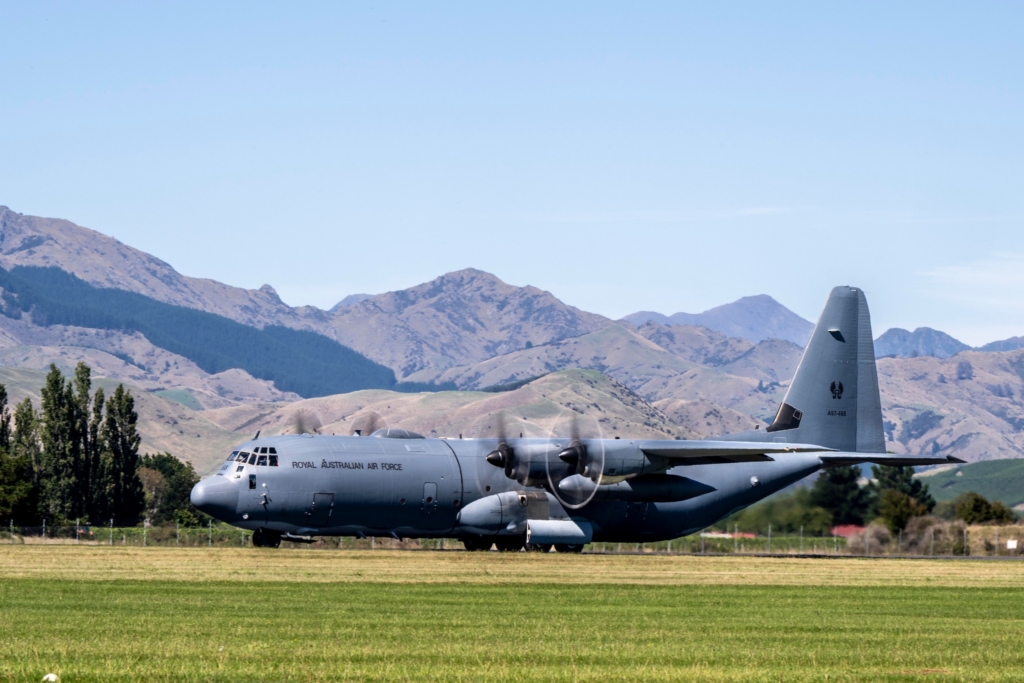
The only New Zealand military deployment to the Middle East in the wake of the current war appears to have been the dispatch of C-130J-30 Super Hercules for repatriation flights.
On the 7th of March, the RNZAF posted, “One of our C-130J Hercules aircraft has taken off from Base Auckland bound for the Middle East region, to be ready to conduct civilian evacuation flights if required, and if conditions in the area make them possible.”
It added a second Super Hercules already overseas (in Korea) and was on its way to the region. New Zealand recently took delivery of its new fleet of five C-130J-30s to replace its legacy Hercules transports.
Featured Image: RAAF