Why Airbus is testing extra-long wings on an A321neo

3 min read
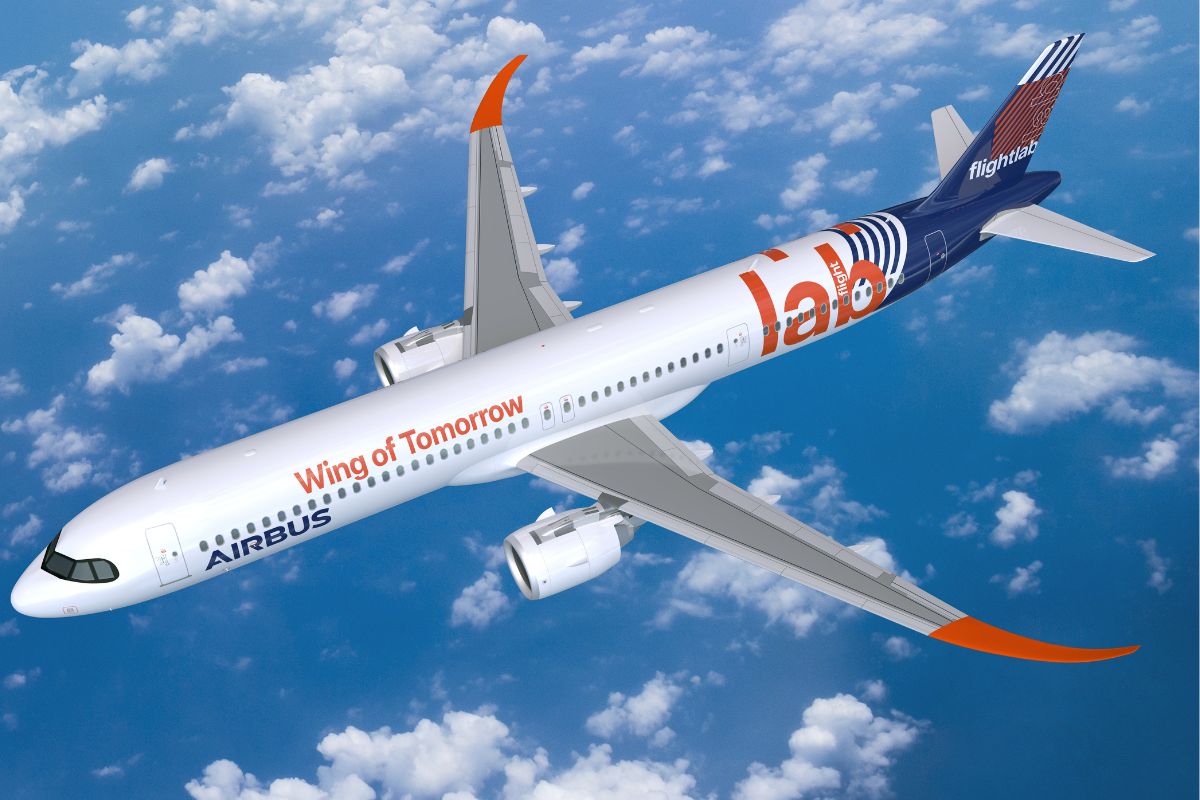
An A321neo is about to get a much bigger wingspan…
Over the next three years, Airbus will fit the aircraft with a series of full-scale wing extensions, each several metres long, and test them in real flight conditions.
The campaign was announced at Farnborough International Airshow in July as the next phase of Wing of Tomorrow, one of Airbus’ biggest research and technology programmes.
While the extensions won’t actually fold, they’ll recreate a future folding wing in its fully extended position. This will allow Airbus to see how different high-span wing designs behave on a full-size single-aisle aircraft.
The findings could help shape the wing design of the aircraft that eventually replaces today’s A320neo family.

Why does Airbus want longer wings?
Longer, thinner wings can make an aircraft more efficient.
A greater wingspan can reduce aerodynamic drag, while lightweight composite materials can help keep weight down. That could mean lower fuel burn, or lower energy use on future aircraft.
Sue Partridge, Airbus Head of Wing of Tomorrow programme, said: “The wing is one of the biggest levers we have to improve flight efficiency, which is why the Wing of Tomorrow is so critical for our next generation single aisle aircraft.
“This flight-test campaign will allow us to safely challenge traditional design limits and explore the benefits of longer wings.”
What is Airbus putting on the A321neo?
Airbus is designing, building and flying a series of full-scale wing extensions representing the outer section of a folding wing once it is fully extended.
Each will be several metres long and fitted with test equipment to measure how it behaves in the air and what the increased span does to the aircraft’s handling.
Before that happens, Airbus is using digital modelling and wind-tunnel testing to finalise the designs.
The A321neo then gives engineers the chance to see what happens away from simulations and ground testing, on a full-size aircraft in real flight.
When could the folding wings appear on an Airbus?
The flight-test campaign is due to run for three years, potentially taking testing into 2029. But that doesn’t mean Airbus has already decided its next aircraft will have folding wings.
Wing of Tomorrow is being used to test different technologies before Airbus settles on the final design of its next-generation single-aisle aircraft.
The company is looking at longer, lighter and more slender wings, as well as new ways of building them at the production rates needed for a future narrowbody programme.
Another wing project is running alongside it.
Airbus UpNext’s eXtra Performance WING demonstrator is looking at a wing that can change shape during flight to improve aerodynamic efficiency. Its first remotely piloted flight is planned by the end of this year.
Both programmes are intended to feed into Airbus’ next generation of single-aisle aircraft.
Sue Partridge added: “For more than 50 years, Airbus has spearheaded aviation innovation, continually pushing the boundaries of what’s possible to deliver more efficient aircraft for future generations. This is why the Wing of Tomorrow programme is such an exciting and rewarding journey to be on.”