


NASA deploys P-3 Orion, Gulfstream III and King Air to monitor Iowa lead azide detonation

7 min read

NASA deployed three of its airborne research aircraft to Iowa this week to collect atmospheric and environmental data as the US Army carried out the controlled detonation of nearly 4.5 metric tonnes of unstable explosive material at the Iowa Army Ammunition Plant in Middletown.
A Lockheed P-3 Orion and a Gulfstream III from NASA’s Langley Research Center in Virginia were joined by a Beechcraft King Air B200 contracted by the agency’s Ames Research Center in California.
NASA also drew on observations from its space-based Tropospheric Emissions: Monitoring of Pollution (TEMPO) instrument as part of a coordinated federal response to the operation on 25 November.
The US Army had identified approximately 4,400kg of degraded lead azide that had become unstable during storage. The disposal operation raised concerns about the potential release of airborne lead particles.
A US Army spokesman said: “Today’s successfully controlled detonation exceeded expectations. Credit goes to our EOD professionals and the Soldiers on the ground today, with every indication showing the munitions used substantially reduced the lead azide threat and safely addressed the hazard. “
They added there was a reading of 0.0 lead detected on the ground after the detonation, explaining: “Immediate overhead coverage after the operation confirmed that everything targeted for removal was cleared, with no secondary explosions, no kickout, and no infrastructure damage on or around the installation.”
However, the US Environmental Protection Agency (EPA) said its air monitoring equipment had detected no airborne lead before, during or immediately after the detonation.
“All EPA air monitors continue to report a ZERO DETECT of airborne lead, which has remained consistent before, during, and after this morning’s controlled detonation at the Iowa Army Ammunition Plant,” the agency said.

Around 300 EPA personnel were involved in collecting air, soil and water samples across the region. More than 1,200 samples had been collected before the detonation, with further samples being sent to laboratories for analysis.
NASA said it had “rapidly mobilized specialized research aircraft, space-based observation capabilities, and scientific personnel” to support the operation.
The deployment brought together three very different aircraft types, ranging from a 60-year-old former naval patrol aircraft to a converted business jet and a twin-engine general aviation turboprop.
All three types have been used extensively in airborne scientific research.
NASA’s 60-year-old P-3 Orion flying laboratory
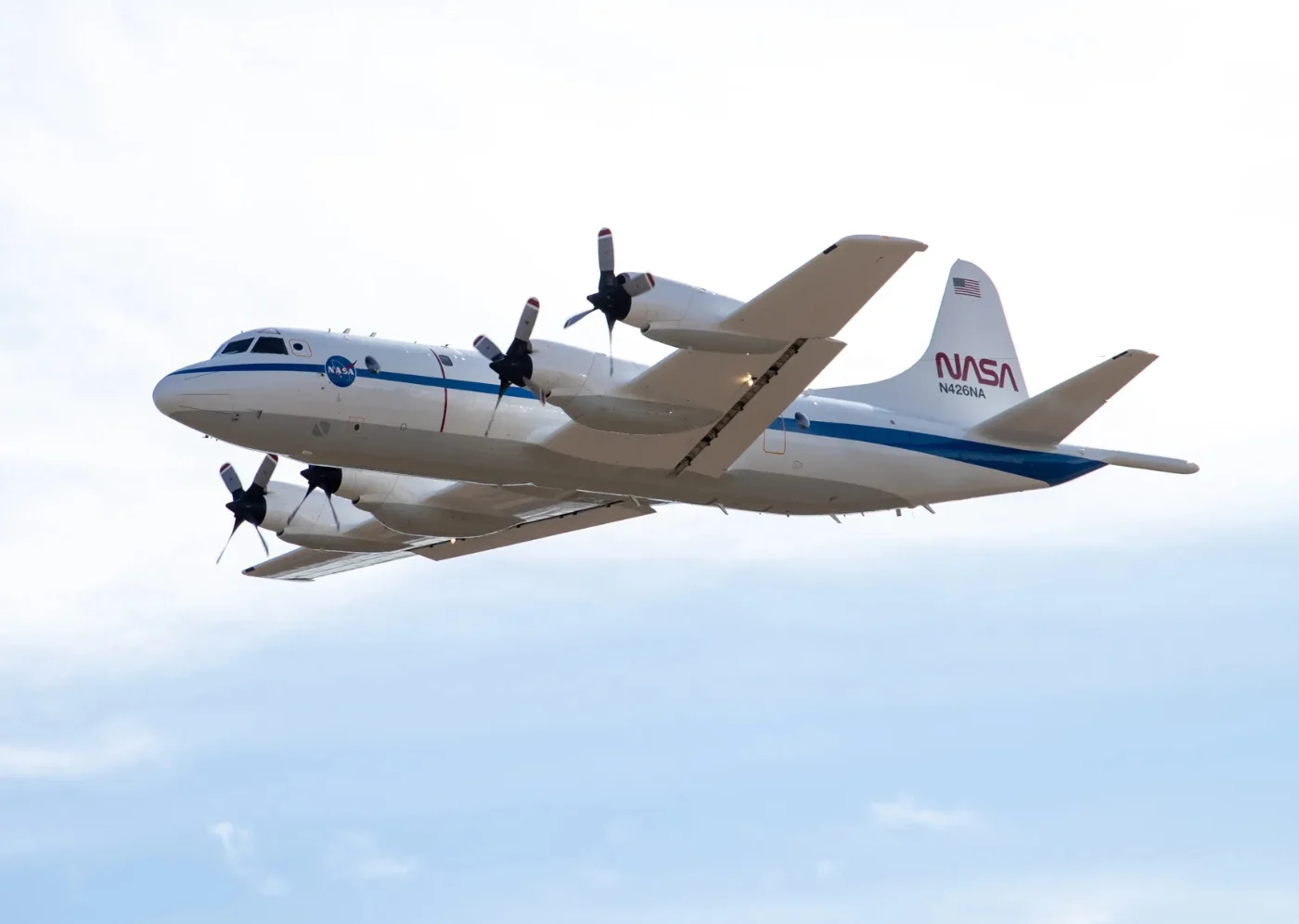
The largest of the three aircraft deployed to Iowa is a former US Navy P-3 Orion built in 1966. Registered N426NA and designated NASA 426, the aircraft entered the agency’s airborne science programme in 1991.
Developed from the Lockheed L-188 Electra commercial airliner, the four-engine turboprop was designed for maritime patrol and anti-submarine warfare. Its long endurance and ability to operate at relatively low altitudes also made it suitable for atmospheric research.
NASA has used the aircraft to study weather systems, atmospheric chemistry, oceans, glaciers and polar ice. It also serves as a test platform for instruments being developed for future satellite missions.
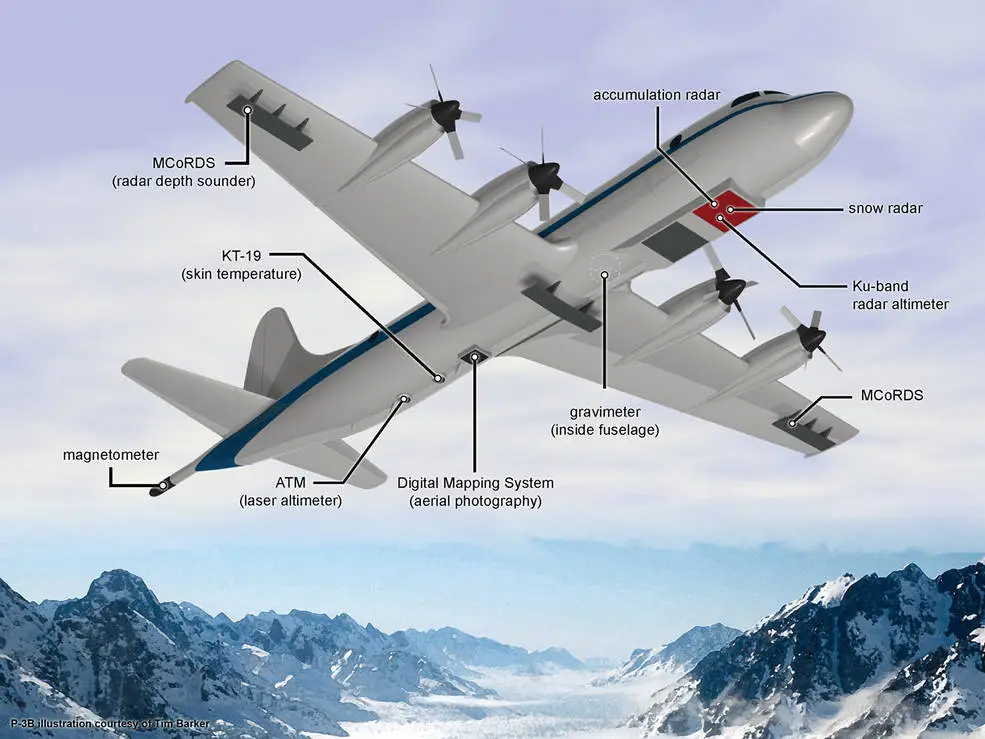
The Orion has undergone extensive modifications since leaving military service. Openings have been incorporated into the upper and lower fuselage, allowing scientific instruments to make upward and downward-looking observations.
Seven cabin windows have been adapted to accommodate externally mounted experiments, while additional equipment can be fitted to the nose, tail and 10 mounting points on the wings.
Even the aircraft’s former weapons bay has found a new purpose. It can accommodate large scientific sensors and antennas or be configured to release atmospheric measuring devices known as dropsondes.
These instruments collect information on temperature, humidity, atmospheric pressure and wind as they descend.
The P-3 can remain airborne for up to 12 hours, depending on its payload and weather conditions. It has a range of 3,800 nautical miles (7,038km), a useful payload of approximately 8,165kg and can accommodate up to 24 people, including its flight crew.
Despite its age, the aircraft has modern avionics and satellite communications equipment. Scientists can access meteorological information and aircraft position data during flight, while the communications network allows them to exchange information with other aircraft and ground teams.
Gulfstream III: From military transport to atmospheric research
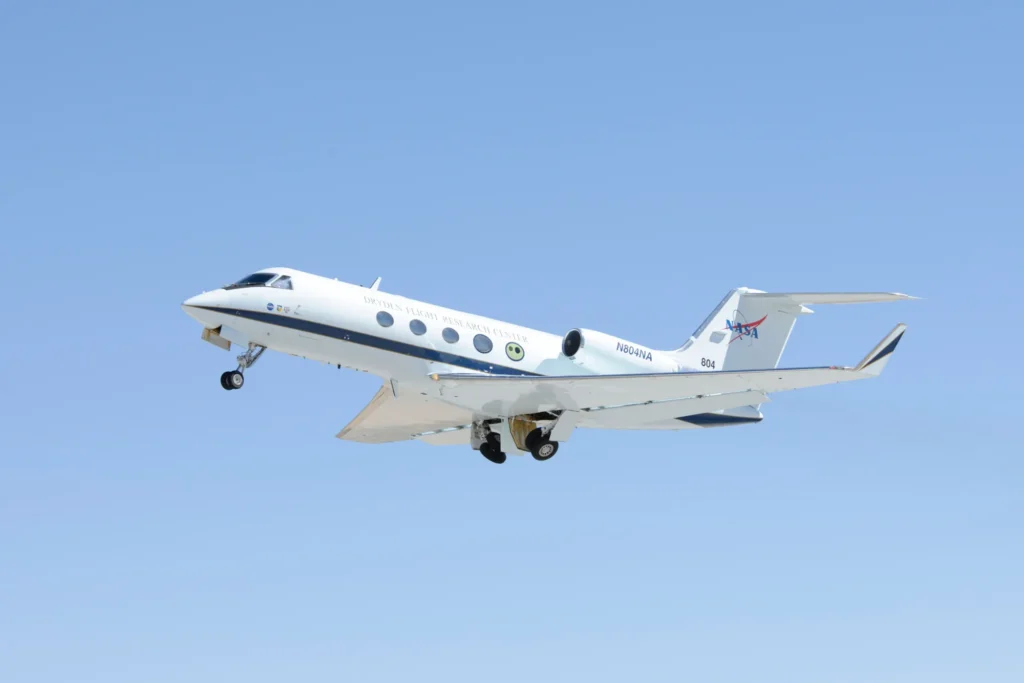
NASA’s Gulfstream III also began its operational life as a military aircraft. In September 2017, NASA received authorisation to acquire three surplus C-20B Gulfstream III aircraft from the US Air Force. Two were allocated to support the agency’s spare parts requirements, while the third was assigned to scientific research.
The research aircraft, registered N520NA and designated NASA 520, arrived at Langley in December 2017, replacing the agency’s Dassault HU-25A Guardian.
The twin-engine business jet can accommodate a range of instruments designed to examine atmospheric composition and measure the distribution of airborne particles.
Among the instruments compatible with the Gulfstream III is NASA’s High-Altitude Lidar Observatory (HALO), which uses laser pulses to obtain information about water vapour, methane, clouds and aerosols beneath the aircraft.
Another instrument, the second-generation High Spectral Resolution Lidar (HSRL-2), allows scientists to examine the distribution and optical properties of airborne particles and clouds.
Unlike instruments that require an aircraft to fly directly through the air being sampled, lidar can make measurements remotely. Scientists can use the returning laser signals to establish how particles are distributed at different altitudes.
The Gulfstream III can also accommodate instruments that analyse the chemical composition of aerosols and measure individual soot particles.
NASA has not disclosed the precise combination of scientific instruments carried aboard the aircraft during the Iowa deployment.
Beechcraft King Air B200: A versatile research aircraft
The smallest aircraft involved in the operation was a Beechcraft King Air B200 operating under contract to NASA’s Ames Research Center.
The King Air 200 family dates back to the early 1970s, with the prototype making its first flight in October 1972. The B200 subsequently introduced more powerful engines and improved performance.
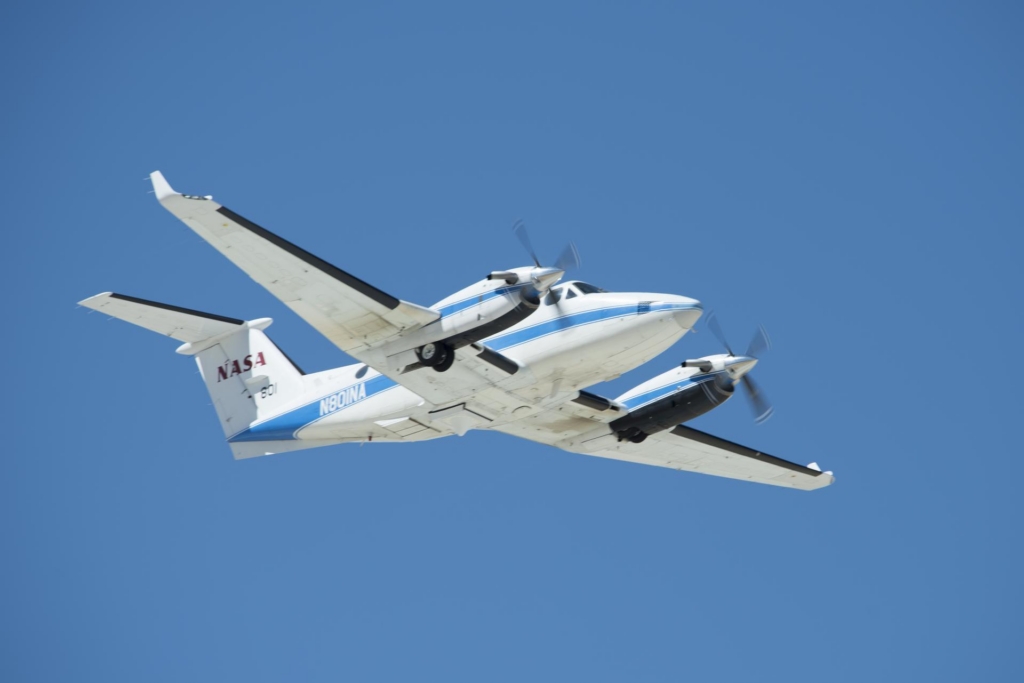
Widely used for business aviation, cargo transport and medical evacuation, the aircraft family also serves with the US military as the C-12 Huron utility transport.
NASA has been using B200 aircraft since the early 1980s, adapting them for a variety of aeronautical and environmental research programmes.
Its own modified King Air aircraft feature openings in the cabin floor through which cameras, radar equipment and laser-based instruments can make observations of the atmosphere, land or water below.
NASA’s Langley-based B200, for example, has additional mounting points beneath its wingtips for instruments that sample airborne particles.
A separate B200 operated by NASA’s Armstrong Flight Research Center has supported research into ocean circulation, soil moisture, snow cover and airflow over aircraft wings.
The relatively small size of the King Air makes it a practical choice for research missions that do not require the payload capacity or endurance of larger aircraft.
NASA has not identified the registration or detailed scientific configuration of the contracted B200 deployed to Iowa.
Monitoring air pollution from space
Complementing the three aircraft was NASA’s TEMPO instrument, which observes atmospheric pollution across North America from geostationary orbit.
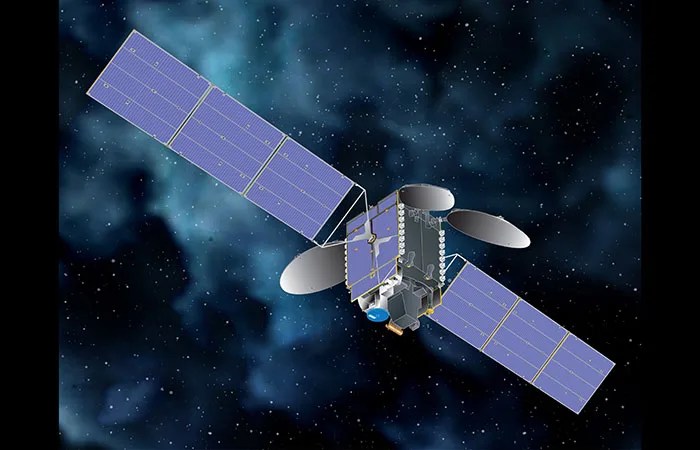
Its measurements from geostationary orbit of ozone, aerosols, and clouds can create a dataset that provides understanding and improve prediction of air quality and physical risks on climate.
Unlike Earth observation satellites that pass over a particular location periodically, TEMPO can repeatedly observe the same geographical region throughout daylight hours.
Its measurements include nitrogen dioxide, ozone and formaldehyde, providing scientists with information about changes in atmospheric pollution.
Airborne instruments can supplement these observations by examining atmospheric conditions in greater detail over a specific area.
NASA has yet to release the scientific findings from its Iowa flights or specify the individual assignments undertaken by the three aircraft.
Jared Isaacman defends NASA’s involvement
NASA’s deployment also prompted an unusual exchange between the agency’s administrator, Jared Isaacman, and former US Congresswoman Marjorie Taylor Greene.
Greene questioned NASA’s involvement on social media, compared the planned detonation to the Chernobyl nuclear disaster and disputed the Apollo Moon landings.
Isaacman dismissed the comparison, pointing out that the Iowa operation involved the controlled disposal of ageing explosive material rather than a nuclear reactor accident.
“In challenging circumstances such as this, you want the nation’s best on the field,” Isaacman wrote. “That is precisely why you call on NASA, putting our airborne and space-based sensors and some of the brightest scientific minds in the country to work.”
He also responded to Greene’s remarks about the Apollo programme.
“And we did go to the Moon,” Isaacman wrote. “It is disheartening that this needs to be explained to a former member of Congress.”
Sign up for our newsletter and get our latest content in your inbox.



More from

November 26, 20262 min read