Germany’s AeroForce X surveillance drone completes maiden flight, moves closer to unmanned trials

6 min read
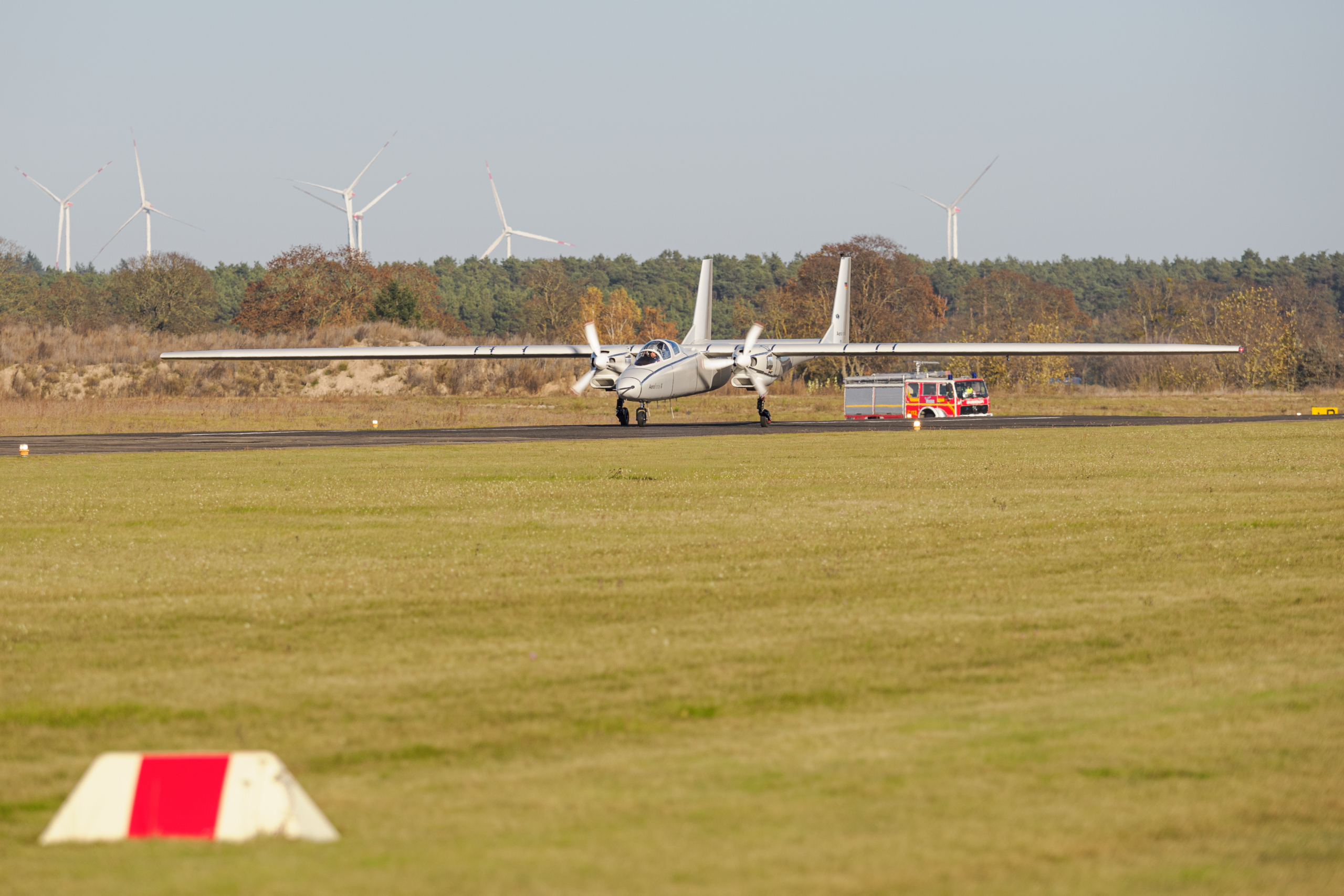
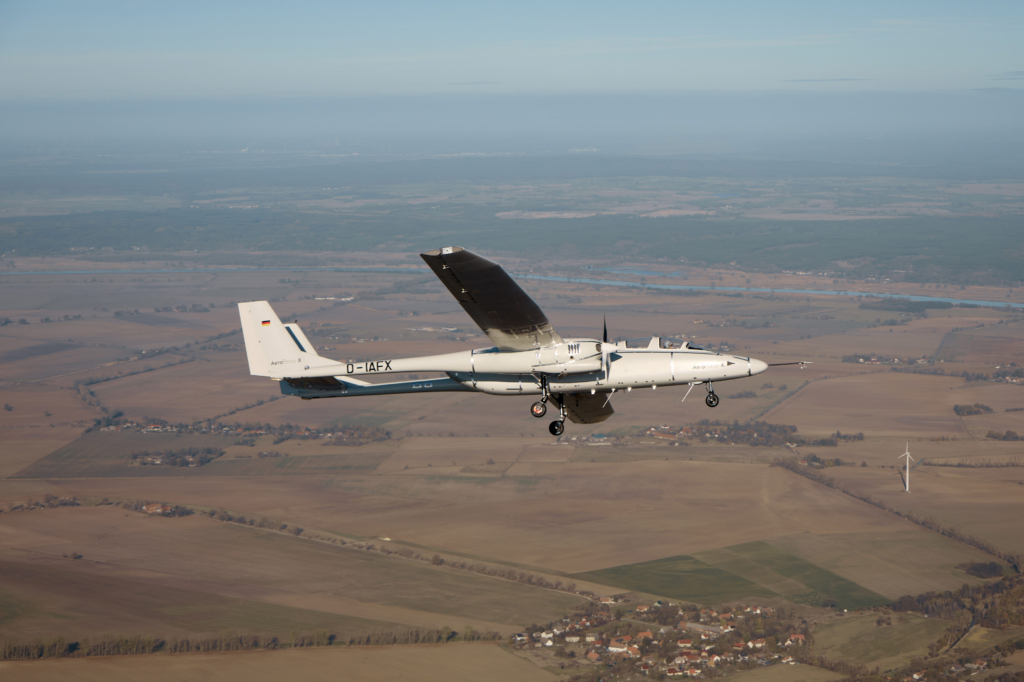
Germany’s AeroForce X long-endurance surveillance aircraft has completed its maiden flight, marking a major step towards developing a European-built unmanned platform capable of remaining airborne for up to 40 hours while carrying heavy reconnaissance payloads.
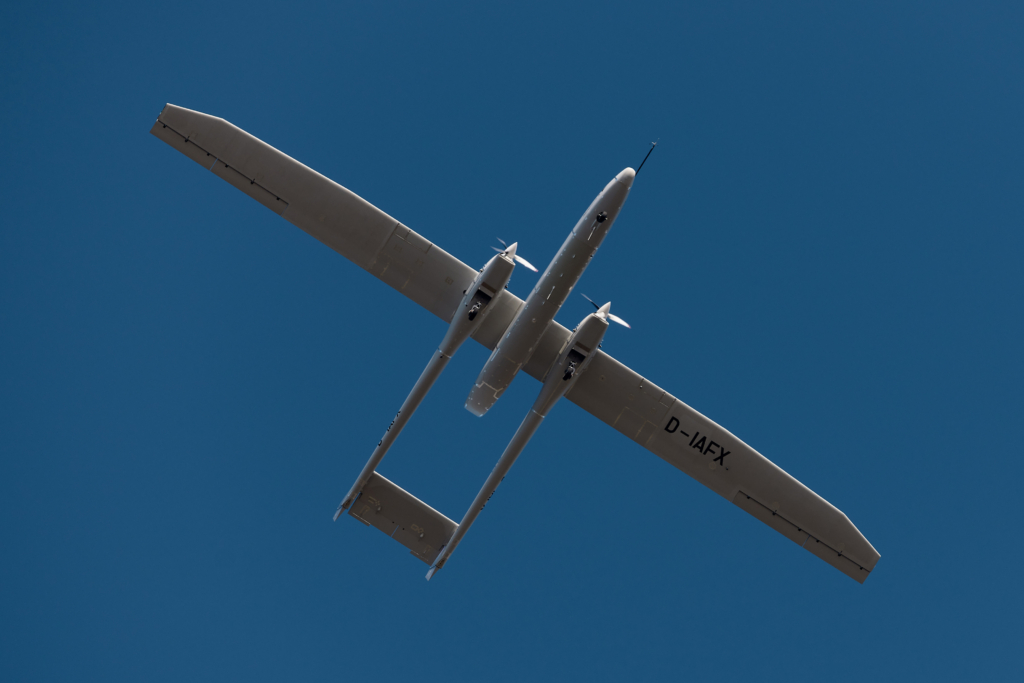
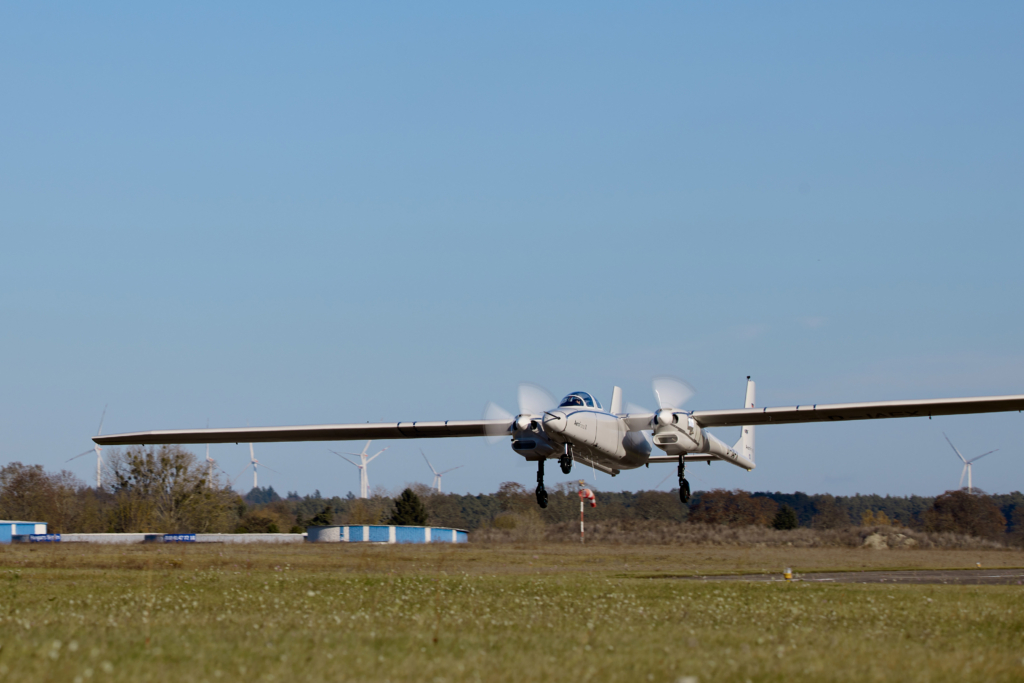
Developer Aerodata AG said the prototype flew successfully from Strausberg Airport in Brandenburg on 14 November, with engineers completing all the objectives set for the initial flight.
The flight comes five months after Aerodata announced the completion of the prototype and follows an agreement with India’s Dynauton Systems to explore adapting the aircraft for surveillance missions in the Himalayas and the Indian Ocean Region.
Although designed as an unmanned aircraft, AeroForce X is initially undergoing crewed flight trials. Aerodata plans to expand testing before attempting its first unmanned flight, when the aircraft will operate under its own flight-control systems.
The company said the maiden flight focused on assessing the aircraft’s controllability, stability and key onboard systems. All requirements specified for the flight were met, although Aerodata did not disclose its duration, altitude or other performance figures.
The successful test moves the programme beyond ground-based development and systems integration into a flight campaign that will determine whether the aircraft can meet its intended operational requirements.
AeroForce X begins flight testing ahead of unmanned operations
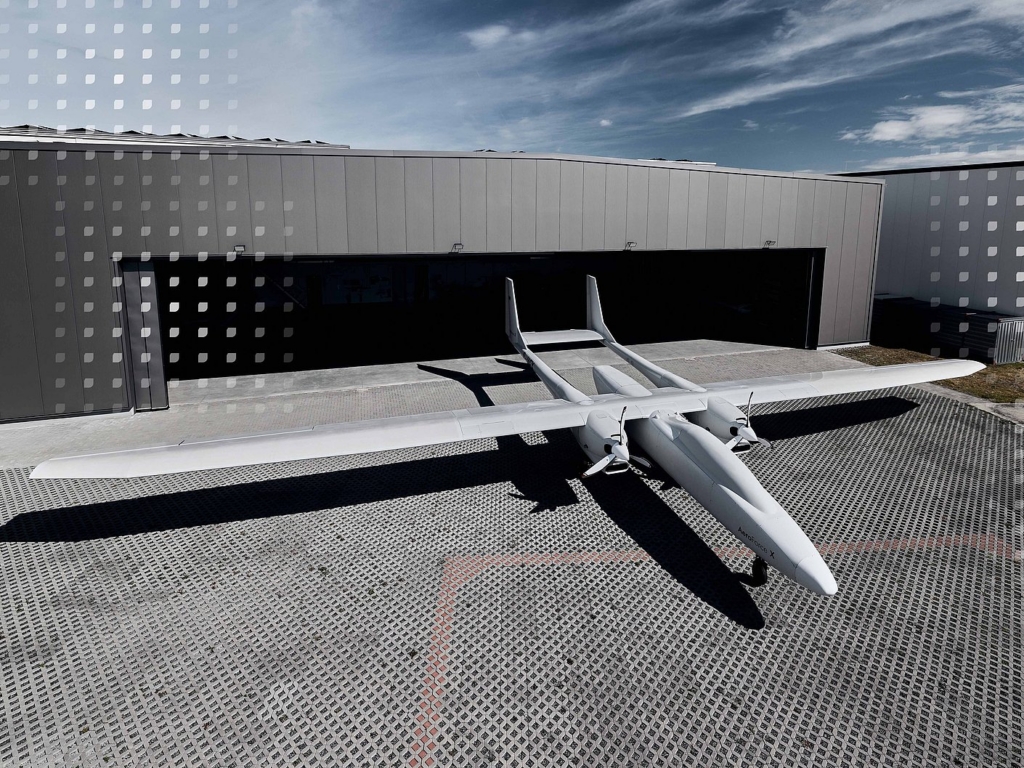
Aerodata is developing AeroForce X as a medium-altitude long-endurance (MALE) unmanned aerial system for intelligence, surveillance and reconnaissance (ISR) missions.
The aircraft is intended to carry sophisticated sensors and other mission equipment over long distances, allowing military and security operators to monitor large areas without repeatedly deploying replacement aircraft.
Its planned endurance of up to 40 hours and payload capacity of 1,300kg would allow it to undertake extended maritime patrols, border surveillance and electronic reconnaissance missions.
Those figures remain design targets rather than demonstrated capabilities. The maiden flight was intended to establish the aircraft’s basic flying characteristics, not validate its full operational performance.
“The successful maiden flight is a significant endorsement of the dedicated development work carried out by the entire project team,” said Ole Vorsmann, General Manager Unmanned Systems at Aerodata.
“The fact that we were able to meet all the requirements defined for this flight is a major achievement and an important step towards the AeroForce X being ready for operational deployment.”
Aerodata said further crewed flights are planned as engineers progressively expand the aircraft’s flight envelope and test its systems.
The next stages will also include testing the autopilot, a critical requirement before the aircraft can operate without a pilot onboard.
The first unmanned flight will follow the successful completion of those tests. The company has not announced a date.
Aerodata makes first flight of its own aircraft platform
The maiden flight is particularly important for Aerodata, which has spent more than four decades developing and integrating specialised aviation and airborne reconnaissance systems.
The German company has traditionally concentrated on equipping aircraft with surveillance equipment and mission systems rather than developing complete aircraft platforms.
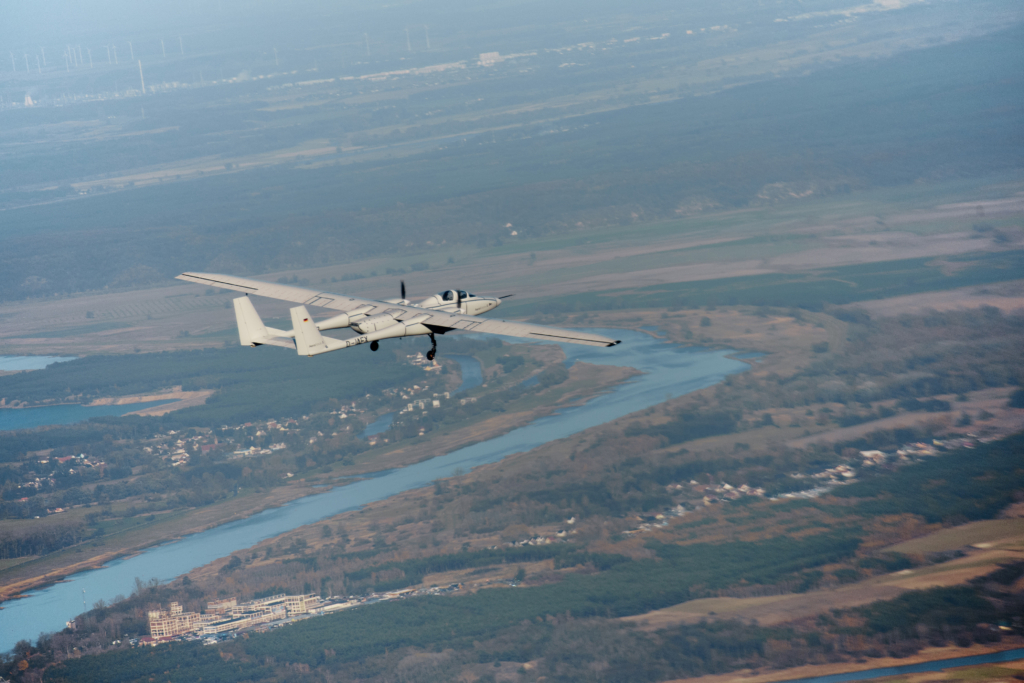
AeroForce X represents a move into designing and testing an aircraft of its own.
“Aerodata has been developing highly specialised aviation and reconnaissance solutions for more than 40 years. Now, for the first time in the company’s history, we have flown our own aircraft platform,” said Neset Tukenmez, Chief Executive of Aerodata AG.
“AeroForce X exemplifies our commitment to transforming innovative technologies into high-performance solutions for modern armed forces.”
Tukenmez described the programme as Germany’s first MALE unmanned aerial system development and linked it to Europe’s efforts to build greater technological independence in defence aviation.
“By developing Germany’s first MALE UAS, we are strengthening Aerodata’s position in the field of unmanned aerial systems and contributing to Europe’s technological sovereignty,” he said.
Aerodata has also emphasised the aircraft’s modular design, which is intended to accommodate different surveillance sensors and mission equipment depending on customer requirements.
The company has previously described AeroForce X as an ITAR-free platform, meaning its architecture is intended to avoid dependence on equipment controlled under US International Traffic in Arms Regulations.
That could provide greater flexibility when offering the aircraft to international customers, although export approvals under applicable European and national regulations would still be required.
India partnership could open new opportunities for AeroForce X
The flight also marks progress for a programme that already has an international development partnership.
As previously reported by Aerospace Global News, Aerodata signed a memorandum of understanding with Dynauton Systems, part of India’s Dynamatic Technologies, in April 2026 to explore jointly developing AeroForce X for Indian surveillance requirements.
The agreement focuses on two very different operating environments: the Himalayan region and the Indian Ocean.
Surveillance over the Himalayas requires aircraft capable of operating in demanding mountainous conditions, while maritime reconnaissance involves monitoring large stretches of ocean, shipping routes and strategically important infrastructure.
Both missions place considerable emphasis on endurance and the ability to carry multiple sensors.
The companies intend to evaluate how AeroForce X could be adapted to meet these requirements, combining Aerodata’s surveillance-system expertise with Dynauton’s engineering and manufacturing capabilities.
At the time of the agreement, Tukenmez said the collaboration would provide a basis for developing the aircraft specifically for ISR missions in the Himalayas and Indian Ocean Region.
Udayant Malhoutra, Chief Executive of Dynamatic Technologies, also described the partnership as an opportunity to build on an existing aircraft design rather than begin an entirely new development programme.
The agreement, however, remains a framework for cooperation. Neither company has announced an Indian procurement contract or a production commitment.
The successful maiden flight gives the partners a flying prototype to evaluate as they consider the aircraft’s suitability for India’s requirements.
AeroForce X enters a competitive long-endurance drone market
AeroForce X is being developed at a time when European countries are seeking greater control over their military surveillance capabilities.
MALE aircraft are designed to operate at medium altitudes for extended periods, carrying electro-optical sensors, radar and other intelligence-gathering equipment.
Their ability to remain airborne for many hours makes them particularly useful for maritime surveillance, border monitoring and missions where maintaining continuous coverage is more important than speed.
The market already includes established aircraft such as the US-built General Atomics MQ-9 Reaper and Turkiye’s Bayraktar Akıncı, while Europe’s multinational Eurodrone programme is developing another MALE-class system.
Aerodata is seeking to distinguish AeroForce X through its combination of endurance, payload capacity, modular mission systems and European development.
The company has identified continuous surveillance of critical maritime infrastructure as one of the aircraft’s potential applications.
Such missions could involve monitoring offshore installations, pipelines, shipping corridors and other infrastructure where sustained aerial observation is required.
The aircraft’s proposed ability to carry substantial mission payloads could also allow operators to combine different surveillance capabilities on a single platform, depending on the configuration.
Aerodata has not provided a timetable for certification, production or operational entry into service.