


US Air Force deploys first F-15EX Eagle II fighters to Japan

3 min read
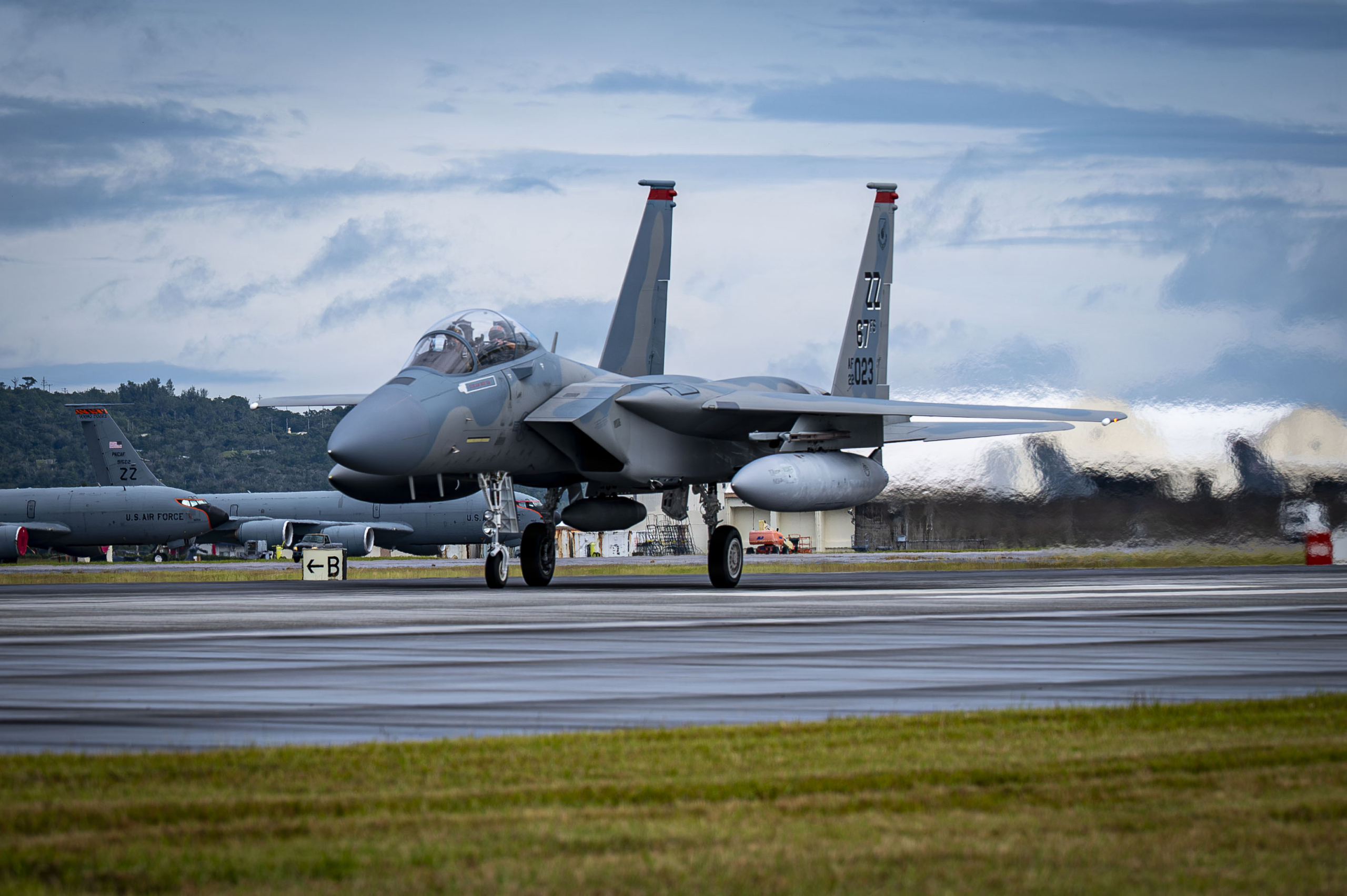
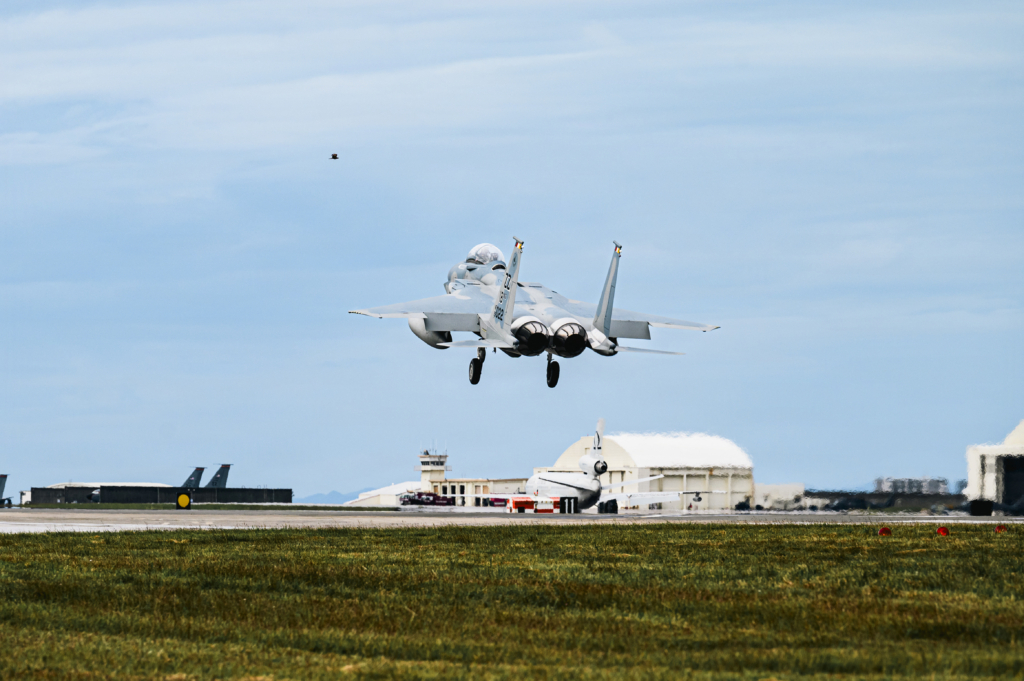
In a landmark development for US Air Force posture in Japan, the first two permanently assigned USAF Boeing F-15EX Eagle IIs arrived at the major Kadena Air Base yesterday.
The decision to replace the F-15C/Ds at Kadena was originally announced in 2024. Under the plan, the base’s fleet of 48 F-15C/Ds is to be replaced with 36 F-15EXs. The last of these is expected to arrive in 2028.
USAF’s Kadena AFB welcomes first F-15EX Eagle IIs
The USAF posted, “The Eagle II has landed. Kadena Air Base welcomes its first permanently assigned F-15EX aircraft, advancing our capabilities in the Pacific region.”
The Air Force stated the arrival makes a major “milestone in the 18th Wing’s fighter modernization and the continued strengthening of U.S. airpower in the Pacific region.”
The Eagle II has landed. 🦅🦅 Kadena Air Base welcomes its first permanently assigned F-15EX aircraft, advancing our capabilities in the Pacific region. Learn more: https://t.co/m2BbgCJXF5 https://t.co/qbPgDKLh4K
— U.S. Air Force (@usairforce) November 15, 2026
Brig. Gen. John Gallemore, 18th Wing commander, said the F-15EX in Kadena strengthens the US ability to “deter aggression” in the region and was a response to “emerging threats.” He also noted it reinforced the US’s commitment to its alliance with Japan.
The 18th Wing’s 44th and 67th Fighter Squadrons are both set to transition to the F-15EX at Kadena.
Importance of Kadena Air Base in the First Island Chain
Kadena Air Base is the largest and most active United States Air Force installation in East Asia and is located on Japan’s southern Okinawa Islands. It is one of the most important military bases in the First Island Chain.
It has become the first overseas USAF base to receive permanent combat-coded F-15EXs and is only the second Air Force installation after the Oregon Air National Guard’s 142nd Wing at Portland Air National Guard Base.
Separately, and adding to the defence of Japan and its southern islands, Japan operates around 200 of the related Mitsubishi F-15Js. These were locally produced Eagles under licence and are set to be upgraded to the F-15EX standard.
Japan is also purchasing F-35A and F-35B fighter jets (around 47 currently delivered) and has around 85 of the F-16-derived Mitsubishi F-2s in service. Japan is one of the three principal members of the 6th-generation GCAP/Tempest fighter jet program.
Japan is sensitive to the GCAP sticking to the timeline to enter service by 2035 to start replacing its F-2s in order to effectively counter China in the region.
Why the F-15EX is needed to replace the older F-15C/D
F-15EX fighter jets are the latest generation of the long-running F-15 Eagle family. It retains the basic airframe, but it is essentially a new aircraft, with vastly updated computers, sensors, networking, and more.
The fighter jet brings “advanced avionics, modernized electronic warfare systems, and increased weapons-carrying capacity.”
The F-15EX is based on the advanced F-15QA developed for Qatar, incorporating technologies and design improvements from subsequent international F-15 programmes. It was subsequently adapted for USAF requirements.
For the US Air Force, it offers a way to replace ageing fourth-generation fighters while retaining a substantial payload and long-range weapons platform.
It also complements the limited-in-number F-22 Raptors. Rather than replacing these aircraft, the F-15EX can provide additional weapons capacity, sensors and networking capabilities, particularly when operating alongside 5th-generation fighters.
It also helps to address the practical payload limits on the F-35A (especially limited internal space).
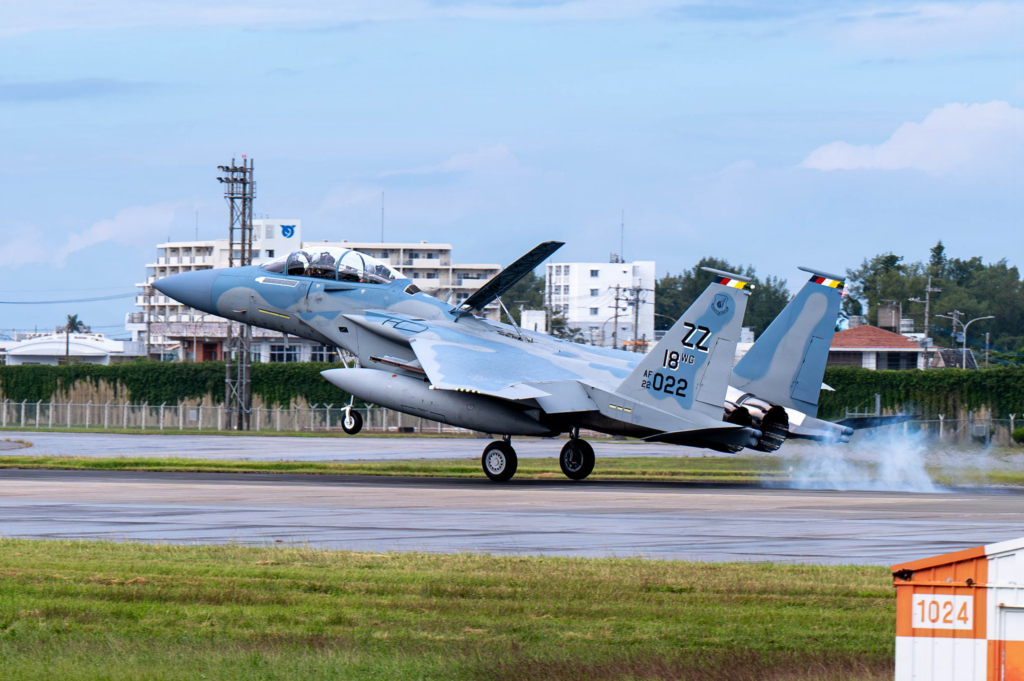
In Kadena specifically, F-15EXs are replacing aging F-15C/D models that were built in the 1980s. These older models would likely struggle in a high-end conflict against China.
Those F-15C/Ds began their phased withdrawal in November 2022 after over four decades of service. Other 4th- and 5th-generation fighters have been rotated through during the transition to prevent a capability gap.
The US has effectively doubled its target F-15EX acquisition from 129 to 267 and is currently investing in ramping up Boeing’s capacity to produce the aircraft to 36 annually.


