


India’s $900m Boeing 767 tanker deal with Israel’s IAI moves closer

6 min read

India is moving closer to a $900 million agreement with Israel Aerospace Industries (IAI) to acquire six Boeing 767-based aerial refuelling aircraft, potentially ending years of unsuccessful attempts to replace the Indian Air Force’s ageing Russian-built tankers.
Israeli business newspaper Globes reported on 1 November that IAI was positioned to secure the contract after its proposal emerged as the only bid approved for further consideration in an Indian government tender. Another Israeli publication, Calcalist’s CTech, reported that the company was nearing an agreement to convert six former passenger aircraft into military tankers.

Neither report establishes that a contract has been signed, but it is learnt from the India Ministry of Defence that final details were being discussed with the Israeli firm.
The proposed acquisition would involve converting pre-owned Boeing 767 airliners into Multi-Mission Tanker Transport (MMTT) aircraft. india is expected to participate in the programme, with at least 30% of the work reportedly earmarked for Indian companies.
The first deliveries are being targeted for 2030, although the timetable remains dependent on a final contract and the subsequent conversion programme.
The latest reports follow an Aerospace Global News investigation published in October 2025, which revealed that India was preparing to acquire six converted Boeing 767 tankers from IAI as part of its long-delayed aerial refuelling modernisation programme.
At the time, a senior Indian Defence Ministry official told AGN that India’s existing relationship with IAI would make the transition and oversight process easier.
The agreement had then been expected before the end of March 2026. That deadline passed without a publicly confirmed contract, underscoring the delays surrounding the procurement.
Why India urgently needs new refuelling aircraft
The Indian Air Force currently relies on six Ilyushin Il-78MKI tankers acquired from Russia in 2003–04.

Based at Agra in northern India, the aircraft have provided India’s principal air-to-air refuelling capability for more than two decades. They allow fighters such as the Rafale and Su-30MKI to remain airborne longer, undertake extended missions and operate farther from their home bases.
Aerial refuelling is particularly important for India because of the distances involved in operations over the Himalayas and the Indian Ocean.
A fighter’s operational reach is limited by the fuel it can carry. Tanker support allows it to replenish fuel during flight instead of returning to an airbase, increasing the time available for patrols, interceptions and strike missions.
However, the Il-78 fleet has suffered persistent serviceability problems.
As AGN reported in October 2025, an audit by India’s Comptroller and Auditor General identified several shortcomings affecting the fleet, including unreliable refuelling pods, maintenance difficulties, inadequate infrastructure and restrictions associated with operating the heavy aircraft from certain runways.
The small fleet has also faced availability problems, leaving the IAF with limited capacity when aircraft are undergoing maintenance.
India has consequently turned to leased aerial refuelling services as an interim measure while pursuing a permanent replacement.
The acquisition of six new tankers would provide a modern replacement capability, although the IAF’s wider refuelling requirements could eventually demand a larger fleet.
Boeing 767 conversion offers an alternative to new-build tankers
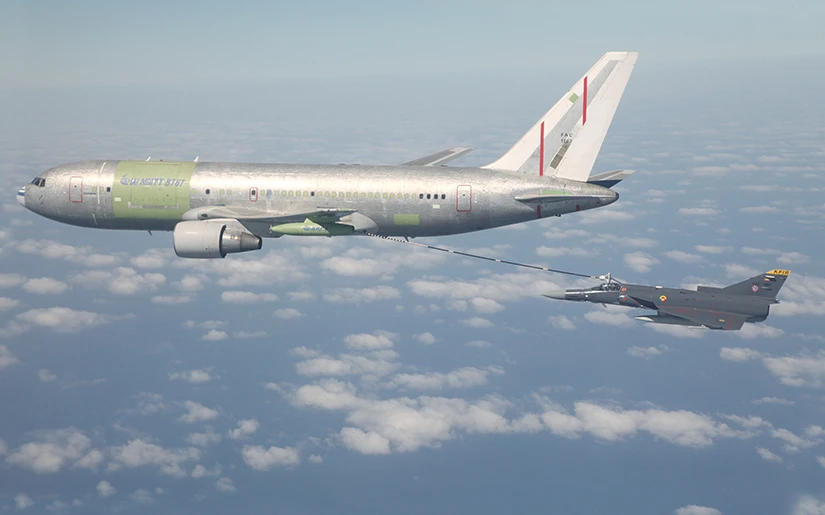
The proposed aircraft would be based on Boeing 767 passenger jets acquired from the commercial market and modified for military use.
IAI’s aviation division has extensive experience converting commercial aircraft, including Boeing 767s, for specialised missions.
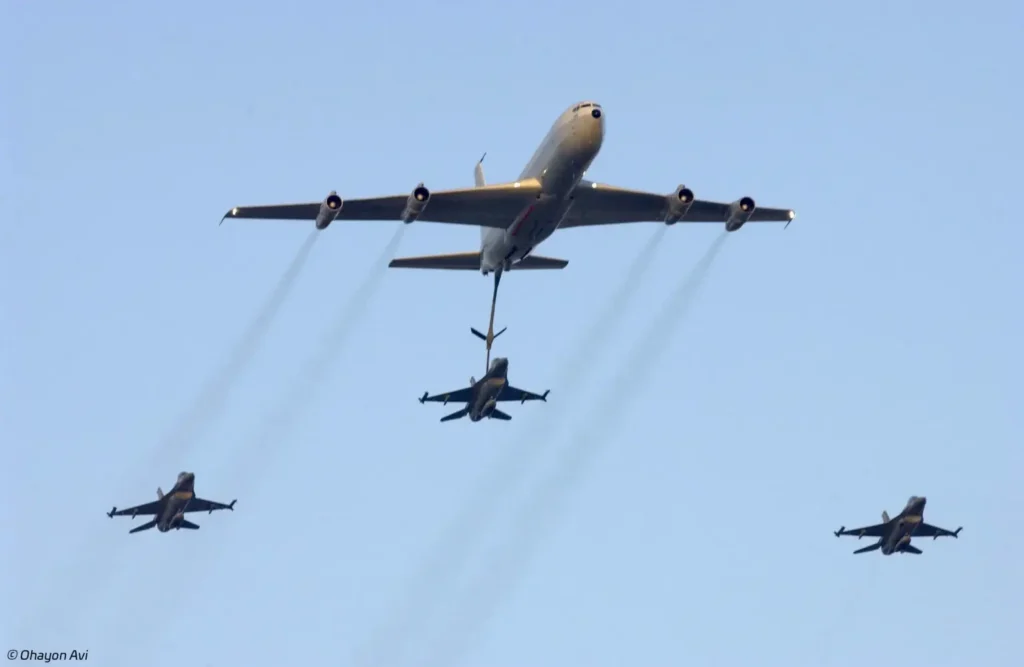
The tanker version would be equipped with systems to transfer fuel to other aircraft in flight. IAI’s MMTT design can accommodate both a refuelling boom and hose-and-drogue equipment, allowing it to support different types of receiving aircraft.
This flexibility matters to the IAF, whose combat fleet includes aircraft of Russian, French and Indian origin.
Aerial refuelling is not the aircraft’s only intended role. The MMTT concept also allows passenger and cargo transport configurations, giving the air force additional flexibility when tankers are not required for refuelling missions.
Using second-hand airliners is expected to reduce acquisition costs compared with buying newly manufactured military tankers. However, the aircraft would still require substantial structural work, installation of specialised systems, testing and military certification before entering service.
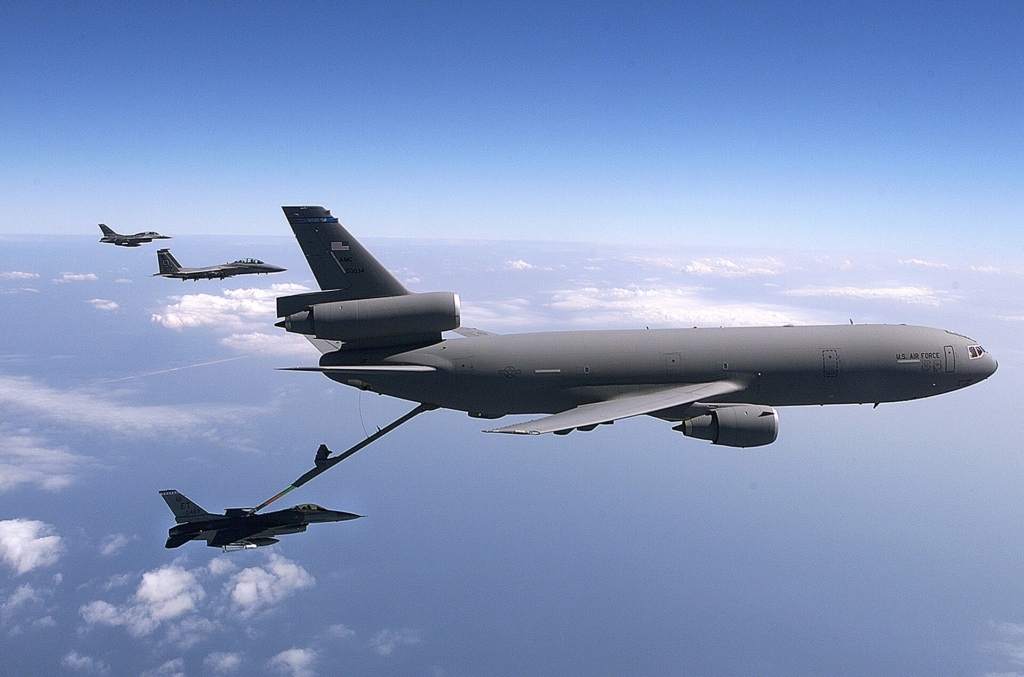
The Boeing 767 option is separate from Boeing’s new-build KC-46A tanker, which is also based on the 767 airframe.
HAL partnership could bring conversion work to India
The proposed arrangement builds on a partnership announced in April 2022, when IAI and HAL signed a memorandum of understanding to undertake Multi-Mission Tanker Transport conversions in India.
Under the agreement, HAL was expected to convert pre-owned aircraft for aerial refuelling and transport missions, while also undertaking aircraft life-extension work and maintenance in India. The agreement covered commercial passenger-to-freighter conversions as well.
Announcing the partnership at the time, then HAL Chairman and Managing Director R. Madhavan described the tanker conversion business as “one of the strategic diversification avenue identified by HAL.”
The then CEO of IAI Boaz Levy said the partnership would bring tanker conversion work to India by drawing on HAL’s manufacturing capabilities, workforce and domestic supply chain.
The 2022 agreement did not constitute an order from the Indian Air Force. However, it established the industrial framework for the Boeing 767 conversion proposal now reportedly approaching a procurement decision.
Indian industrial participation is a significant element of the proposed agreement.
According to the Israeli reports, at least 30% of the conversion work would be carried out in India
The arrangement would involve technology transfer and participation in aircraft modification, although the precise division of work between IAI and HAL has not been officially disclosed.
IAI and HAL already have an established relationship in India’s defence aviation sector. The Israeli company has also worked with Indian organisations on radar, missile and other military systems.
One of the largest joint programmes has been the Barak 8 medium-range surface-to-air missile system, developed through cooperation between IAI and India’s Defence Research and Development Organisation.
The tanker programme could extend that relationship into the conversion and support of large military aircraft.
IAI also has a substantial commercial aircraft conversion business, including Boeing 767 passenger-to-freighter modifications. That experience provides an industrial foundation for the proposed tanker work, although a military refuelling conversion requires different equipment and certification.
India has struggled to buy tankers for years
India’s effort to expand its aerial refuelling fleet has repeatedly encountered delays.
Earlier competitions involving the Airbus A330 Multi Role Tanker Transport failed to result in a purchase, with acquisition costs among the major obstacles.
The IAF has subsequently examined alternative approaches, including converting commercial aircraft and leasing refuelling capacity.
In December 2025, reports indicated that India was considering a wider requirement involving 12 aircraft, potentially divided between six converted tankers and six new-build aircraft.
The reported IAI agreement concerns the six-aircraft conversion proposal. It does not establish whether India has abandoned or retained the possibility of a separate new-build tanker acquisition.
The Airbus A330 MRTT and Boeing KC-46A have featured in discussions surrounding India’s broader tanker requirements.
The attraction of the converted Boeing 767 lies partly in the prospect of obtaining a capable aircraft at a lower purchase price while involving Indian industry in the programme.
However, the first aircraft would not arrive immediately. The reported 2030 delivery target means the IAF will have to continue relying on its existing Il-78 fleet and interim refuelling arrangements for several more years.
The latest reports suggest that IAI is closer to securing the contract than at any previous stage of the procurement. The decisive step remains an official selection and a signed agreement.


