


NASA’s X-59 supersonic jet heads to Florida on one year flight anniversary

3 min read
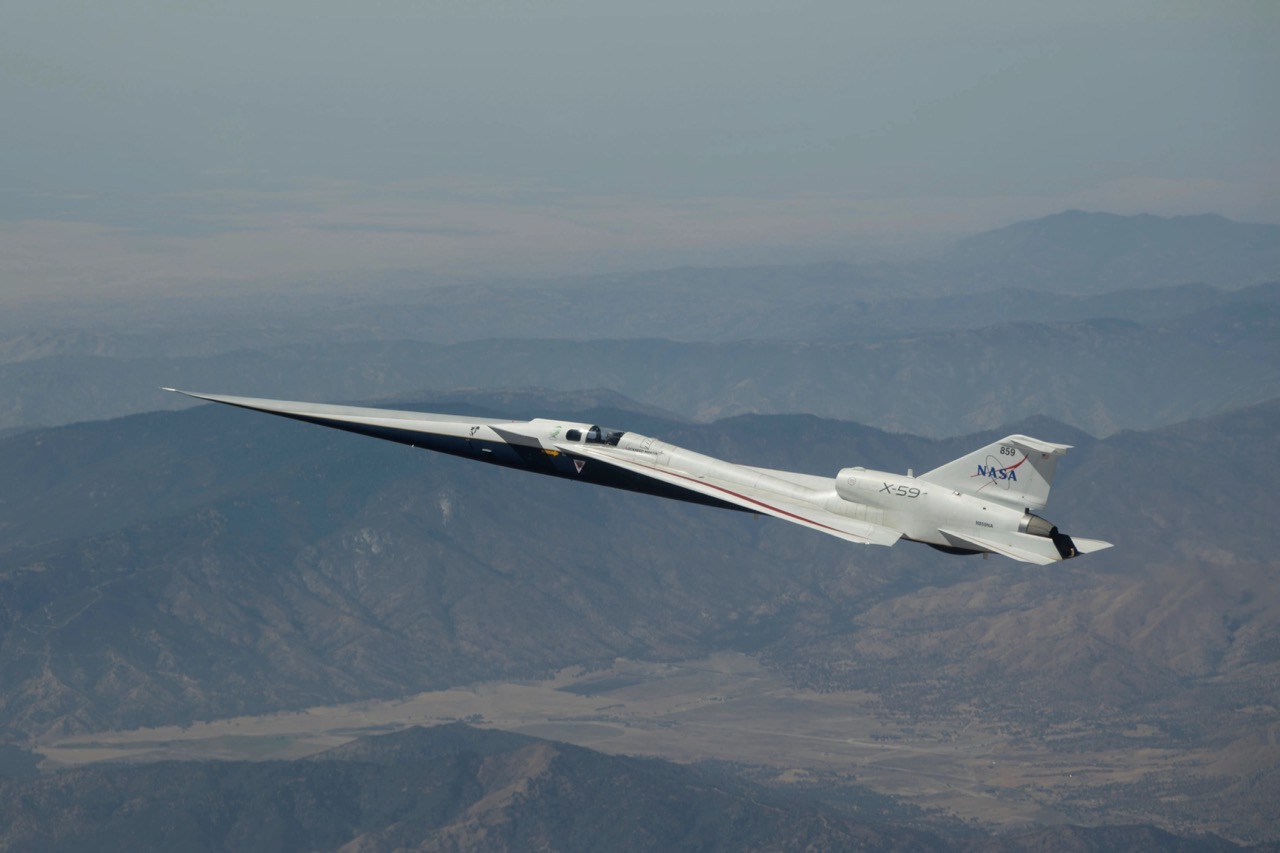
NASA‘s experimental X-59 supersonic aircraft is making its first cross-country journey to Kennedy Space Centre in Florida as the agency celebrates the first anniversary of the jet’s maiden flight.
The aircraft departed California on 28 October 2026, exactly one year after its first flight. It made stops in El Paso and Fort Worth, Texas, on its way to the Sunshine State. It is expected to appear at NASA’s MAX POWER airshow at Kennedy Space Centre on 7–8 November, taking part in celebrations marking the 250th anniversary of American independence.
NASA Administrator Jared Isaacman confirmed the aircraft was heading to Kennedy Space Center in a reply to a post on X by an aviation enthusiast who captured the aircraft in flight over Fort Worth on Wednesday.
@LensOfMae @thenewarea51 @gfontana767 Great catch… X-59 making her way to @NASAKennedy
— NASA Administrator Jared Isaacman (@NASAAdmin) October 28, 2026
The X-59 landed at Naval Air Station Joint Reserve Base Fort Worth on 28 October, accompanied by a NASA F-15 safety chase aircraft. A NASA F/A-18 and Gulfstream C-20 were also tracked along the route.
NASA reports significant progress in testing the aircraft, which is designed to demonstrate that supersonic flight is possible without the disruptive sonic booms created by aircraft travelling faster than sound.
X-59 completes 40 flights in its first year
According to NASA’s anniversary update, the X-59 has completed 40 additional flights since its maiden flight on 28 October 2025.
That first flight, piloted by NASA test pilot Nils Larson, lasted 67 minutes and focused on basic handling characteristics and aircraft systems.
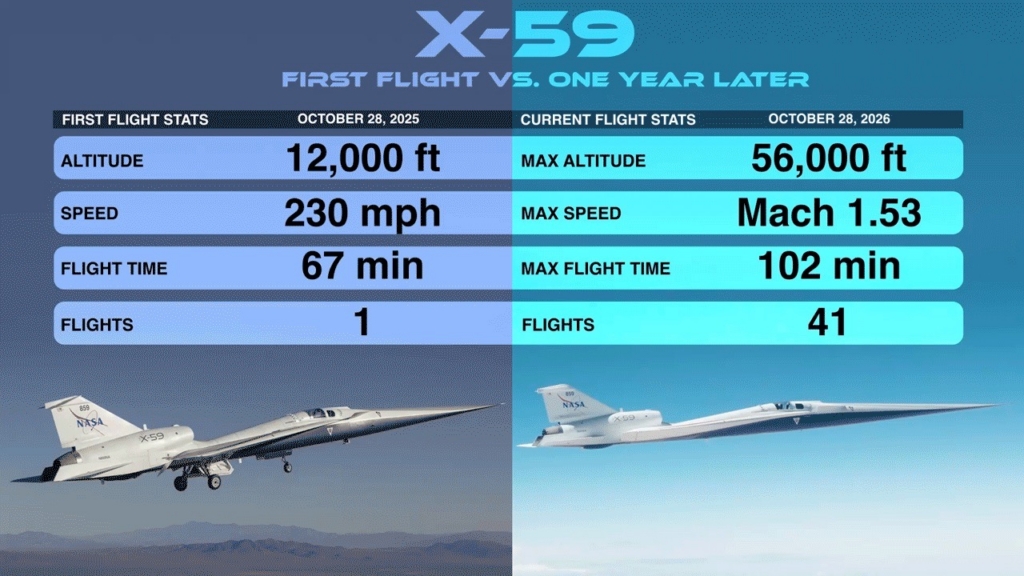
The aircraft has since exceeded 56,000 feet and reached a maximum speed of Mach 1.53, approximately 1,010 mph.
On 5 June 2026, the X-59 exceeded the speed of sound for the first time, reaching Mach 1.1 at 43,400 feet. A week later, it achieved its intended operating conditions of Mach 1.4 at 55,000 feet.
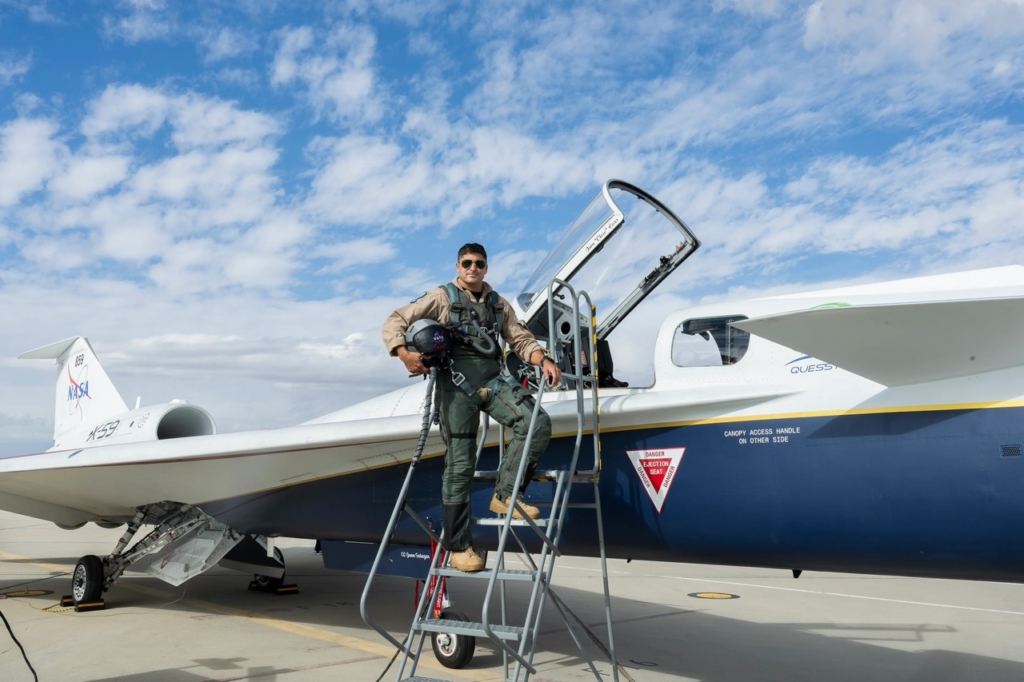
Testing continued through the summer, including six flights over three days in September. NASA test pilot Mike Lippert completed his first flight in the aircraft on 21 October.
The flights have allowed engineers to expand the aircraft’s operating envelope, assessing its handling and performance at progressively higher speeds and altitudes.
X-59 to appear at NASA’s MAX POWER airshow
The aircraft’s journey to Florida will bring it to NASA’s MAX POWER aerospace expo and airshow, scheduled for 7–8 November at Kennedy Space Centre. The agency has not specified whether the aircraft will perform a flying demonstration or appear as a static display.
The airshow will feature NASA aircraft, the US Air Force Thunderbirds and other military aviation displays. Visitors can see new aerospace technologies, including autonomous aircraft, drones and spacecraft.
The X-59’s appearance will let visitors see an aircraft that has spent most of its flight-testing programme operating from California.
Could the X-59 make supersonic passenger flights quieter?
The X-59 was developed by Lockheed Martin‘s Skunk Works division for NASA’s Quesst mission, which aims to provide evidence that could support the return of commercial supersonic flights over land.
Conventional supersonic aircraft produce loud sonic booms when shockwaves generated by their passage through the air reach the ground. The X-59’s long, narrow nose and specially shaped fuselage are designed to prevent those shockwaves from combining into a powerful boom.
NASA expects the aircraft to produce a much quieter sound, comparable to a car door closing from around 20 feet away, when flying at its intended test conditions of Mach 1.4 and 55,000 feet.
The next major stage of testing will involve acoustic validation, during which NASA will measure the sound produced by the aircraft during supersonic flight.
The agency then plans to fly the X-59 over selected communities in the United States and survey residents about the noise they experience.
NASA will share results with aviation regulators, including the Federal Aviation Administration, to help them assess whether new noise standards could allow commercial supersonic operations over land.
The X-59 is a research aircraft, not a prototype passenger jet, but the technical and public-response data it helps collect could determine whether quieter supersonic aircraft could operate commercially in future.


