Ukraine claims first battlefield casualty evacuation by heavy-lift drone

3 min read
Ukraine’s 92nd Separate Assault Brigade has released footage of what it claims to be the ‘first-of-its-kind’ casualty evacuation by drone.
The operation highlights the expanding roles of drones and may offer a glimpse of the future of combat MEDEVAC.
First reported aero-drone casualty evacuation
The 92nd’s post, shared on its official Telegram channel, read, “A wounded serviceman was evacuated from a position using an aerial drone.” The infantryman in question is from the 30th Separate Mechanised Brigade.
Mines and high activity of enemy drones in the area meant Ukrainian forces couldn’t evacuate him using unmanned ground vehicles (UGVs).
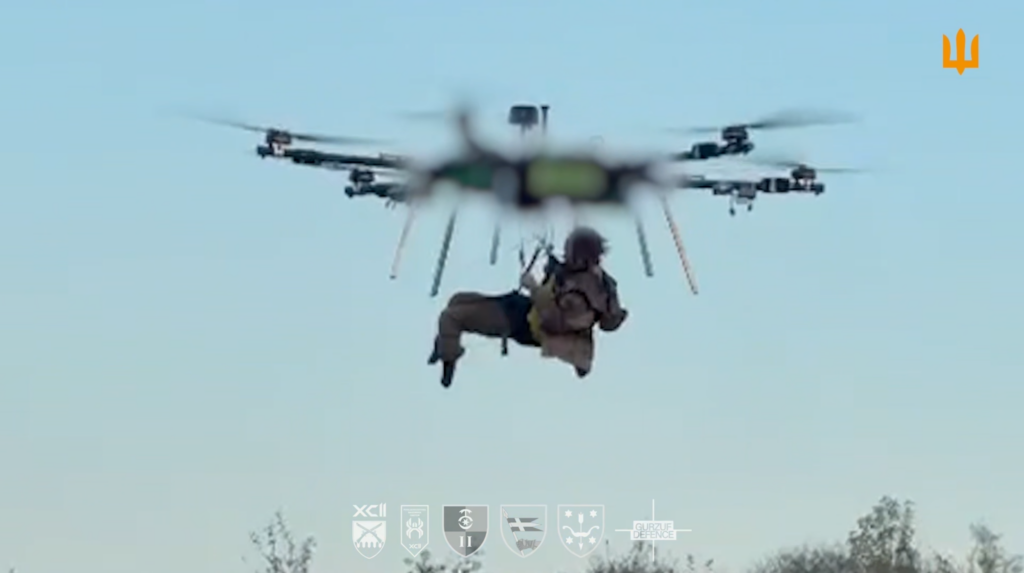
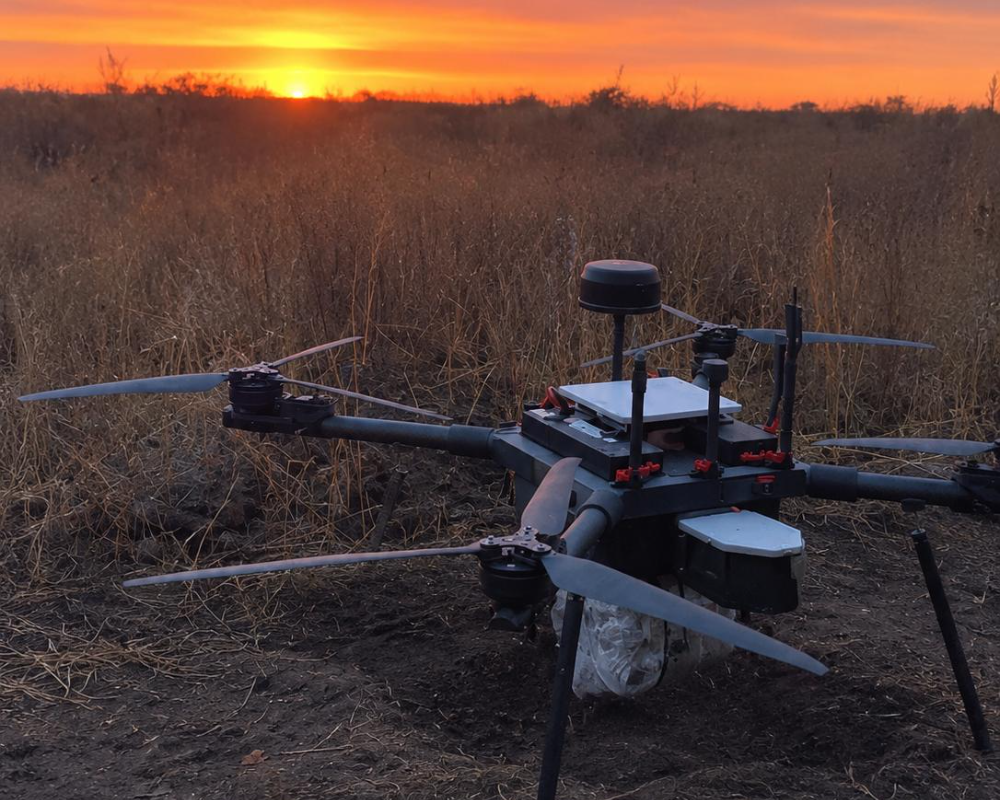
Ukraine’s 92nd Separate Assault Brigade elected to evacuate the stricken soldier using a heavy-lift hexacopter drone built by Ukraine’s Gurzuf Defence. The 92nd worked with Gurzuf to modify the heavy-lift drone so it would remain stable in the air and not overturn or swing excessively.
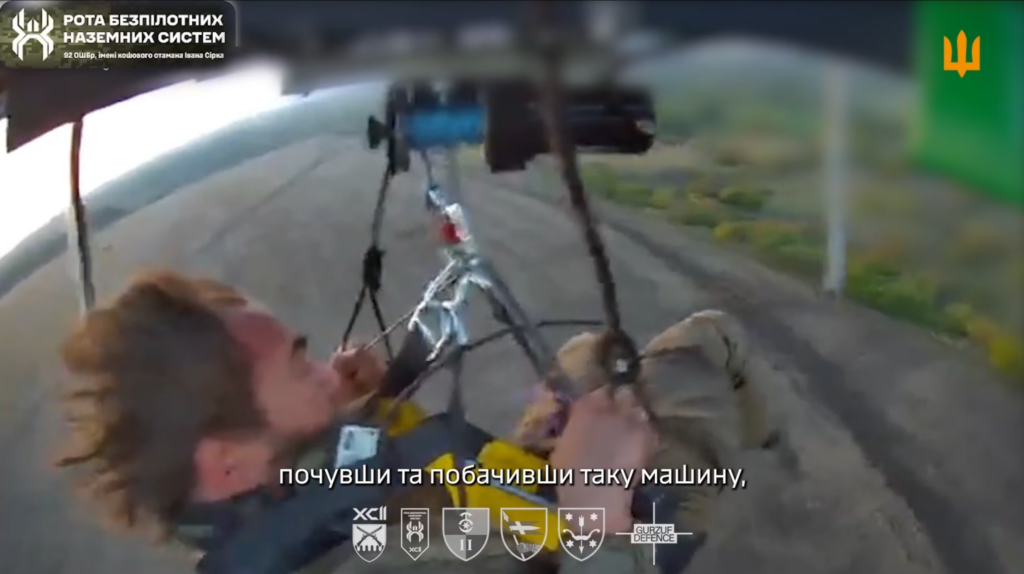
The mission proved successful; the released video shows the wounded soldier attaching himself to the harness and flying out of harm’s way. He is now undergoing medical treatment and his life is no longer in danger.
The 92nd did not disclose the operation’s location or date.
Expanding use of drones in MEDEVAC
AGN recently reported that the US Air Force has retired the last of its Sikorsky HH-60G Pave Hawk combat search and rescue helicopters and that they are being replaced by upgraded HH-60W Jolly Green II helicopters.
These give the US a combat search and rescue capability, but one that is increasingly put under greater risk in modern war. While the classic rescue effort of the downed F-15E pilots was considered a success, it was also high risk and could have spiraled into a ‘Black Hawk Down’ scenario.
This year’s war with Iran saw another development. The US Navy dispatched an autonomous Saronic Corsair USV to rescue downed US Army Apache helicopter pilots in June 2026 who had been shot down by Iran. This was technically a maritime rescue more than a MEDEVAC mission.
Many analysts think that in a future high-end war with China, classic helicopter MEDEVAC from frontlines will be infeasible. Eyes are now increasingly turning to drone systems.
A related concept is the Marine Corps’ high priority for drone systems to supply the ‘last mile’ of logistical support. This doesn’t mean that helicopters like the Jolly Green II will become obsolete; there will still be many practical use cases.
Additionally, it is better to understand the future of MEDEVAC as unmanned systems complementing traditional systems. Drones can evacuate personnel to a point where it is safe enough for helicopters to operate.
Drones taking their place as MEDEVAC platforms
In the last couple of years, Ukraine has increasingly used Unmanned Ground Vehicles (UGVs) for frontline Ukrainian MEDEVAC missions, and are now locally considered the default method.
On July 6, video footage of a drone evacuating stranded people from flood-hit areas to safety in Hengzhou, South China’s Guangxi, went viral. The Global Times learned that the drone was a DJI delivery drone, and that more than 10 DJI delivery and mapping drones worked alongside local emergency response forces in the disaster relief efforts in Hengzhou.
— Global Times (@globaltimesnews) July 7, 2026
Earlier in the war, Ukrainian MEDEVAC missions were mostly carried out with armoured vehicles, but they have now been pushed further back behind the lines.
Meanwhile, some countries, like China (2025-2026 Hengzhou floods) and Pakistan (2025 Punjab floods), have already used similar heavy-lift drones to rescue people over very short distances.
Gurzuf’s Heavy Shot Ayudag-6 was developed as a heavy bomber drone, a class of drones Russia had been slow to copy and adopt until now.
The Ayudag-6 has a reported flight range of up to 25 kilometres and an operational altitude of 150-300 metres. The drone weighs about 98 kilograms and can carry a payload of 70-90 kilograms.
Sign up for our newsletter and get our latest content in your inbox.


More from


October 17, 20264 min read