


From a boy watching the stars to a hologram in space: The remarkable journey of Aexa’s founder

15 min read
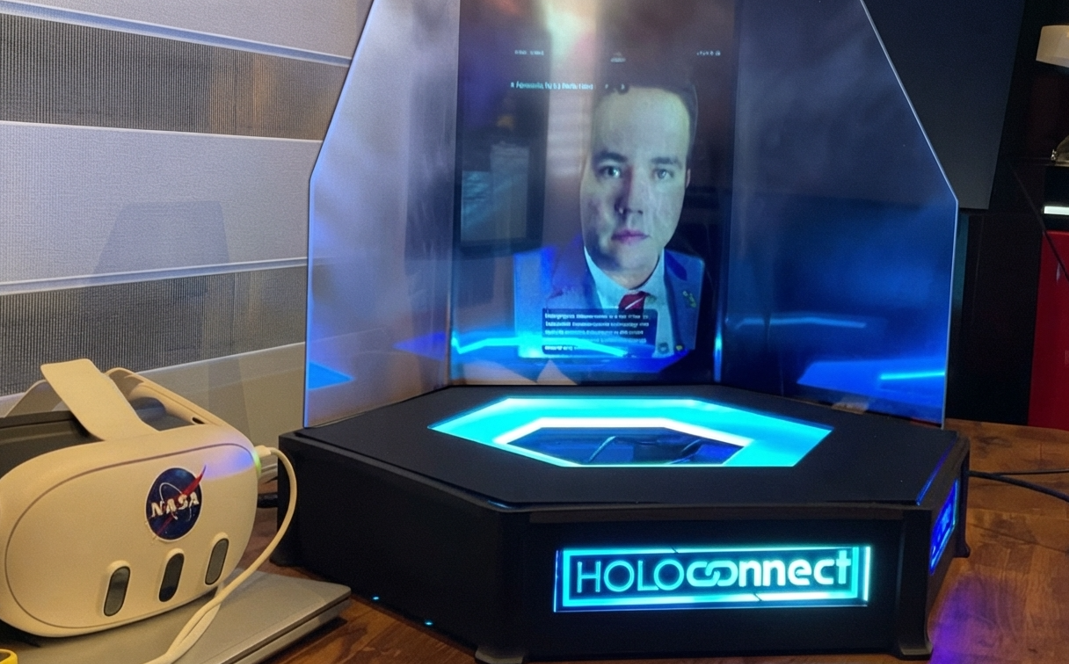
Five years after becoming one of the first people to appear aboard the International Space Station as a hologram, Dr Fernando De La Pena Llaca is taking the technology into airports and everyday life. Behind the aerospace breakthrough lies a deeply personal story of childhood loss, science fiction and a desire to make his father proud.
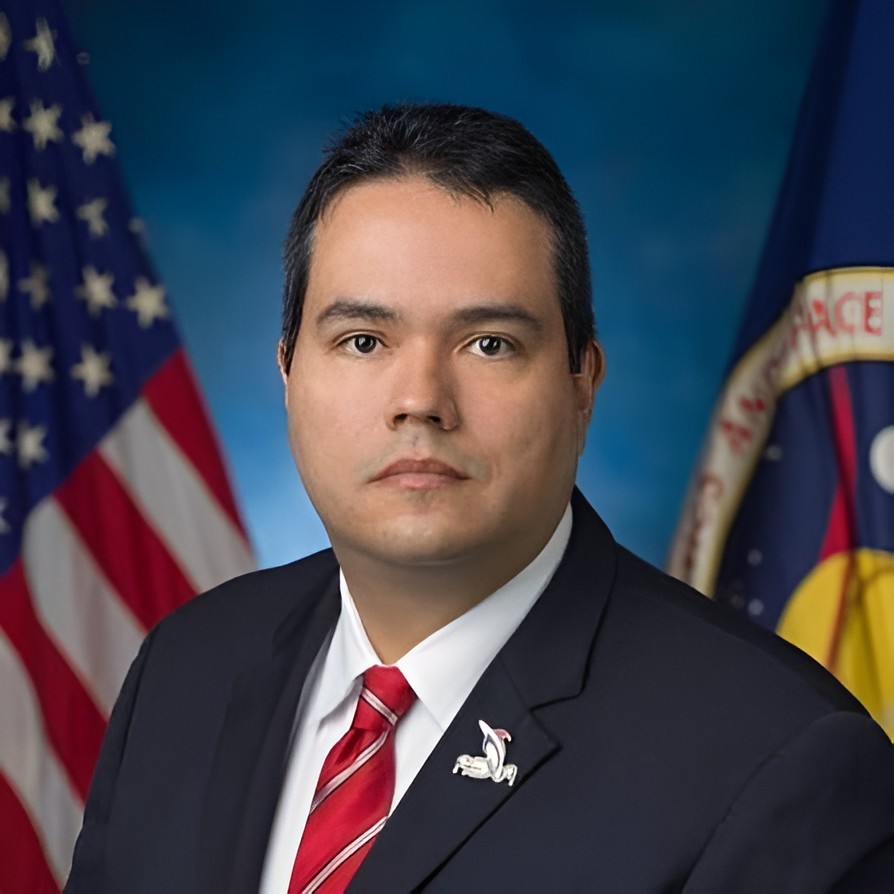
Every October, Dr Fernando De La Pena Llaca remembers his father.
He was just ten when his father died, leaving him an only child growing up in the Mexican city of Tulancingo. The loss shaped a personal tradition that he has carried into adulthood. Each year, around the anniversary of his father’s death, he tries to accomplish something meaningful, something that would have made him proud.
On 8 October 2021, that tradition took an extraordinary turn.
De La Pena Llaca was at NASA’s Mission Control in Houston, helping his team attempt something never previously achieved aboard the International Space Station (ISS). They were trying to transmit a live, three-dimensional human image from Earth to an astronaut orbiting the planet at approximately 17,500 miles per hour.
The experiment succeeded.
NASA flight surgeon Dr Josef Schmid became the first person to be holoported to the ISS, followed by De La Pena Llaca himself. Their bodies remained on Earth, but their three-dimensional images appeared inside the orbiting laboratory, where European Space Agency astronaut Thomas Pesquet could see them through an augmented reality headset.
For the boy who had once stood beneath enormous satellite antennas in Mexico, wondering what lay beyond them, it was a remarkable moment.
“October has always carried a lot of emotion for me,” De La Pena Llaca, founder and chief executive of Houston-based Aexa Tech, told Aerospace Global News in an exclusive interview marking the experiment’s fifth anniversary.
“My father passed away when I was 10 years old. I have no siblings, and he died during the second week of October. Every year during that week, I try to do something meaningful, something that would have made him proud.”
Five years later, the technology that allowed him to appear in space without leaving Earth has taken an unexpected direction.
Last month, Aexa used its holographic artificial intelligence platform to bring historical members of the Vanderbilt family to life inside New York’s Grand Central Terminal.
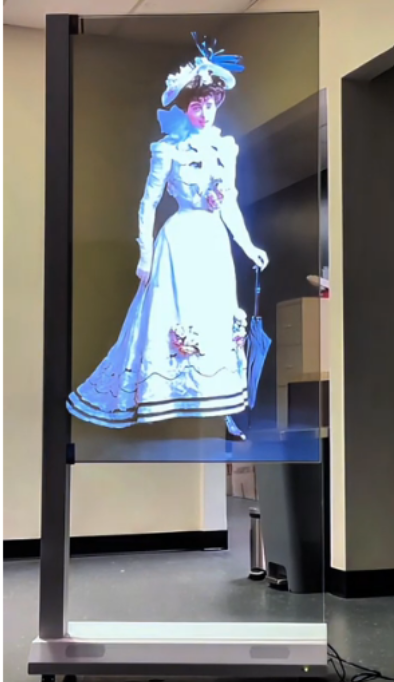
The two demonstrations are technologically different. One involved transmitting living people into space in real time. The other used AI to create interactive representations of people who died generations ago.
But for De La Pena Llaca, both address the same question: how can technology make someone feel present when they cannot physically be there?
A childhood surrounded by science fiction
Long before he began working with NASA, De La Pena Llaca was fascinated by the enormous satellite dishes near his childhood home.
Tulancingo had become an important satellite communications centre around the time of the 1968 Olympic Games in Mexico. Its two giant antennas, each approximately 105 feet across, were among the city’s most striking landmarks.
To a young boy fascinated by electronics, they were a source of endless curiosity.
“As a kid, I would look at those gigantic antennas and wonder what they were communicating with. And then I would look beyond them, at the stars,” he recalled.
His father encouraged that curiosity.
During the early 1980s, when personal computers and mobile communications were still unfamiliar to many households, De La Pena Llaca was growing up around technology that seemed to belong in science fiction.
He remembers a wristwatch with a television, green-screen computers in one of the family’s factories and radio telephones long before mobile phones became commonplace.
At home, he watched television programmes such as Knight Rider and Automan, both of which imagined a future shaped by intelligent machines and advanced electronics.
But the technology he saw on television did not seem entirely fictional.
“The interesting thing is that I would see technology on television and then see something surprisingly similar sitting in my father’s office or on his wrist. So, I never developed the mental barrier that said, ‘That is science fiction and therefore impossible.’”
His family also spent considerable time in Texas, where they had a home in The Woodlands, near Houston. That connection would eventually bring him closer to the American space programme.
Looking back, he sees an extraordinary connection between his childhood and the technology he would later help develop.
“A child from Tulancingo looking at those satellite dishes ultimately ended up developing technology used aboard the International Space Station. I think my father would have enjoyed that story.”
The day a hologram reached the ISS
The experiment on 8 October 2021 was a significant demonstration of how people on Earth might one day communicate with astronauts working in space.
Using Microsoft’s HoloLens augmented reality system, specialised cameras and software, the team transmitted three-dimensional representations of people on Earth to the ISS.
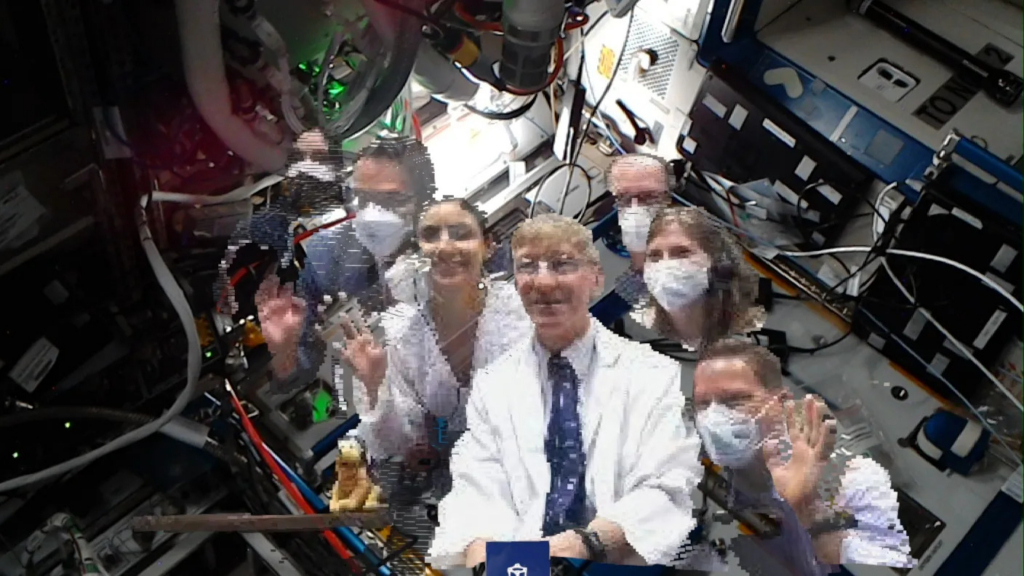
The astronaut could see the visitors occupying apparent physical space inside the station. Unlike a conventional video call, which displays a person on a flat screen, holoportation allowed the image to be viewed spatially.
NASA subsequently described the experiment as its first holoportation handshake between Earth and space.
The demonstration also established a foundation for exploring remote medical consultations, technical assistance and other applications that could be useful during future space missions.
For De La Pena Llaca and his team, getting the system to work was anything but straightforward.
The experiment took place during the COVID-19 pandemic, with restrictions complicating normal working arrangements. The team was also attempting to transmit three-dimensional information through NASA’s communications infrastructure using a connection of roughly five megabits per second.
The data had to pass through networks, security systems and satellite links while maintaining a usable connection with the orbiting station.
“We were attempting to connect to an International Space Station travelling approximately 17,500 miles per hour, using a technology that had never been deployed there before,” he recalled. “There was no playbook. But failure was not an option for us.”
Then came the moment when the technology worked.
“It felt a little like the ‘Help me, Obi-Wan Kenobi’ moment becoming real. One minute I was at NASA’s Mission Control helping control the system, with members of my team working alongside Dr. Schmid. Moments later, my three-dimensional presence was aboard the International Space Station. That is a moment I will never forget.”
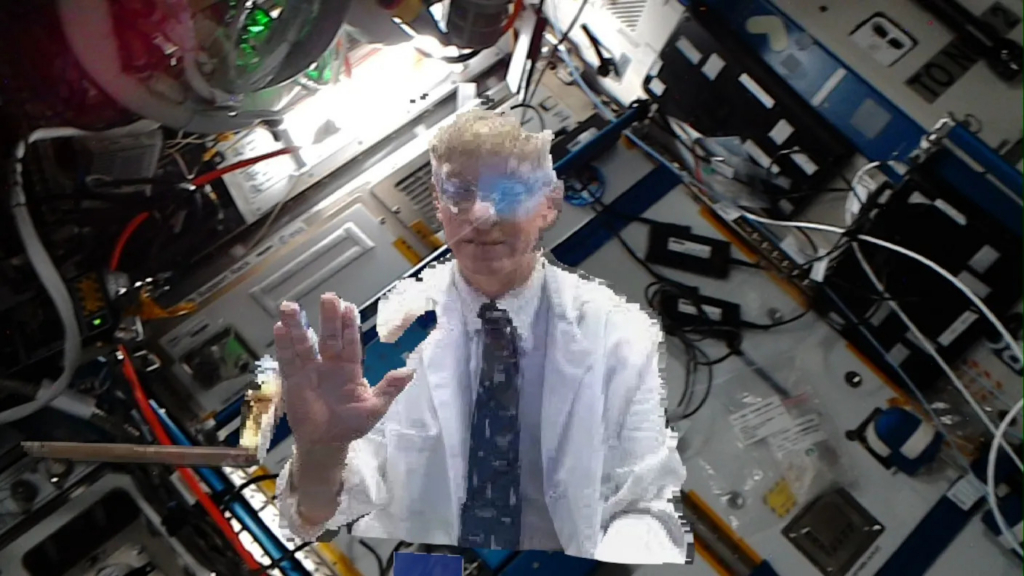
For someone whose childhood imagination had been shaped by science fiction, the comparison with Star Wars was irresistible.
But the experiment was not simply about recreating a famous cinema scene.
The person appearing aboard the ISS was a live, three-dimensional representation of someone on Earth, capable of interacting with the astronaut in real time.
“I sometimes call it the fastest way to travel to space. Your body stays on Earth. Your presence does not.”
Why astronauts need more than video calls
There was a practical reason for attempting the experiment.
Astronauts regularly depend on specialists on Earth to help them maintain equipment, conduct experiments and resolve technical problems.
A video connection can provide assistance, but it also has limitations.
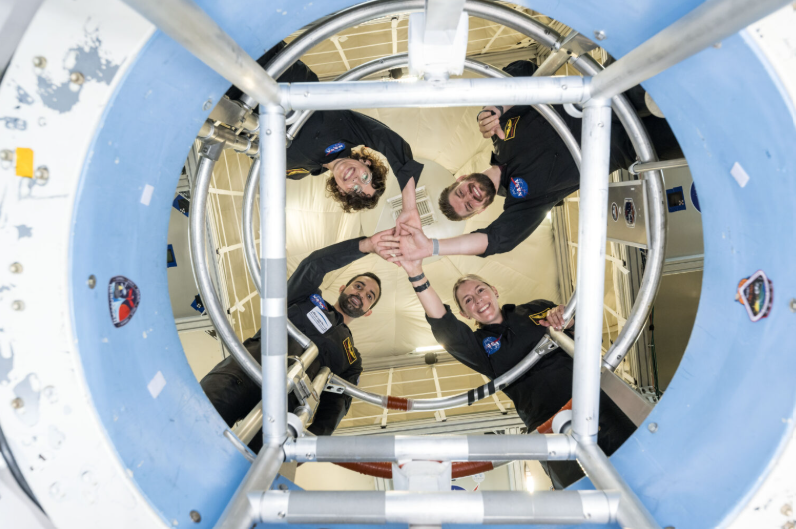
Inside the ISS, astronauts work in microgravity, where there is no natural sense of up or down. Explaining the precise location of a component or demonstrating a repair can become surprisingly complicated.
De La Pena Llaca remembers an activity involving work on a spacesuit that was expected to take around 20 minutes but became an hours-long process as those involved struggled with camera positioning and instructions.
“‘Turn the screw on your left.’ ‘No, your other left.’ That sounds trivial on Earth. In microgravity, it is not.”
Now imagine an engineer on Earth appearing beside an astronaut in three dimensions, able to point towards equipment and demonstrate the required action from a shared perspective.
“Instead of looking through a flat camera, an expert on Earth can appear beside the astronaut in three dimensions, look at the same equipment from the same perspective and physically demonstrate what needs to happen.”
Such capabilities could eventually help reduce the time astronauts spend troubleshooting equipment or receiving technical instruction.
Crew time is an expensive and limited resource aboard the ISS. Every hour devoted to resolving a maintenance problem is time unavailable for other activities.
The potential applications also extend to medicine.
An astronaut who becomes ill or injured may need specialist advice from doctors on Earth. Three-dimensional communication could give medical teams additional visual information about the patient’s posture, movements and physical condition.
But the 2021 demonstration was an early technological test, not proof that holographic medical consultations or complex remote maintenance procedures are ready for routine operational use.
For De La Pena Llaca, however, the technology addresses another challenge that could become increasingly important as humans venture deeper into space.
“The second problem is even more human: isolation. COVID gave billions of people a small glimpse of what separation feels like. Now imagine living hundreds of kilometres above Earth in an extremely confined environment for months at a time.”
Astronauts already communicate with their families through video and audio connections. Yet a three-dimensional representation of a loved one could provide a different sense of closeness.
“What happens when your family can appear in the room with you? Your body may not be there, but your presence is.”
Whether this improves psychological well-being would require further research. And on missions to Mars, the communications delay between Earth and the spacecraft would make the kind of immediate conversation demonstrated aboard the ISS impossible.
Nevertheless, the experiment offers a glimpse of how communication might evolve during future human spaceflight.
From space to Grand Central Terminal
In September 2026, De La Pena Llaca watched his technology create a very different kind of encounter.
This time, the setting was not an orbiting spacecraft but Vanderbilt Hall inside New York’s Grand Central Terminal.
During a New York Fashion Week event on 15 September, Aexa Tech presented its HoloConnect AI platform as part of the House of Vanderbilt’s Makers, Moguls, and Muses experience.
The demonstration brought members of the Vanderbilt family into the present through interactive, life-size AI representations.
Among them were Cornelius Vanderbilt, the shipping and railway magnate, Alva Vanderbilt, Gertrude Vanderbilt Whitney and Consuelo Vanderbilt Balsan.
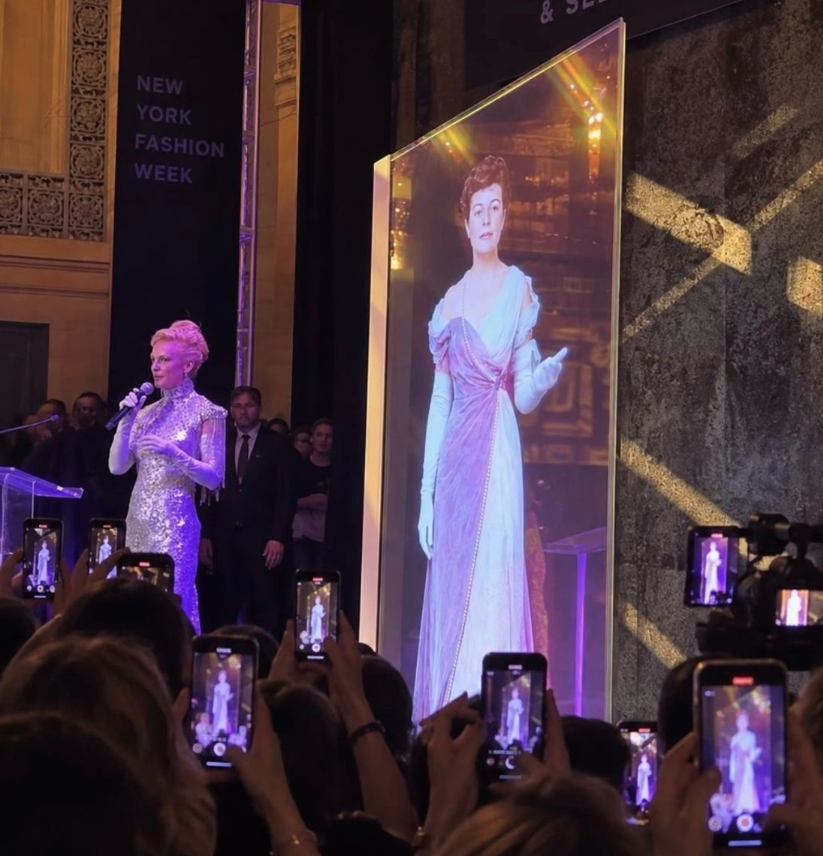
The project grew out of discussions between De La Peña Llaca and Consuelo Vanderbilt Costin, a descendant of the family and founder of the House of Vanderbilt.
Aexa had the holographic and AI technology. Costin had a family history closely connected with American transport, business and philanthropy.
“We asked a simple question: What if Consuelo could have another conversation with her family? That idea became real at Grand Central,” De La Pena Llaca recalled.
For a company whose technology had previously reached the ISS, the Grand Central demonstration marked a different kind of milestone.
It showed how systems developed through work in aerospace and spatial computing could find commercial applications in public spaces, historical exhibitions and education.
De La Pena Llaca had expected the technology to perform as designed. What surprised him was the emotional response.
“Consuelo was standing on the stage, and suddenly Cornelius Vanderbilt appeared at Grand Central again as a life-size digital presence, speaking with and supporting his descendant. I looked around and almost every cellphone in the room was pointing at the stage.”
Other Vanderbilt family members appeared through the experience.
“We knew what we had built. But it still felt magical.”
The demonstration was also a reminder of how far the technology had moved beyond its original space application.
At the ISS, holoportation had transmitted living people in real time.
At Grand Central, AI generated interactive representations of historical figures. These were digital recreations, not recordings of the individuals themselves, and their responses should not be mistaken for authenticated historical statements.
That distinction will become increasingly important if similar systems are used in museums, classrooms and other educational settings.
The question nobody expected
After the Grand Central demonstration, some visitors approached De La Pena Llaca with a question that had little to do with aerospace engineering.
“Could you do this with someone from my family?” It was a striking response.
People had watched a demonstration involving some of America’s best-known historical figures. Yet their thoughts had turned to members of their own families.
For De La Pena Llaca, who had lost his father so young, the question had particular emotional significance in the context of his life, even though he did not describe the experience as a substitute for speaking with someone who had died.
“That is the moment you realise the technology has crossed a line. People are no longer looking at a computer demonstration. They are feeling presence.”
It also points towards a complicated future.
AI can generate a person’s likeness, voice and conversational responses from available material. But it cannot recover unrecorded memories or establish what someone who has died would genuinely think or say.
Applications involving deceased relatives or historical personalities would therefore raise questions about consent, authenticity and the limits of digital recreation.
In the interview De La Pena Llaca did not detail how Aexa verifies the historical accuracy of such portrayals, leaving an important issue for the technology’s future development.
For now, the response at Grand Central suggests that holographic AI could appeal to people for reasons extending far beyond its original technical purpose.
Could holographic AI change airports?
For an aerospace company, the journey from the ISS to a railway terminal might seem unusual.
But De La Pena Llaca believes the technology has practical applications in aviation, particularly in airports where passengers need assistance and information.
Aexa says it already has AI agents operating in airport environments, interacting with thousands of users.
These systems are designed to make conversations with artificial intelligence feel more natural by combining voice, visual presence and responses informed by the user’s interaction.
The company has also developed Aexa Aware, a technology intended to recognise elements of human engagement and emotional context, allowing an AI agent to adjust its behaviour.
“Humans do not communicate only through words. We communicate through timing, expression, attention, tone, movement and emotion,” he explained.
He recalls an airport deployment in which the company initially wondered whether employees working alongside an AI agent would see it as a competitor.
Instead, according to De La Pena Llaca, the employees began treating the digital assistant almost like another colleague.
“They adopted her almost like another colleague. They spoke to her. They helped her. They included her. That taught us something important about trust.”
The account is an encouraging observation from one deployment rather than evidence that such systems will be universally accepted.
But airports offer a potentially useful environment for the technology.
Passengers frequently need help finding departure gates, understanding procedures, navigating terminals or obtaining information in unfamiliar languages.
A conversational AI assistant with a recognisable human presence could offer another way to provide that assistance, although the benefits would depend on reliability, accessibility and the accuracy of the information supplied.
The same technology could also be adapted for museums, hospitals, education and commercial environments.
De La Pena Llaca believes the central challenge is no longer simply making AI more intelligent. It is making interaction with that intelligence feel natural.
“We are moving from artificial intelligence as software toward artificial intelligence as presence. I believe that distinction will define the next wave of adoption.”
The next destination could be the Moon
Five years after the ISS experiment, De La Pena Llaca has not abandoned his ambitions for space.
He wants to see holographic technology used on the Moon, Mars and eventually beyond.
The potential applications are considerable.
Future lunar crews could benefit from three-dimensional technical assistance during equipment maintenance, scientific operations or medical consultations. Such systems could also support training and collaboration between astronauts and specialists on Earth.
But the challenges remain substantial.
Hardware must be reliable, lightweight and suitable for demanding space environments. Communications systems must support the transmission of complex visual information, while delays on deep-space missions will require different approaches to interaction.
The technology also has to demonstrate that it can deliver meaningful operational advantages over conventional communications.
De La Pena Llaca nevertheless believes the combination of AI and holography could fundamentally change how expertise is shared.
“For most of human history, expertise was scarce. If you needed the world’s best engineer, physician, teacher or scientist, that person’s time and location were limiting factors. AI begins to break that constraint. Holography breaks another one: physical presence.”
He also wants the technology to become accessible beyond specialist aerospace facilities and major commercial installations.
“What would still surprise and excite me? Seeing technology we created operating on the Moon, on Mars and eventually beyond. But I also want the opposite extreme: I want this technology available to ordinary people everywhere.”
It is an ambitious vision, and many of its applications remain to be demonstrated.
Yet De La Pena Llaca has already seen one childhood fantasy become reality. The boy who grew up imagining the impossible has spent much of his adult life trying to make it real.
“Five years ago, we accomplished something extraordinary without today’s generation of AI. Now we have combined holography with artificial intelligence. The sky is no longer the limit.”
Sign up for our newsletter and get our latest content in your inbox.


More from

October 17, 20265 min read


October 17, 20264 min read





