


10 bizarre aircraft that looked impossible to fly – but actually did

9 min read
Most aircraft begin with the same basic ingredients: a fuselage, two wings, a tail and engines arranged in places that generations of designers have found work rather well. Every so often, somebody decides that is not good enough.
The result has been aircraft with wings pointing forwards, wings that swivel sideways, cockpits hanging off one side, aeroplanes without wings at all and machines that appear to have been assembled with little concern for symmetry. Some were experiments that flew only long enough to prove a point. Others entered production and spent years doing useful work.
Many disappeared because the problem they were designed to solve went away, technology overtook them or a more conventional aircraft simply did the job better. But they flew. In several cases, what engineers learnt from them found its way into later aircraft.
Leaving aside familiar and much written about platforms, here are ten of the more unusual aircraft that made it off the drawing board and into the air.
Bartini Beriev VVA-14: built to hunt submarines from just above the sea
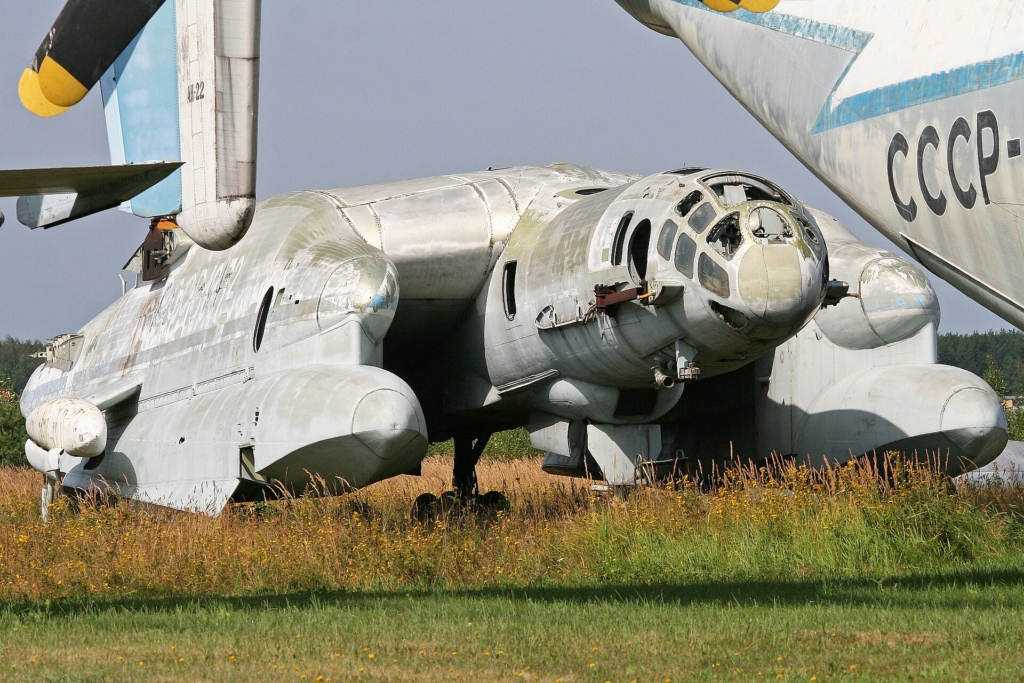
It is difficult to know quite what to call the VVA-14 when seeing it for the first time. Soviet designer Robert Bartini conceived it as an amphibious anti-submarine aircraft able to operate from water, fly conventionally at altitude and travel efficiently close to the sea using ground effect. It was intended primarily to help counter the threat from US ballistic-missile submarines.
The VVA-14 made its first conventional flight on 4 September 1972. Bartini’s much more ambitious plan called for 12 lift engines that would have given the aircraft vertical take-off capability, but those engines were never delivered and the VVA-14 never flew vertically. Development slowed after Bartini died in 1974 and eventually ended. The surviving aircraft was sent to the Central Air Force Museum at Monino in 1987.
Blohm & Voss BV 141: the aircraft that did not need two equal halves
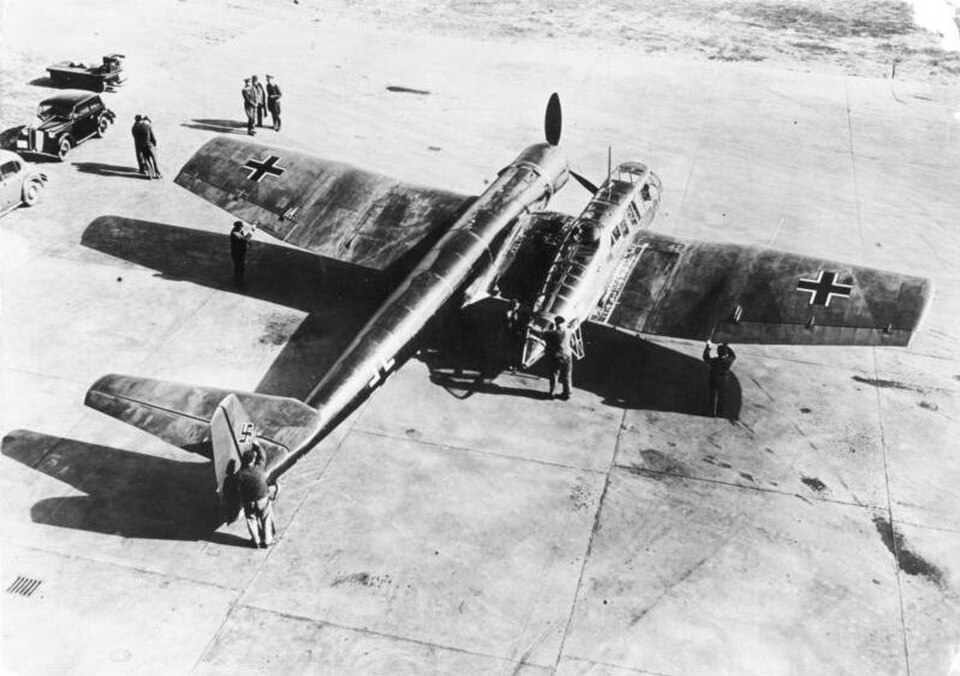
Few aircraft challenge the eye quite like Germany’s Blohm & Voss BV 141. Its radial engine and tail were carried in the main structure on the left, while the three crew members occupied a separate extensively glazed gondola on the right. It looks as though half of one aeroplane has been joined to half of another.
But the asymmetry was deliberate. The BV 141 was developed as a tactical reconnaissance aircraft, and separating the crew compartment from the engine gave its occupants an unusually unobstructed view. The first prototype flew on 25 February 1938 and the aircraft proved the unconventional arrangement could work. It never entered large-scale production, however. The Focke-Wulf Fw 189 was selected for the reconnaissance role and demand for BMW 801 engines for the Fw 190 further worked against the later BV 141B.
Transavia PL-12 Airtruk: an agricultural aircraft that looks assembled backwards
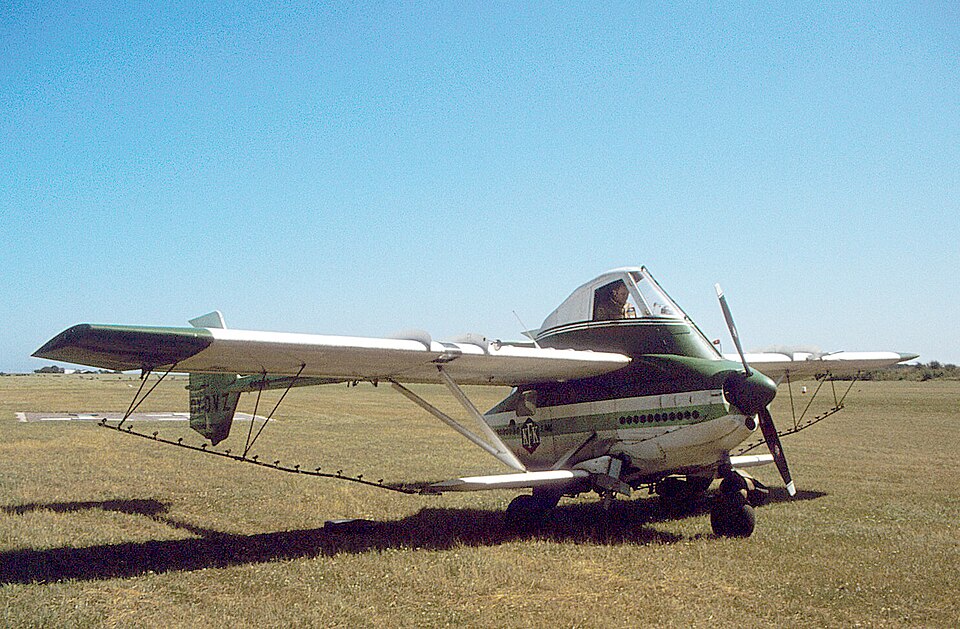
The Australian Airtruk looks as though somebody started with an agricultural aircraft and removed everything that was not absolutely necessary. The pilot sits high above the engine, the fuselage ends abruptly and two slender booms run aft to separate tail surfaces.
Yet the odd shape had a job to do. Designed by Luigi Pellarini for agricultural operations, the Airtruk provided good visibility for low-level flying and was built around the practical requirements of carrying and spreading material over farmland. The prototype preserved by Sydney’s Powerhouse collection first flew from Bankstown on 15 April 1965, with New Zealand test pilot Neil Johnston at the controls. Production followed in 1966.
Unlike many aircraft on this list, the Airtruk was not merely an experiment. It went to work. Its unconventional appearance was largely the result of designing an aircraft around a specialised job rather than making it conform to what an aeroplane was expected to look like.
Edgley Optica: a helicopter view without the helicopter
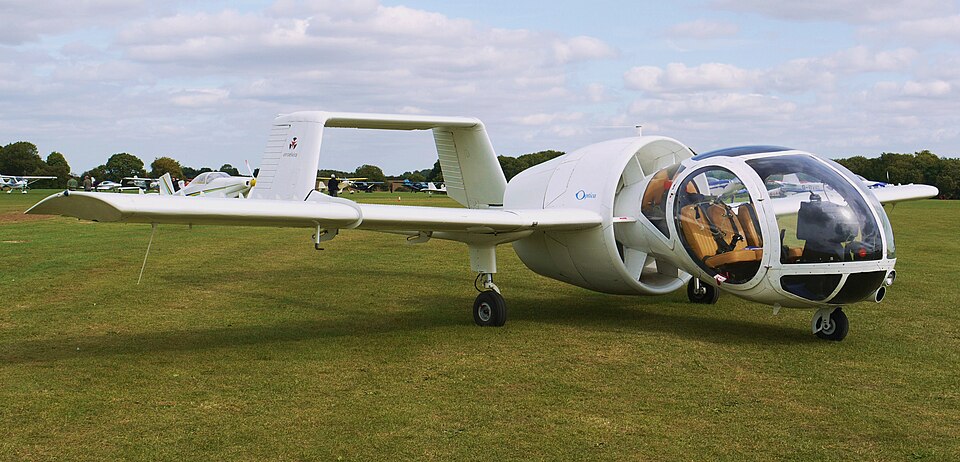
The Edgley Optica is dominated by its cockpit. Three people sit side by side inside a bulbous glazed nose, giving the aircraft the appearance of a giant flying observation pod.
That was precisely what British designer John Edgley wanted. The Optica was created as an observation and surveillance aircraft offering excellent visibility while avoiding the expense and complexity of a helicopter. Behind the cockpit sits a Lycoming piston engine driving a five-bladed ducted fan, while twin booms carry the tail. The first flight took place on 14 December 1979.
Its development subsequently encountered financial and ownership difficulties, as well as a fatal crash in 1985. But the underlying idea was straightforward: for police, surveillance and observation work, what mattered was being able to fly slowly and see as much of the world below as possible.
Grumman X-29: yes, the wings really were meant to point forwards
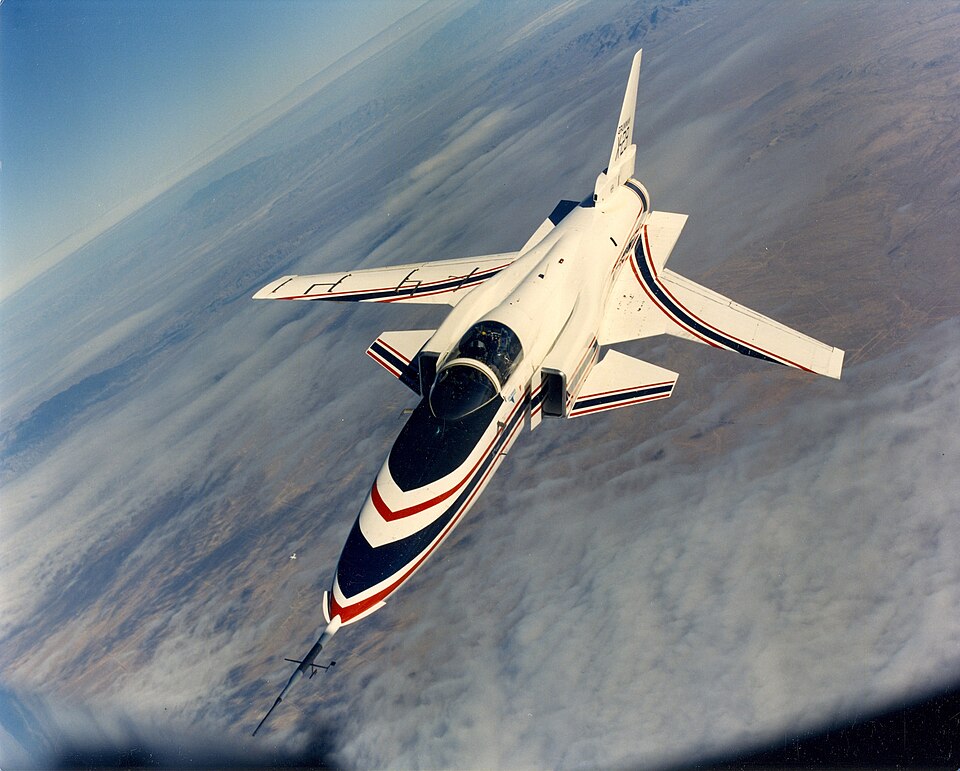
No, the wings were not fitted backwards.
The X-29’s forward sweep was the reason the aircraft existed. Built by Grumman for a research programme involving DARPA, the US Air Force and NASA, the aircraft combined forward-swept composite wings with canards and a computerised fly-by-wire system. The first of two X-29s flew on 14 December 1984.
There was a catch. The configuration was extremely unstable, so the aircraft depended on its flight-control computers to provide artificial stability. That instability was deliberate: the X-29 was a flying laboratory used to investigate forward-swept wings, advanced composites, digital flight controls and high-angle-of-attack behaviour.
The two aircraft ultimately accumulated 422 research missions. NASA found that the forward-swept wing and movable canards provided excellent control response at angles of attack as high as 45 degrees.
NASA AD-1: an aircraft whose entire wing turned sideways
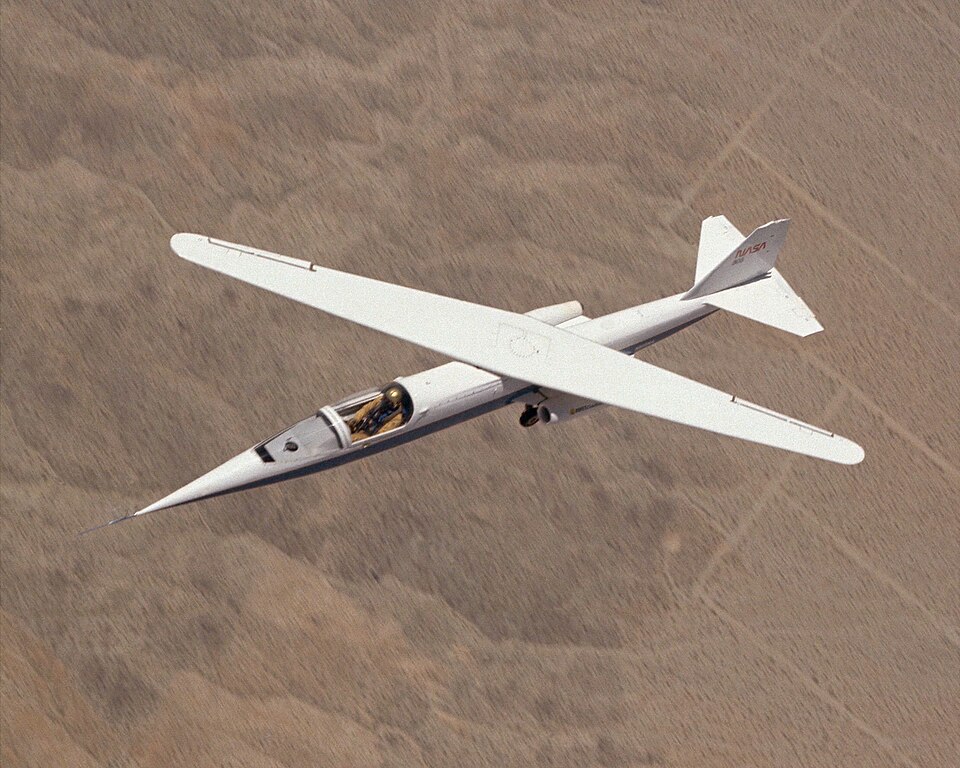
Variable-sweep fighters move their wings backwards together. NASA’s AD-1 did something considerably stranger. Its single wing rotated around a pivot on top of the fuselage, so that one side swept forwards while the other swept backwards.
NASA wanted to determine whether an oblique wing could reduce drag and improve efficiency on a future high-speed transport. The AD-1 began each flight with its wing perpendicular to the fuselage. As the test programme progressed, the wing was gradually pivoted until the aircraft eventually flew at the full 60-degree angle. The first flight was on 21 December 1979.
NASA flew the little twin-jet 79 times before the programme ended in 1982. The concept worked, although pilots encountered poor handling qualities at extreme wing angles. No sideways-wing passenger aircraft followed, but the AD-1 had answered the question it was built to investigate: a piloted aircraft really could fly with its wing arranged like a pair of open scissors.
NASA M2-F1: the aeroplane without wings
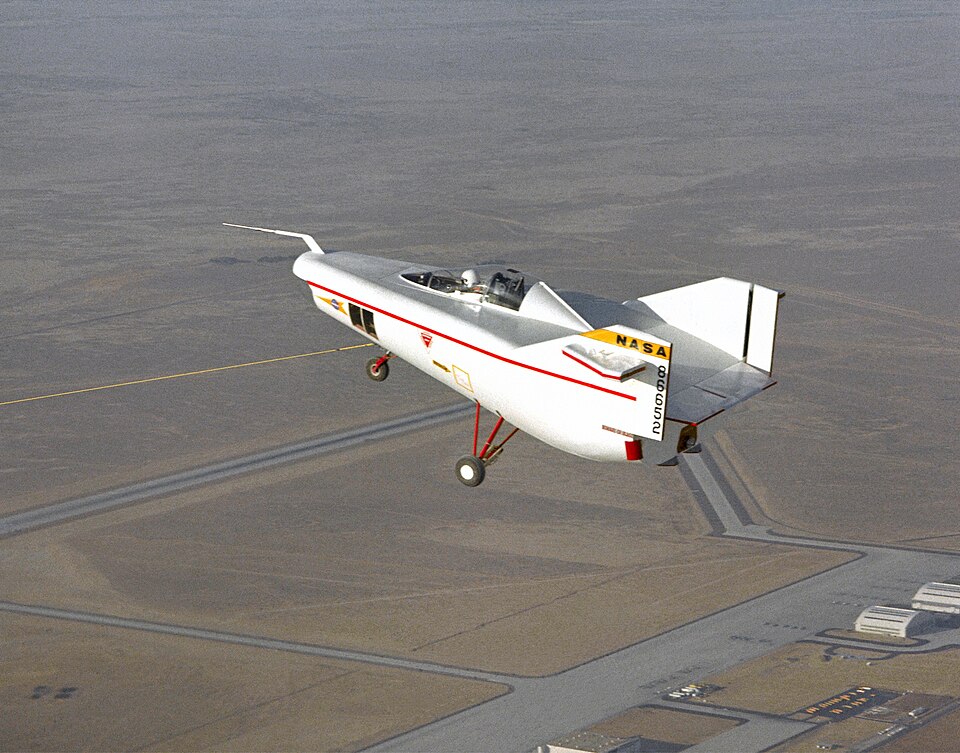
The M2-F1 looked so little like a conventional aircraft that it became known as the “flying bathtub”.
NASA was exploring the lifting-body concept: instead of relying on wings to generate aerodynamic lift, could the shape of a vehicle’s body itself provide enough lift and control for a spacecraft returning through the atmosphere? The lightweight M2-F1 was built with a plywood shell over a tubular steel frame. Early tests involved towing it across Rogers Dry Lake behind a modified Pontiac convertible. Later, a NASA R4D — the military version of the DC-3 — carried it aloft on a towline.
NASA pilot Milt Thompson made the first air-towed free flight on 16 August 1963. By retirement, the M2-F1 had completed more than 400 ground tows and 77 aircraft-tow flights. The lifting-body shape itself was not adopted for the Space Shuttle, but NASA says the programme generated aerodynamic and controllability data that was directly applicable to Shuttle design.
Northrop Tacit Blue: the stealth aircraft nicknamed the Whale
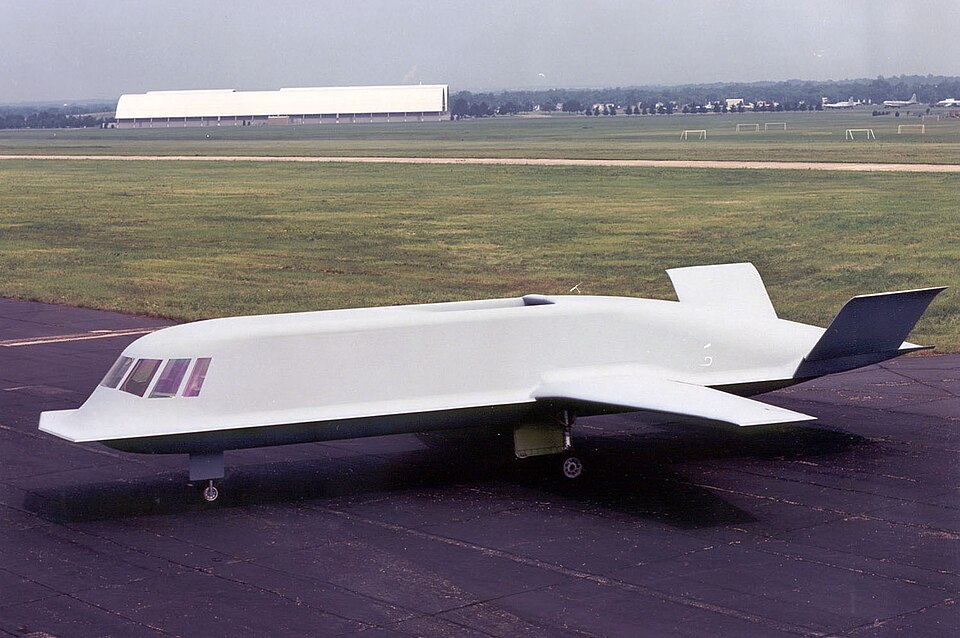
Stealth usually brings to mind sleek black aircraft with sharp edges. Tacit Blue looked more like a large box somebody had decided to fly.
Built secretly by Northrop, the single aircraft was created to test advanced radar sensors and new approaches to low-observable technology. Its rounded, bulky shape helped demonstrate that curved surfaces could be incorporated into a stealth aircraft rather than relying entirely on the faceted surfaces associated with the F-117. The aircraft was also aerodynamically unstable and required a digital fly-by-wire system to control it.
Tacit Blue first flew in February 1982 and completed 135 flights before the programme ended in 1985. Its work influenced later aircraft, most notably the B-2 Spirit. The programme remained classified until 1996, when the aircraft was publicly revealed and placed on display at the National Museum of the United States Air Force.
SNECMA C.450 Coleoptere: take off sitting on the tail
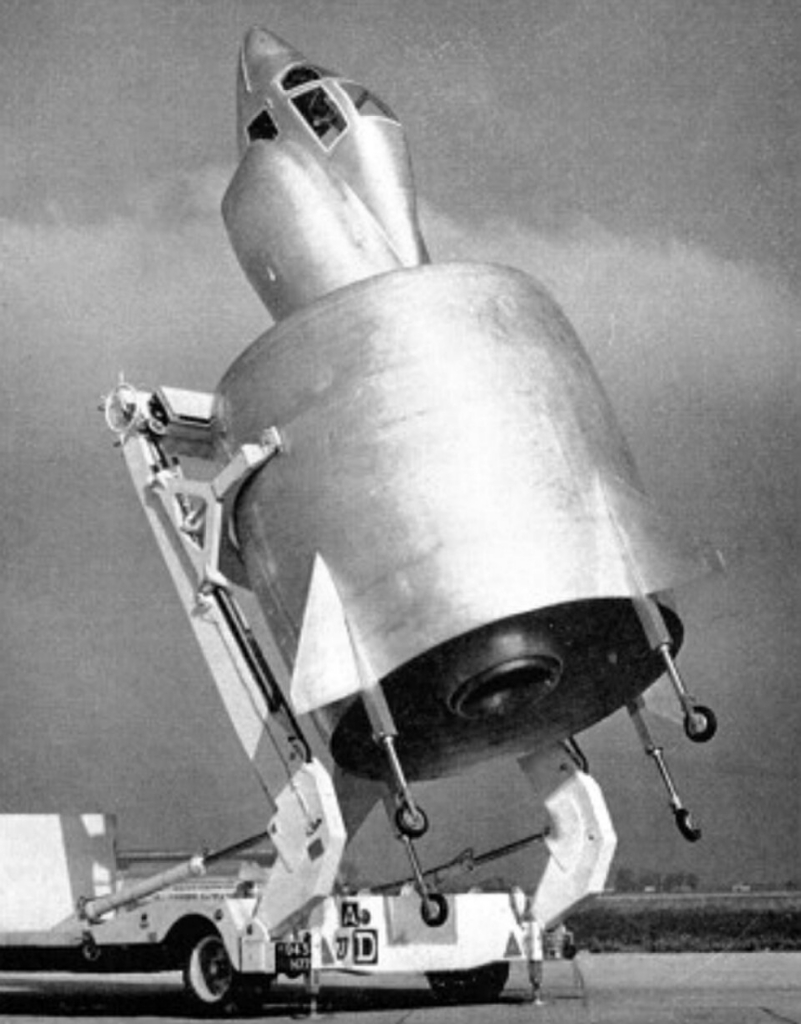
The French C.450 Coléoptère dispensed with the idea that an aircraft should sit horizontally before taking off. It stood upright on its tail.
Developed by SNECMA with an airframe built by Nord Aviation, the single-seat experimental aircraft surrounded its fuselage with an annular, or ring-shaped, wing. The objective was vertical take-off and landing without a runway, followed by a transition into conventional forward flight. The Coléoptère began free-flight testing in May 1959.
The problem was bringing such an aircraft safely through the transition between vertical and horizontal flight and back again. On its ninth test flight, on 25 July 1959, the aircraft became uncontrollable during an attempted transition. Test pilot Auguste Morel ejected and survived, but the sole Coléoptère was destroyed. The programme ended with it.
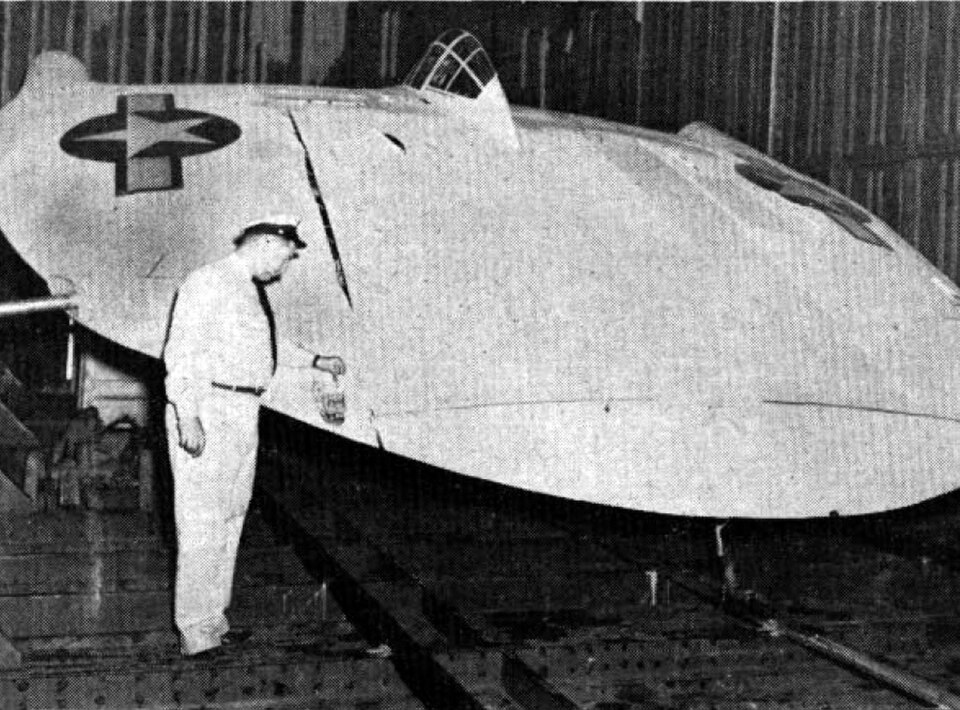
Vought V-173: the Flying Pancake that almost hovered
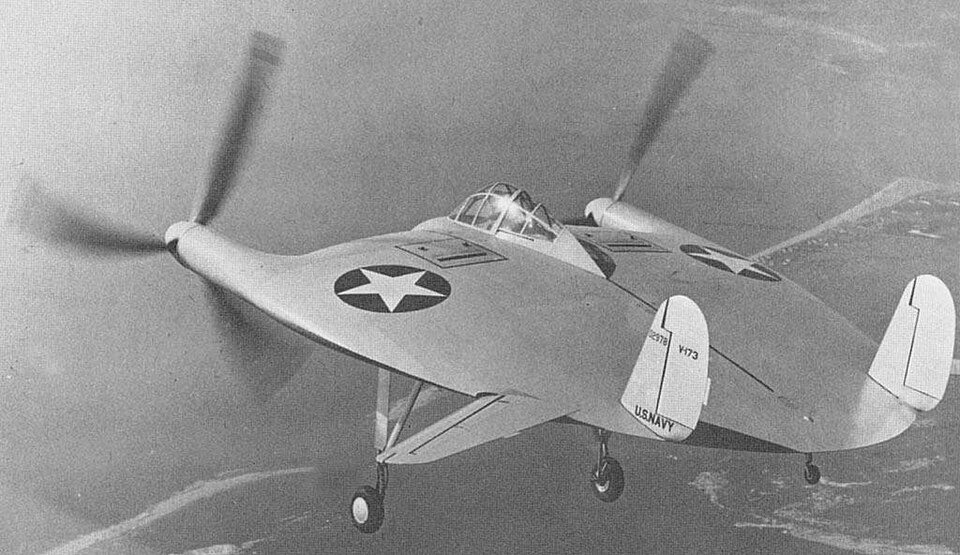
The nickname required little imagination. Viewed from above, Vought’s V-173 really did resemble a pancake with two enormous propellers attached.
Designer Charles Zimmerman was exploring an aircraft with an extremely low-aspect-ratio, disc-like lifting surface. Large 16.5ft propellers sat at either side, and the US Navy saw potential in an aircraft capable of taking off and landing at very low speeds. The V-173 made its first flight on 23 November 1942.
The strange shape proved surprisingly effective. Smithsonian records say the V-173 could almost hover and remained controllable at very low speeds. The Navy was sufficiently impressed to order the more powerful XF5U-1 development, but that aircraft never flew. By then the Navy was turning towards turbojet propulsion and the programme was cancelled.
The ten aircraft could hardly have had less in common. One spread fertiliser over Australian farmland. Another explored how a spacecraft might return to Earth. One was built to hunt submarines, another to test stealth, while the Flying Pancake tried to solve the problem of operating an aircraft from very little space.
Most did not lead to production aircraft. That does not make them failures.
Experimental aviation is often about answering a question rather than selling an aeroplane. Sometimes the answer is that an idea works but offers too little advantage. Sometimes another technology arrives first. And sometimes the lessons reappear years later in an aircraft that looks nothing like the machine that produced them.
What these ten have in common is simpler. At some point an engineer drew something that must have looked improbable on paper. Then somebody built it. And somebody climbed aboard and flew it.
Sign up for our newsletter and get our latest content in your inbox.


More from

October 3, 20267 min read


