United takes first GTF Advantage-powered Airbus A321XLR as Pratt & Whitney targets durability gains

3 min read
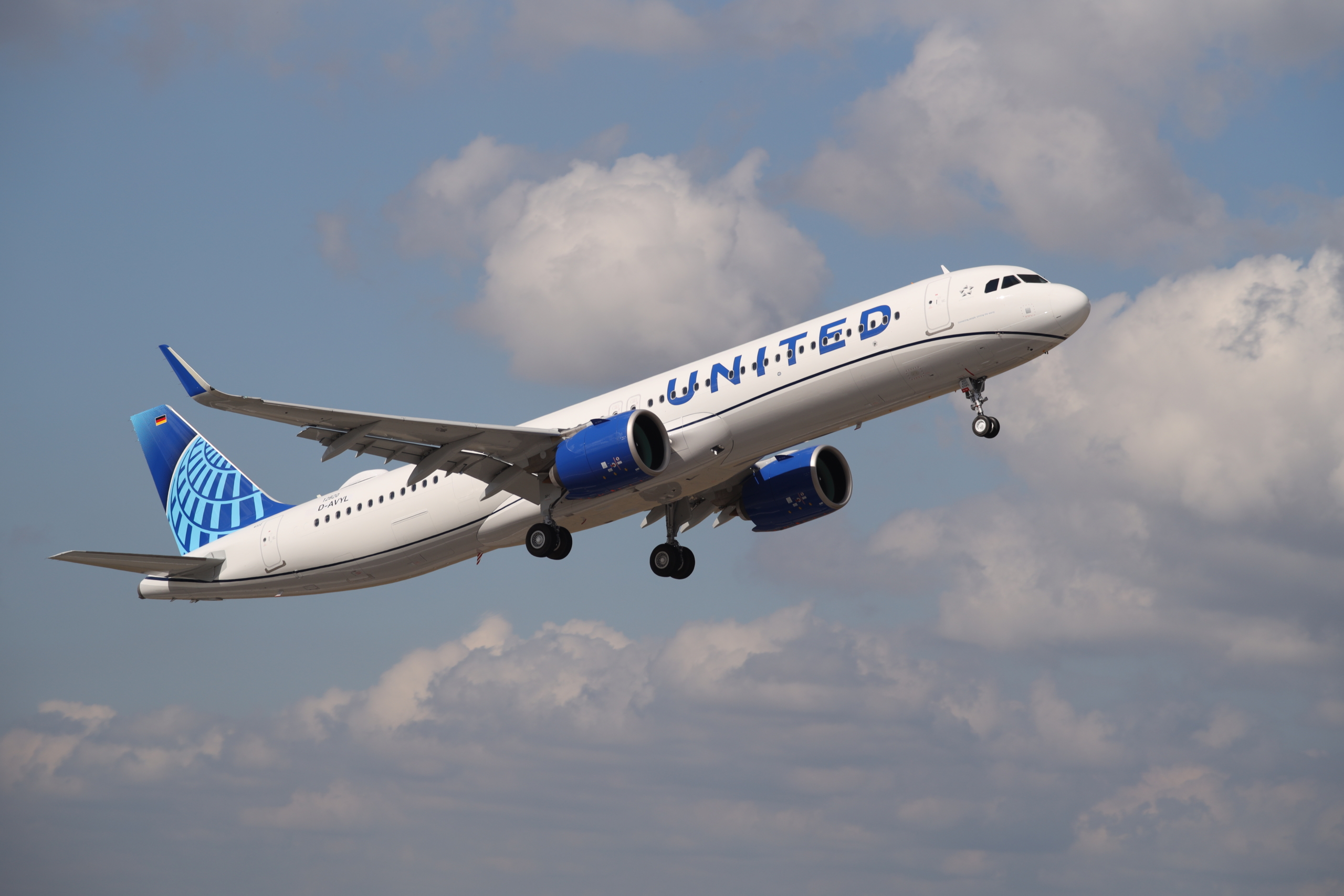
United Airlines has become the first airline to take delivery of an aircraft powered by Pratt & Whitney’s GTF Advantage engines, receiving an Airbus A321XLR equipped with the manufacturer’s latest propulsion standard.
Announced on 24 September, the delivery brings an engine promising up to twice the time on wing and 4–8% more take-off thrust to United’s fleet as the airline develops its long-haul narrowbody network.
The additional thrust is particularly relevant to the A321XLR, where it can support higher payloads and longer-range operations. United is using the aircraft type to expand its reach into smaller European markets.
“United will be the first to benefit from the world-class efficiency, durability and additional thrust capability of the GTF Advantage engine, which is particularly well-suited to the long-range A321XLR,” said Rick Deurloo, president of commercial engines at Pratt & Whitney.
The milestone follows FAA engine certification in February 2025, EASA validation in October that year, and European certification of GTF Advantage-powered A320neo-family aircraft in April 2026.
What is the Pratt & Whitney GTF Advantage?
The GTF Advantage is the latest evolution of the PW1100G-JM engine that powers Airbus A320neo-family aircraft.
It retains the geared turbofan architecture, which allows the fan and low-pressure turbine to rotate at different speeds, improving their efficiency. The new standard adds performance and durability improvements, with particular attention to the engine’s hot section.
Changes include redesigned high-pressure turbine airfoils, improved protective coatings and revised cooling holes in the turbine and combustor. Their size, shape and position, together with improved manufacturing techniques, are intended to protect components more effectively from heat and oxidation.
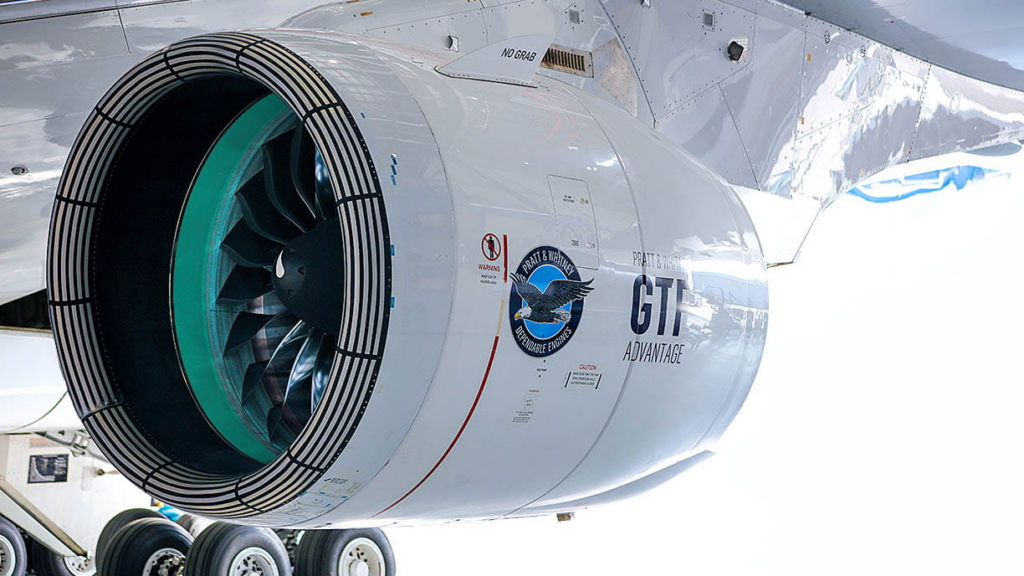
Pratt says those improvements will deliver up to twice the time on wing compared with today’s GTF engine. For airlines, longer intervals before an engine needs to be removed for maintenance could mean fewer disruptions, lower maintenance demand and less pressure on spare-engine inventories.
The promise comes against a difficult backdrop for the existing GTF fleet. Alongside durability concerns, a separate powder-metal manufacturing issue disclosed in 2023 triggered accelerated inspections of affected PW1100G engines, contributing to aircraft groundings and heavy demand for maintenance capacity.
There has been progress in recovering fleet availability. In July, RTX said PW1100-powered aircraft groundings were down 25% since the start of 2026, supported by maintenance output more than 40% above the previous year and a 23% reduction in turnaround time.
GTF Advantage is fully interchangeable and intermixable with the current engine standard. Pratt plans to transition its entire PW1100G-JM production line to Advantage by 2028.
Existing GTF operators set for durability upgrades in 2027
Airlines already operating PW1100G-JM engines will be able to access much of the new engine’s durability improvement through the GTF Hot Section Plus, or HS+, upgrade.
Pratt says the package will provide 90–95% of Advantage’s durability benefits and will be available for incorporation during maintenance visits from early 2027.
That represents a change from the previously advertised schedule: when Pratt launched HS+ in June 2025, it expected installations to begin in 2026, and its April 2026 certification announcement still referred to availability later that year. Today’s release does not explain the revised timing.
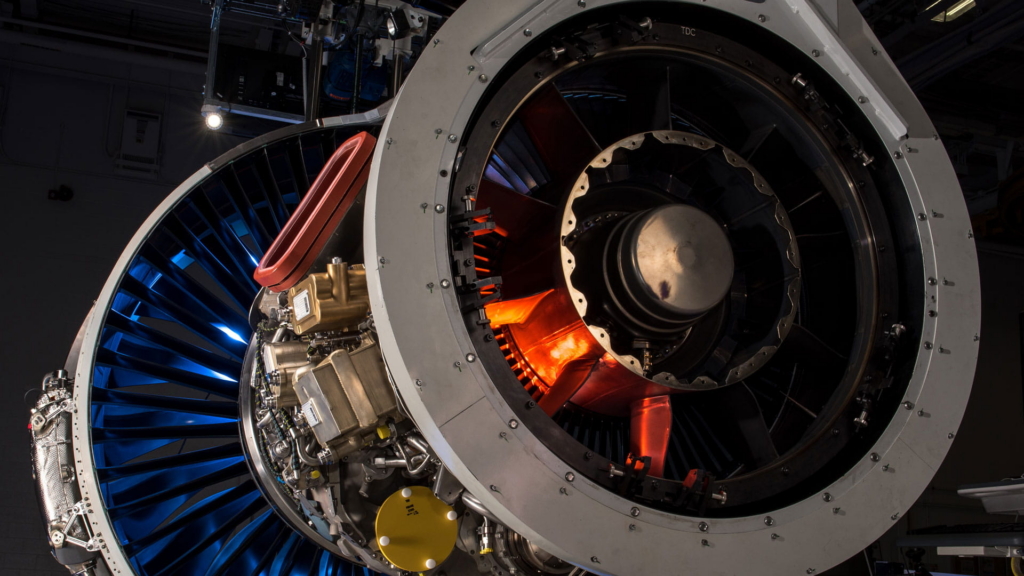
The package covers approximately 35 part numbers and was introduced as an option available for purchase. Upgraded engines will remain compatible with both current GTF and Advantage engines, allowing airlines to introduce the improvements as engines pass through maintenance.
The 90–95% figure refers specifically to durability benefits. Pratt has not presented HS+ as providing the full Advantage engine’s additional thrust.
For existing operators, the benefits will build progressively as upgrades are installed. United’s delivery begins the next chapter for new aircraft, while much of the wider fleet must await shop visits to gain the improved hot-section technology.
Sign up for our newsletter and get our latest content in your inbox.


More from


September 24, 20265 min read