


AXIS enters helicopter simulation market as operators seek more training capacity

6 min read
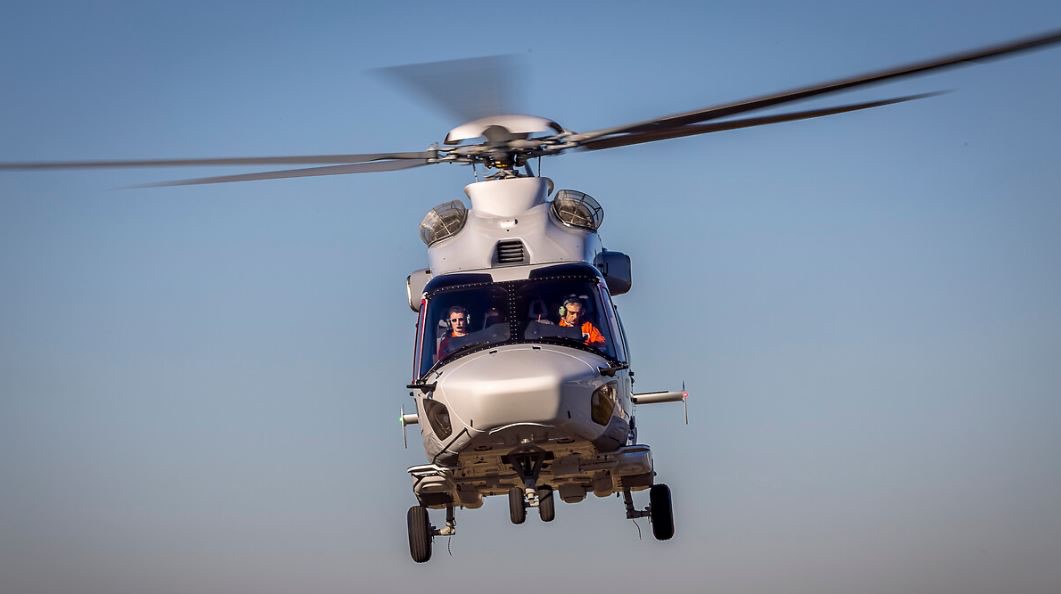
AXIS Flight Simulation is entering the helicopter simulator market with two new training devices, responding to growing demand from civil and specialist rotary-wing operators.
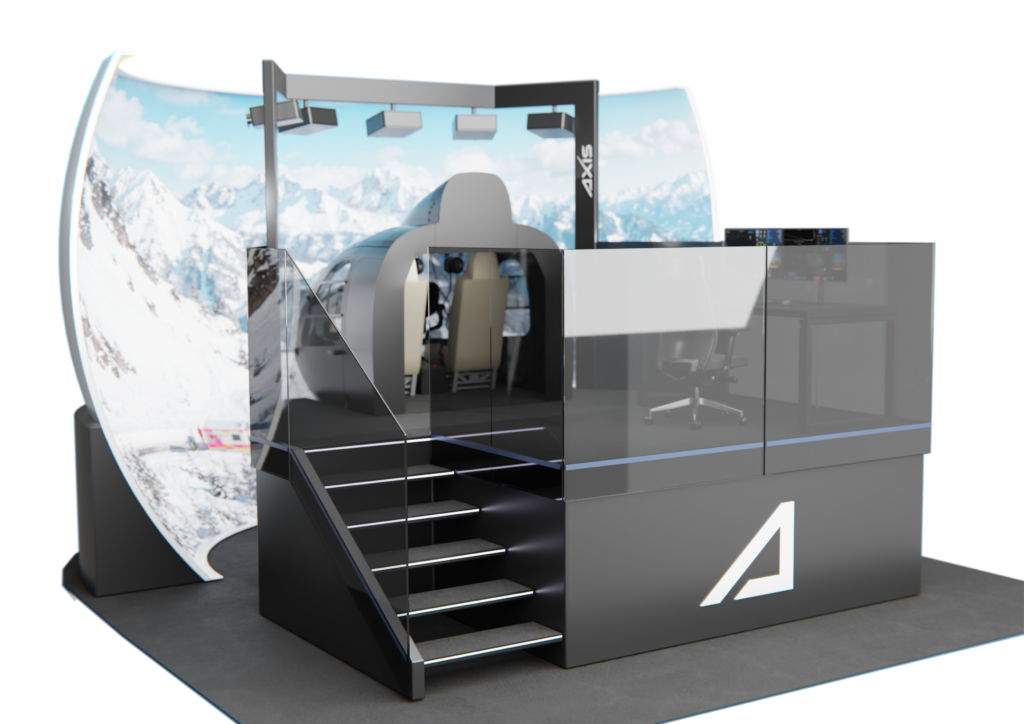
The Austrian manufacturer is developing the AX-DH, a high-fidelity device based on its existing AX-D simulator, alongside a fixed-base Flight Training Device designed to be approvable by the European Union Aviation Safety Agency and US Federal Aviation Administration.
The AX-DH will combine a high-resolution visual system with six-degree-of-freedom electric motion, while both products will feature full-scale, aircraft-specific cockpits and helicopter-specific flight dynamics and avionics models.
Christian Theuermann, executive board member at AXIS, told Aerospace Global News that the expansion had been driven partly by customers asking the company to bring its fixed-wing simulation expertise into the rotary-wing market.
“The market has been proactively approaching us and asking whether we can support operators with rotary-wing training devices,” he said. “It is a logical next step for AXIS and allows us to extend the product portfolio for our customers.”
AXIS expects its first helicopter simulator or training device to become available within approximately 20 months.
AXIS targets Airbus and Leonardo helicopters
The two devices will use a common underlying architecture, with interchangeable cockpits allowing AXIS to represent different helicopter types.
Theuermann said Airbus Helicopters and Leonardo platforms would be the first to be offered, although AXIS has not yet identified the individual aircraft models under consideration.
“The visual system, outer shell and platform will remain the same, but we will offer different helicopter types,” he explained. “We will begin with Airbus Helicopters and Leonardo platforms. The cockpit will be interchangeable, while the rest of the system will use a common architecture.”
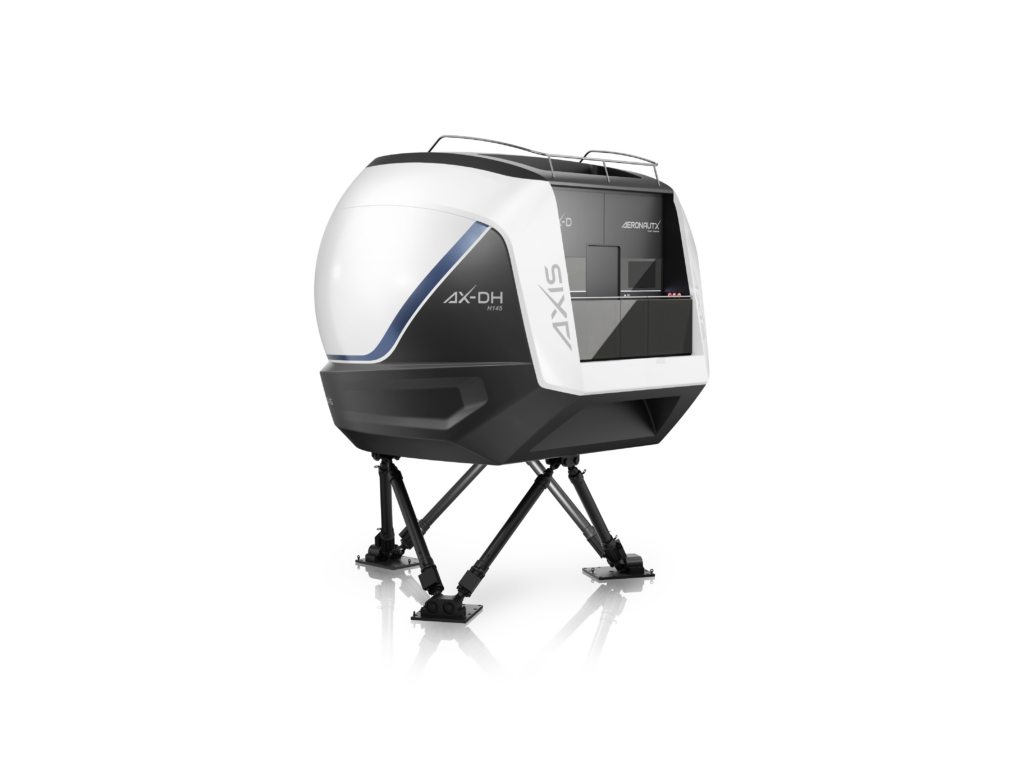
AXIS intends the devices to support individual and multi-crew training for missions including helicopter emergency medical services, search and rescue, offshore operations and night-vision-goggle flying.
Operators will also be able to switch between Instrument Flight Rules and Visual Flight Rules during approaches, allowing pilots to practise the transition from relying on cockpit instruments to using external visual references.
That outside view is particularly important in helicopter training, where pilots routinely operate close to terrain, buildings, vessels and other obstacles.
“Helicopter pilots focus much more on what is happening outside the cockpit, whereas fixed-wing pilots tend to focus more on the instruments inside,” Theuermann said. “We have some development work and design changes to complete, but it is not an entirely new area for us.”
Demand for helicopter simulator access
While helicopter simulators are not new, access to the correct aircraft type and configuration can be challenging. High-fidelity devices are expensive to develop and tend to be concentrated around aircraft manufacturers and major training centres.
For smaller operators, this can mean sending pilots considerable distances for recurrent training. A suitable device may represent the correct helicopter family without matching the operator’s precise avionics, mission equipment or aircraft variant.
Simulation is particularly valuable in the rotary-wing sector because many of its most hazardous scenarios cannot be practised safely in an aircraft. Engine failures close to the ground, inadvertent entry into cloud, degraded visual environments and emergency procedures during offshore or confined-area operations can be recreated without placing an aircraft or crew at risk.
Military demand is potentially significant too, although AXIS has not announced a defence customer or dedicated military device. Armed forces increasingly use synthetic training to preserve aircraft availability and reduce the cost of live flying, but military simulators must frequently reproduce sensors, defensive systems, communications and weapons alongside the aircraft itself.
Theuermann said AXIS was taking a measured approach to the market rather than planning for immediate high-volume production.
“We want to grow organically, step by step,” he said. “We do not need to sell five full-flight helicopter simulators every year. If we secure one contract every year or two, supported by fixed-base devices, that would provide a good foundation for growth.”
AXIS will collect its own helicopter flight data
One of the most important parts of the company’s development strategy will be the collection of its own aircraft performance data.
As it has done for its fixed-wing simulators, AXIS intends to rent and fly representative helicopters, gathering information that can supplement the data packages available from aircraft manufacturers.
“What we have done in fixed-wing, we will also do in rotary-wing: we will collect our own flight data,” Theuermann said.
“We will rent a helicopter and fly the profiles required to secure a high standard of training. We intend to collect more information than is contained in the standard OEM data package, which will help us increase the quality and fidelity of the model.”
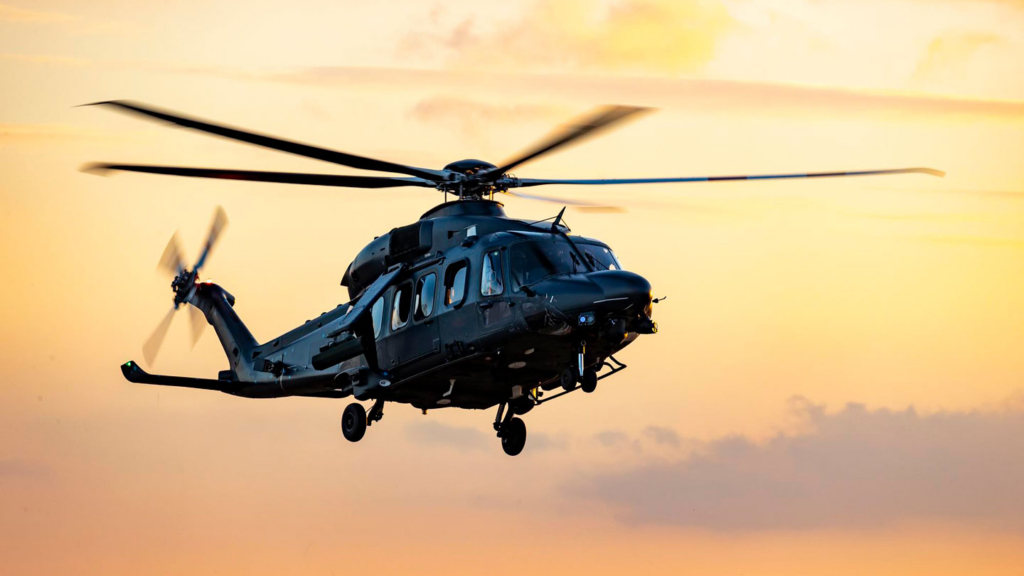
Accurately recreating helicopter behaviour presents different challenges from modelling a conventional aircraft. The simulator must represent hover and low-speed handling, ground effect and the relationship between aircraft movement and external visual references, as well as conventional cockpit procedures and systems.
The underlying development process, however, remains familiar to AXIS.
“The flight model is different, but the tasks and development steps are largely the same,” Theuermann said. “There are changes we need to make, but it is not a completely new departure.”
AI will provide objective pilot feedback
AXIS plans to support the physical simulators with virtual and mixed-reality tools, web-based course material and tablet-accessible training.
Pilots could use these products for systems familiarisation, procedural instruction and mission preparation before arriving at a training centre, reserving more expensive simulator time for the elements that require full cockpit immersion or motion.
“Our approach is to offer the complete range of training solutions, rather than only the simulator,” Theuermann said. “The pilot should arrive at the training centre well prepared, rather than encountering all the technology for the first time when training begins.”
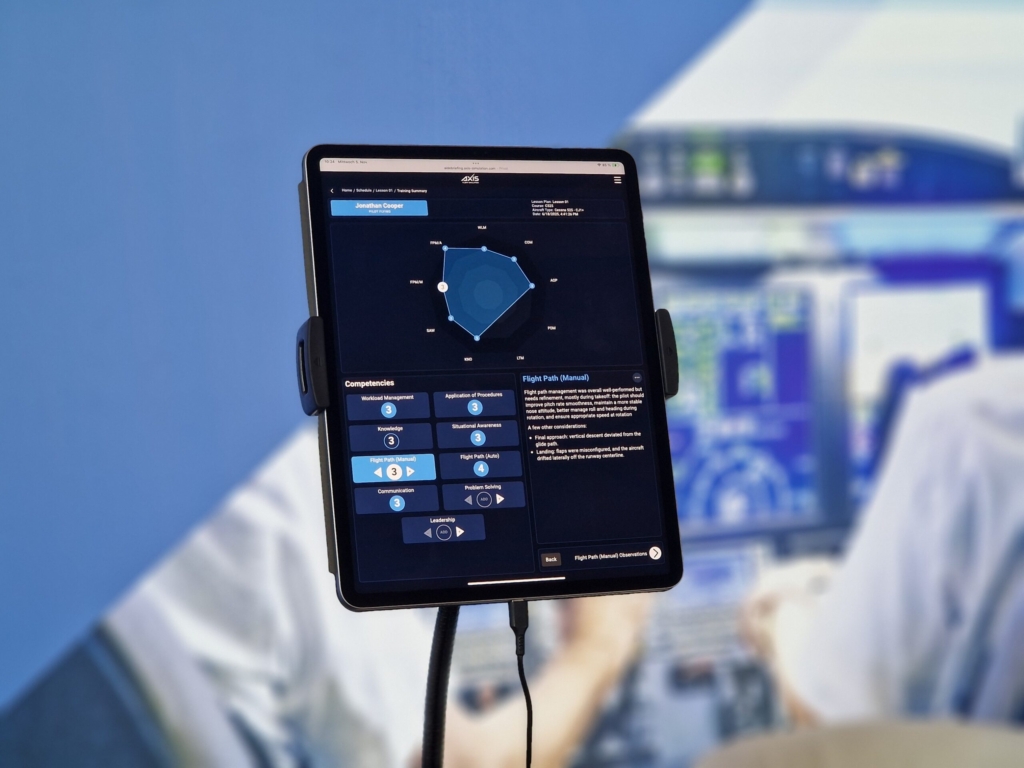
The company will also adapt its AXIS Intelligent Debriefing Station, already available for fixed-wing training, to the new helicopter devices.
The AI-based system collects simulator data and assesses the pilot’s performance against defined competencies. It can provide feedback on elements such as an approach, helping the instructor identify areas requiring further attention.
“It provides objective, data-based feedback on how the pilot flew the approach and supports the instructor in evaluating the quality of the training,” Theuermann explained.
“The instructor will always have the final word and can override the system, but it gives them an objective assessment based on the simulator data.”
Helicopters provide a bridge to eVTOL training
The move into rotary-wing simulation could eventually help AXIS address another emerging part of the aviation market: electric vertical take-off and landing aircraft.
The company is not announcing an eVTOL simulator, and Theuermann acknowledged that widespread commercial operations remain some distance away. Nevertheless, much of the knowledge developed for helicopter aerodynamics, vertical flight and external visual environments could be relevant to future eVTOL training.
“We are taking this step by step: first fixed-wing, then rotary-wing,” he said. “From rotary-wing, the move into eVTOL is not so far away.
“We know that market is still at an early stage and it will not arrive next year, but over the longer term we believe these aircraft will come. Expanding into helicopters is a step in the right direction.”
For AXIS, the two new devices therefore represent more than an additional aircraft category. They provide an entry into specialist helicopter training today and could establish the technical foundations for the emerging vertical-flight market of tomorrow.
Sign up for our newsletter and get our latest content in your inbox.


More from

August 29, 20264 min read


August 29, 20264 min read


