


India’s Super Sukhoi Su-30MKI to become a stealth jet hunter with new AESA radar


India is preparing to give its Su-30MKI fleet a new set of eyes, built for an air battle increasingly shaped by stealth fighters, long-range missiles and electronic warfare.
At the heart of the transformation is Virupaksha, a large indigenous active electronically scanned array (AESA) radar being developed by the Defence Research and Development Organisation’s Electronics and Radar Development Establishment (LRDE).
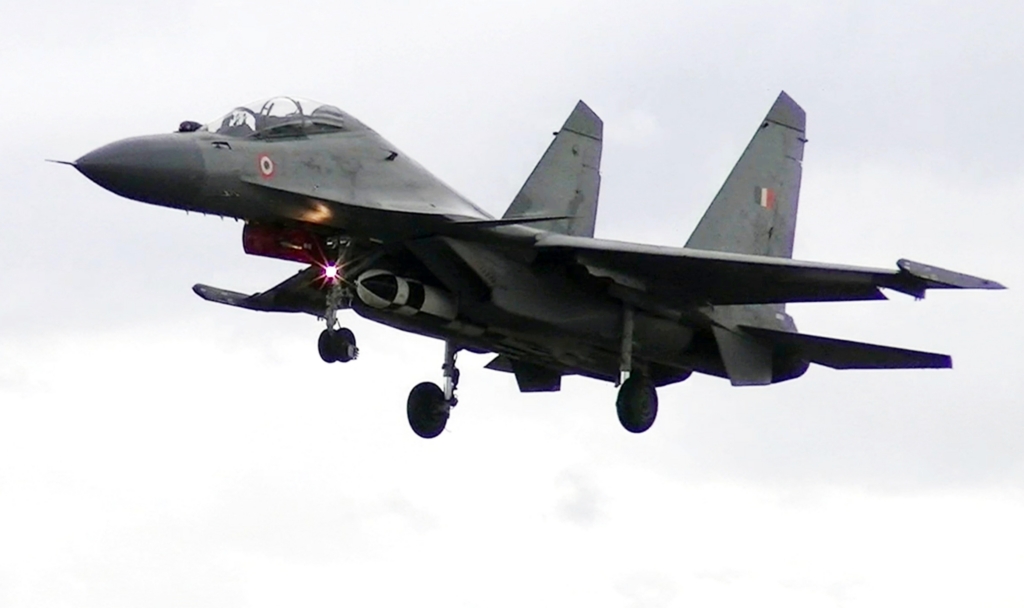
A DRDO official told Aerospace Global News that the radar has been designed specifically for the Indian Air Force’s Su-30MKI upgrade and will replace the fighter’s Russian-origin N011M Bars passive electronically scanned array radar.
For India’s largest fighter fleet, that is a fundamental change. The Su-30MKI has size, range and an increasingly formidable weapons load, but its existing radar belongs to an earlier generation. Virupaksha is intended to give it much sharper eyes, including a better chance of finding aircraft designed not to be easily found.
Virupaksha gives India’s biggest fighter a much more powerful radar
DRDO publicly displayed Virupaksha at Aero India 2025 in Bengaluru, where officials told AGN that the radar architecture had been finalised.
The system has since moved into hardware evaluation. Indian media reporting said Virupaksha achieved its first power-on, known as “First Light”, in February 2026.
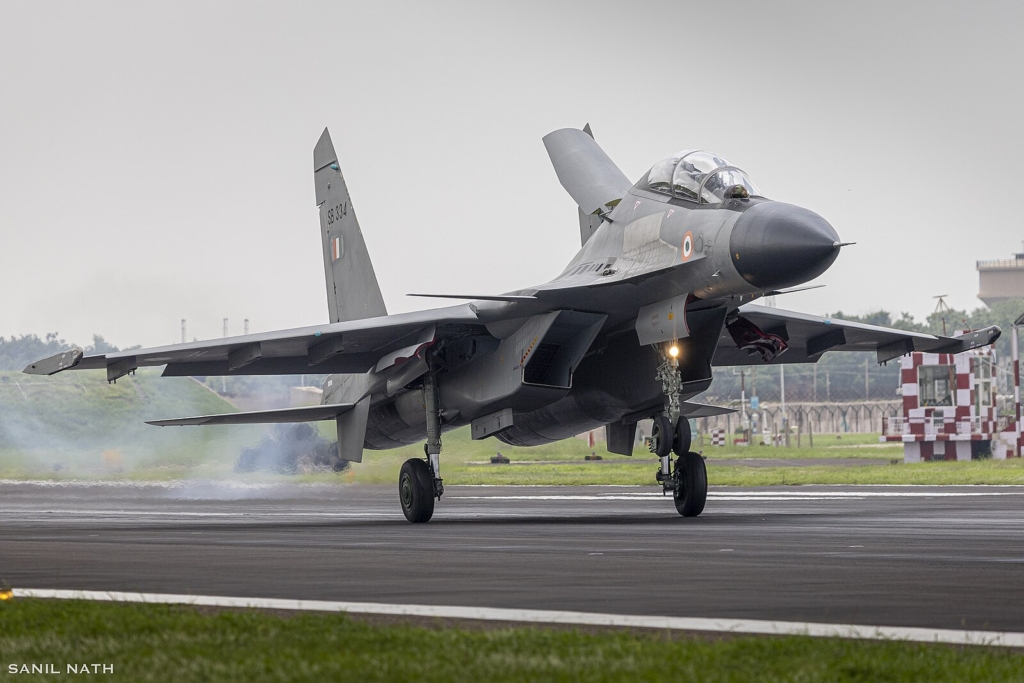
The radar takes advantage of the considerable space available in the Su-30MKI’s nose. Its antenna measures around 950mm in diameter and carries approximately 2,400 gallium nitride (GaN) transmit/receive modules.
The result is a considerable step beyond the Bars radar.
Virupaksha is designed as a 4D radar, simultaneously determining a target’s range, azimuth, elevation and relative velocity.
DRDO officials said it can operate across air-to-air, close-combat, air-to-ground, air-to-sea and navigation modes, while advanced electronic counter-countermeasures are intended to keep it functioning in a heavily contested electromagnetic environment.
GaN technology is central to that performance. It allows higher power density than older semiconductor technologies, while offering advantages in heat management and efficiency, important when squeezing thousands of T/R modules into a fighter’s nose.
Can the Su-30MKI really hunt stealth fighters?
That is the most intriguing part of Virupaksha and also where some caution is required.
DRDO officials have credited the radar with tracking up to 100 airborne targets simultaneously and guiding six missiles against separate targets. They have also cited a detection range of up to 200km against a target with a radar cross-section of 0.01 square metres.
AGN understands from DRDO officials that improving the Su-30MKI’s ability to detect and track low-observable targets is among the objectives of the new radar.
However, detailed flight-test data substantiating the reported 200km figure have not been publicly released by DRDO. But even an advanced AESA radar cannot make a stealth aircraft easy to detect.
Stealth reduces the distance at which a radar can obtain and maintain a useful track. A more powerful array, faster electronic beam steering, sophisticated signal processing and better resistance to electronic attack can improve the odds of finding difficult targets.
That matters increasingly to India. China already operates the Chengdu J-20 stealth fighter, while arch-rival Pakistan has publicly discussed acquiring China’s J-35A.
Virupaksha is therefore being developed for a threat environment very different from the one in which the Su-30MKI first entered Indian service.
Indian industry is being brought into Virupaksha production
The radar programme is also moving towards a broader Indian industrial effort.
DRDO is using a Development-Cum-Production Partner model intended to take Virupaksha from development through integration, manufacture and long-term support. Astra Microwave and Bharat Electronics are among the companies being brought into the radar’s development and production ecosystem, alongside HAL and other Indian private-sector manufacturers.
HAL has the pivotal aircraft-level role. As the Su-30MKI manufacturer and upgrade integrator in India, it will handle integration of the new radar with the fighter.
The industrial effort also draws on companies including Larsen & Toubro, ICOMM Tele and Alpha Design Technologies for radar hardware, electronics, assemblies and related work, with Astra Microwave involved in high-frequency electronics and active-array hardware.
This is important for another reason. DRDO retains the radar’s design and intellectual-property rights, meaning India is seeking control not merely over production but also over future upgrades and support.
Testing is expected to intensify through 2026, with development work including electromagnetic compatibility evaluation and airborne testing. Some Indian media reports said a modified Hawker 800 business jet is being used as an airborne radar testbed, with integration and flight testing on a modified Su-30MKI to follow. Initial radar deliveries are being targeted from mid-2027.
Virupaksha is only one part of India’s ‘Super Sukhoi’ transformation
India initially plans to modernise 84 Su-30MKIs under the wider “Super Sukhoi” programme, estimated at around INR630 billion ($7.2 billion).
The work goes considerably beyond replacing the radar. The aircraft are expected to receive new cockpit and avionics systems, indigenous electronic warfare equipment, upgraded mission computers and integration with newer Indian weapons.
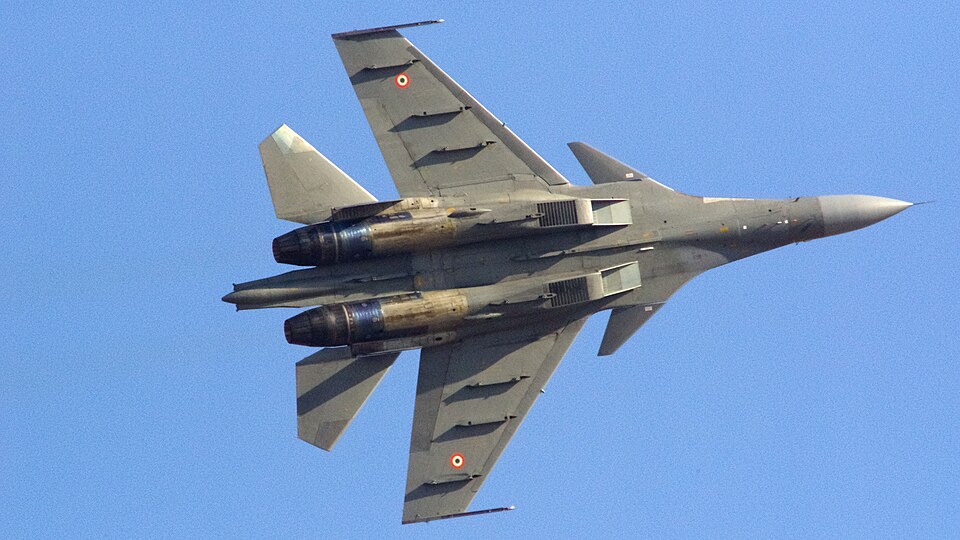
That combination matters more than any individual piece of hardware.
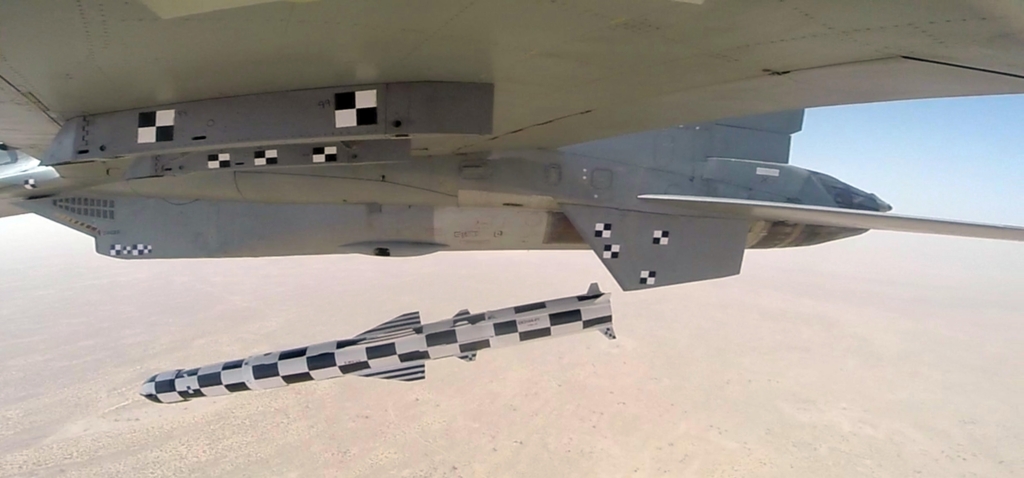
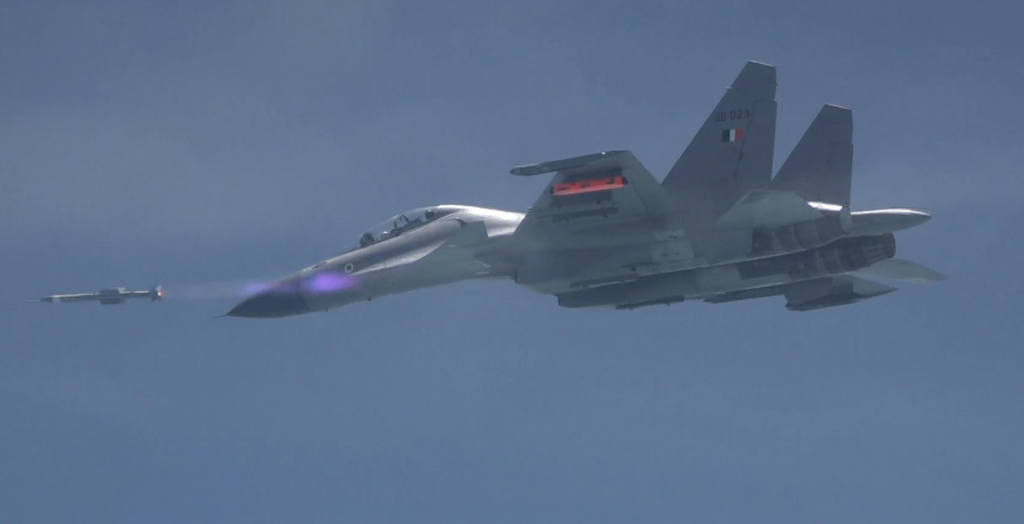
The Su-30MKI already carries India’s Astra beyond-visual-range air-to-air missile and the air-launched BrahMos supersonic cruise missile. A more capable radar gives the fighter a better chance of exploiting increasingly long-range weapons by finding, tracking and maintaining information on targets farther away and in a more heavily contested electronic environment.
A Russian fighter is becoming increasingly Indian
That may ultimately be the most significant part of the Super Sukhoi programme.
The Su-30MKI began as a Russian-designed fighter extensively tailored to Indian requirements. With its long-range reach, precision engagement ability, and powerful radar systems, it stands as one of the backbone platforms of the Indian Air Force.
India is now attempting something more ambitious: retaining the basic aircraft while progressively replacing or supplementing Russian sensors, avionics, electronic warfare equipment and weapons with Indian systems.
Virupaksha sits at the centre of that transition.
India is also investing in keeping the Su-30MKI at the heart of its fighter fleet. In December 2024, the Ministry of Defence signed a $1.5 billion contract with HAL for 12 additional Su-30MKIs and associated equipment, replacing aircraft lost in accidents and sustaining the production line at Nashik.
The new fighters will have 62.6% indigenous content, with deliveries scheduled between 2027 and 2029. With the IAF operating roughly 260 Su-30MKIs, the new order and the Super Sukhoi upgrade underline New Delhi’s intention to keep the heavyweight fighter relevant for decades to come.


