


Archer’s ZEE AI predicts aircraft movements minutes before they happen


Archer Aviation, the company behind the Midnight eVTOL, says its AI-powered aviation foundation model, ZEE, has demonstrated the ability to predict aircraft movements across airport surfaces several minutes into the future.
The technology is being developed as a decision-support tool for pilots and air traffic controllers, with the aim of identifying potential conflicts before they develop into safety risks.
Archer describes the latest demonstration as a “frontier breakthrough” in its wider effort to develop what it calls “physical AI” for aerospace and defense. However, ZEE remains under development and larger-scale testing is now underway.
ZEE targets the risk of airport ground incidents
The US National Airspace System handles more than 45,000 flights each day, creating a complex operating environment both in the air and on increasingly busy airport surfaces.
Runway incursions remain a particular focus for regulators. The FAA’s latest Runway Incursion Mitigation report referenced 1,268 runway incursions during FY2024. These incidents ranged considerably in severity and are defined as the incorrect presence of an aircraft, vehicle or person on the protected area of a runway.
The FAA already uses a range of technologies to improve situational awareness on airport surfaces. Systems including ASDE-X and Airport Surface Surveillance Capability can track aircraft and vehicles and alert controllers to potential conflicts, while newer systems are being rolled out to additional airports.
Archer wants ZEE to go a step further by moving beyond monitoring what is happening now and predicting what aircraft are likely to do next.
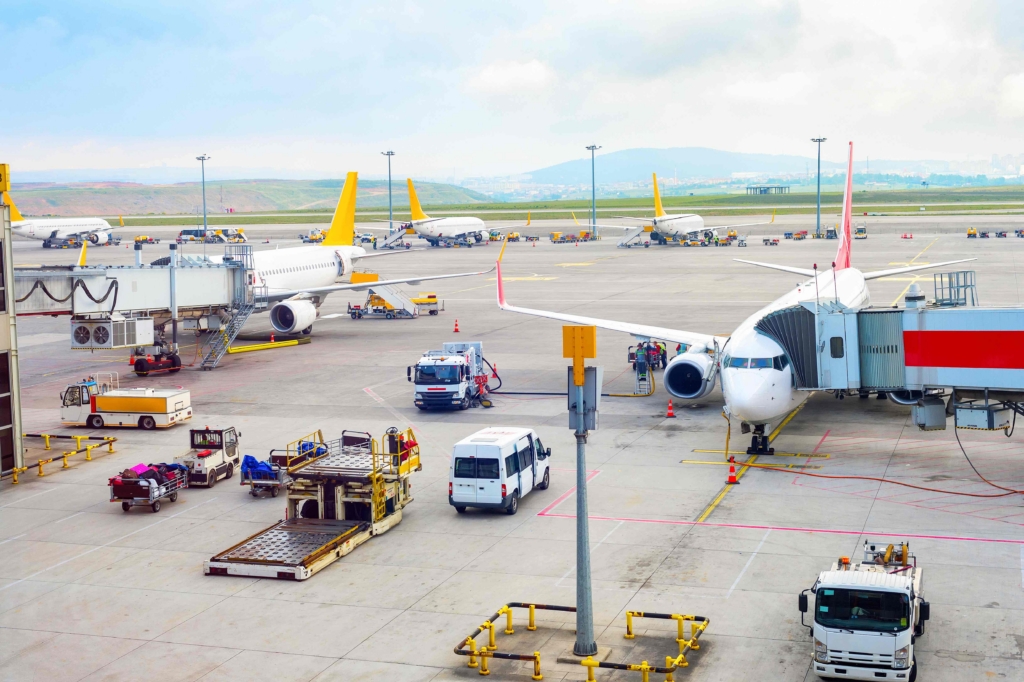
The company says ZEE could eventually provide an additional predictive layer for air traffic management, processing complex aviation data in real time and giving pilots and controllers more time to react when an aircraft appears to be deviating from its expected path.
Speaking about the technology, Mario Srouji, Vice President of AI Products at Archer, said ZEE could transform observations from several different sources into predictive context, potentially identifying flight path anomalies and cross-route conflicts before they develop into safety risks.
“We believe ZEE can give the humans in the loop the most critical asset in aviation: time to react,” said Srouji.
How does Archer’s ZEE AI model work?
According to Archer’s technical paper on the ZEE foundation model, aviation already produces huge quantities of data.
Archer estimates that around 85% to 90% of daily global flights operate with active Automatic Dependent Surveillance-Broadcast (ADS-B) tracking. This sits alongside other sources including ATC communications, weather reports, flight plans and Notices to Airmen (NOTAMs), but Archer argues much of that information remains fragmented across different systems.
Pilots and controllers therefore still have to interpret information from multiple sources, often while managing rapidly changing situations.

Predicting aircraft movement on the ground brings another challenge. An aircraft approaching a taxiway intersection may have several possible routes available to it, making its future path less predictable than simply extending its current trajectory.
Archer says ZEE was purpose-built to address this using a generative AI technique known as “conditional flow matching”. Instead of forecasting one rigid path, the model attempts to calculate a distribution of possible trajectories an aircraft could take.
This is combined with a vision transformer trained using high-resolution satellite imagery, allowing ZEE to identify features including runways, taxiways and aprons and use the physical airport layout when calculating possible aircraft movements.
If the approach can be validated at scale, the significance is that airport safety systems could potentially move beyond identifying existing or imminent conflicts towards predicting them several minutes before they develop.
ZEE is being tested at Hawthorne Airport
Archer has begun testing ZEE at Hawthorne Airport in California, which the company began acquiring in stages in late 2025 as both a future air taxi hub and a testbed for its AI technologies.
Archer completed the first phase of the transaction in December 2025, taking control of the real estate that makes up the airport, and has since expanded its operations there.
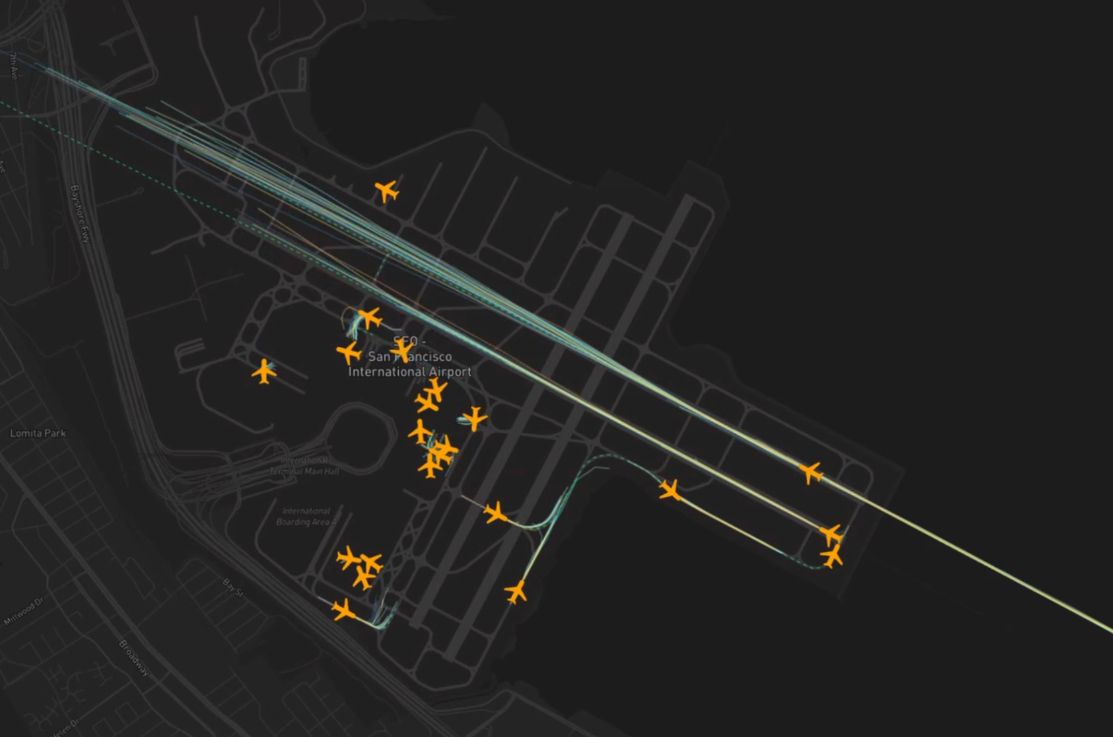
According to the company, early ZEE results measured against real-world tracking data have been strong, although Archer has not yet published independent validation of those results. Larger-scale testing is now underway, and the company plans to establish pilot programs to further evaluate the technology.
Archer says it also intends to work with government agencies to build the “rigorous empirical foundation” needed to demonstrate whether ZEE can operate effectively as a predictive safety tool supporting controllers and pilots.
“Our goal with ZEE is to unleash a far more powerful and scalable approach than traditional prediction mechanisms in aviation,” the Archer technical paper states.
“Capable of running on-device in the cockpit, or on the cloud, ZEE is the foundation of Archer’s physical AI strategy. Today, ZEE serves as decision support for pilots, controllers and airline operators. Tomorrow, we believe it can act as end-to-end autonomy across every layer of aviation.”


