


Boeing’s new Air Force One could be obsolete before it even enters service

5 min read
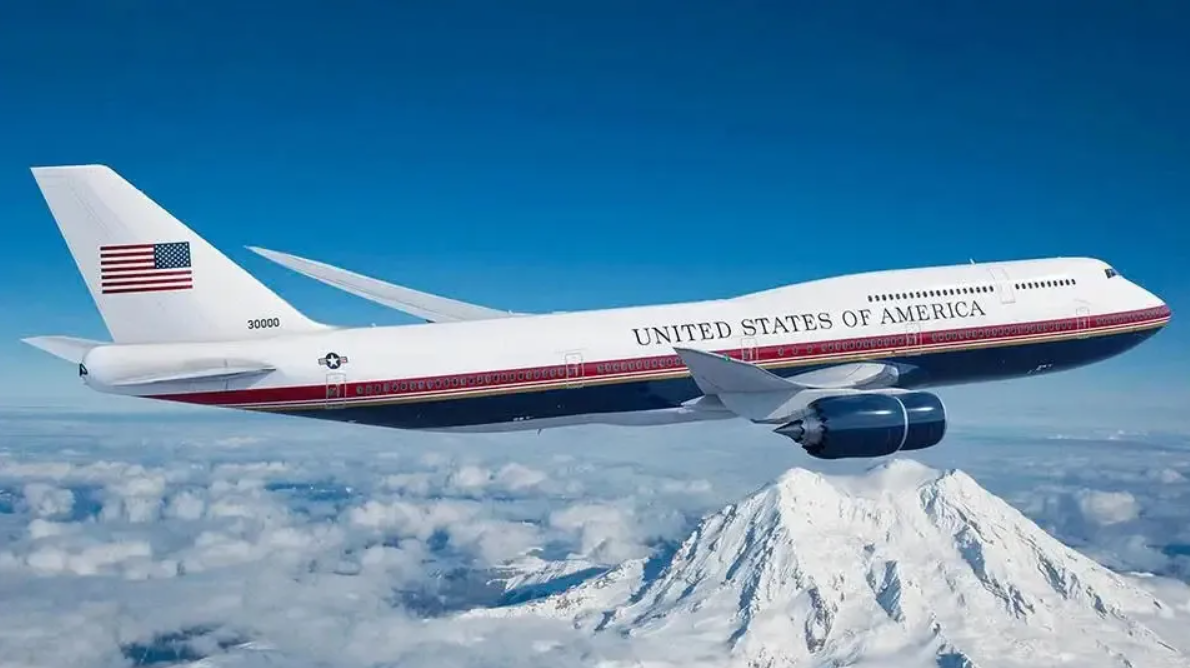
The much-delayed programme to bring two new Air Force One aircraft online is facing further setbacks as a catalogue of ongoing issues continues to plague the process to prepare the aircraft for presidential service.
According to a new report released by the US Government on 3 August (prepared as part of the Pentagon’s fiscal 2027 budget submission), the programme is suffering from various complications that will delay the delivery of the two converted Boeing 747-8 aircraft, known in US military nomenclature as the VC-25B, until 2028.
The issues include the primary communications system (which requires replacing), interior design problems, electrical wiring issues, structural defects, and preparations for flight testing, all of which will need resolving before the aircraft can be handed over to the US Air Force (USAF). “The design maturity for the aircraft interior continues to lag due to numerous technical and certification issues,” the report stated.
Communications system will be obsolete by 2028
As reported by Avbrief.com, the US Government report said that a secret communications system which has already been installed in the two new VC-25B aircraft will pose a security threat before the delivery of the aircraft in 2028. Iit will cost tens of millions of dollars to replace the system so that the aircraft are fit-for-purpose as the primary presidential transport aircraft.
“The current Mission Communication System (MCS) baseline is not viable past 2028 due to cybersecurity and obsolescence issues,” said the USAF in an update issued in April and recently declassified.
“Unmitigated risk will drive an inability for Authority to Connect and Operate on vital National Security Systems required for Presidential communications,” the report added.
According to the authorities, removing and replacing the MCS system will cost an estimated $73.3 million, only half of which has been allocated and approved in the current USAF appropriation budget.
The revelation marks a major setback for a programme that is already many years behind schedule.
Cockpit and cabin windows are also an issue
Among the other issues currently delaying the VC-25B programme are supply chain issues linked to cabin and flight deck windows for the aircraft. The report indicated that the current window contractor (GKN) is having difficulty manufacturing the cabin windows to the USAF specifications. Any further delays could delay pressurisation tests, interior installation and ground and flight testing even further.
“Challenging defect criteria have been established which require defect-free sub-components, clean room facilities, and detailed processes to reduce and eliminate particles in the assembly of the windows,” the report says.
There are also issues with the cockpit windshields, according to the report. The original contractor for these components ceased trading, and the replacement contractor assigned to take over the contract (PPG) has not yet received design certification.
According to the report, there are no spare commercial 747-8 windshields available, and so PPG is having to develop a replacement that is suitable for use on the VC-25B.
The cabin interior continues to be delayed
Another major issue affecting the progress on the two aircraft is the design and supply of the aircraft’s bespoke presidential interior. Having already replaced the original contractor (GDC Technics) for this task in 2021, this move already pushed back the delivery of the aircraft until 2028 – four years behind schedule and around the time when President Donald Trump is due to leave office.
The delays to the cabin interior (also being experienced by commercial carriers such as Lufthansa and Air India) have impacted the installation of various other linked systems, including electrical wiring and other structural modifications.
This has resulted in “inefficient engineering work” and repeated changes to parts of the aircraft that Boeing had already begun modifying, delaying the programme even further.
Additionally, repairs are still needed to cracks found in structural stringers on both aircraft. Stringers run along the fuselage and help the fuselage bear structural loads imposed by flight. As of the date of the report, 95 repairs or installations remained on the first aircraft and 142 on the second.
The first aircraft to be delivered by 2028?
According to the USAF, despite these ongoing issues, it is continuing to work toward delivery of the first aircraft in 2028 and the second in 2029. However, the report indicated that the planned schedule will be difficult to maintain should more unexpected work emerge, or aircraft testing takes longer than expected.
In July 2026, Boeing stated that it had recorded a further $280 million loss on the programme during the second quarter, after adding production and certification resources in an effort to shore up the delivery schedule.
Additionally, Boeing announced that it had agreed with the USAF to transfer the aircraft from FAA certification to the equivalent military certification process, as the planemaker looks to reduce risks during the certification and flight testing processes.
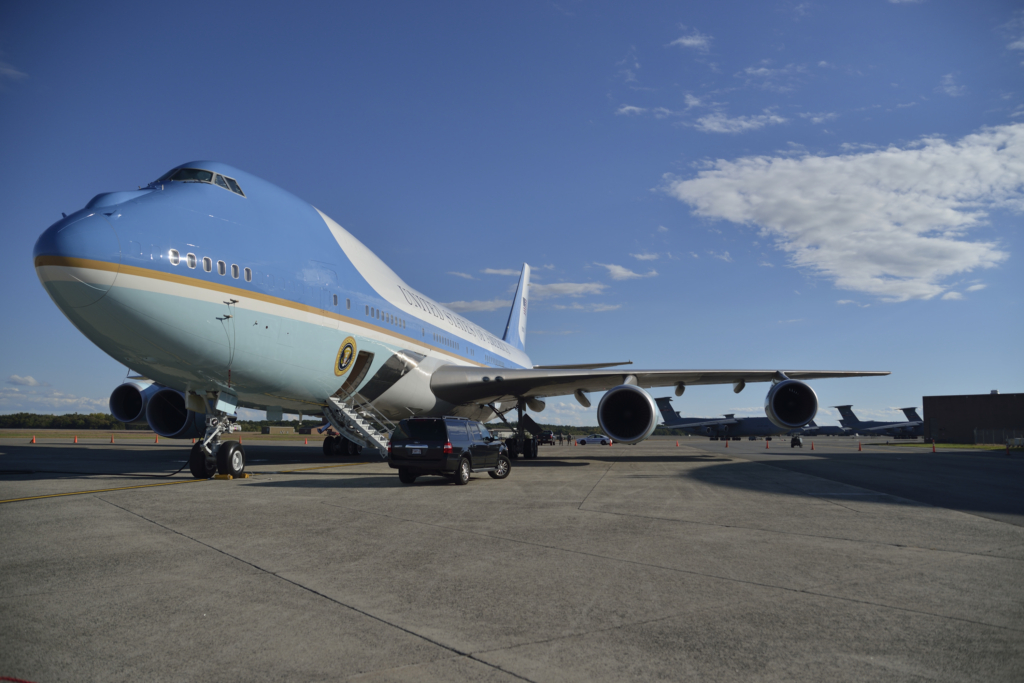
In the meantime, the USAF said that it remains committed to keeping the two 30-year-old VC-25A aircraft that now fill the ‘Air Force One’ role “available and mission-ready until the VC-25B can support full mission requirements.”
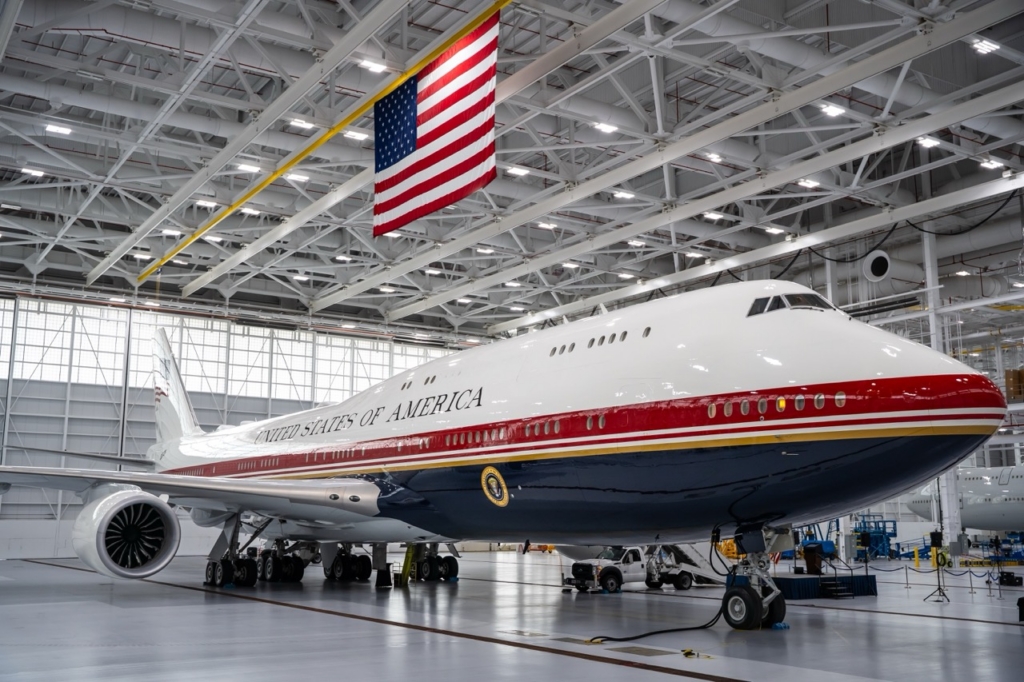
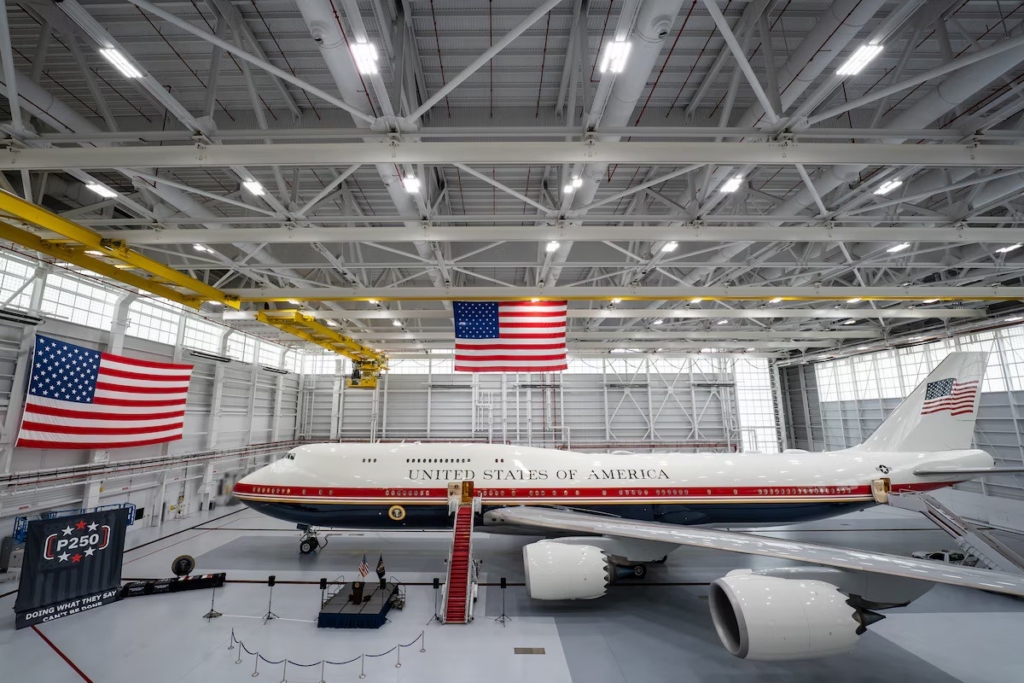
Notably, the report made no mention of the 10-year-old 747-8 Boeing Business Jet gifted to the Air Force by the Qatari Royal Family. Having been formally rolled out and handed over to the USAF in July ahead of the USA250 celebrations, the aircraft is now back in Texas to have apparent security gaps addressed by defence contractor L3Harris.
These security issues came to light when the aircraft was supposed to take President Trump from Turkey to Washington after the NATO Summit in July. The US Secret Service insisted Trump use an older VC-25A as far as the UK due to a heightened security threat in Turkish airspace. The president later switched to a C-32A for the flight to the UK, as reported by the BBC.
The president then made an aircraft switch to the former Qatari jet at an airbase (RAF Mildenhall) in the UK before continuing his journey to Washington. The exact nature of the additional work required has not been made public.
Sign up for our newsletter and get our latest content in your inbox.


More from

September 27, 20263 min read

September 26, 20263 min read


September 25, 20264 min read


September 25, 20264 min read

September 24, 20262 min read


