


NASA’s F-15 and F/A-18 research jets get patriotic makeover for Freedom 250

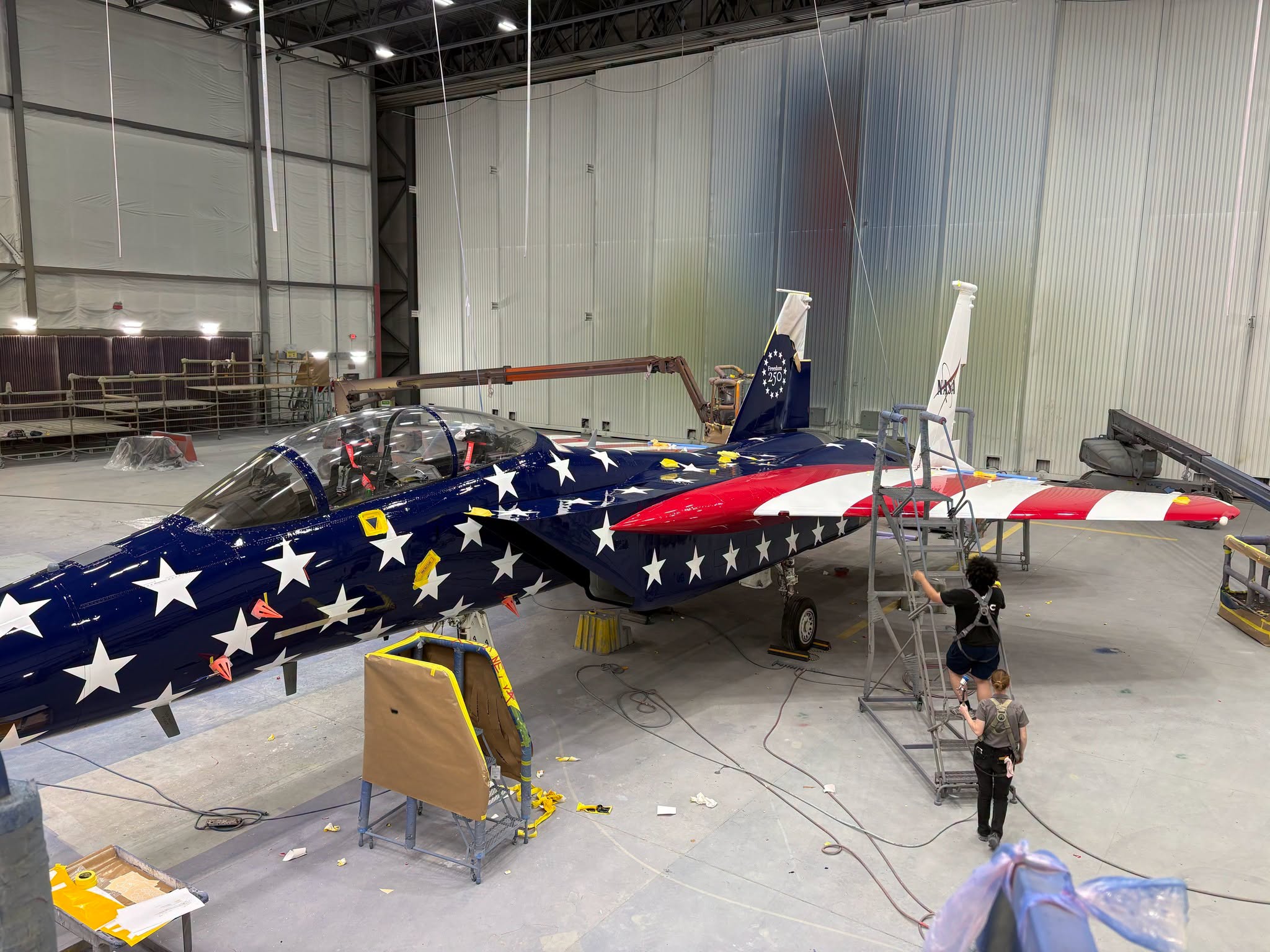
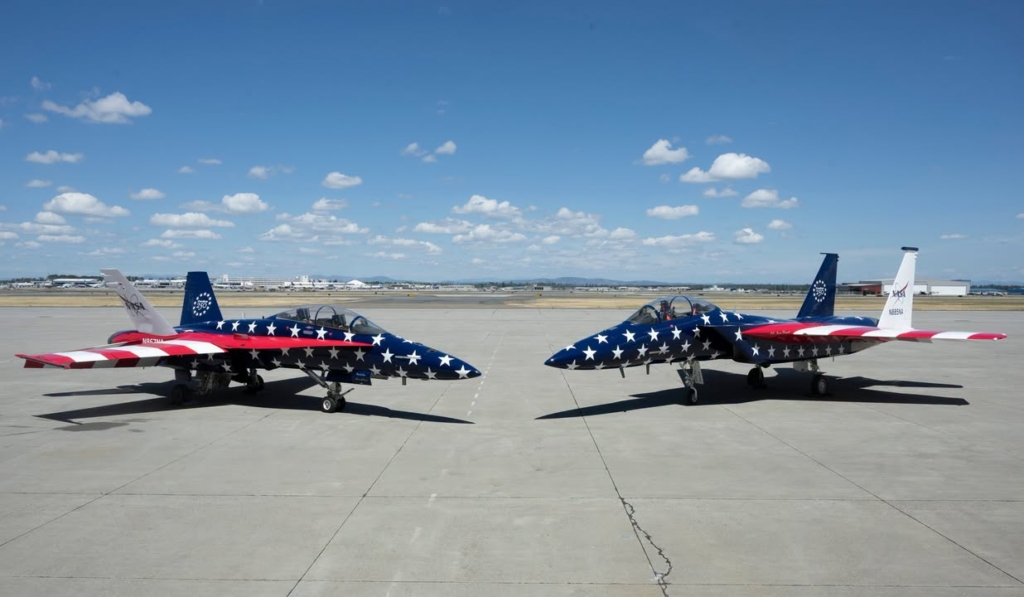
NASA has used two of its longest-serving research aircraft to commemorate the 250th anniversary of the United States’ Declaration of Independence, repainting an F-15 and an F/A-18 in a special red, white and blue livery during the Freedom 250 celebrations on 4 July.
The agency said the colours were chosen to honour America’s legacy of “determination, service and unity”, describing the repainting as both “a tribute to the past and a salute to the future”.
While the new appearance celebrated a historic national milestone, the two aircraft continue to serve a far more specialised purpose as flying laboratories at NASA’s Armstrong Flight Research Center in California, supporting experimental flight programmes and testing technologies that are shaping the future of aviation.
For 250 years, America has inspired generations to dream bigger, aim higher, and explore farther.
— NASA Administrator Jared Isaacman (@NASAAdmin) July 5, 2026
Yesterday was a celebration of that enduring spirit and a reminder that our greatest adventures are still ahead.
Happy Independence Day, America. 🇺🇸 pic.twitter.com/Bm0QvLWvHR
Unlike their military counterparts, NASA’s F-15s and F/A-18s are not flown in combat. Instead, they form an integral part of the agency’s aeronautics research fleet, carrying experimental equipment, supporting flight-test campaigns and acting as chase aircraft for some of NASA’s most advanced aerospace programmes.
NASA F/A-18 supports X-59 testing and future space mission technology
NASA Armstrong operates three two-seat F/A-18 research aircraft that have become among the agency’s most versatile flight-test platforms.
The aircraft support aeronautics research, pilot training and scientific flight testing while also serving as airborne camera platforms and chase aircraft.
Flying alongside experimental aircraft, they transmit live video to engineers on the ground, allowing flight-test teams to monitor aircraft performance in real time and enhancing overall mission safety.
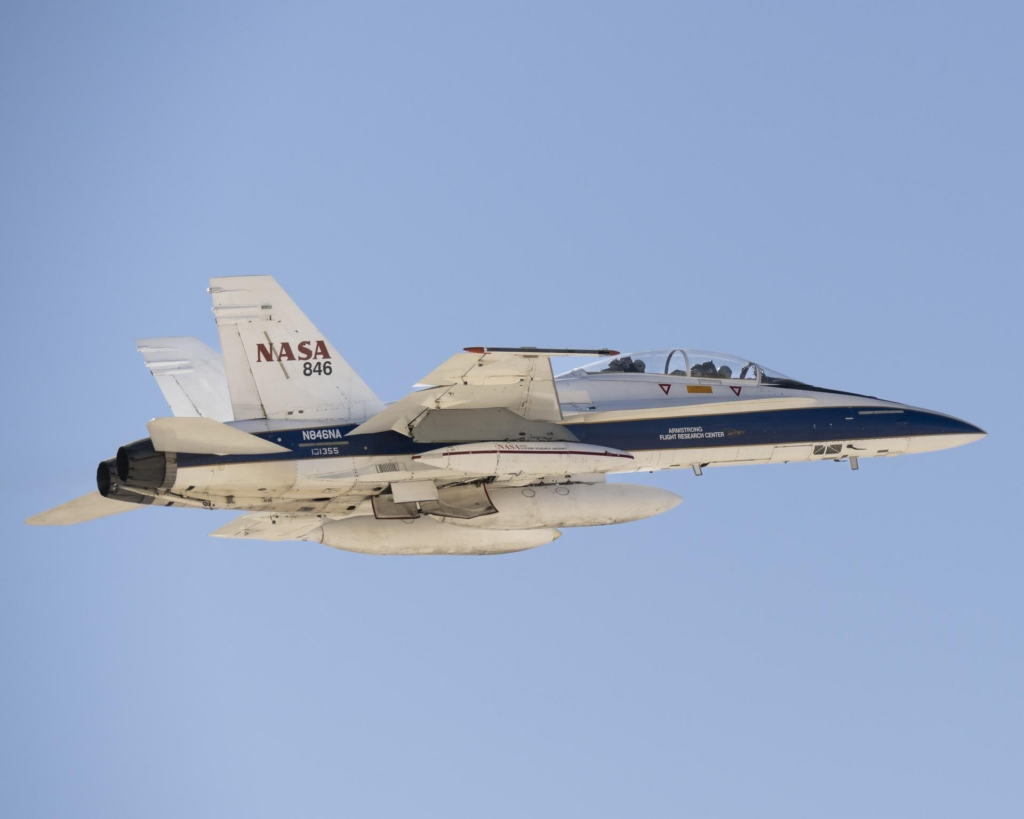
The fleet regularly supports some of NASA’s most demanding programmes. Earlier this year, one of the F/A-18s evaluated a commercial precision landing navigation system intended for future space missions by carrying a Doppler lidar sensor beneath its wing during test flights from Edwards Air Force Base.
The aircraft has also played a prominent role in NASA’s X-59 Quesst programme, acting as a chase aircraft during flight testing of the agency’s quiet supersonic demonstrator.
Because the aircraft can be rapidly configured for different missions, they continue to support a broad range of research activities, from evaluating new aerospace technologies to documenting experimental flights for engineers and scientists.
NASA’s modified F-15 remains one of its most capable high-altitude research aircraft
The F-15 has followed a similarly distinctive path after transitioning from military service to scientific research.
NASA currently operates modified, two-seat F-15D aircraft dedicated to aerodynamic, propulsion and instrumentation research.
Capable of flying safely at altitudes of up to 60,000 feet, the aircraft provide an ideal platform for testing experimental technologies in conditions beyond the operating envelope of many conventional aircraft.
The F-15s also perform an important safety role as chase aircraft, escorting experimental vehicles while transmitting live imagery back to mission controllers throughout flight tests.
Among their most recent assignments has been support for NASA’s Quesst programme.
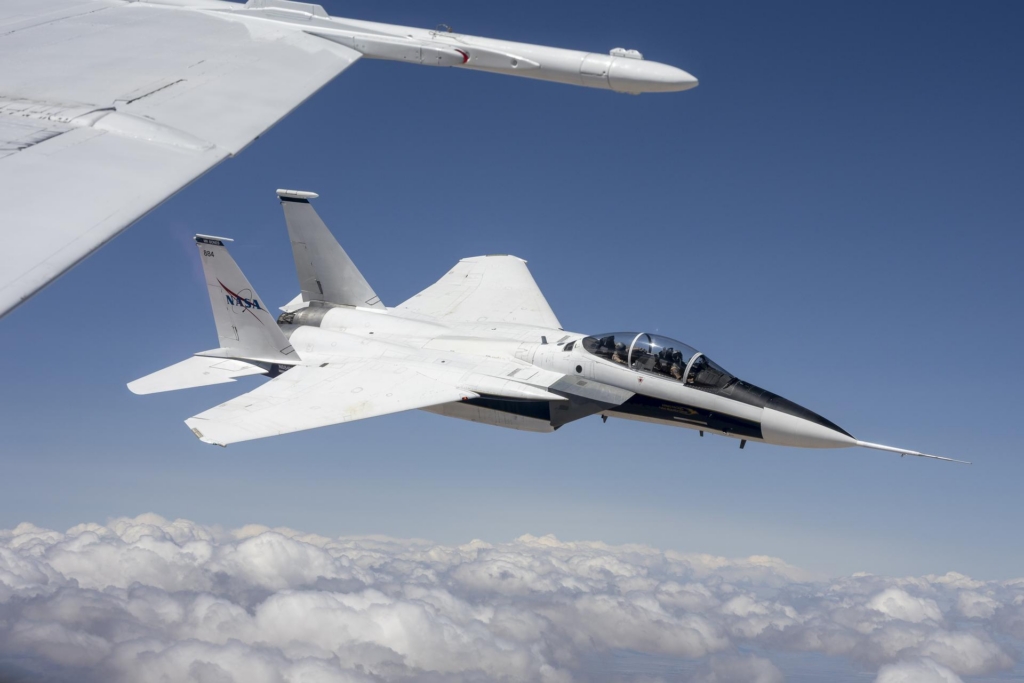
One of the aircraft has carried a specialised shock-sensing probe designed to measure the strength and characteristics of supersonic shock waves in flight, helping researchers better understand how future supersonic aircraft could minimise the disruptive sonic booms that have historically restricted overland operations.
The aircraft’s combination of speed, altitude capability and payload flexibility continues to make it one of NASA’s most valuable airborne research assets decades after the F-15 first entered service.
Why NASA still uses fighter jets for aerospace research
NASA’s continued use of fighter aircraft reflects their unique suitability for demanding flight-test missions rather than any military requirement.
Both the F-15 and F/A-18 offer high performance, wide operating envelopes, excellent manoeuvrability and the ability to fly safely alongside experimental aircraft throughout complex test profiles.
Those characteristics allow researchers to evaluate new sensors, flight-control systems, propulsion technologies and scientific instruments in real operating conditions before they are introduced into future aerospace programmes.
Equally important is their role as chase aircraft. By accompanying experimental vehicles throughout their missions, the fighters enable engineers to obtain visual observations and high-definition imagery while providing an additional layer of flight safety during tests involving prototype aircraft.
NASA Freedom 250 aircraft link US aviation heritage with future flight
The patriotic paint scheme unveiled for Freedom 250 serves as a reminder that some of NASA’s most recognisable aircraft continue to make important contributions well beyond their original military roles.
From supporting advanced aerodynamics and propulsion research to helping develop technologies for quieter supersonic flight and future space exploration, the F-15 and F/A-18 remain indispensable tools for engineers working to solve some of aviation’s most complex challenges.
Featured image: NASA


