


Sustainable aviation fuel is no longer just about climate, it is about energy security

9 min read

Sustainable aviation fuel has usually been discussed as aviation’s most important route to net zero. But at this year’s SAF Congress, which took place this week in Amsterdam, another argument kept breaking through.
SAF is no longer just a climate story. It is becoming an energy security story.
That shift has been sharpened by renewed instability in global oil markets, concern over the Strait of Hormuz and the growing recognition that aviation remains heavily exposed to fossil fuel supply chains it does not control.
The International Energy Agency has warned that around a quarter of the world’s seaborne oil trade transited the Strait of Hormuz in 2025, with limited options to reroute flows if the route is disrupted.
For aviation, that vulnerability has a direct consequence. Jet fuel is not just another operating cost. It is the industry’s core energy source, and its availability depends on a global system exposed to conflict, refining capacity, and price shocks.
Against that backdrop, SAF is increasingly being framed not only as a way to reduce lifecycle emissions but as a way to build regional fuel resilience.
SAF is moving from climate policy to energy security
That changing narrative was put plainly by Maarten van Dijk, CEO of SkyNRG, during a Project Sky Power panel on e-SAF and final investment decisions.
“The whole resilience topic is taking precedence over the sustainability topic,” he said.
For van Dijk, that does not mean the climate case for SAF has weakened. Rather, the energy security case is now being layered on top of it.
“In Europe, we’re combining and saying, if we move into this new space, if we need to think about our energy security, let’s do it in a sustainable way,” he said. “Combine the topics.”

For years, the European SAF debate has been driven largely by decarbonisation targets, the ReFuelEU mandate and the need to cut aviation’s climate impact. But the conversation is now widening to include industrial competitiveness, resilience and strategic control over future fuel supply.
Van Dijk said European institutions that had previously approached the issue from different angles are now beginning to align around the same question: “How do we combine this topic to make sure that Europe builds up an energy system that’s resilient and sustainable for the future?”
Europe does not just need SAF; it needs European SAF
The question of where SAF is produced is becoming almost as important as how much is produced.
Under ReFuelEU Aviation, fuel suppliers must provide an increasing share of SAF at EU airports, starting at 2% in 2025 and rising to 6% in 2030. Over time, the mandate also introduces a synthetic aviation fuel sub-target, intended to drive the development of eSAF.
But mandates do not guarantee that the fuel will be produced in Europe. Nor do they guarantee that Europe will control the feedstocks, technologies or infrastructure needed to supply it.
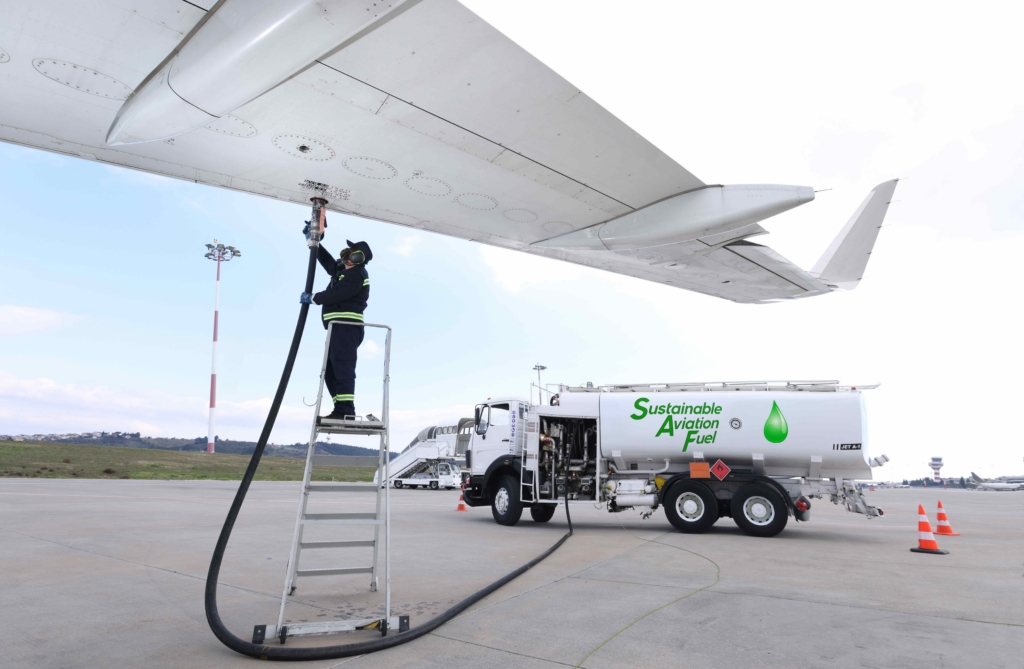
That was the risk van Dijk was keen to highlight. If Europe pays a premium for SAF but allows the industrial base to develop elsewhere, it may decarbonise on paper while creating a new form of dependency.
“If we pay for something as Europe, as European customers, we need to build it in Europe,” he said. “Otherwise we’re sort of paying for more expensive fuel, we’re building up an industry somewhere else, then Hormuz two happens in 2035, and suddenly we don’t have any fuel left.”
The point was deliberately stark, but it captured one of the central tensions in the SAF market. Europe’s policy framework is creating demand, but the production base remains uncertain. Without domestic and allied supply, SAF could become another globally traded strategic commodity rather than a source of resilience.
That is why the European Commission’s Sustainable Transport Investment Plan matters. Its proposed €500 million pilot double-sided auction for e-SAF is not only a decarbonisation tool. It is also an attempt to turn policy targets into investable European production capacity.
Australia shows how quickly the SAF argument can change
The energy security case is even more visible in Australia.
Speaking on a SAF business case panel, Shahana McKenzie, founder of the Low Carbon Fuels Alliance of Australia and New Zealand and Chief Executive of Bioenergy Australia, said Australia had moved from relative inaction to a much more urgent policy conversation.
The reason, she said, was not simply climate change.
“We import over 90% of our aviation fuel,” McKenzie said. “And we’re now down to two refineries, and we’re refining less than 10%. And so for us, we were very susceptible to this kind of fuel security crisis.”
That vulnerability, she argued, has changed the politics of SAF.

“It has really fast-tracked the government’s ambition in wanting to drive things forward,” McKenzie said. “It means it’s not politics anymore. This is about sovereign risk, capability, defence, and fuel security. The argument has changed. We don’t even talk about emissions reduction at the moment. We don’t need to.”
That is perhaps the clearest example of the broader shift underway. SAF is still a decarbonisation fuel, but for governments dependent on imported petroleum, it can also be a resilience tool.
Australia has already committed support for low-carbon liquid fuels, including SAF, and is developing a national feedstock strategy. McKenzie said the country could deliver around two billion litres of SAF and renewable diesel by 2030 based on current pipeline projects, but she also suggested Australia would need to think beyond its own market.
Asked whether Australia could become a SAF exporter, she replied: “We’ll have to.”
She added that Australia would need to play a significant role in supporting decarbonisation across its region, including the Pacific Islands, New Zealand, Japan and Singapore.
North America shows SAF is also economics and agriculture
In Europe, SAF has often been driven primarily by climate policy. In the US and Canada, speakers suggested the picture is more mixed, with energy security, agriculture, state-level incentives and industrial strategy all playing major roles.
Ken Hill of BioCarbon Strategies said the North American picture was more positive than the headlines suggested.
“While from afar, you might look at that and say, well, the US is completely disengaged, at least from the energy transition,” he said, “when you actually dig down and look at the policy momentum last year, as well as what we expect to happen this year, both in the US and in Canada, it’s actually not a bad scenario.”
“From the very inception of the US Renewable Fuels Policy, it was actually motivated in large part by energy security and economics,” he said. “Climate and sustainability was a fundamental part, but it was not the overwhelming driver.”

That difference changes the political durability of the SAF argument. When renewable fuels are presented only as a climate policy, they can be pulled into polarised debates over emissions and regulation. When they are also presented as a fuel security and regional development strategy, the coalition behind them can become stronger.
Hill pointed to activity across California, Oregon, Washington and British Columbia, as well as emerging work in other US states. In his view, North America’s federal politics can obscure the distributed leadership happening at state and provincial levels.
The feedstock picture is also different. Lane Howard of the National Corn Growers Association highlighted competition between potential alcohol-to-jet SAF pathways and existing road fuel markets, noting that US ethanol still has strong incentives to flow into on-road uses rather than aviation.
SAF mandates alone do not create resilience
Canada offers a warning. Having a SAF mandate does not automatically mean having domestic SAF supply.
Keith Gillard of Sustareo pointed to British Columbia, which has a SAF mandate but still relies on imported fuel.
“They have this mandate, but they have to import all of it,” he said. “Right now, Canada, other than some small pilot plants, does import all of its SAF. They get it from Neste; it’s made in Singapore and brought into Vancouver.”
That is the uncomfortable gap many governments now face. A mandate can create demand and can signal ambition. But unless it is paired with production incentives, infrastructure, feedstock strategy and financeable projects, it may simply create a requirement to import low-carbon fuel from elsewhere.

That risk is not unique to Canada. Europe faces a similar challenge as it seeks to meet rising SAF and eSAF targets while ensuring the supply chain does not simply migrate to regions with cheaper power, easier permitting, stronger incentives or more abundant feedstocks.
The feedstock race is becoming strategic
The next pressure point is feedstock.
Today, much of the early SAF market is built around HEFA fuels produced from waste oils, fats and greases. But those feedstocks are limited, and competition for them is already intensifying. As mandates rise, aviation will need more advanced biofuels, alcohol-to-jet fuels and e-SAF.
Van Dijk warned that waiting too long to develop those pathways could create a cliff in the 2030s.
“You cannot wait till 2033 and then think, oh, where’s my volume coming from next year?” he said.
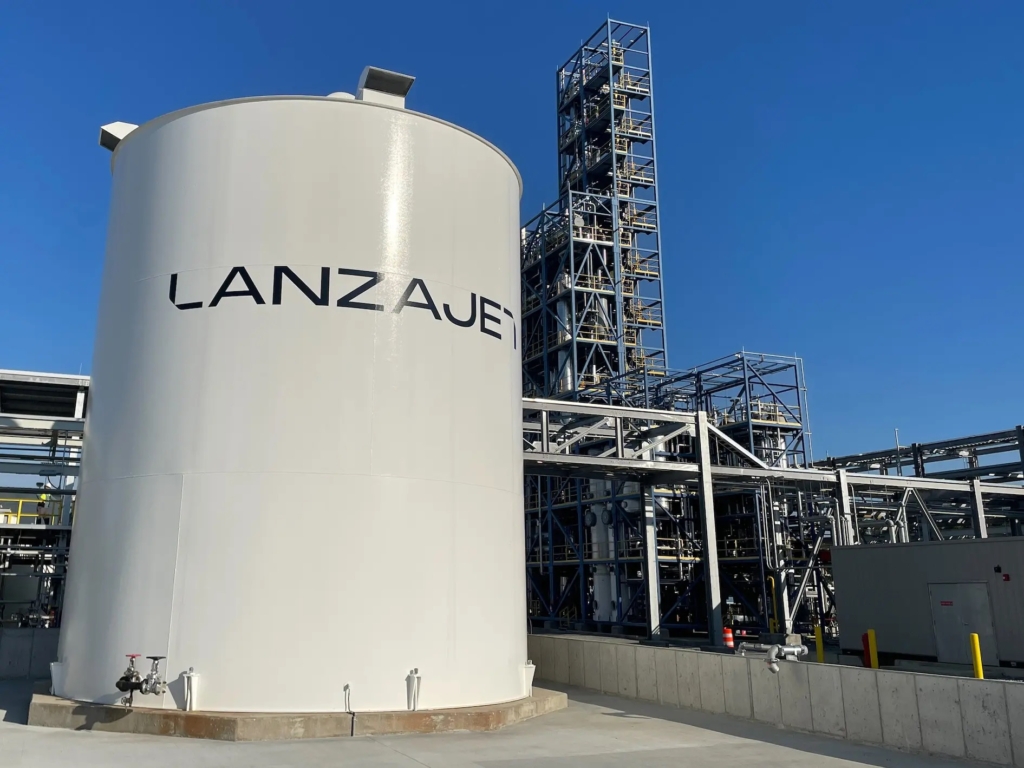
He also noted that China is stepping up in e-SAF, although he cautioned that “it’s always hard to judge from the outside” how much progress individual projects are really making.
The SAF race is no longer only about who can buy the fuel. It is about who can control the industrial capability, the low-carbon electricity, the feedstocks and the logistics networks needed to produce it at scale.
SAF is becoming part of national resilience
None of this means SAF can make aviation immune to global energy shocks. It will take years to scale, and the industry remains overwhelmingly dependent on conventional jet fuel.
But the political case for SAF is changing.
For airlines, SAF remains a cost and availability challenge. For investors, it is a question of bankable projects and long-term offtake. For governments, however, it is becoming something larger: a way to connect decarbonisation with domestic industry, regional development, fuel security and strategic resilience.
That may ultimately prove more powerful than the climate argument alone.
The new question for governments is not simply how much SAF airlines should be required to use. It is where that fuel will come from, who controls the feedstocks and production assets, and whether enough domestic or allied capacity can be built before the next supply shock arrives.
SAF may still be aviation’s main decarbonisation lever. But it is increasingly being asked to do something else as well: make aviation’s fuel supply less fragile.
Featured image: stock.adobe.com
Sign up for our newsletter and get our latest content in your inbox.


More from

October 4, 20264 min read


