How HAV maintains its giant Airlander 10 airship

3 min read
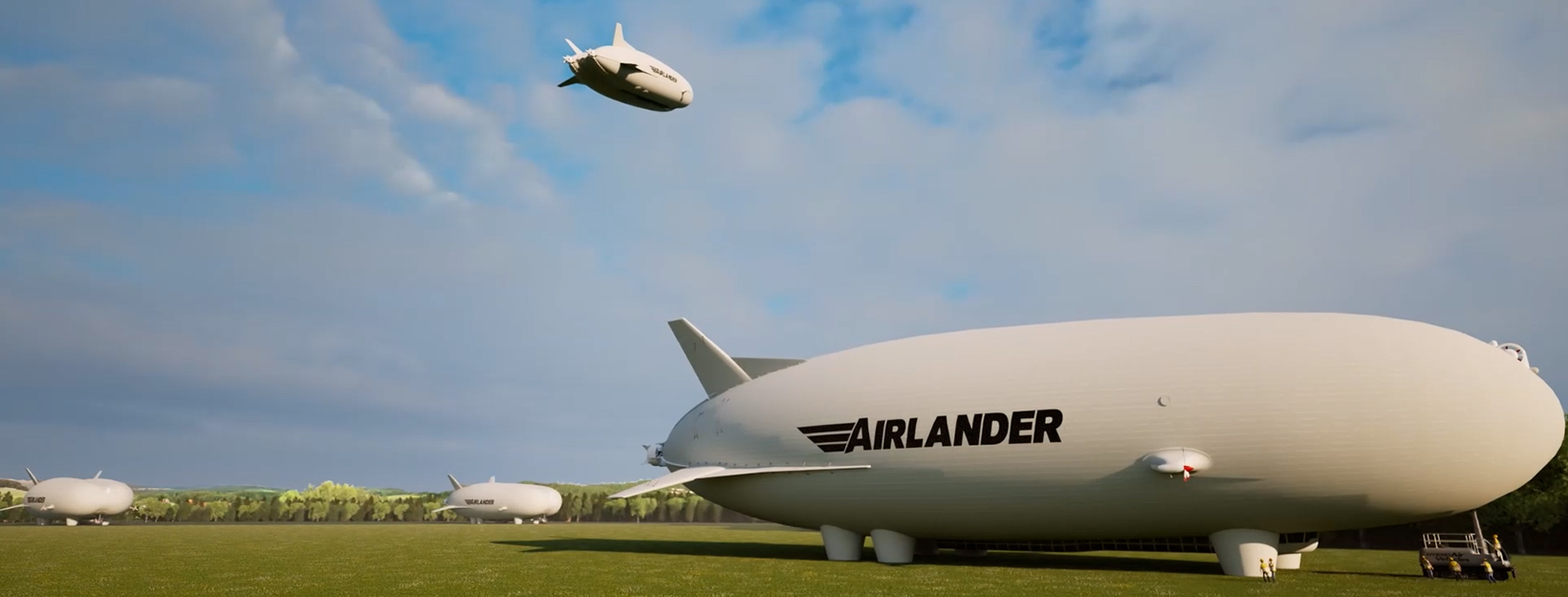
Combining lighter-than-air technology with aerodynamic lift, the striking hybrid Airlander 10 aircraft is the world’s largest aircraft by length.
Developed by Bedfordshire-based Hybrid Air Vehicles (HAV), it’s designed as a lower-emission solution for passenger transport, cargo operations and specialist missions.

But as the company works towards commercial service, it is also addressing a less visible challenge: how to maintain an aircraft unlike any other.
To tackle this, HAV has adopted an approach that challenges one of aviation’s most established assumptions – that aircraft maintenance must take place inside a hangar.
A different maintenance approach for Airlander 10
For conventional airliners, hangars provide a controlled environment for inspections, repairs and servicing. However, Airlander 10 has different requirements.
Designed to spend much of its operational life outdoors, the aircraft is secured to a mooring mast when not flying, naturally rotating to face changing wind conditions.
Rather than treating the mast as a temporary parking position before entering a maintenance facility, HAV is developing procedures that allow much of the aircraft’s maintenance to be carried out while it remains moored. The result is maintenance that is built around the aircraft, rather than standard aviation infrastructure.
At 98 metres long, Airlander is rather larger than many “normal” aircraft. So engineers can access its structure safely and efficiently, HAV has therefore looked beyond aerospace for solutions.
Borrowing rope-access expertise from the wind industry
The company has drawn heavily on expertise from the wind energy sector, where technicians routinely work at height on large structures in exposed environments.
Rope-access techniques and electric ascender systems are now central to HAV’s maintenance strategy, meaning engineers can move around the aircraft without extensive scaffolding or large access platforms.
While fairly uncommon in aviation, these methods are well established in industries where flexibility and mobility are essential. HAV initially worked with specialists accredited by the Industrial Rope Access Trade Association (IRATA) before developing its own internal capability.
Through a train-the-trainer approach, the company is building a workforce equipped to support future Airlander operations.
The benefits extend beyond access, though. By reducing dependence on specialised infrastructure, maintenance could now become far simpler at locations where large hangar facilities are unavailable
That flexibility could prove valuable as Airlander enters service across a range of operating environments.
Safety and efficiency at the centre of the strategy
Working on an aircraft of Airlander’s size presents obvious challenges, but HAV says maintenance procedures are being developed with safety integrated from the outset.
The aim is to build repeatable processes that allow technicians to work efficiently while maintaining rigorous operational standards.
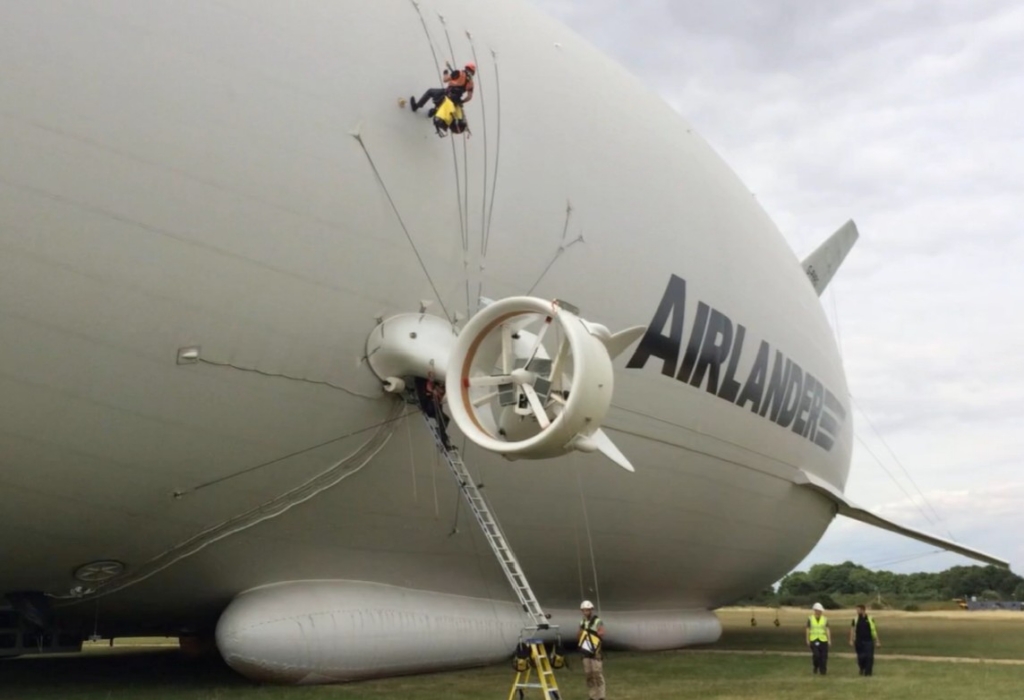
Lessons learned from maintaining the Airlander prototype are also shaping future developments. Engineers continue to assess how equipment can be refined, how tasks can be sequenced more effectively, and how the maintenance experience can be improved for technicians working on the aircraft.
Could augmented reality shape future Airlander maintenance?
HAV is also exploring technologies that could support future operations. Augmented reality is very much part of the conversation, giving technicians real-time guidance from remotely located experts.
These capabilities could reduce travel requirements while making sure specialist knowledge can still be readily accessed when needed.
As Airlander 10 moves closer to commercial deployment, HAV’s maintenance strategy offers a glimpse of how unconventional aircraft can drive equally unconventional operational practices.
Rather than adapting the aircraft to fit existing infrastructure, HAV is adapting maintenance processes to fit the aircraft. It’s an unusual approach that may prove as innovative as Airlander’s design itself.
Featured image: HAV