


Airbus Ravenstorm enters the race to build Europe’s Collaborative Combat Aircraft

6 min read
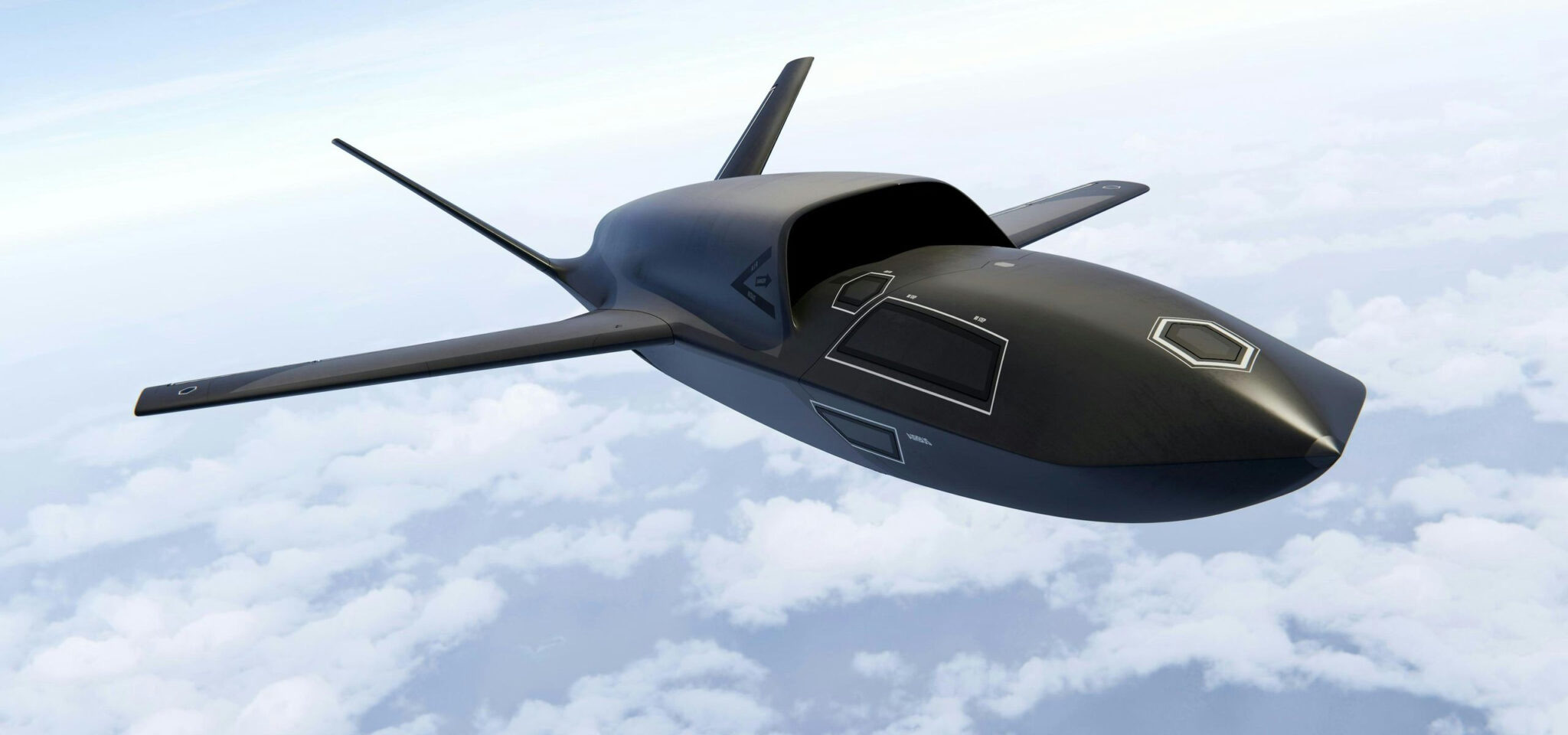
Europe’s future fighter aircraft may not fly into combat alone. Increasingly, military planners expect them to operate alongside autonomous aircraft capable of carrying weapons, gathering intelligence, conducting electronic warfare and absorbing risk in contested airspace.
Airbus’ new U760 Ravenstorm offers one of the clearest indications yet of how that future could look.
The aircraft, displayed as a full-scale mock-up at ILA Berlin earlier this month, is Airbus Defence and Space’s latest attempt to establish a European presence in the rapidly expanding market for collaborative combat aircraft (CCA), sometimes known as loyal wingman systems.
Designed to operate alongside crewed fighters, Ravenstorm reflects a growing belief among military planners that future air power will depend as much on autonomous systems as on the aircraft carrying pilots.
Its arrival comes as European nations accelerate defence spending, reassess the lessons of the war in Ukraine and seek greater control over critical defence technologies ranging from artificial intelligence to mission systems and communications networks.
Airbus U760 Ravenstorm reveals Europe’s CCA ambitions
Airbus describes Ravenstorm as an uncrewed collaborative combat aircraft designed to support crewed fighters across a broad range of missions.
The aircraft measures approximately 13 metres in length with a wingspan of around 10 metres.
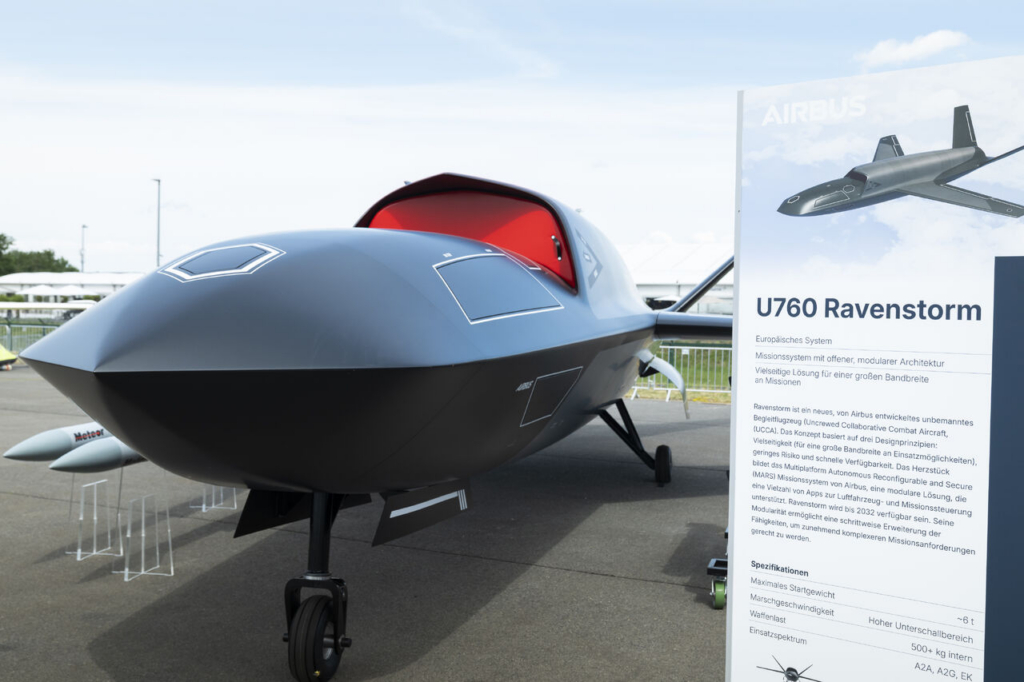
Airbus says it has been optimised for multi-domain operations, including air-to-surface strikes using precision-guided munitions, air-to-air defence missions employing medium- and long-range missiles, and electronic warfare tasks designed to suppress enemy air defences and support offensive counter-air operations.
According to Airbus, Ravenstorm represents the next stage in its roadmap towards a scalable family of collaborative combat aircraft. The company is targeting availability in the early 2030s.
Unlike conventional drones that often perform a single role, collaborative combat aircraft are intended to function as force multipliers.
They can carry additional weapons, extend sensor coverage, undertake electronic warfare missions and operate in higher-risk environments without placing pilots in danger.
For air forces facing increasingly sophisticated air-defence networks, that flexibility is becoming increasingly attractive.
Airbus views Ravenstorm as part of a much broader transformation in military aviation.
“Whatever uncrewed or ‘drone’ capability our customers need to strengthen sovereign air power, we deliver,” said Mike Schoellhorn, CEO of Airbus Defence and Space.
“Our portfolio ranges from rapid-response drone interceptors and various tactical drones, autonomous cargo helicopters to uncrewed fighter aircraft UCCAs operating co-operatively with crewed fighter jets. On the other side of the spectrum we have the Eurodrone, our very high payload and very long endurance ISTAR platform. Airbus provides the entire envelope of uncrewed capabilities required for modern multi-domain warfare.”
Why air forces are turning to collaborative combat aircraft
The emergence of aircraft such as Ravenstorm reflects broader changes in the character of air warfare.
The conflict in Ukraine has reinforced a lesson already emerging among defence planners: future air campaigns will depend not only on advanced fighters but also on large numbers of connected, increasingly autonomous systems capable of extending combat mass and absorbing operational risk.
Electronic warfare, distributed operations and rapid information sharing have become as important as traditional kinetic effects.
In that environment, collaborative combat aircraft offer commanders additional options.
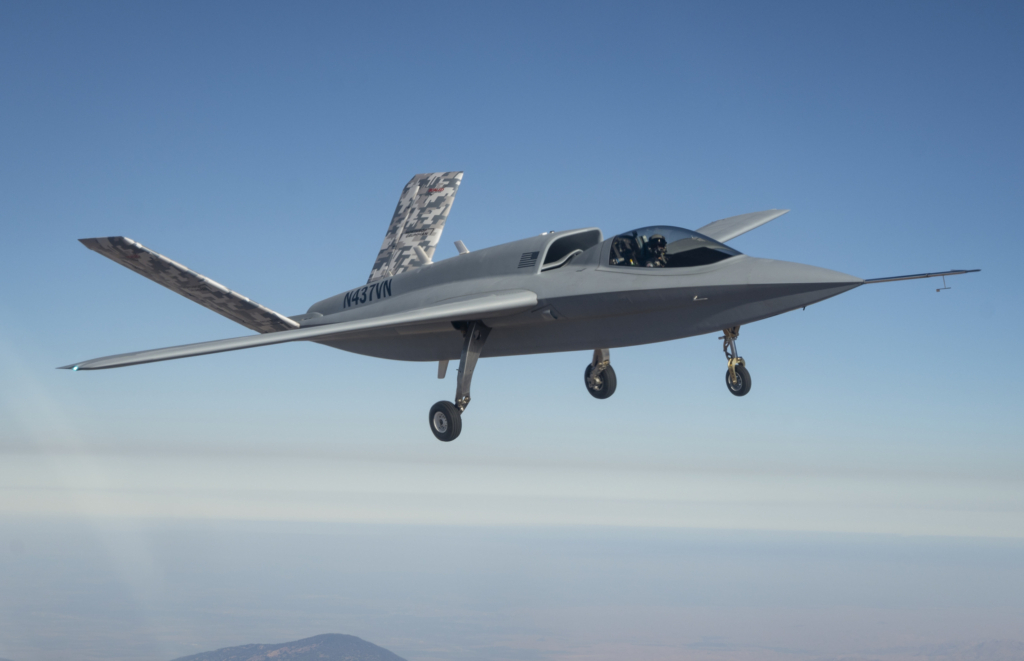
An autonomous aircraft can be sent ahead of a formation to gather intelligence, conduct electronic attack missions, carry additional missiles or draw enemy attention away from crewed platforms.
If lost, it does not involve the loss of a pilot.
That concept is driving investment programmes across Europe, North America and the Indo-Pacific as militaries seek ways to increase combat mass without the cost and complexity associated with expanding traditional fighter fleets.
Sovereign AI becomes central to Europe’s loyal wingman plans
For Europe, the discussion extends beyond airframes and weapons.
Increasingly, governments are focusing on who controls the software, artificial intelligence and mission systems that will underpin future combat operations.
Speaking to Reuters, Stephanie Lingemann, Head of Air Domain at German defence technology company Helsing, highlighted the importance of sovereign control over AI-enabled military systems.
“The AI agent, of course, the brain of these systems, needs to be controlled in a sovereign fashion,” she told Reuters.

That concern has become a recurring theme across European defence programmes.
As governments invest in next-generation air combat capabilities, many are seeking to reduce dependence on foreign software architectures and critical technologies.
Airbus has repeatedly positioned Ravenstorm as part of a sovereign European approach to collaborative combat aviation.
The issue has taken on greater significance amid continuing debate over Europe’s future combat aviation programmes and broader questions surrounding defence autonomy.
From Barracuda to Ravenstorm: Airbus builds its uncrewed combat aircraft roadmap
Although Ravenstorm is new, the programme draws upon a much longer lineage of Airbus uncrewed aircraft development.
The company traces many of the concepts underpinning the aircraft to the Barracuda demonstrator, an experimental unmanned combat aircraft that first flew almost 20 years ago.
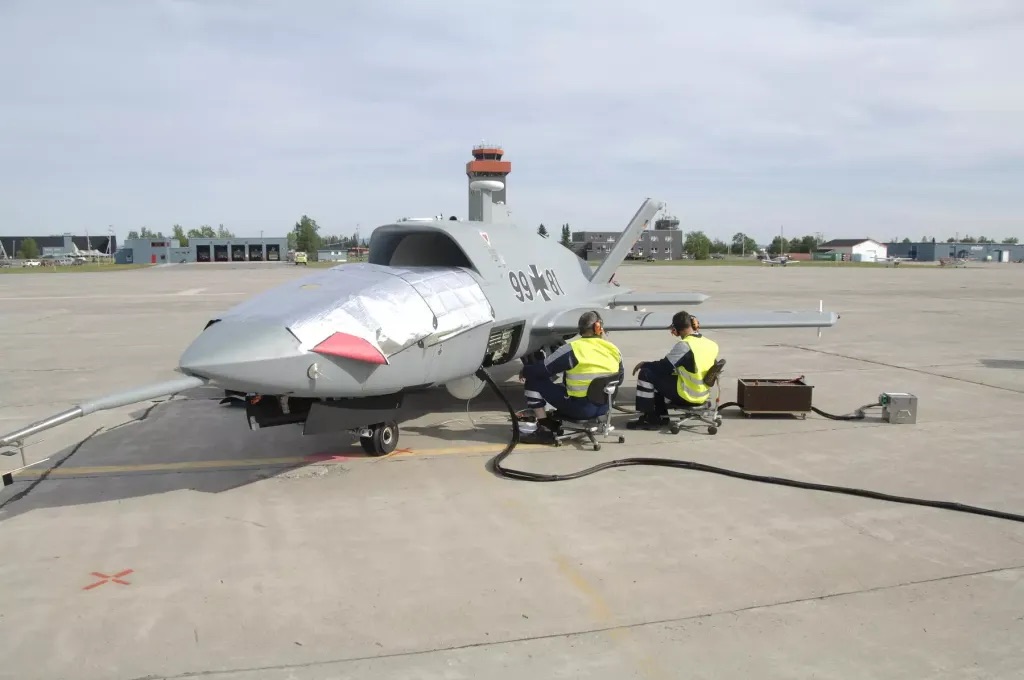
Airbus describes Barracuda as a pioneering step in collaborative combat aviation, introducing design principles that continue to shape the sector today.
Barracuda was never intended to enter operational service. Instead, it served as a technology demonstrator exploring autonomous flight, mission systems integration and low-observable design concepts.
Many of those lessons are now reappearing in a significantly larger and more capable aircraft.
Ravenstorm represents Airbus’ most ambitious attempt yet to transform years of experimentation into an operational combat platform.
Airbus is building an ecosystem rather than a single aircraft
One of the more significant aspects of Airbus’ strategy is that Ravenstorm does not stand alone.
The company has begun bringing together a broad range of uncrewed programmes under a common family structure spanning tactical drones, autonomous helicopters, drone interceptors, collaborative combat aircraft and strategic surveillance platforms.
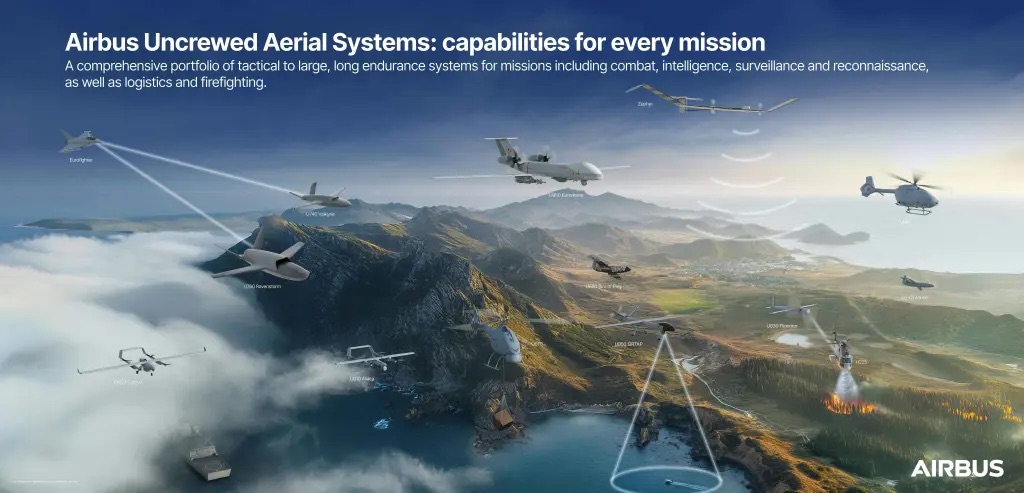
Among them is the U145, derived from Airbus’ widely used H145 helicopter platform, which is being developed for autonomous logistics and support missions.
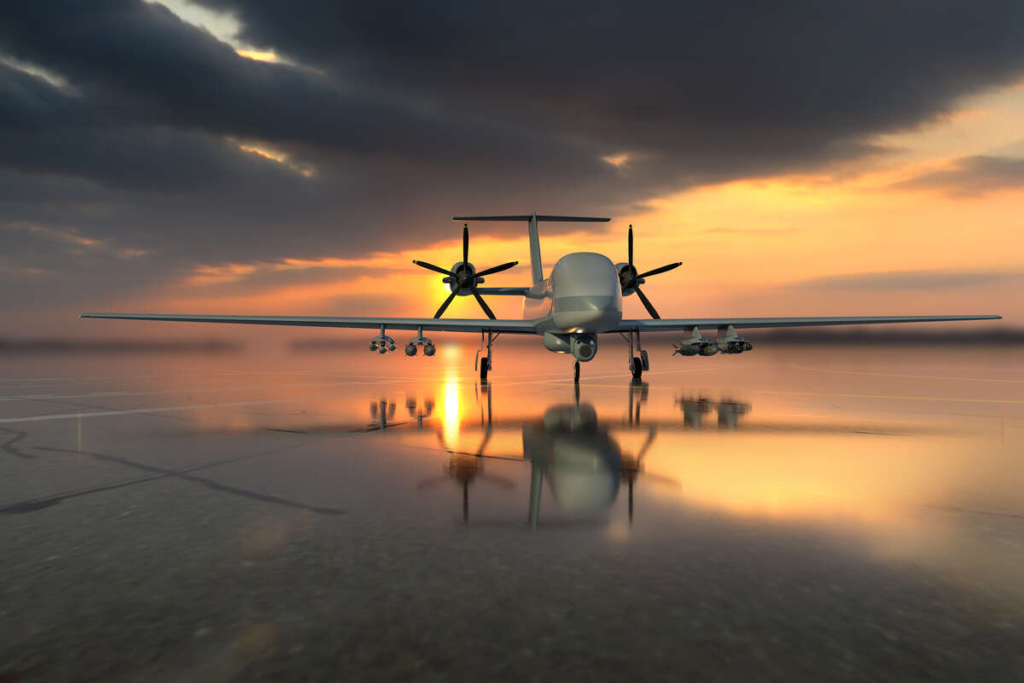
Airbus also showcased its U680 Bird of Prey interceptor, designed to counter massed drone attacks, as well as the U740 Valkyrie collaborative combat aircraft and the U950 Eurodrone strategic surveillance platform.
Connecting many of these systems is Airbus’ Multiplatform Autonomous Reconfigurable and Secure (MARS) mission system. According to the company, MARS provides an AI-supported software core that enables platform autonomy and can be scaled across multiple aircraft types.
Airbus plans to deploy the system across Ravenstorm, Valkyrie, Bird of Prey and eventually Eurodrone.
The approach reflects a wider trend in military aviation, where success increasingly depends not on individual platforms but on how effectively they share information and operate as part of a wider combat network.
Ravenstorm faces Boeing Ghost Bat, General Atomics and Helsing rivals
Airbus is not alone in pursuing the collaborative combat aircraft market.
Boeing’s MQ-28 Ghost Bat, developed in Australia, has already completed extensive flight testing and is being promoted internationally.
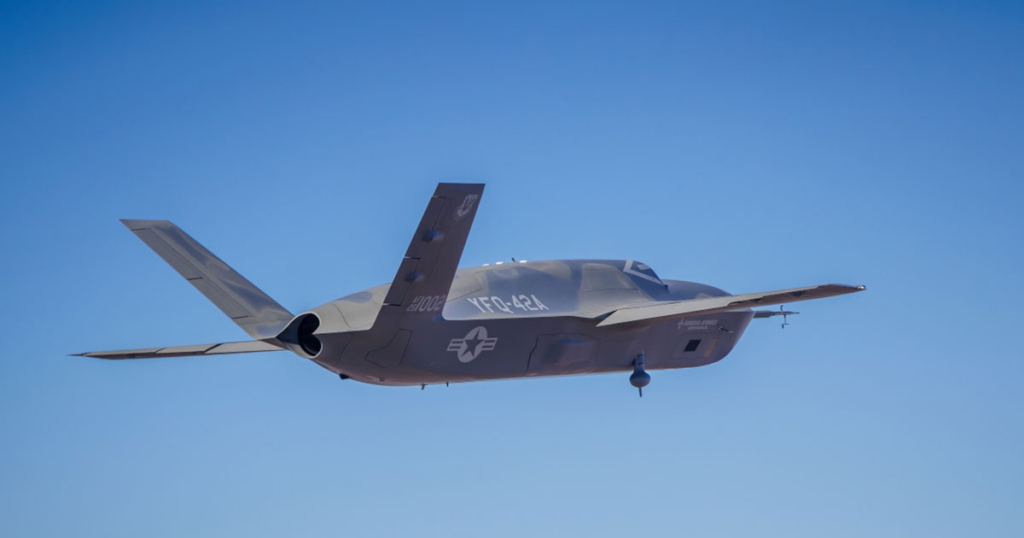
General Atomics and Anduril have both won production contracts under the US Air Force’s collaborative combat aircraft programme, while Helsing has proposed its own European solution.
Speaking to Reuters, Boeing Defence Australia Managing Director Amy List emphasised the role autonomous aircraft could play in supporting crewed platforms.
“It can go out ahead of crewed platforms, provide situational awareness, analyse data, it can fuse that data and provide decision-making quality information back to a human,” she said.
Those capabilities are precisely what Airbus hopes Ravenstorm will eventually deliver.
The company argues that its aircraft’s integration into a broader European ecosystem, combined with sovereign mission systems and autonomy software, will differentiate it from foreign competitors.
Featured image: Airbus


