How many B-52 Stratofortress bombers are still in service?

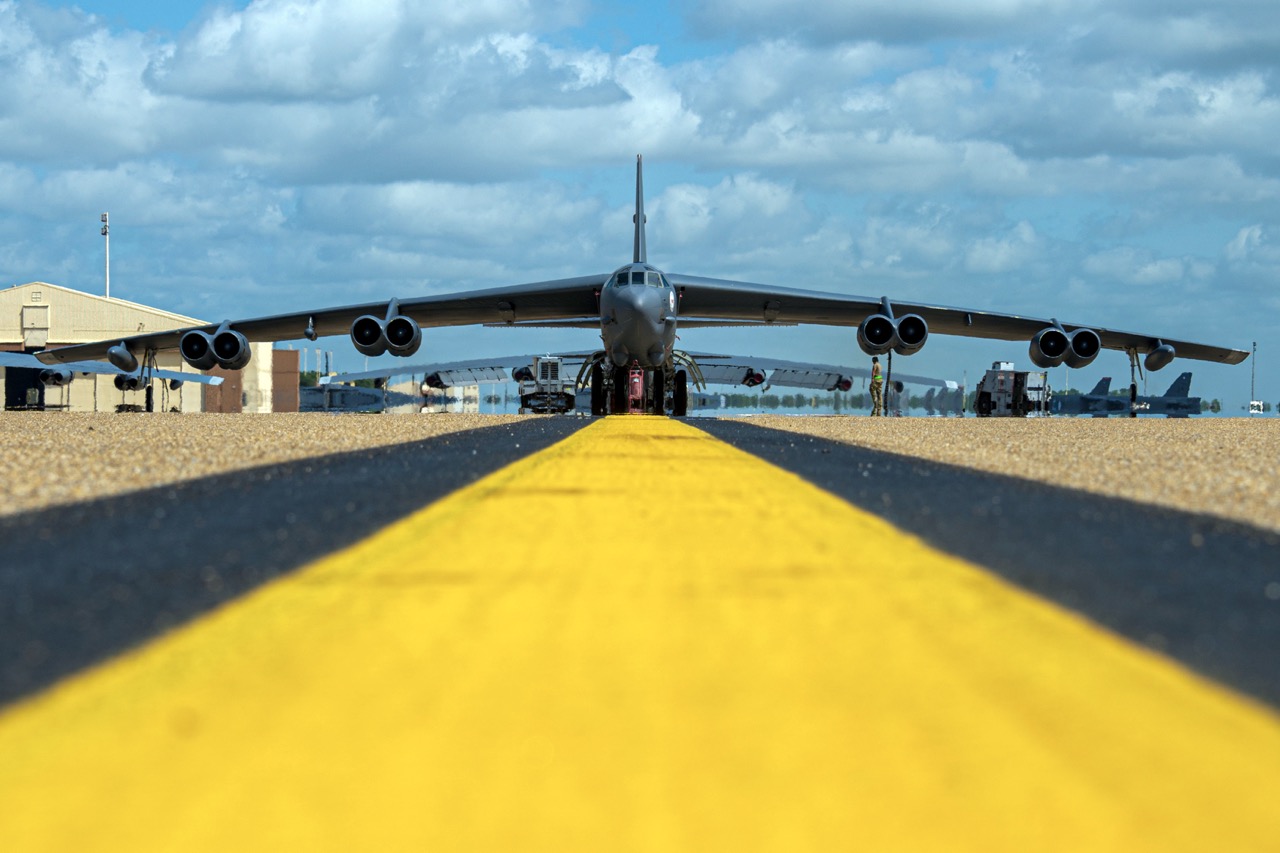
More than 70 years after it first entered service, the Boeing B-52 Stratofortress is one of the most recognisable military aircraft in the world. Despite being more than twice as old as many of the pilots who fly it, the B-52 plays a key role in the United States’ long-range strike capability.
The aircraft’s longevity has come under renewed attention after a B-52 crashed during a test mission at Edwards Air Force Base in California on 15 June. The aircraft was supporting a modernisation effort linked to keeping the bomber in service for decades to come.
How many B-52 bombers does the US Air Force have?
Before the Edwards crash, the US Air Force maintained a fleet of 76 B-52H Stratofortress bombers, including 58 active-duty aircraft and 18 reserve aircraft.
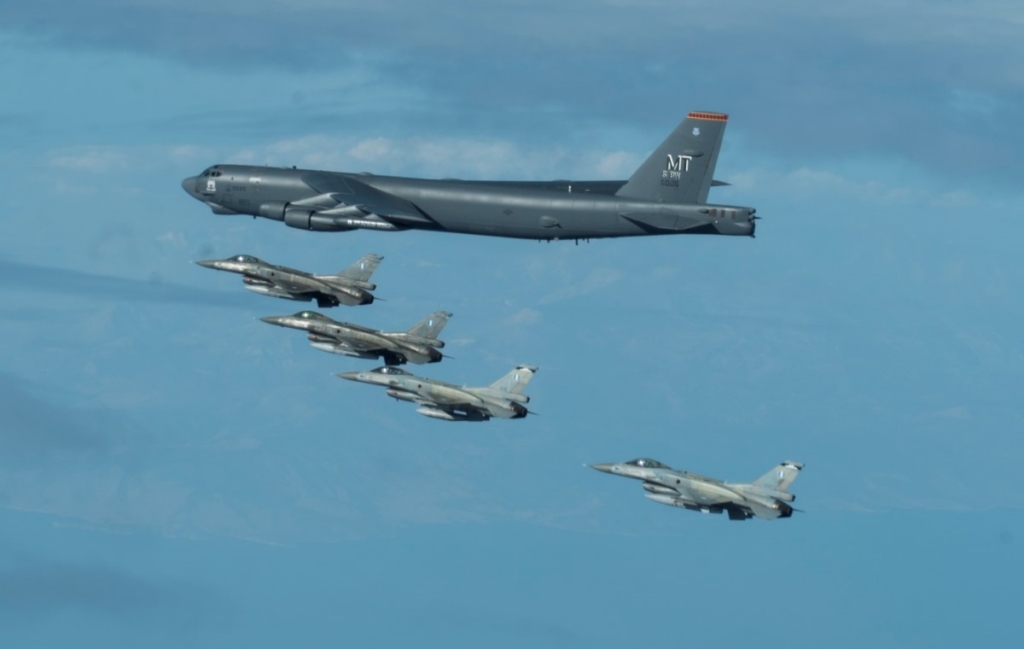
Although some aircraft will require maintenance or modernisation, the Air Force intends to retain the entire fleet.
Boeing produced a total of 744 B-52 Stratofortresses between 1952 and 1962. Only around 10% of the aircraft built remain in service today.
The youngest B-52s currently flying were delivered in 1962, meaning every operational aircraft is more than six decades old.
The B-52 has been operated exclusively by the United States since entering service in 1955. Unlike aircraft such as the F-16 or C-130 Hercules, the B-52 was never exported.
The bomber is operated solely by the US Air Force and forms one leg of America’s nuclear triad alongside land-based intercontinental ballistic missiles and submarine-launched ballistic missiles.
Most operational B-52s are assigned to two Air Force bases and three bomb wings:
- Barksdale Air Force Base, Louisiana—home to the 2nd Bomb Wing and the 307th Bomb Wing (Air Force Reserve).
- Minot Air Force Base, North Dakota—home to the 5th Bomb Wing.
Stratofortresses also deploy overseas to locations in Europe, the Indo-Pacific and the Middle East.
Why is the B-52 still flying after 70 years?
The aircraft’s long service life can be credited to a series of factors, starting with its unique performance characteristics.
Exceptional structural durability
The large B-52 airframes were designed for nuclear missions and have accumulated relatively low flight hours compared with commercial aircraft.
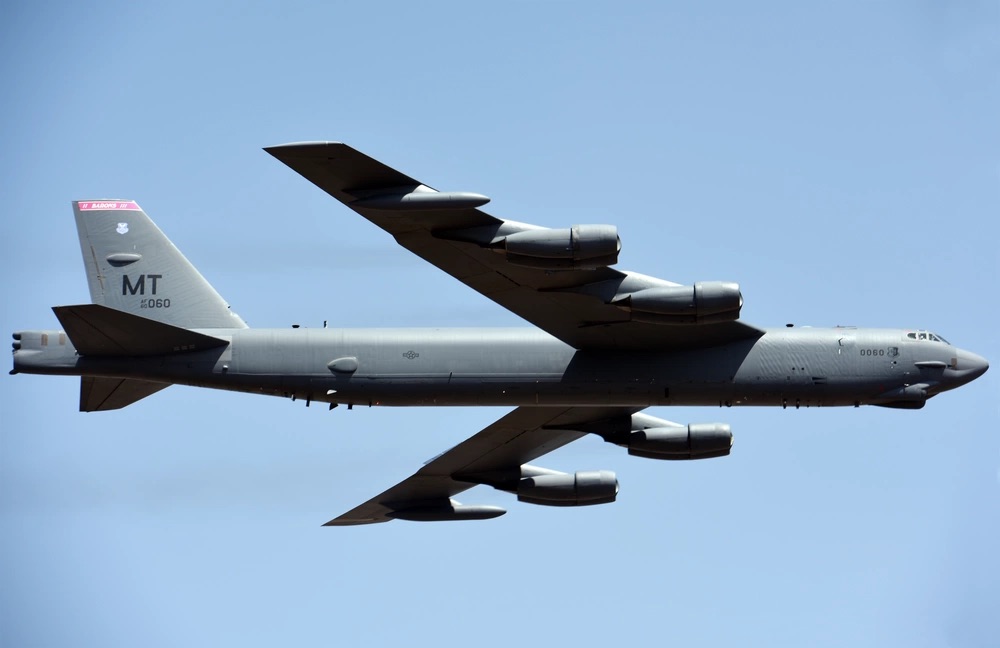
- Wingspan: 185 feet (56.4 metres)
- Length: 159 feet, 4 inches (48.5 metres)
- Height: 40 feet, 8 inches (12.4 metres)
- Weight: Approximately 185,000 pounds (83,250 kilograms)
Huge payload capacity
The bomber can carry up to 70,000 pounds (31,500 kilograms) of mixed ordnance and has been modified to carry air-launched cruise missiles.
Long range
The aircraft’s typical combat range is 8,800 miles (14,200 km) without aerial refuelling. With aerial refuelling, B-52s can strike targets virtually anywhere in the world.
Lower operating costs
Compared with stealth bombers such as the B-2 Spirit, the B-52 remains relatively economical to operate.
What is the B-52J upgrade?
The next-generation version of the aircraft will be designated the B-52J.
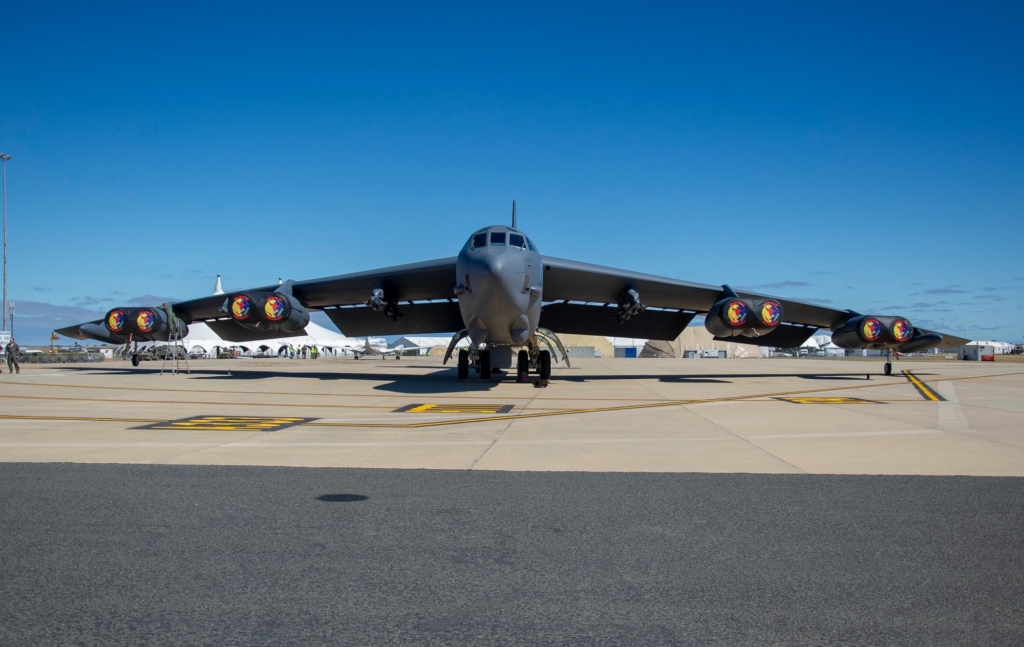
The B-52J upgrade is far more than a simple engine swap. The programme will replace the bomber’s ageing TF33 engines with Rolls-Royce F130 powerplants, while also adding new radar, digital avionics and additional electrical power for future systems.
The radar upgrade is particularly important. A modified B-52 completed its ferry flight from Boeing’s San Antonio facility to Edwards Air Force Base in December 2025 after receiving a new radar system, with ground and flight testing planned throughout 2026 to support a future production decision.
Together, the upgrades are intended to make the B-52 more reliable, easier to sustain and better suited to long-range standoff missions well into the 2050s.
Current Air Force plans call for the B-52J to remain operational through at least 2050, and officials have suggested service could extend beyond that. That would give the aircraft a service life approaching 100 years.
What will replace the B-52 bomber?
There is currently no direct replacement for the Stratofortress. Instead, the upgraded B-52J and the B-21 Raider will operate together.
The Northrop Grumman B-21 Raider will complement the B-52, not replace it. The Air Force intends to operate both aircraft simultaneously under different mission profiles.
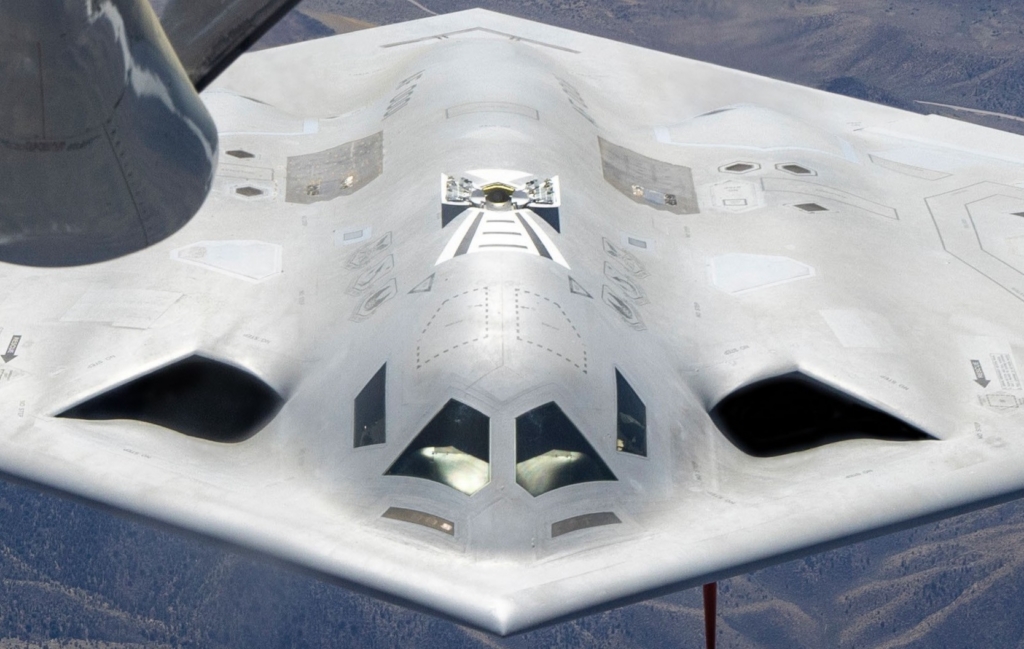
The B-21 provides stealth capabilities for penetrating heavily defended airspace, while the B-52 serves as a long-range missile truck capable of carrying very large payloads.
Are any retired B-52s being used again?
Yes. The Air Force has occasionally returned retired aircraft from storage to active use. One example is “Wise Guy,” restored after spending years at Davis-Monthan Air Force Base’s boneyard.
Retired aircraft can also serve as test assets. One former B-52H, nicknamed “Damage Inc. II,” is helping Boeing and the Air Force develop the engine-replacement programme and reduce modernisation costs.
What happened to the hundreds of retired B-52s?
The B-52A through B-52F models entered service in the 1950s and early 1960s. As more capable versions became available, the Air Force retired previous variants.
In the decades that followed, most of the other 668 B-52s were retired and scrapped as newer variants entered service.
The B-52H, introduced in 1961, proved the most adaptable and became the only surviving variant.
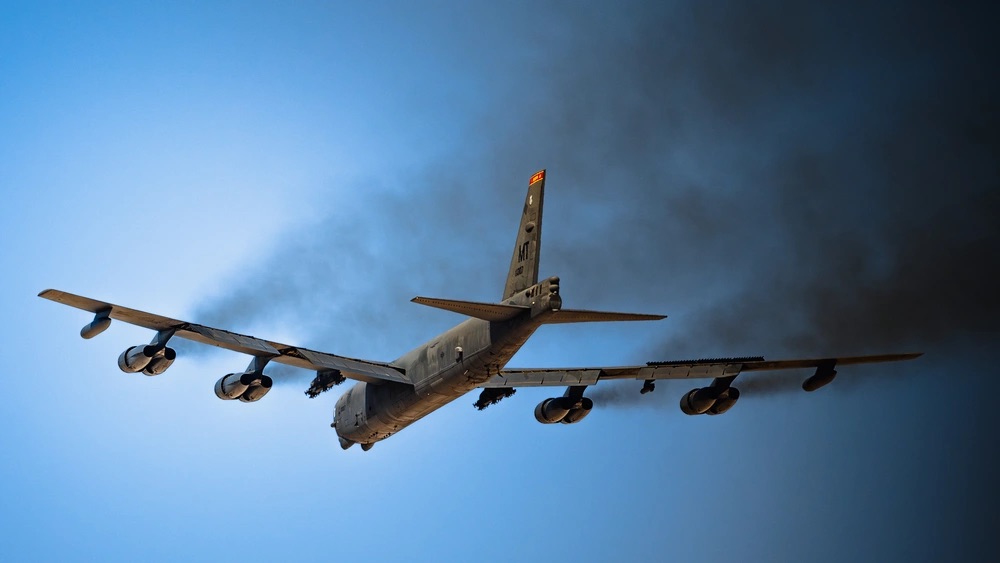
One of the biggest reasons so few B-52s remain is the START I treaty between the United States and the Soviet Union.
During the 1990s, approximately 365 B-52s were eliminated to comply with the agreement. Many B-52Gs were flown to the aircraft boneyard at Davis-Monthan Air Force Base in Arizona, where they were chopped into pieces by giant guillotine blades.
Over the aircraft’s long history, roughly 30 B-52s were destroyed in crashes or other mishaps.
Around 40 B-52s have escaped the scrapyard and are preserved in museums or serve as testbeds. Several retired aircraft have been repurposed as structural test airframes, engine and avionics testbeds, ground trainers, or simply as sources of spare parts.
The 76 B-52 aircraft built between 1961 and 1962 will continue to fly for the US Air Force into the 2050s, proving the Stratofortress name is very apt.
Featured Image: US Air Force by Senior Airman Kate Bragg