


IATA tells passengers to “Save a Life, Not a Bag” in new aircraft evacuation campaign

4 min read
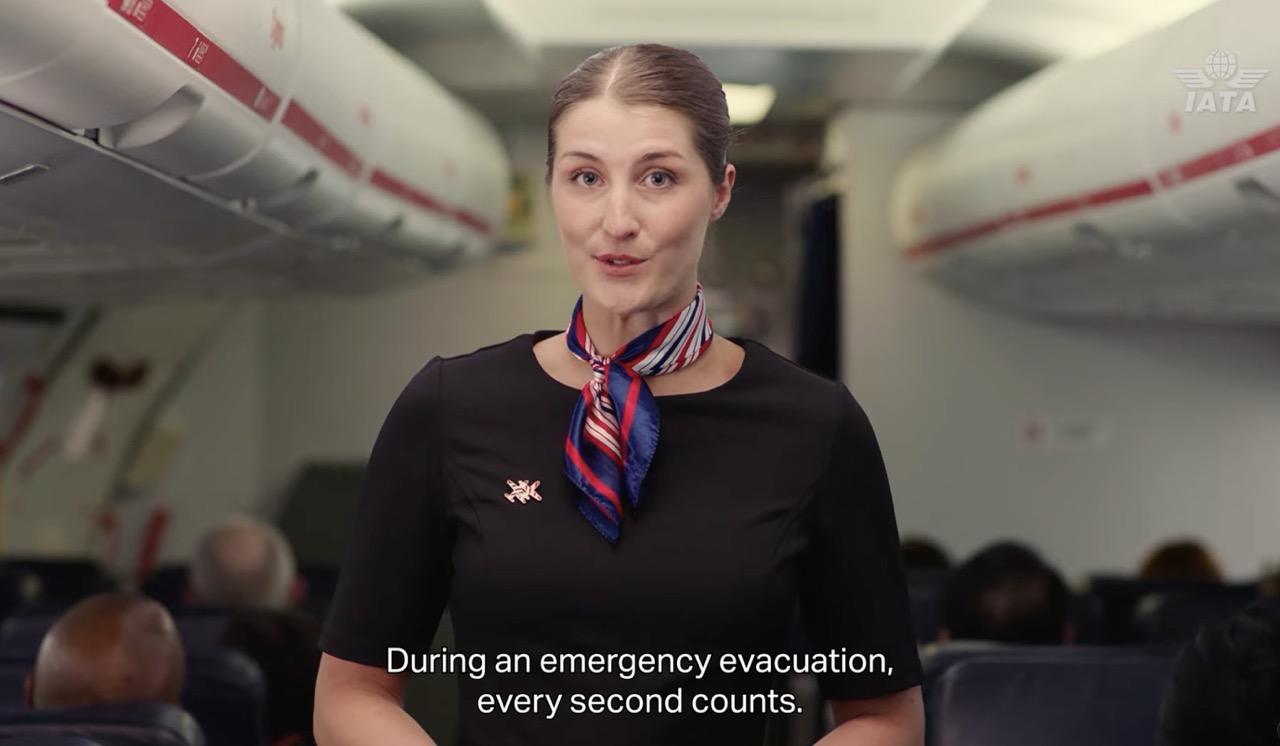
The International Air Transport Association (IATA) has launched a new global safety campaign urging passengers to stop taking cabin baggage or filming during emergency evacuations, warning that even a few seconds of delay can put lives at risk.
The campaign, titled “Save a Life, Not a Bag,” is backed by the US Federal Aviation Administration (FAA) and the European Union Aviation Safety Agency (EASA). It reminds air travellers that their only priorities during an evacuation should be to follow crew instructions, leave belongings behind and get off the aircraft as quickly as possible.
“Taking bags during an evacuation is not a minor issue. Every second matters,” said Willie Walsh, IATA’s director general in the association’s announcement of the new campaign. “Even taking one bag can affect the safe evacuation of everyone onboard. Crew instructions are clear and simple: leave everything behind and move quickly.”
Passengers retrieving bags during evacuations pose an ongoing safety risk
The campaign comes amid growing concern about passengers delaying evacuations to retrieve carry-on bags or to record events on their phones.
Recent incidents have repeatedly shown travellers ignoring flight attendants’ instructions.
In May of this year, passengers evacuating a Frontier Airlines Airbus A321 at Denver International Airport after the aircraft struck a person on the runway were seen carrying backpacks and roller bags down emergency slides, ignoring cabin crew instructions to leave their belongings behind.
🚨🇺🇸 EARLIER: Horrific scenes after a Frontier Airlines Airbus A321neo struck and killed a pedestrian on the runway at Denver International Airport, forcing the crew to abort takeoff and evacuate passengers. pic.twitter.com/Q5Je1vTtb3
— Nova Intel (@intel_nova) May 10, 2026
As the Times of India reported, SWISS initiated a review of its evacuation messaging after an Airbus A330 aircraft evacuation during a potential engine fire in Delhi this past April. Passengers on that aircraft also carried cabin baggage onto the emergency slides, raising concerns about evacuation delays and potential damage to the slides.
In February 2025, a passenger aboard the Delta Connection CRJ-900 that overturned while landing in Toronto filmed the evacuation despite flight attendants’ instructions to put phones away and focus on exiting the aircraft.
The issue is far from new. As the Royal Aeronautical Society has reported in depth, videos from the 2016 Emirates Boeing 777 accident in Dubai showed passengers opening overhead bins and filming the evacuation rather than leaving immediately.
IATA survey reveals dangerous passenger misconceptions on evacuations
To support the campaign, IATA surveyed recent air travellers in the United States, the United Kingdom, the United Arab Emirates and Singapore.
Although 80% of respondents said they knew how to react during an emergency evacuation, only 61% correctly answered that they should leave all personal belongings behind.
The research found:
- One-third of passengers had seen reports of people taking baggage during evacuations.
- Of those, 22% said they would be inclined to do the same.
- One in ten admitted they might take baggage themselves or follow others doing so, even after being instructed not to.
- Only 18% knew that aircraft are certified to evacuate everyone within 90 seconds.
- Nearly 40% believed evacuations could take three minutes or longer.
- 60% said they would be less likely to retrieve bags if important items such as passports, money and medication were already kept on their person.
“The majority of passengers know what to do in an accident,” said Nick Careen, IATA senior vice president for operations, safety and security. “There is, however, a significant gap in knowledge among some travellers that could result in disaster. Even just a passenger or two taking a few extra seconds to gather personal items can endanger lives.”
IATA video illustrates evacuation dangers in memorable ways
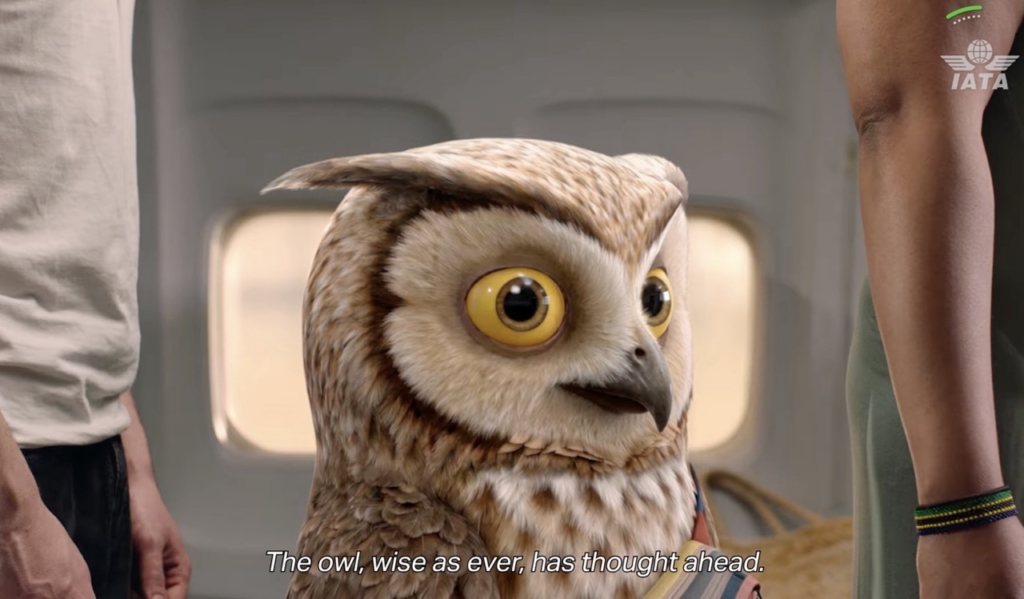
IATA developed a campaign video with behavioural experts that deliberately uses animated animal characters representing various dangerous evacuation habits, playing out scenarios to make the message memorable.
Passengers are encouraged to prepare before takeoff and landing by keeping essentials such as passports, medication and money on their person.
The campaign’s key messages are:
- Pay attention to the crew
- Leave all baggage behind
- Do not film or photograph
- Keep moving
- Exit quickly
Digital assets are being made available to airlines, airports and other aviation organisations for use on social media and passenger communications.
Why stopping to collect bags during aircraft evacuations is dangerous
According to IATA, passengers stopping during an evacuation to retrieve their luggage can:
- Slow movement through the cabin
- Block aisles and exits
- Injure other passengers
- Damage evacuation slides
- Obstruct emergency lighting
- Create hazards for the crew and first responders
The organisation stressed that the danger extends beyond the individual carrying the bag.
“A single passenger stopping to retrieve luggage can delay others, disrupt crew commands, and affect the use of exits and slides,” IATA said.
EASA Executive Director Florian Guillermet emphasised that aircraft certification and crew training are designed around rapid evacuations.
“For this to work in a real emergency, all passengers must play their part too,” he said. “It is very simple: follow crew instructions, leave all baggage behind and move quickly to the nearest usable exit.”
FAA Administrator Bryan Bedford added that the agency has seen an increasing number of passengers disregarding instructions during emergencies.
“Passengers must act quickly, follow instructions without hesitation, and leave all belongings behind,” he said. “Safety is a shared responsibility.”
Featured Image: IATA


