NASA and GE complete ground test of megawatt-class hybrid-electric aircraft engine

7 min read
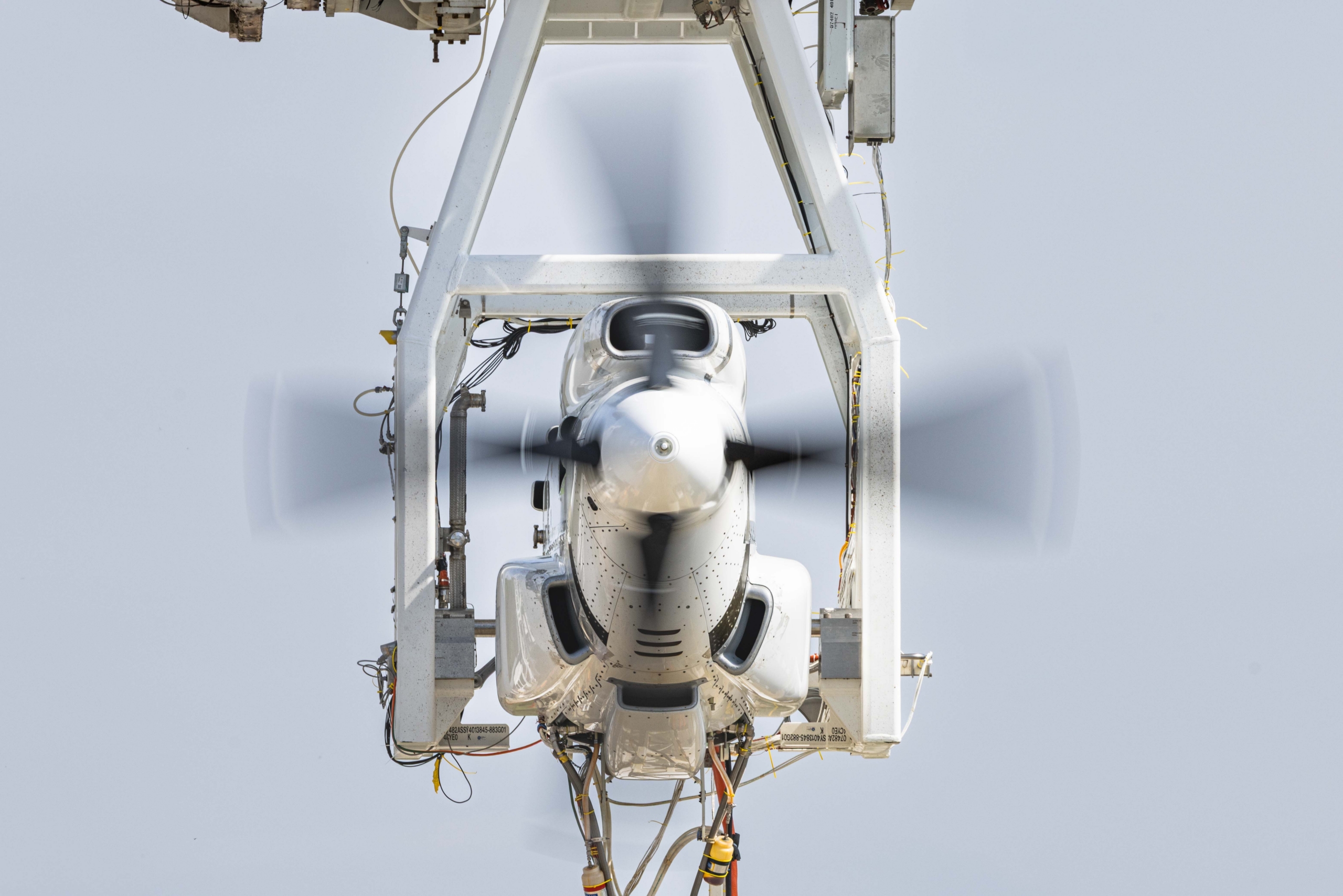
GE Aerospace has completed ground testing of a megawatt-class hybrid-electric engine system developed with NASA, clearing the way for flight trials of a propulsion technology widely viewed as a potential pathway to lower-emission commercial aviation.
The test campaign, conducted at GE Aerospace’s Peebles Test Operation facility in Ohio, validated a fully integrated hybrid-electric powertrain for the first time.
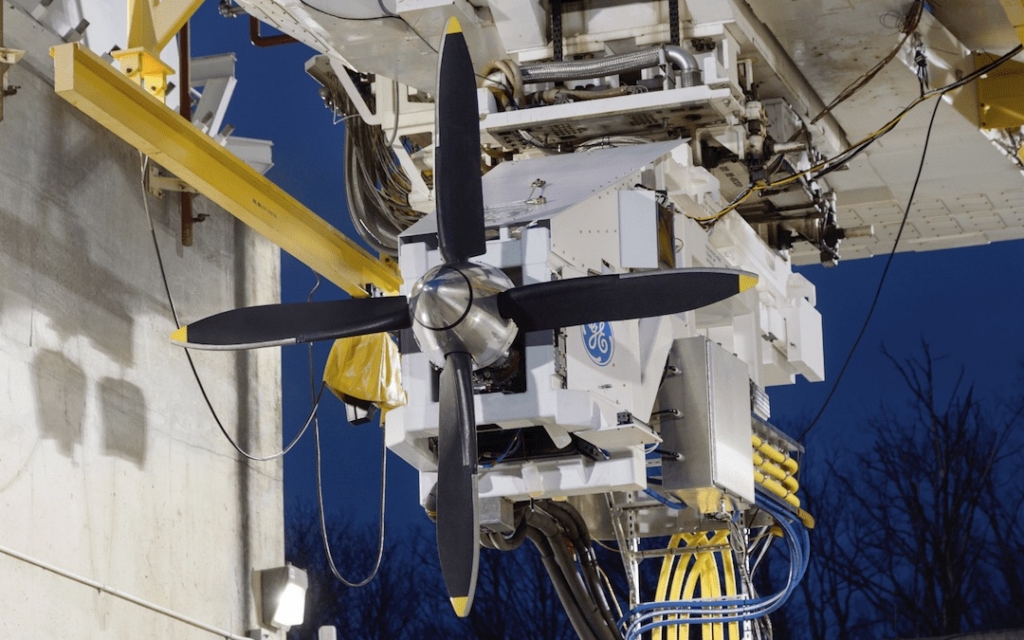
The system combines a CT7 turboprop engine with electric motor-generators, power converters, inverters, controllers, gearboxes, propellers and battery systems developed by a consortium of industry partners.
The successful ground-test campaign clears the way for flight testing of the propulsion system, the next major milestone in NASA’s Electrified Powertrain Flight Demonstration (EPFD) programme.
The propulsion system is expected to progress to flight testing aboard a modified Saab 340B flying testbed as part of NASA’s EPFD programme.
While hybrid-electric aviation has often been associated with ambitious concepts and laboratory demonstrations, the latest milestone represents one of the most advanced propulsion systems yet assembled at a scale relevant to commercial aviation.
The achievement comes as manufacturers, airlines and regulators continue searching for technologies capable of reducing aviation’s environmental footprint without sacrificing range, payload or operational flexibility.
Megawatt-class powertrain prepares for Saab 340B flight testing
The latest test is the culmination of more than a decade of work by GE Aerospace and NASA to mature electrified propulsion technologies.
According to GE, the campaign validated a complete propulsion architecture incorporating GE-developed motor-generators, power electronics and control systems alongside Dowty propellers, Avio Aero gearboxes, batteries supplied by BAE Systems and a nacelle provided by Aurora Flight Sciences, a Boeing subsidiary.
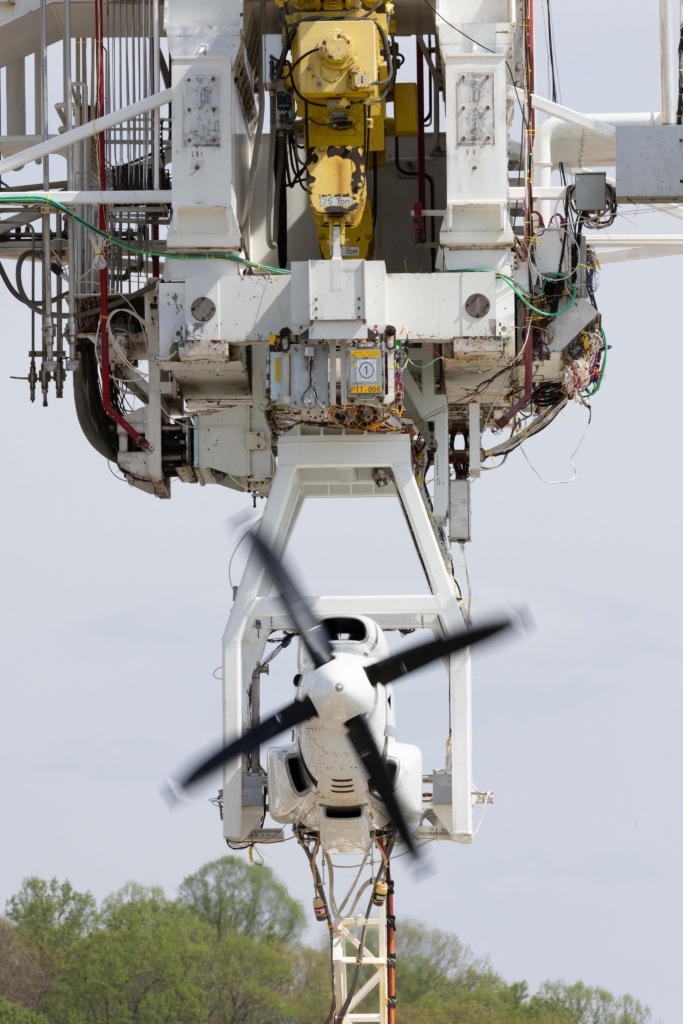
During testing, engineers simulated multiple phases of flight, including taxi, take-off, climb and cruise. The electric system successfully powered the propeller and generated power back into the battery system, demonstrating the bidirectional energy flows that are central to hybrid-electric propulsion concepts.
“Step by step, we’re proving hybrid electric engine technology for next-generation commercial aircraft,” said Arjan Hegeman, Vice President for Future of Flight at GE Aerospace. “The ground test is a major turning point in our understanding of hybrid electric powertrains for aviation and a fundamental building block for the future,” he added.
Hybrid-electric propulsion reduces fuel burn without replacing turbines
Unlike fully electric aircraft, hybrid-electric aircraft do not rely solely on batteries.
Instead, they combine conventional gas turbines with electric motors and advanced power management systems.
The objective is to use electrical energy where it delivers the greatest efficiency benefits while retaining the energy density and range advantages of liquid fuels.
In practical terms, electric motors can assist during the most energy-intensive portions of flight, particularly taxi, take-off and climb. Conventional engines continue to provide the bulk of propulsion during cruise, where turbine efficiency is already relatively high.
The approach resembles hybrid automotive technology, although scaling it for aviation presents significantly greater challenges.
Aircraft require far higher power levels, stricter safety standards and much lighter systems than those used in ground transportation. Every additional kilogram carried onboard affects payload, range and economics.
Battery energy density remains the industry’s biggest obstacle. Even the most advanced batteries available today store far less energy per kilogram than conventional jet fuel, making fully electric regional or narrowbody airliners impractical with current technology.
Hybrid-electric systems are therefore widely viewed as a transitional step between conventional propulsion and longer-term concepts involving hydrogen, fuel cells or highly advanced battery technologies.
NASA HyTEC targets future single-aisle hybrid-electric engines
The work being undertaken through EPFD is closely linked to NASA’s broader Hybrid Thermally Efficient Core (HyTEC) programme, which seeks to develop propulsion technologies suitable for the next generation of commercial aircraft.
NASA describes HyTEC as a pathway toward the world’s first mild hybrid-electric jet engine for single-aisle airliners. The concept combines conventional gas-turbine propulsion with electric motor-generators capable of both producing and supplying power during flight.
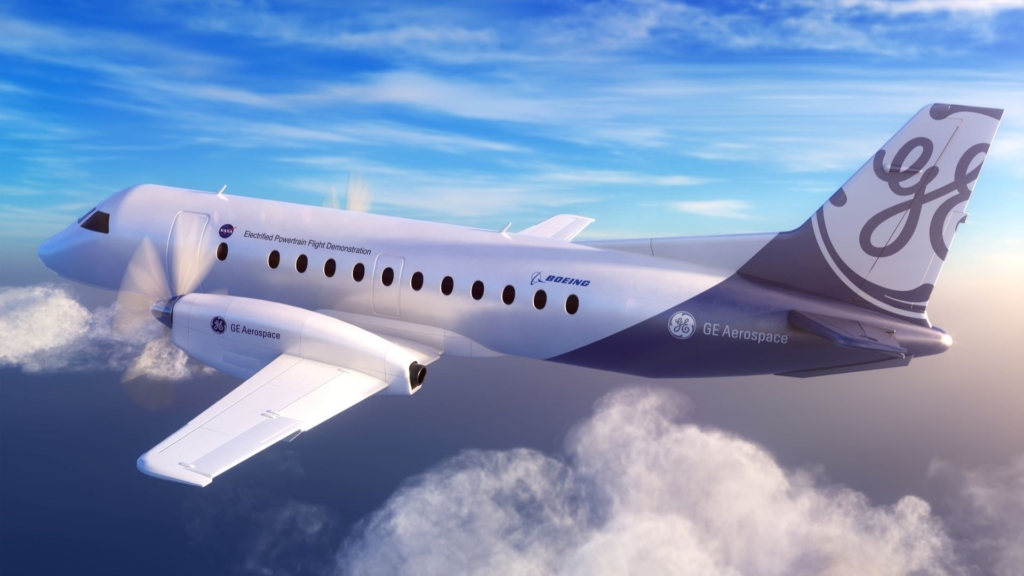
“This will be the first mild hybrid-electric engine and could lead to the first production engine for narrow-body airliners that’s hybrid electric,” said Anthony Nerone, NASA’s HyTEC Project Manager. “It really opens the door for more sustainable aviation even beyond the 2030s.”
NASA and GE are also exploring compact engine cores capable of delivering similar thrust levels while reducing fuel burn and emissions.
NASA estimates such technologies could improve efficiency by between five and ten per cent before additional gains from hybridisation are considered.
The agency sees hybrid-electric propulsion as a key component of its Sustainable Flight National Partnership, which supports the United States’ objective of achieving net-zero aviation emissions by 2050.
CFM RISE connects open fan engines with hybrid-electric systems
The significance of GE’s latest test extends beyond a single demonstrator.
Many of the technologies being matured through NASA-funded programmes are feeding directly into CFM International’s Revolutionary Innovation for Sustainable Engines (RISE) initiative.
Launched in 2021 by CFM International, the joint venture between GE Aerospace and Safran Aircraft Engines, RISE is intended to define propulsion technologies for the next generation of single-aisle aircraft.
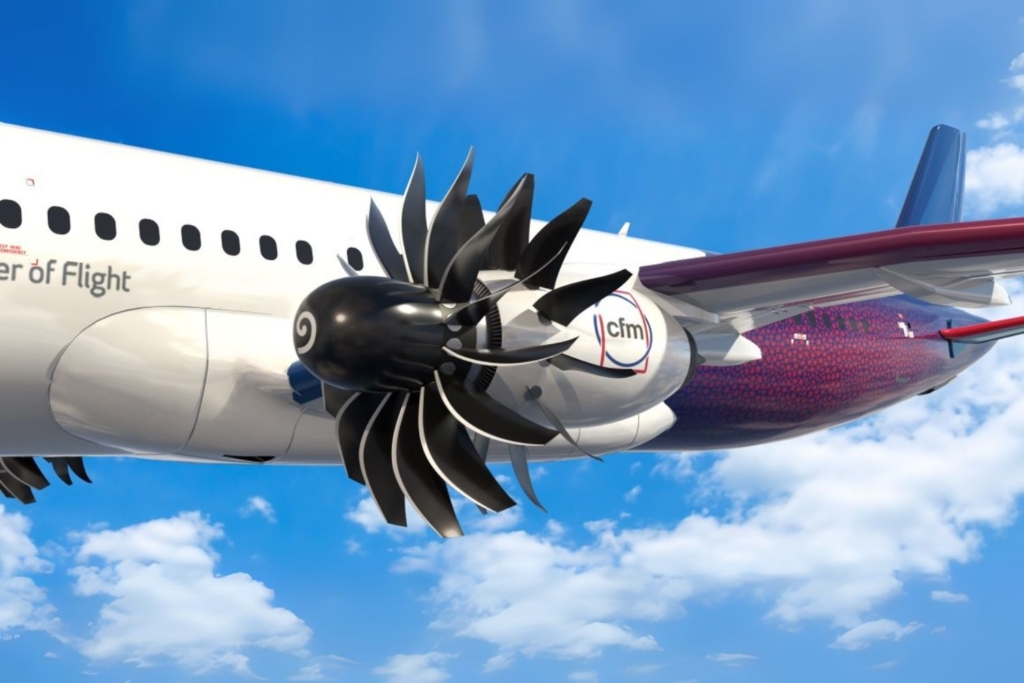
The programme combines several technologies, including Open Fan architecture, compact engine cores, advanced materials and hybrid-electric systems.
According to GE, more than 350 tests and 3,000 endurance cycles have already been completed. The programme is targeting more than 20 per cent lower fuel consumption than current commercial engines.
NASA’s September 2024 update on HyTEC highlighted the growing integration between government-funded research and future commercial products.
“Together with NASA, GE Aerospace is doing critical research and development that could help make hybrid-electric commercial flight possible,” Hegeman said at the time.
Airbus, RTX and Heart Aerospace join the hybrid-electric race
GE is not alone in pursuing hybrid-electric propulsion.
Across the industry, manufacturers increasingly view hybridisation as one of the most realistic routes toward reducing fuel consumption in the medium term.
Airbus has spent several years investigating electrification and hybrid propulsion concepts as part of its broader decarbonisation strategy. The company states that hybrid-electric propulsion can improve energy management and reduce fuel consumption while helping establish regulatory and industrial foundations for future alternative propulsion systems.
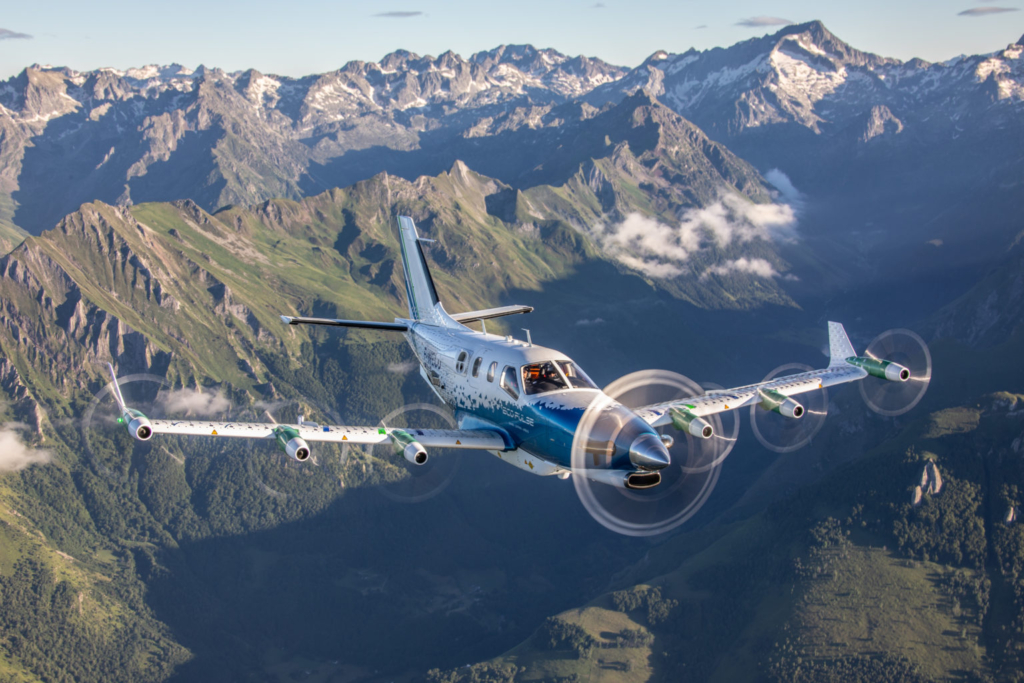
One of Airbus’ most visible projects is EcoPulse, a distributed hybrid-propulsion demonstrator being developed with Daher and Safran. The programme is intended to explore new aircraft architectures that combine conventional and electric propulsion systems.
RTX is pursuing a similar path through its Hybrid-Electric Flight Demonstrator. That programme combines a Pratt & Whitney Canada thermal engine with a one-megawatt Collins Aerospace electric motor and battery system.
The powerplant is expected to fly aboard a modified De Havilland Canada Dash 8 regional turboprop and is targeting fuel-efficiency improvements of up to 30 per cent.
Regional aircraft could be first to adopt hybrid-electric propulsion
Although hybrid-electric technology remains in development, airlines have already begun positioning themselves for its eventual arrival.
The strongest commercial support has emerged around Sweden’s Heart Aerospace, whose ES-30 regional aircraft combines electric propulsion with a range-extending turbine generator.
Air Canada placed an order for 30 ES-30 aircraft in 2022, while United Airlines and Loganair have also backed the programme. The aircraft is designed to carry 30 passengers and is expected to offer both all-electric and hybrid-electric operating modes.
Developers see regional aviation as the most likely entry point for hybrid-electric technology because shorter sectors require less onboard energy storage than larger narrowbody operations.
The pathway for larger aircraft will be longer. Yet milestones such as GE Aerospace’s latest demonstration suggest the technology is moving steadily beyond the experimental stage.
Commercial service for hybrid-electric narrowbody aircraft remains years away, but the industry’s major propulsion manufacturers are increasingly converging on a common view: the future of flight is unlikely to be entirely electric or entirely conventional.
Instead, it may involve both working together.
For GE Aerospace and NASA, the successful completion of a megawatt-class hybrid-electric powertrain test is another step toward proving that the concept can work at airline scale.
Featured image: GE Aerospace
Sign up for our newsletter and get our latest content in your inbox.




More from


October 11, 20263 min read