Restored de Havilland Dragon ‘Iolar’ recreates the flight that launched Aer Lingus

7 min read
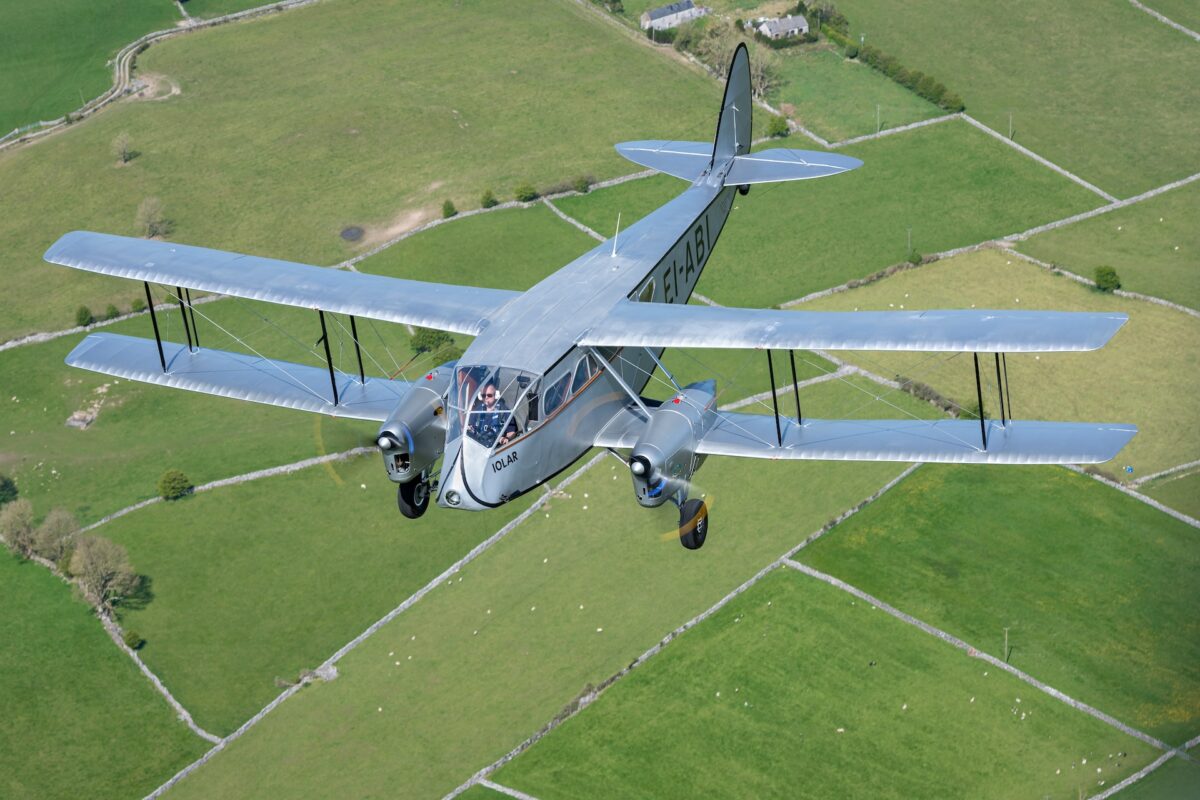
Ninety years after a small twin-engine biplane lifted off from a military airfield outside Dublin carrying five passengers and a bundle of newspapers, Aer Lingus has taken to the skies once again with the aircraft that started it all.
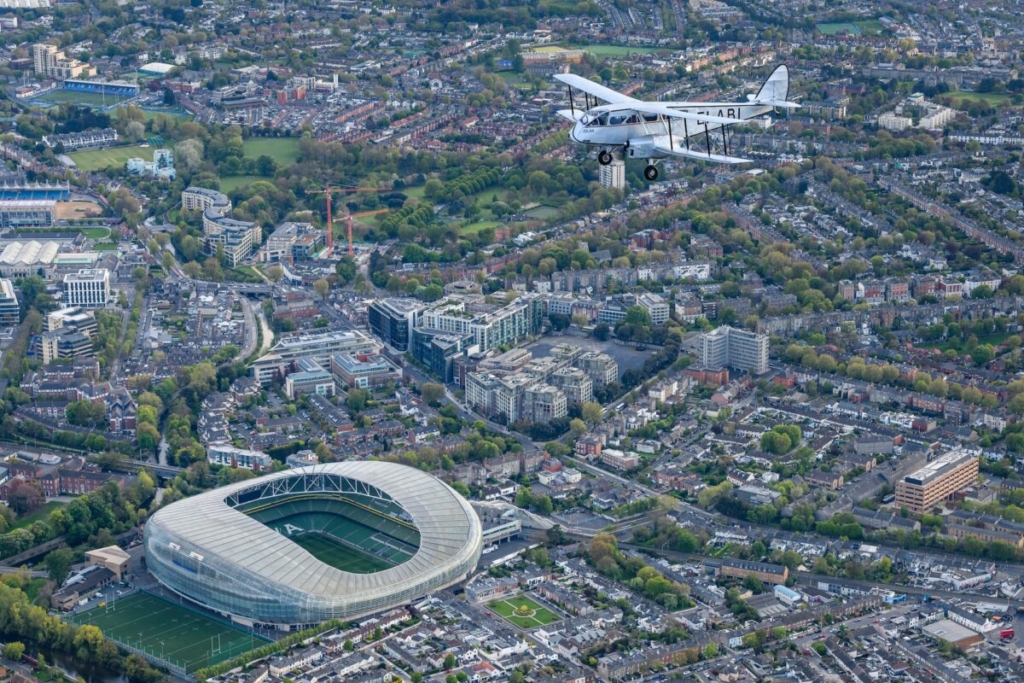
On 27 May, the restored de Havilland DH.84 Dragon known as Iolar departed Dublin for Bristol, recreating Aer Lingus’ inaugural 1936 service across the Irish Sea and marking the airline’s 90th anniversary with one of the rarest aircraft still flying in Europe.
The silver-and-green aircraft, registered EI-ABI, cruised toward Bristol at little more than 170 km/h, watched closely by aviation enthusiasts, airline staff and historians gathered to witness a piece of Irish aviation history return to the air.
For Aer Lingus, the flight was far more than a heritage flypast. It was a return to the moment the airline began operations with one aircraft, one route, and a small team trying to establish commercial aviation links between Ireland and Britain at a time when flying itself still carried an air of novelty.
Back then, the journey from Baldonnel Aerodrome to Bristol took around three hours. Today, Aer Lingus operates multiple daily services on the route using Airbus aircraft, connecting Ireland with more than 100 destinations across Europe, the UK and North America.
But for one morning at least, Aer Lingus stepped back into the 1930s.
Rare de Havilland Dragon Iolar returns to the skies
The aircraft at the centre of the anniversary celebrations is itself a survivor from the earliest era of European airline travel.
The de Havilland DH.84 Dragon was introduced during the early 1930s as airlines across Europe began experimenting with short-haul passenger networks.
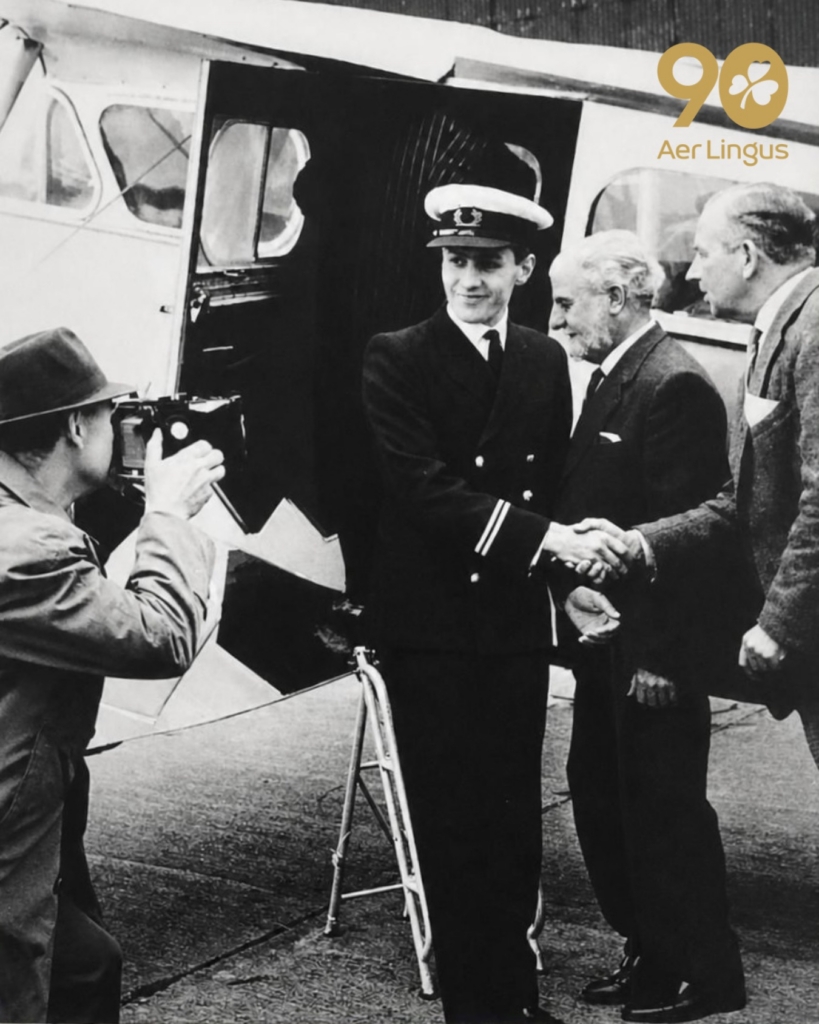
Built largely from wood and fabric, the aircraft carried a pilot and up to six passengers and quickly became one of the pioneering airliners of the interwar years.
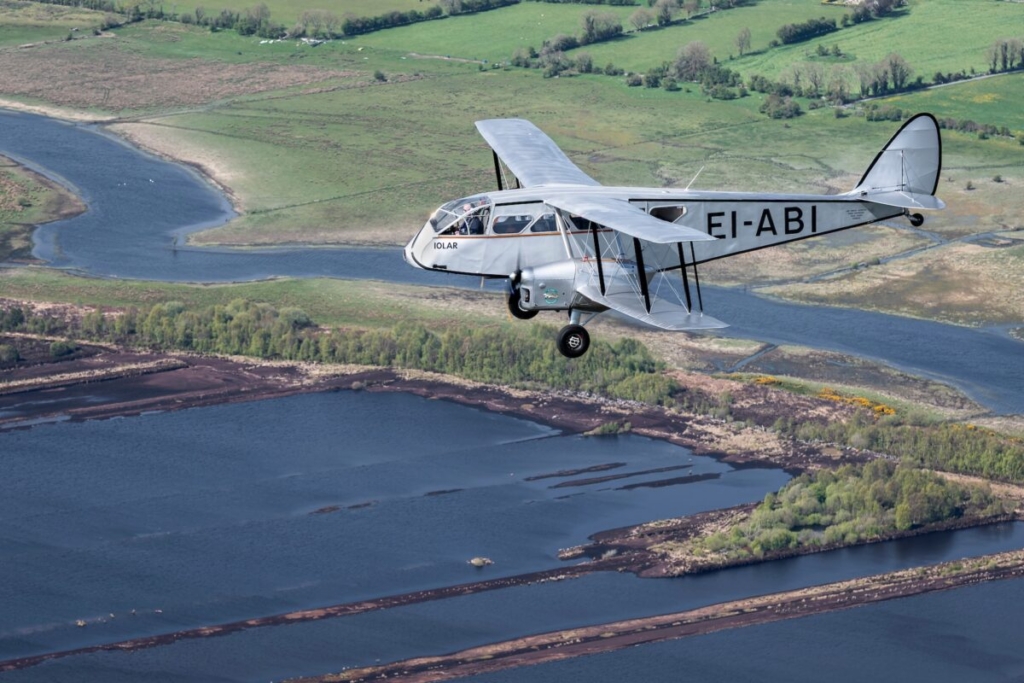
Aer Lingus took delivery of its first Dragon on 26 May 1936 and registered it as EI-ABI. The aircraft was named Iolar, the Irish word for eagle, and became the airline’s first and only aircraft when operations began from Baldonnel, then an Irish Air Corps base outside Dublin.
At 0900 on 27 May 1936, the aircraft departed for Bristol carrying five passengers. The only cargo on board was a bundle of Irish Times newspapers bound for London.
Within weeks, Aer Lingus expanded services to the Isle of Man before adding London Croydon later that year using a larger de Havilland DH.86.
The original Iolar remained with the airline for just two years before being sold to Channel Air Ferries in Britain in 1938. It was later lost during the Second World War.
The aircraft that flew to Bristol this week is a sister aircraft to the original. Built in the same year, it passed through several owners before Aer Lingus acquired it in 1967 as a historic reminder of the airline’s beginnings.
The aircraft was restored once before for Aer Lingus’ 50th anniversary in 1986 and later flew again during the airline’s 60th and 75th anniversaries.
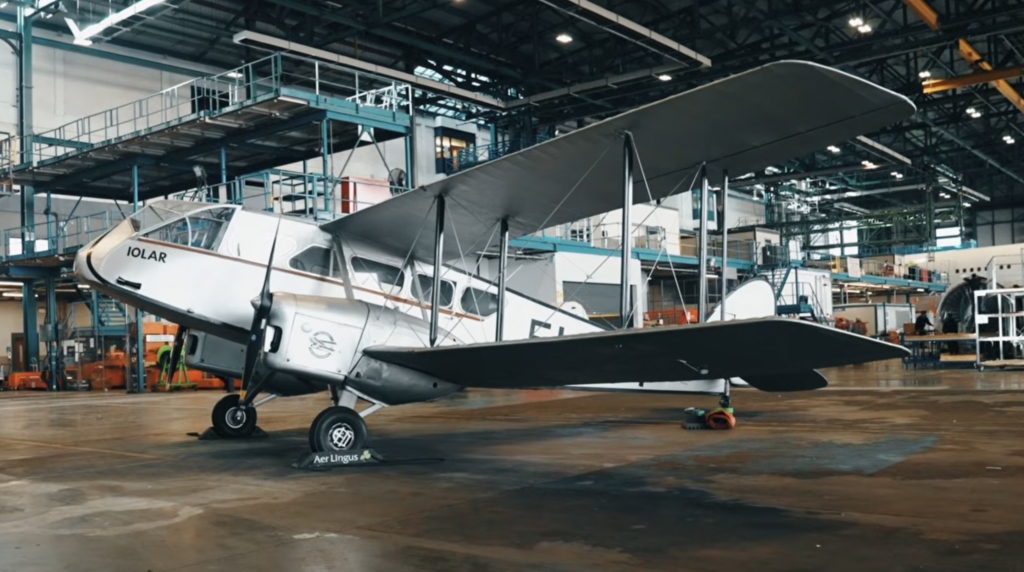
Now re-registered as EI-ABI, it once again carries the identity of the original aircraft that launched Ireland’s national airline.
Today, only a handful of DH.84 Dragons remain airworthy worldwide, making the aircraft one of the rarest operational airliners from the pre-war era.
Aer Lingus recreates the flight that launched Irish commercial aviation
The anniversary flight itself was flown by Captain Brendan Bruton and Captain Mark Dolan, both deeply involved in the restoration project.
For Bruton, who normally flies Airbus A330 long-haul aircraft across the Atlantic, the flight offered a sharp contrast with modern airline operations.
Before departure, he told reporters the cockpit felt “like a greenhouse” amid Ireland’s unusually warm weather, a far cry from the climate-controlled flight decks and automated systems of today’s widebody aircraft.
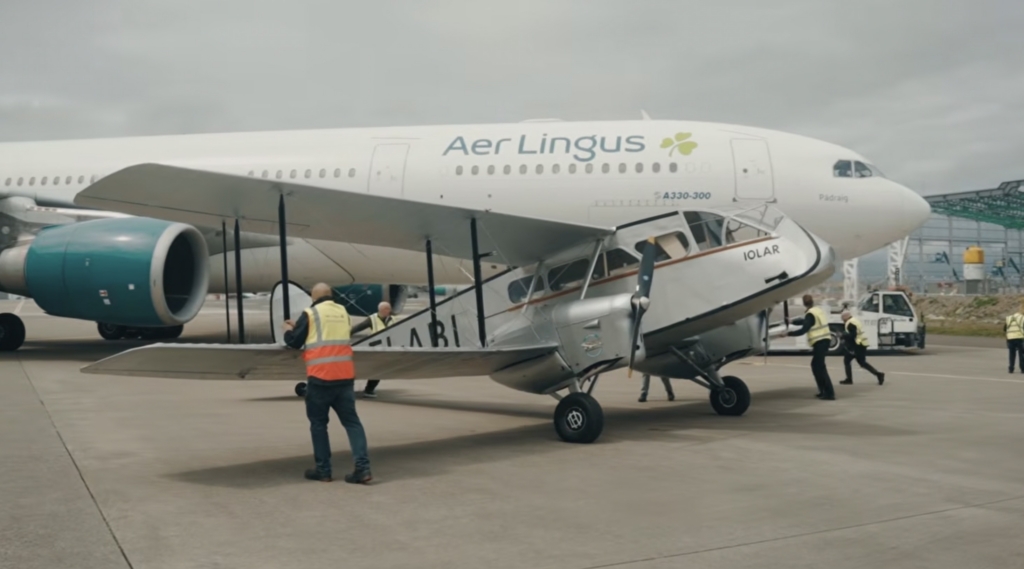
The contrast between the Dragon and a modern Airbus captured the wider story Aer Lingus was trying to tell through the flight: how commercial aviation has transformed over nine decades from fragile regional operations into a highly connected global industry.
The Dragon cruises at approximately 110 mph and was considered remarkably efficient for its time.
According to Aer Lingus, the aircraft can carry roughly 80 per cent of its own weight, an impressive figure for an aircraft designed in the early 1930s.
The recreated route also carried historic significance for Bristol itself.
Local accounts note that the original 1936 Aer Lingus arrival marked Bristol Airport’s first international service, although the milestone received limited attention at the time, as it coincided with the maiden transatlantic voyage of the Queen Mary from Southampton on the same day.
Engineers and volunteers restore one of Europe’s last flying DH.84 Dragons
In recent years, Iolar has been displayed inside Aer Lingus’ maintenance headquarters at Dublin Airport, suspended above engineers and aircraft technicians working on the airline’s modern fleet.
Ahead of the 90th anniversary, however, the decision was made to return the aircraft to flying condition once again.
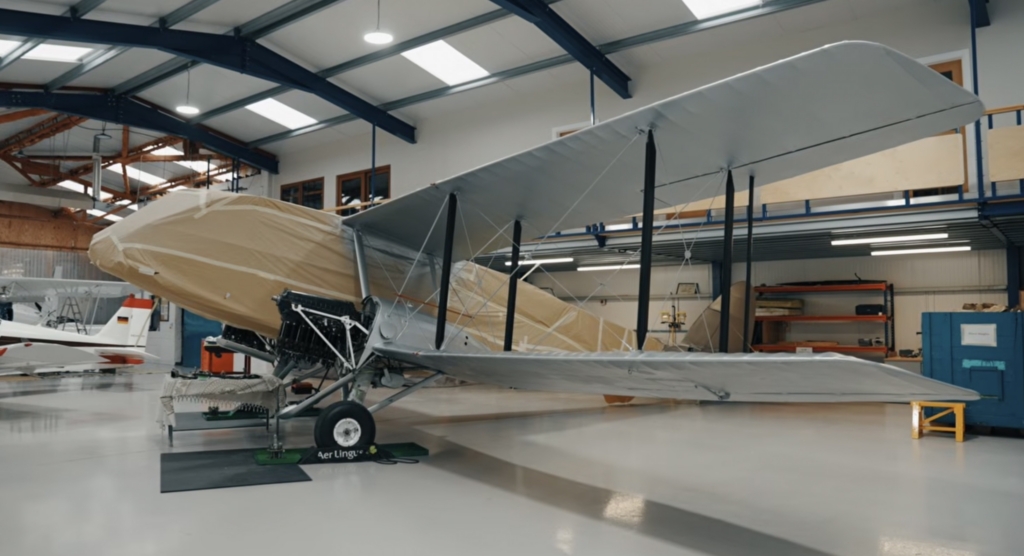
The four-month restoration was carried out by Midland Aviation at Abbeyshrule Aerodrome in County Longford with support from Aer Lingus volunteers and the Aer Lingus Charitable Foundation.
The work involved full top overhauls of both engines, maintenance inspections, certification checks and detailed cosmetic restoration of the aircraft’s wooden structure and fabric-covered airframe.
One of Ireland’s last remaining aviation carpenters also contributed to the project, helping preserve original construction methods rarely seen in modern aviation engineering.
The restoration team relied heavily on archival photographs and historical documents to maintain authenticity while ensuring the aircraft met modern airworthiness requirements.
Adrian Dunne, Aer Lingus Chief Operations Officer, described the anniversary flight as a reconnection with the airline’s origins.
“Today’s flight to Bristol is a proud moment, reconnecting us with the very beginnings of our airline,” he said. “I am incredibly proud of the dedication and expertise shown by our colleagues and partners in bringing Iolar back to life, preserving an important piece of our history for future generations.”
Aer Lingus Chief Executive Lynne Embleton said the project reflected the “pioneering spirit” that shaped Irish aviation during the airline’s early years.
Aer Lingus grew from one biplane to a transatlantic airline
When Aer Lingus began operations in 1936, Ireland’s aviation infrastructure remained limited and commercial air travel was still considered exclusive and experimental.
The airline itself operated with only a handful of staff.
Passengers departing Baldonnel for Bristol that first morning in 1936 would have experienced an aviation industry very different from the one that exists today.
Navigation remained basic, weather forecasting was limited, and airline operations were often shaped by mechanical reliability and changing conditions over the Irish Sea.
Yet the Dublin-Bristol route quickly became an important commercial and social link.
Today it remains one of Bristol Airport’s busiest international connections. Since 2022, Aer Lingus Regional, operated by Emerald Airlines, has flown more than 10,000 services between Bristol, Dublin and Cork, carrying over 550,000 passengers.
The anniversary celebrations in Bristol reflected that continuing relationship between the two cities.
Among those greeting the aircraft were Irish diplomatic representatives, Bristol Airport executives and former Aer Lingus staff, including 83-year-old former cabin crew member Rosemary Collins, who flew Aer Lingus services during the 1960s.
Collins recalled climbing a vertical ladder into aircraft cockpits carrying coffee and meal trays for pilots while working onboard Aer Lingus’ ATL-98 Carvair aircraft.
“It was really special to see Iolar flying again,” she said.
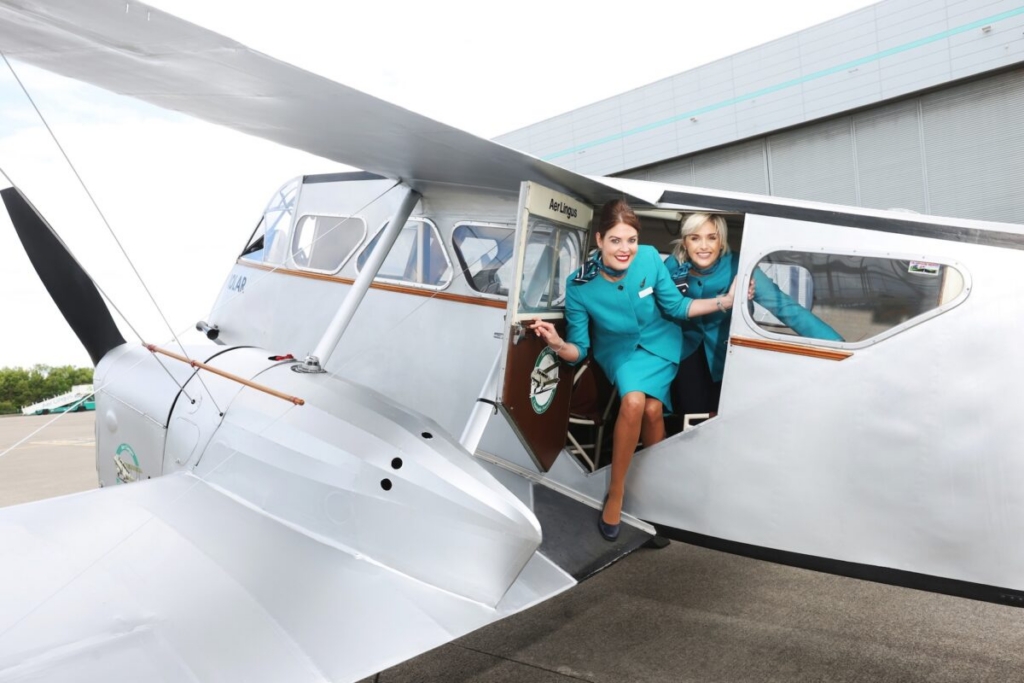
For Aer Lingus, the sight of the Dragon returning to Bristol represented more than nostalgia.
The airline that once operated a single biplane carrying five passengers now flies modern Airbus A321LR and A330 aircraft across the Atlantic to destinations including New York, Boston, Chicago and Los Angeles.
But the recreated flight also served as a reminder that the foundations of modern European air transport were built by small pioneering aircraft like the DH.84 Dragon and the crews willing to fly them across uncertain skies nearly a century ago.
Featured image: PL Ryan / Aer Lingus