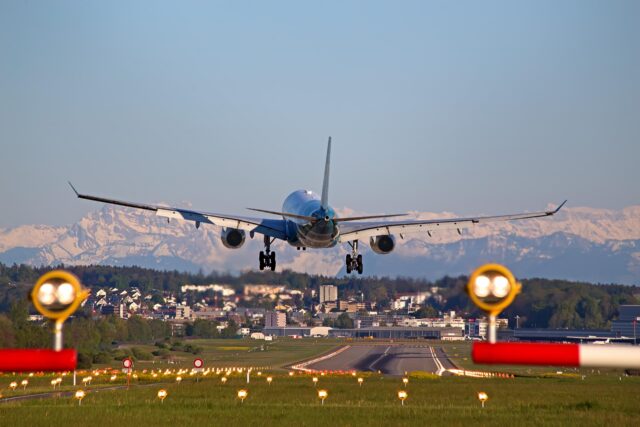
Airbus A330 wings and tailplane set for sharkskin-inspired efficiency upgrade

May 19, 2026
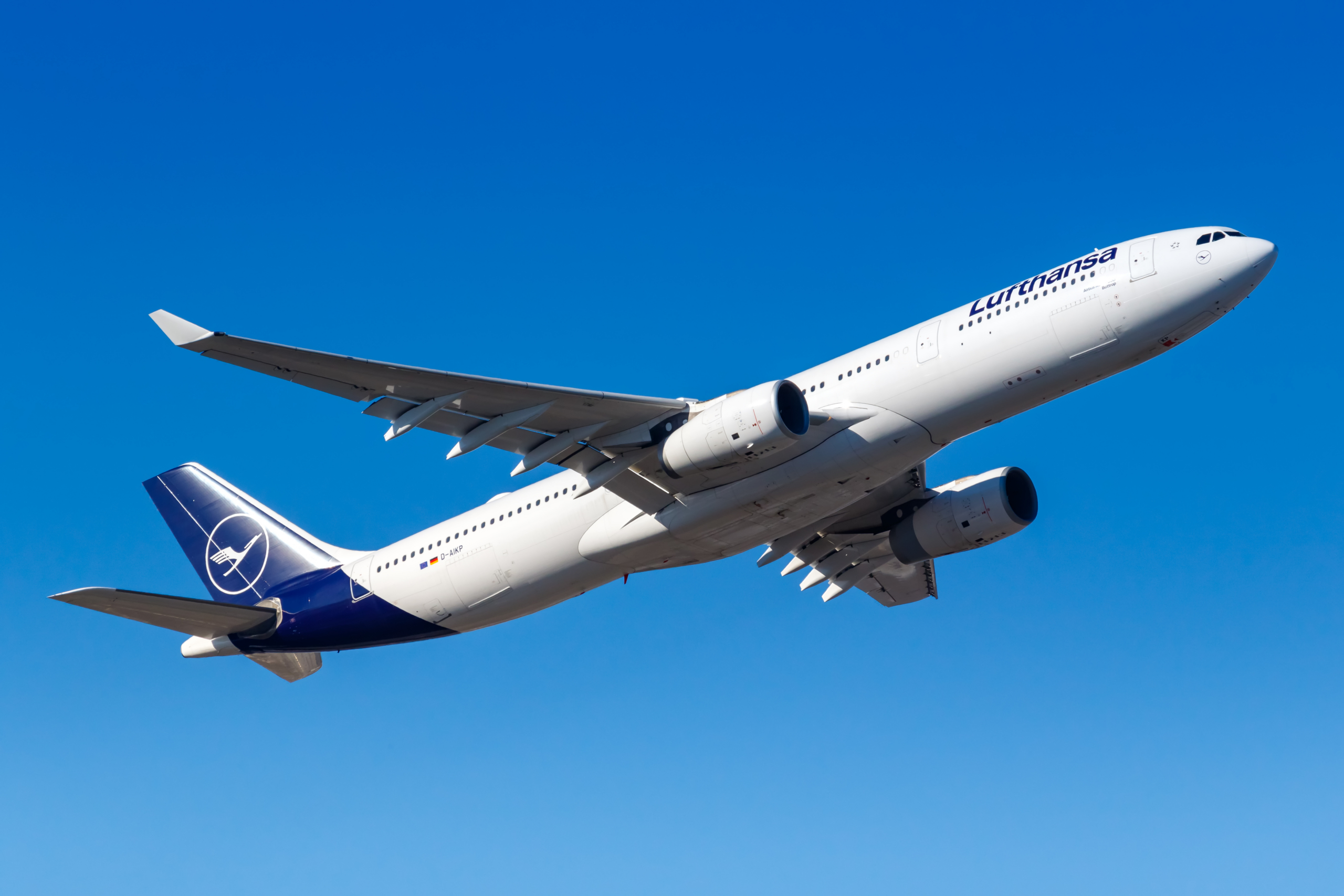
Lufthansa Technik and Airbus are collaborating to expand AeroSHARK riblet technology beyond fuselage applications, with the partners now evaluating its use on the wings and tailplanes of the Airbus A330ceo.
The project aims to achieve the first commercial certification of riblet technology on an Airbus A330 wing and tailplane, potentially marking a significant step forward in drag-reduction technology for commercial aviation.
The work builds on AeroSHARK applications already under development for the fuselage and engine nacelles of the A330-200 and -300, which require a Supplemental Type Certificate (STC) before entering service.
Lufthansa Technik collaborates with Airbus to extend A330 shark fin coating
By extending the coating to additional aerodynamic surfaces, Lufthansa Technik hopes to unlock greater fuel savings through reduced airflow disturbance across a larger proportion of the airframe.
When applied across all relevant aerodynamic surfaces, the company says fuel savings for a fully modified A330ceo could exceed 2% on typical long-haul missions, reducing both operating costs and carbon dioxide emissions.
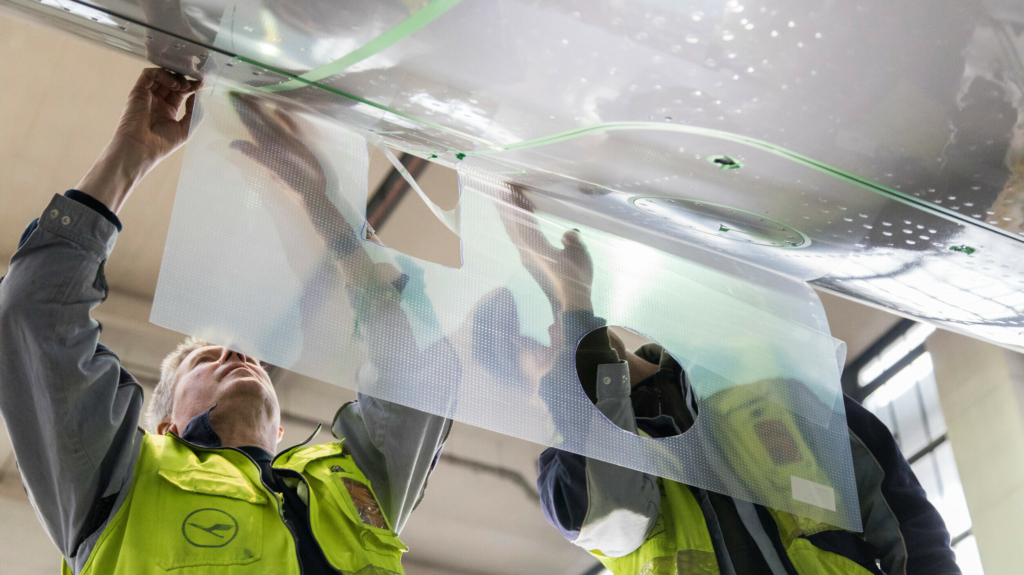
Following validation and approval by the European Union Aviation Safety Agency (EASA), the AeroSHARK solution is intended to be made commercially available.
Lufthansa Technik will hold the STC and lead the certification process, while Airbus Engineering will support the programme through aircraft type data and safety assessments.
According to Lufthansa Technik, certification work will assess the impact of the riblet coating on flight dynamics, lightning strike protection, structural loads, maintenance requirements and aircraft systems, including flight controls, autopilot and navigation systems.
Airbus’s involvement reflects the manufacturer’s wider interest in supporting decarbonisation technologies across its in-service fleet. Henning Linnekogel, Senior Director OEM Partner Management at Lufthansa Technik, said the programme aimed to develop a solution that actively contributes to the aviation industry’s sustainability goals.
AeroSHARK already has a proven operational record
Lufthansa Technik has already rolled out AeroSHARK technology on Boeing 777 aircraft both within the Lufthansa Group and with other airlines, while a Lufthansa Boeing 747 previously served as a testbed for the technology.
The company is now looking to expand AeroSHARK to additional aircraft types as airlines seek further fuel savings and emissions reductions.
Andrew Muirhead, Vice President OEM and Special Engineering Services at Lufthansa Technik, said the company was now exploring the application of AeroSHARK to larger and more aerodynamically significant aircraft surfaces.
To date, AeroSHARK modifications have been applied to around 30 Boeing 777 aircraft.
In February 2026, LATAM Airlines announced plans to roll out AeroSHARK coatings across all ten of its Boeing 777s, while Austrian Airlines and ANA already operate aircraft using the technology.
According to Lufthansa Technik, AeroSHARK-modified aircraft had accumulated more than 350,000 flight hours by April 2026, saving over 20,600 metric tonnes of jet fuel and reducing carbon dioxide emissions by more than 65,000 metric tonnes.
What is AeroSHARK and how does it work?
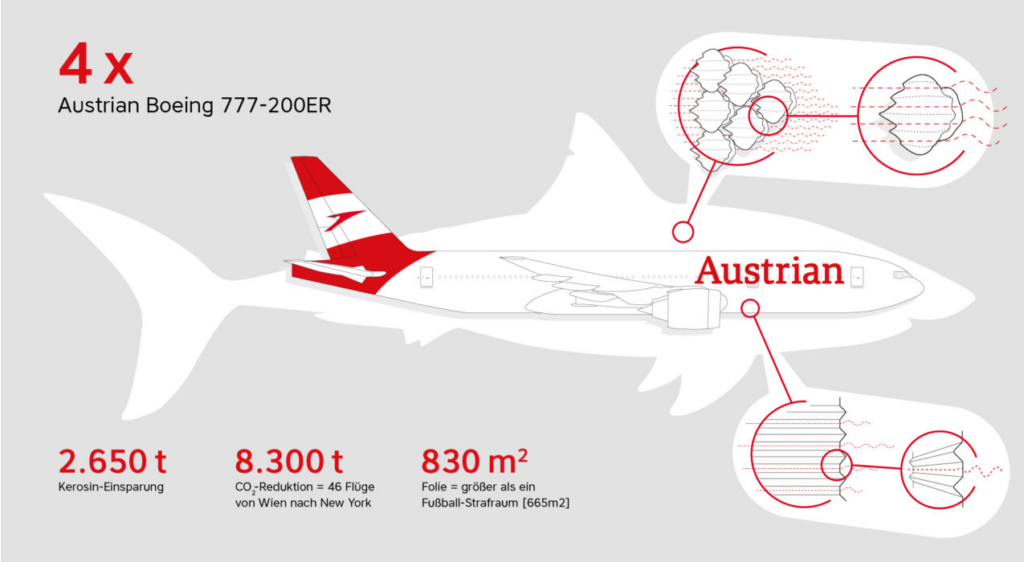
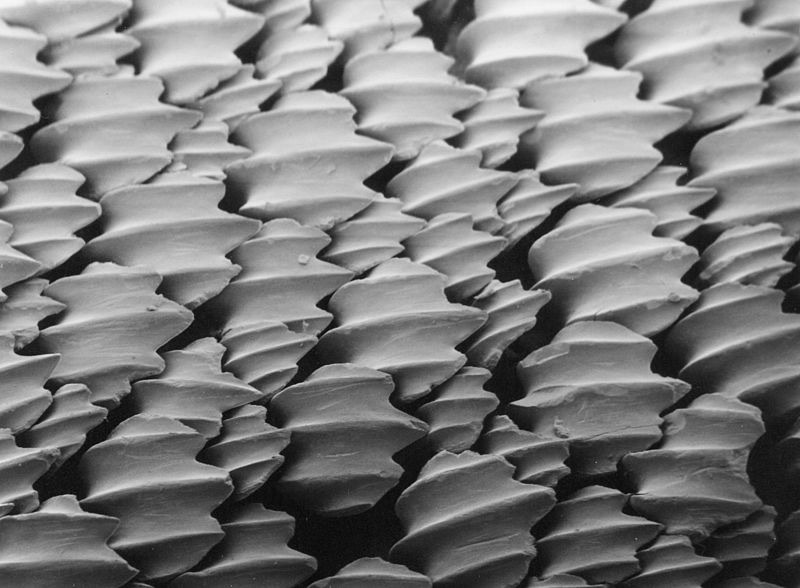
The science behind AeroSHARK is rooted in the natural engineering of the great white shark. Researchers have found that the alternating high and low ridges on a shark’s skin – denticles – reduce the pressure drag by controlling flow separation, especially as the animal switches between slow and high-speed swimming.
Research by Tokyo Institute of Technology’s Hiroto Tanaka shows high ridges work best at low speeds, while alternating high-low ridges excel at high speeds, offering benefits across the shark’s full swimming range.
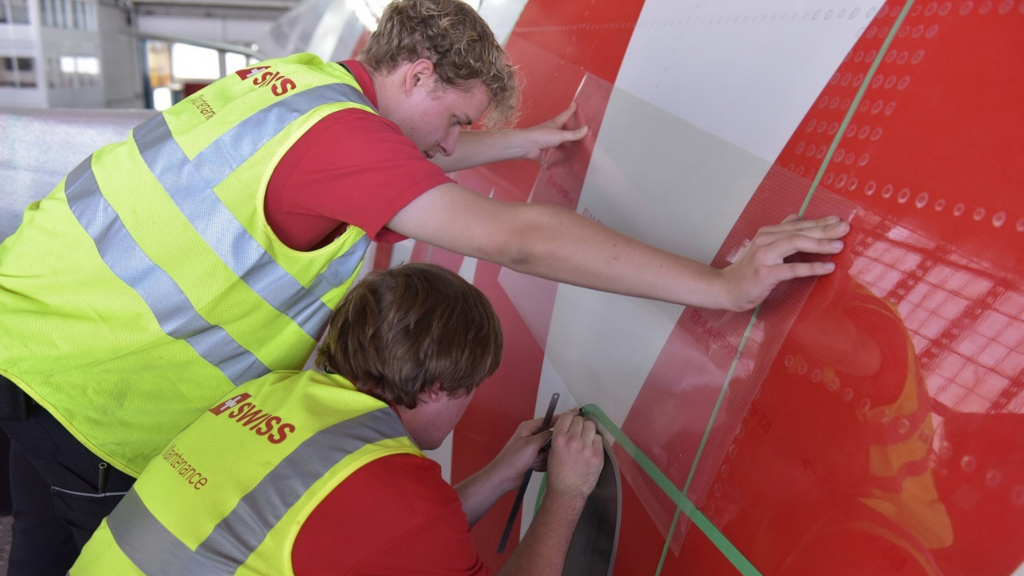
In AeroSHARK films, riblets just 50 micrometres high are engineered to mimic this effect, smoothing airflow over the aircraft. The riblets are precisely aligned with the airflow along the fuselage and engine nacelles, reducing skin-friction drag and, with it, fuel burn.
In cruise flight, the modification delivers around a 1% cut in fuel consumption and carbon dioxide emissions. Applied across a global long-haul fleet, Lufthansa Technik estimates it could save nearly five million tonnes of kerosene annually.
Featured image: Markus Mainka / stock.adobe.com