


B-21 Raider refuelling trial images provide fresh look at design of USAF’s new stealth bomber

6 min read
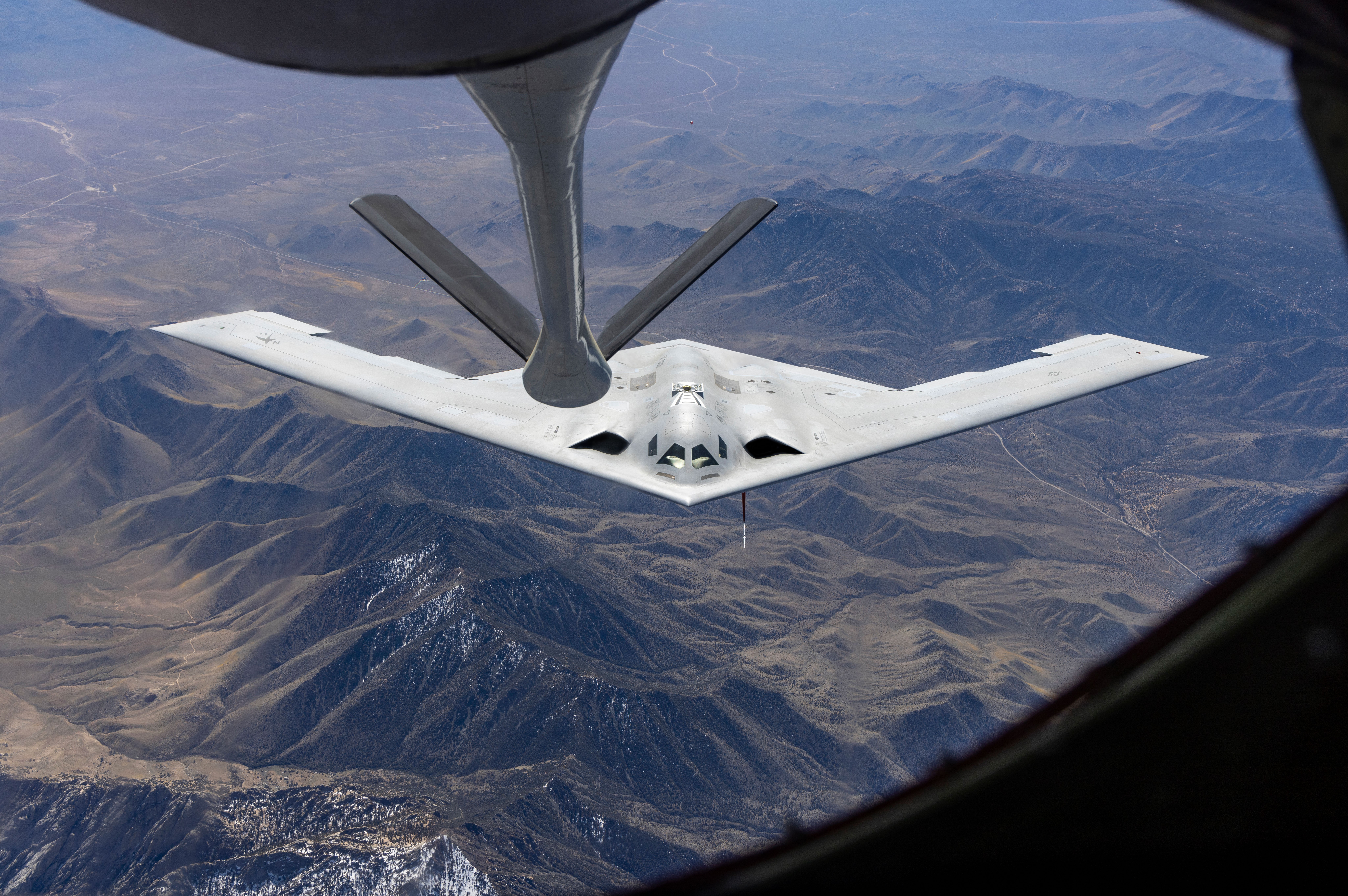
Northrop Grumman and the US Air Force (USAF) have publicly acknowledged the recent air-to-air refuelling trials carried out between the air arm’s new-generation B-21 Raider stealth bomber and a KC-135R Stratotanker over California, with the release of two images of the event, including one from a never-before-seen steep upper overhead angle.
Published on 14 April, these new images were released more than a month after the B-21 prototype (serial AF-0001/‘ED’, nicknamed ‘Cerberus’) was seen performing an air-to-air refuelling trial over Eastern California with the USAF’s specially modified, white-topped KC-135R (serial 61-0320, nicknamed ‘Ghost’) from the 370th Flight Test Squadron (FLTS) at Edwards Air Force Base (AFB).
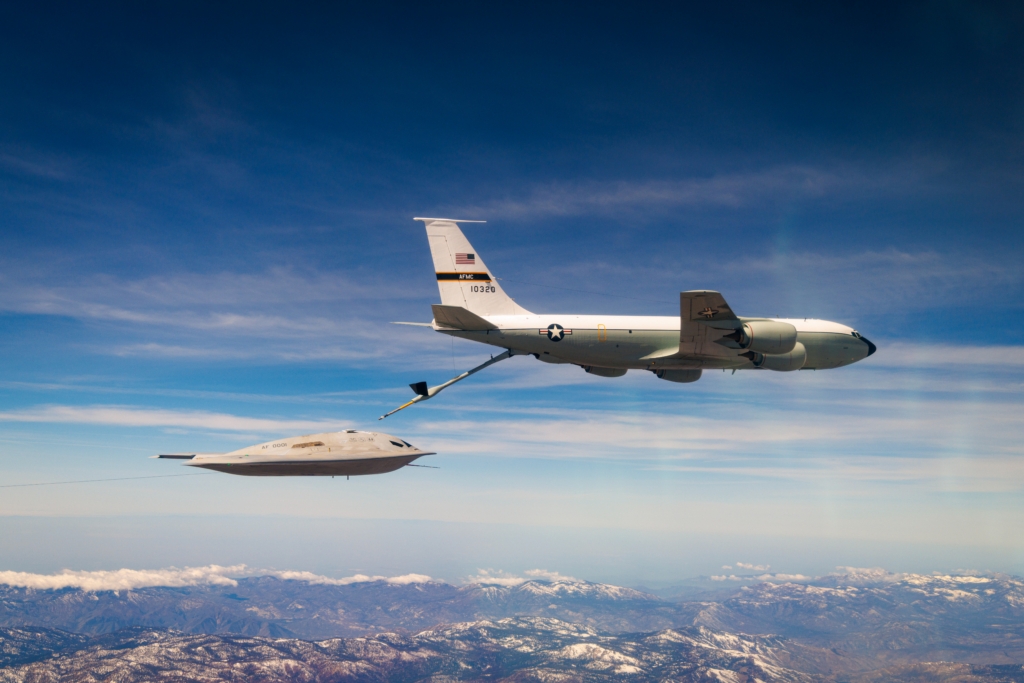
This recent mission, which took place on 10 March and lasted roughly 5 hours and 33 minutes, was documented by several aviation photographers, who later shared some incredible images of the air-to-air refuelling trial across various social media platforms.
The two new images show the B-21 prototype lining up in the pre-contact position behind the KC-135R’s extended refuelling boom. The first image provides a side angle of this milestone test effort and features both aircraft in full.
I believe I captured a "first" today. 🙌#b21 #b21raider #stealthbomber pic.twitter.com/ZHj1WnTTQk
— jmh.creates (@JarodMHamilton) March 10, 2026
Meanwhile, the second – taken from the KC-135R’s boom operator station – provides us with our first official look at the top of the B-21 from an overhead perspective and a closer look at some of the more sensitive parts of the new stealth bomber’s unique low-observable design.
In confirming that the Raider’s ongoing test campaign had now progressed to include air-to-air refuelling activities, Northrop Grumman said: “The B-21 Raider test campaign now includes aerial refuelling, extending the stealth bomber’s global reach and enabling longer, more efficient test sorties as critical weapons and mission systems evaluations continue…
— T. Ace (@minor_triad) March 10, 2026
“As the most fuel-efficient bomber ever built, the B-21 consumes a fraction of the fuel used by fourth- and fifth-generation aircraft. This reduces demand for theatre tanker logistics and provides operational commanders with greater flexibility in force packaging…
“With more than $5bn invested in digital technologies and manufacturing infrastructure for the B-21 program, Northrop Grumman is accelerating its production, with the first aircraft planned to arrive at Ellsworth AFB [in South Dakota] in 2027. Expanded production capacity provides additional flexibility to increase the Raider fleet size aligned with future operational requirements,” the firm added.
What have we learned from these new B-21 Raider images?
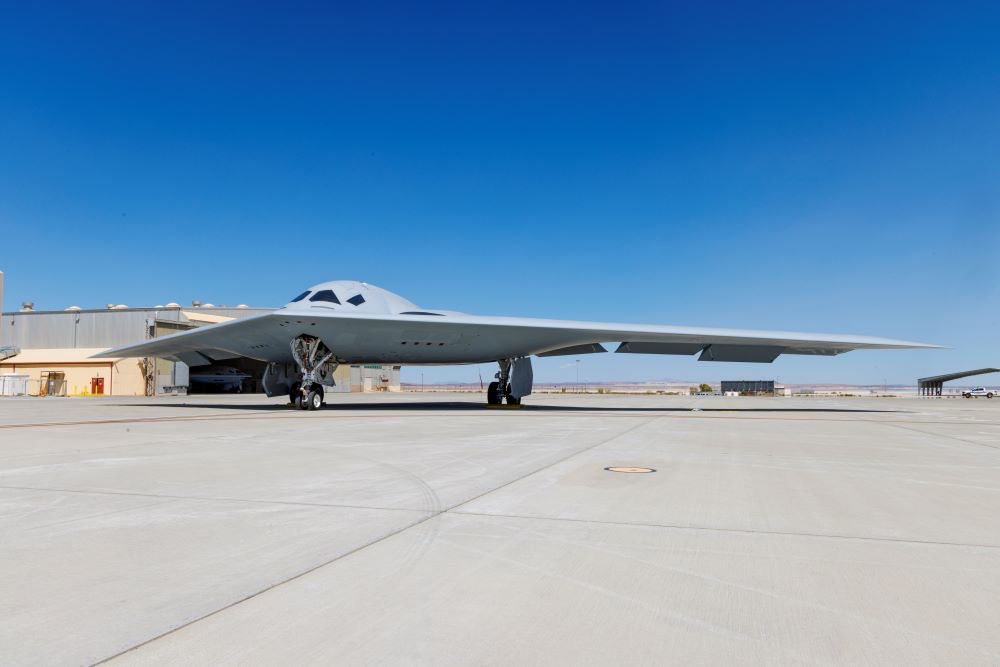
While the first of the two new images provided by Northrop Grumman – a side profile shot of the B-21 in a pre-contact position with the KC-135R – does not offer much in terms of new details or angles of the Raider in flight, it does serve to remind one of how much smaller the so-called world’s first sixth-generation combat aircraft is when compared with its predecessor, the venerable B-2A Spirit.
At a reported 54ft (16m) in length, the B-21 is shorter than both the F-15EX Eagle II and F-22A Raptor, which are both just over 60ft (18.2m) long. With a reported wingspan of between 145-155ft (44-47m), the USAF’s new stealth bomber is not as wide as the B-2A, which is 172ft (52.4m) wide. Despite this, the Raider has been heavily optimised for efficient flight operations at high-altitude.
However, the newly released overhead image of the B-21 in flight behind the KC-135R – taken from the boom operator’s station on board the Stratotanker – provided us with our most telling view of the new stealth bomber’s upper surface to date.
This image offered our first good glimpse of the Raider’s open aerial refuelling receptacle, as well as a better close-up view of its distinctive, blended air intakes, exhausts and smaller cockpit design.
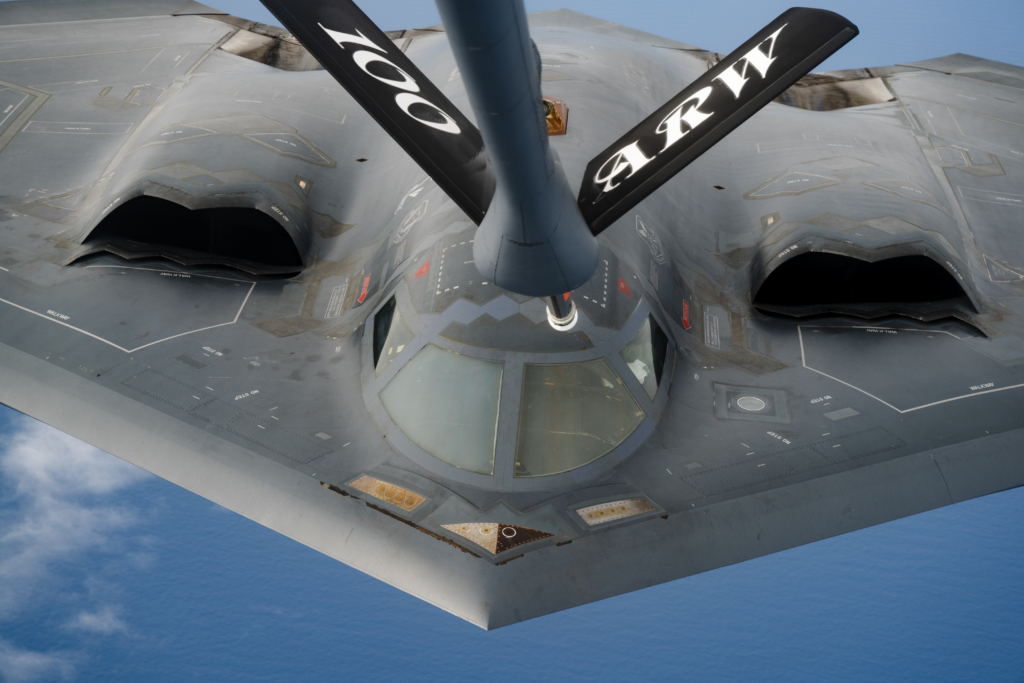
The image highlights just how drastically the Raider’s top-mounted aerial refuelling receptacle differs from the one employed by the B-2A. While the latter employs a rotating receptacle, the former appears to follow a two-piece clamshell door-like design, which is located just behind the cockpit and reveals the Raider’s refuelling receptacle once opened.
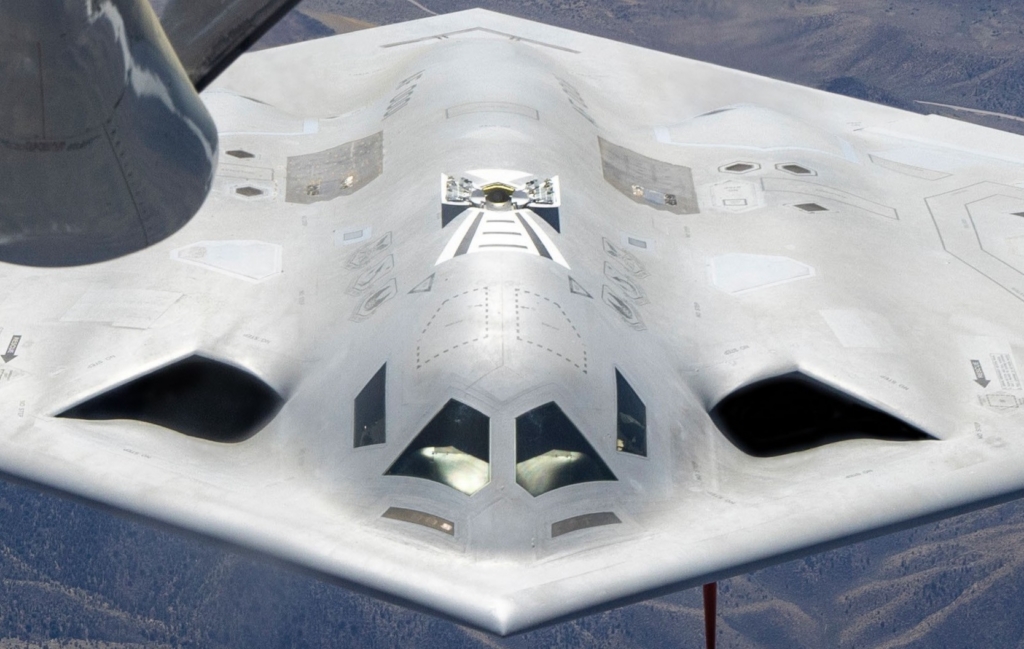
The new image also provides us with a closer look at the B-21’s blended air intakes and exhaust ports, both of which are key elements of the Raider’s titular stealth design. In both cases, the B-21 employs sunken chevron-shaped intakes and exhausts. This is similar to the B-2A’s innovative design, although the chevron design has been applied in an inverse direction aboard the Raider.
However, when compared with the B-2A, the B-21’s exhaust ports have been placed further forward from the bomber’s trailing edge to better hide its overall infrared signature and enhance its stealth characteristics.
Unlike the Spirit, the Raider’s exhaust ports do not feature any visible special active cooling material to help protect the airframe from the heat generated from the hot gasses produced at the rear of the aircraft.
B-21 Raider: Reinventing global reach for the USAF
These newly released images serve to remind one of how small the B-21 Raider actually is when compared with its predecessor, which shares a similar highly optimised flying-wing design.
While the B-2A is driven by four GE Aviation F118-GE-100 non-afterburning turbofan engines and boasts a larger weapons payload, its successor is powered by two Pratt & Whitney PW9000 non-afterburning turbofans and will carry significantly more fuel than its in-service predecessor.

From the outset of the USAF’s Long-Range Strike Bomber (LRS-B) programme, the B-21 has been designed with extreme endurance in mind to further expand its global combat reach, allowing it to penetrate enemy territory at greater distances from supporting tanker aircraft.
This key characteristic will help reduce the demand on the USAF’s tanker fleet, while allowing such support assets to remain at safer stand-off ranges when supporting B-21 operations, when compared with the USAF’s current bombers. The importance of air-to-air refuelling aircraft in supporting the USAF’s bomber triad has once again been highlighted during the ongoing war with Iran.
The conflict has shown how the air arm’s ability to refuel its B-1Bs, B-2As and B-52Hs in-flight has been crucial in projecting combat airpower globally from bases in the Continental US (CONUS) and at forward operating bases at RAF Fairford in the UK, and Diego Garcia in the Indian Ocean.
While the USAF has yet to formally declare how many B-21s it will ultimately acquire in total, the current program of record for the type mandates the procurement of at least 100 aircraft to replace the air arm’s ageing B-1B and B-2A bombers.
While a 100-strong fleet is the baseline acquisition figure, defence analysts believe this figure may be pushed beyond 145 airframes to meet current and emerging threats in the modern battlespace. The first aircraft is due to be delivered to Ellsworth AFB in 2027.
Featured Image: The USAF’s first B-21 Raider prototype (serial AF-0001/’ED’, nicknamed ‘Cerberus’) conducts an air-to-air refuelling trial over California with a KC-135R Stratotanker from the 370th FLTS at Edwards AFB on 10 March 2026. Image: Northrop Grumman


