


Syrian Airlines reveals new livery as it plans to double fleet and expand to 25 destinations

6 min read
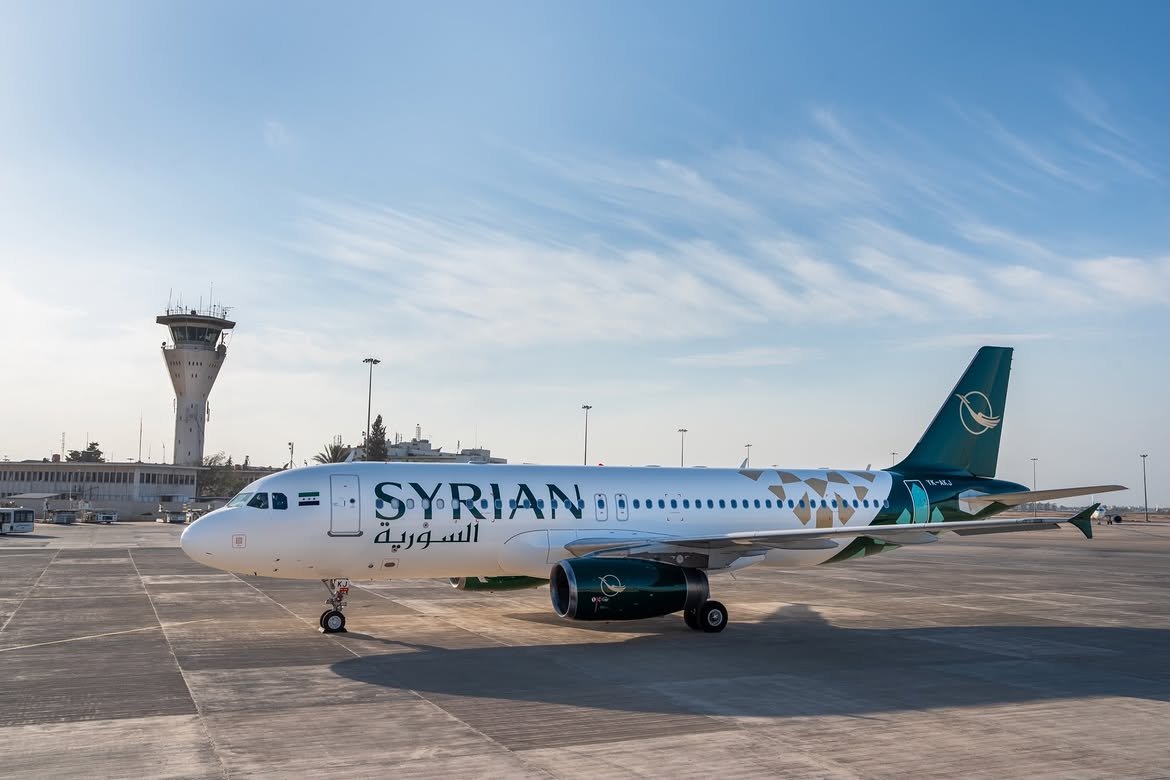
Syrian Airlines has unveiled a new corporate identity and strategic vision at Damascus International Airport, marking one of the most visible changes yet in the national carrier’s effort to modernise its fleet, rebuild its international network and reposition itself for growth.
The rebranding was presented on 5 October at a ceremony organised with Syria’s General Authority of Civil Aviation and Air Transport.
The event also marked the entry into service of the first aircraft wearing the airline’s updated visual identity. Behind the new look is a much broader programme covering aircraft acquisitions, new international routes, digital services and an ambitious target of serving 25 destinations before the end of the year.
Syrian Airlines unveils new green-and-gold livery
The most immediate change is on the aircraft themselves. The carrier’s traditional blue-heavy scheme has been replaced by a much more distinctive dark-green and gold design, giving Syrian Airlines a markedly different appearance on the airport apron.
The first aircraft to receive the new treatment is Airbus A320-200 YK-AKJ, which returned to Damascus after being repainted at Ostrava Airport in the Czech Republic.
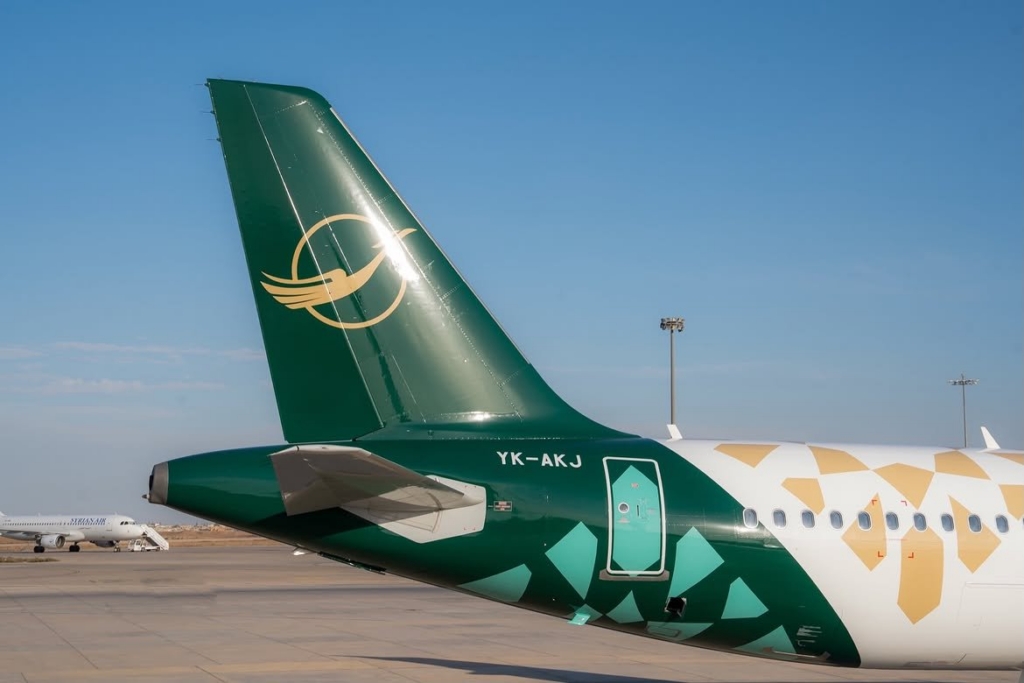
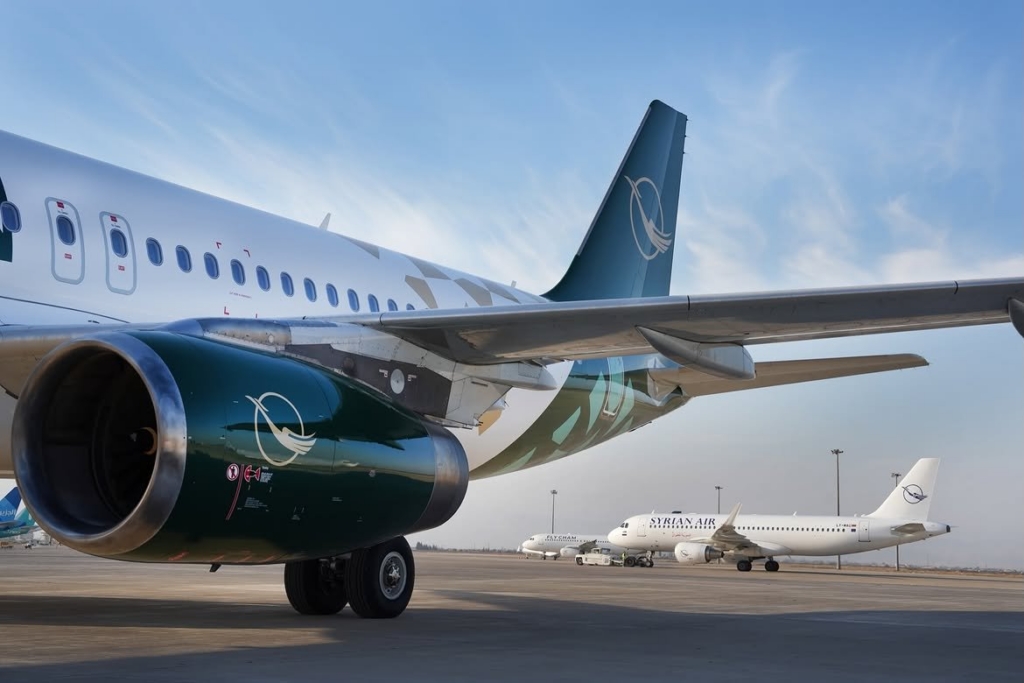
The new design uses dark green across the rear fuselage and tail, combined with gold detailing and a stylised Simurgh bird emblem on the tail and engine covers. The aircraft also carries prominent “SYRIAN” lettering in English alongside the airline’s Arabic name, creating a cleaner and more contemporary visual identity.
Syrian Airlines has unveiled a new corporate identity and strategic vision at Damascus International Airport, marking another step in the carrier’s ongoing modernization and international network expansion. The event was held in cooperation with Syria’s General Authority of Civil Aviation and Air Transport, with the first aircraft wearing the updated identity entering service. CEO Anwar Akkad said Syrian Airlines currently operates six aircraft and plans to double its fleet to 12 aircraft by the end of 2026. The carrier has been adding aircraft as part of a broader fleet-modernization programme, including Airbus A320-family aircraft. The airline also aims to expand its network from nine destinations at the beginning of the year to 25 destinations by year-end. Recent additions include Amsterdam, Vienna, Copenhagen and Moscow, strengthening Damascus’ direct links with Europe and Russia. The transformation also has a strong digital focus. Syrian Airlines has launched a new website and is upgrading booking, payment and electronic services, with a new reservation system meeting international standards planned for early November. The airline’s European expansion has accelerated in recent months, with Amsterdam service beginning in July and direct Moscow, Copenhagen and Vienna services subsequently returning or launching. Key figures: 🛩️ 6 aircraft currently operating 📈 12 aircraft targeted by year-end 🌍 25 destinations targeted 🇳🇱 Amsterdam | 🇦🇹 Vienna | 🇩🇰 Copenhagen | 🇷🇺 Moscow among recent additions 💻 New website launched; new global-standard reservation system planned for November
— FL360aero (@fl360aero) October 5, 2026
The decoration goes beyond a simple colour change. Geometric patterns inspired by traditional Eastern and Islamic architecture extend across the rear section of the aircraft, while the gold-and-green combination gives the livery a stronger sense of cultural identity. The result is intended to connect the airline’s heritage with a more modern international image.
Syrian Airlines modernises digital and booking systems
Syrian Airlines is presenting the new identity as part of a wider transformation rather than a stand-alone marketing exercise. Chief executive Anwar Akkad said the carrier had already begun upgrading its booking and payment platforms, electronic services and passenger-facing digital tools.
A new website is already live, while mobile applications, self-service functions and automated internal management systems are being developed.
A new reservation system designed to meet international standards is expected to go into operation in early November, potentially giving the airline a much more modern foundation as its network grows.
That digital overhaul matters because Syrian Airlines is attempting to grow at a rapid pace. A larger network and fleet require booking technology capable of handling more destinations, passengers and transactions, while self-service and mobile tools are increasingly standard across international aviation.
Syrian Airlines expands European route network
Network expansion is central to the new strategy. Syrian Airlines began 2026 with nine destinations and has since added Amsterdam, Vienna, Copenhagen and Moscow, according to Akkad.
The expansion represents a significant broadening of the carrier’s international footprint, particularly in Europe. The Amsterdam service marked a return to the European market, while the Copenhagen and Vienna additions further strengthen links with cities that serve large Syrian communities and wider regional catchment areas. Moscow also adds another important connection between Syria and Russia.
The airline has said that further routes will be announced but has not yet published a definitive list of all the destinations that will make up its year-end network. Instead, management has set a clear numerical objective: 25 destinations before the end of 2026. That means adding a substantial number of new markets in a very short period.
Plans to double its Airbus fleet by the end of 2026
To support that growth, Syrian Airlines is targeting an equally ambitious expansion of its operating fleet.
The carrier currently has six A320ceo aircraft in service but plans to increase that number to 12 by the end of 2026. In August, the airline received the first two of eight Airbus A320-family aircraft being introduced under its fleet renewal programme. The first pair, registered YK-AKI and YK-AKJ, are Airbus A320-200s configured with 156 seats, including 12 in business class and 144 in economy.
The additional aircraft are important not only for adding seats but also for providing the operational flexibility needed to support longer international sectors and a broader timetable. In practical terms, the airline’s network ambitions depend on turning the planned fleet increase into reliable additional frequencies and new city pairs.
Damascus Airport development supports airline growth plans
The airline’s plans are also closely connected to the development of Damascus International Airport.
Syrian authorities signed a $4 billion agreement in November 2025 with an international consortium to develop, expand and operate the airport, with the wider project including $250 million in financing for aircraft purchases and support for the national carrier’s fleet.
That makes the rebrand significant beyond the airline itself. Syrian Airlines is being positioned as part of a broader effort to restore international connectivity and modernise the country’s civil aviation infrastructure.
The new green-and-gold aircraft therefore serves as more than a visual statement. It is the first public symbol of an airline attempting to move into a new phase: larger fleet, wider network, modern booking technology and a renewed presence in international markets.
What the rebrand means for Syria Airlines’ future growth
The success of the strategy will ultimately depend on execution. Reaching 25 destinations while doubling the fleet in just a few months is a demanding target, requiring aircraft availability, crews, airport capacity and dependable international operating arrangements.
For now, however, Syrian Airlines has set out a clear direction. The 5 October launch combines a highly visible new identity with concrete plans for expansion, and the first rebranded A320 is already in service.
As more aircraft receive the new livery and additional destinations are announced, the green-and-gold scheme is likely to become an increasingly familiar sight well beyond Damascus, signalling the national carrier’s ambition to reconnect Syria with a much wider international aviation network after facing years of restrictions and sanctions.


