What does squawk 7500 mean? The aviation code no pilot wants to transmit

4 min read
The unusual sequence of emergency squawk codes transmitted by flydubai flight FZ1073 on 30 September has drawn attention to one of aviation’s most important signalling systems.
While passengers may never notice them, these four-digit transponder codes help air traffic controllers identify aircraft and quickly recognise when a flight needs assistance.
During the flydubai incident involving the Boeing 737 MAX 8, flight tracking data showed the aircraft displaying 7700, the standard emergency code. It later showed 7500, indicating unlawful interference, before returning to 7700 as it approached Tabuk, Saudi Arabia, where it landed safely. The circumstances of the incident remain under investigation.
So what exactly does squawk code 7500 mean, and what happens when a pilot selects it?
What is a squawk code in aviation?
A squawk is a four-digit code entered into an aircraft’s transponder so air traffic controllers can identify it on their radar screens. It also helps them spot an aircraft in trouble.
The word “squawk” dates back to the Second World War. Modern transponders evolved from military Identification Friend or Foe (IFF) systems.
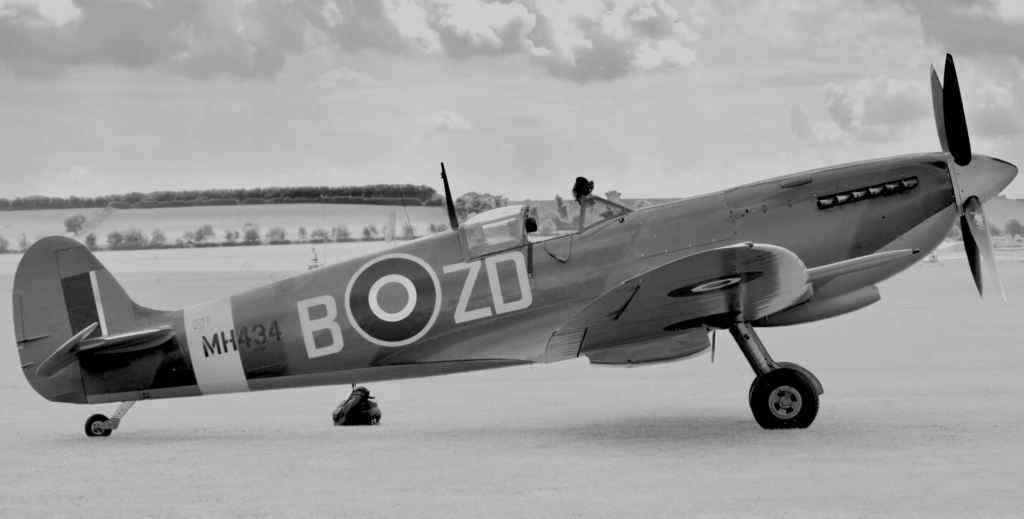
Early British transponders were nicknamed “Parrots” because they automatically responded to ground signals. Pilots could be told to “squawk your Parrot” to activate the equipment. The Parrot disappeared, but “squawk” remained.
How do aircraft transponders and Secondary Surveillance Radar work?
Essentially, Secondary Surveillance Radar (SSR) sends a signal to the aircraft on 1030 MHz. The aircraft’s transponder replies on 1090 MHz, telling the radar system which aircraft it is.
Primary Radar works differently. It can detect an aircraft or other object in the sky, but it cannot necessarily tell controllers which aircraft it is.
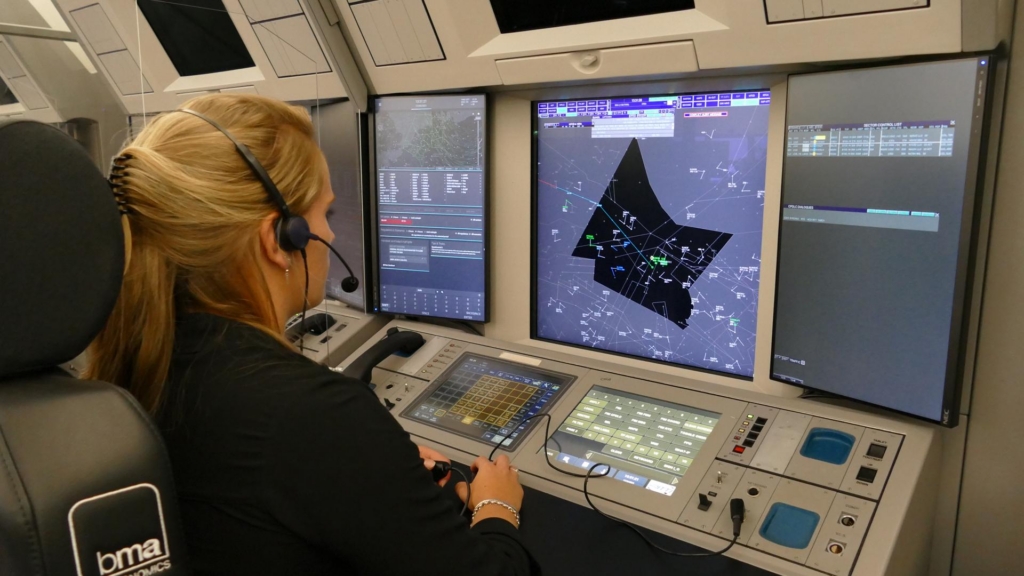
The transponder therefore helps controllers put a name to the aircraft they see on their radar screen.
How many aircraft squawk codes are there?
A standard squawk has four digits, each from 0 to 7. Numbers 8 and 9 are not used, giving 4,096 combinations.
That is not enough for every aircraft to have a permanent code, so ATC units allocate them according to where an aircraft is operating. A flight may receive a new code after being handed to another controller.
Mode S and ADS-B provide additional identification. Mode S uses a unique 24-bit aircraft address, while ADS-B broadcasts information including position and supports public flight-tracking services.
What do squawk codes 7700, 7600 and 7500 mean?
7700 means an emergency. It does not specify the problem, only that the aircraft needs immediate assistance.
7600 means loss of two-way radio communications with ATC. If the crew cannot transmit but can hear the controller, the transponder’s Ident function can highlight the aircraft’s radar return.
7500 means unlawful interference, including hijacking.
FZ1073 demonstrated how these codes can change during an incident, moving from 7700 to 7500 and later back to 7700 before landing at Tabuk.
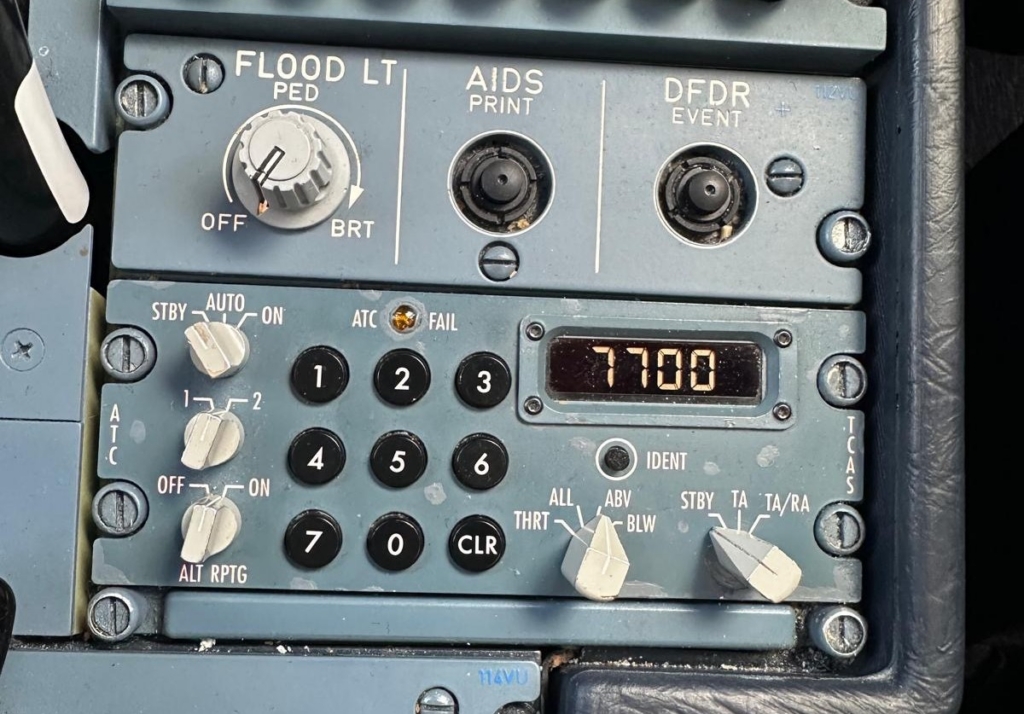
The codes do not explain what is happening inside the aircraft, but they immediately alert controllers that something requires attention.
What are the most common UK aircraft squawk codes?
Most squawks are routine.
In the UK, aircraft flying under visual flight rules (VFR) and not receiving a specific air traffic control service will often use 7000. Other codes are used for things like low-level military flying, air displays, aerobatics and aircraft flying circuits around an airport.
7400 can indicate an uncrewed aircraft system that has lost its communications link, while 2000 is used for general conspicuity in certain circumstances.
In the US, 1200 is commonly used for VFR aircraft in uncontrolled airspace.
What is a listening squawk?
Around some UK airports, light aircraft outside controlled airspace can select a designated “listening squawk” and monitor the local radar frequency.
The pilot is not necessarily receiving an air traffic control service – they are simply listening to the controller’s radio frequency. If the controller sees that the aircraft may enter controlled airspace, they can contact the pilot and warn them.
Identification and action
For most flights, a squawk simply means ATC can easily identify an aircraft. But when 7700, 7600 or 7500 appears, those four numbers take on a different meaning.
The flydubai FZ1073 incident is a recent example. The changing codes gave controllers an important signal that the flight was dealing with an abnormal situation, even though they could not tell the whole story.
In a busy sky, four simple numbers can make sure the right people start paying attention.