The overhead locker wars: Why cabin baggage has become so valuable to airlines

7 min read
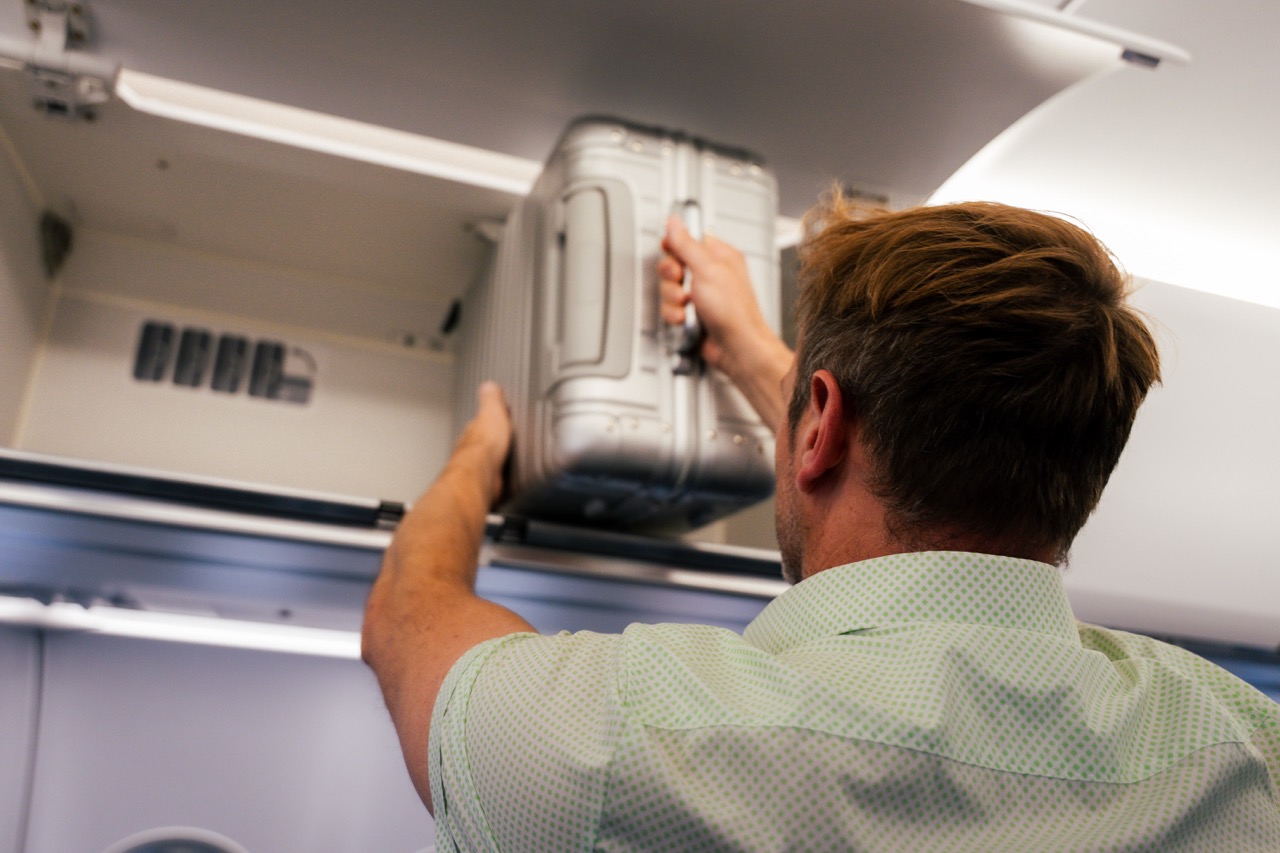
For decades, the overhead locker space was simply somewhere passengers put their bags. But every foot of cabin space is valuable real estate, both horizontally and vertically. The overhead locker has become part of the airline revenue machine. Just like seats, some airlines now view the overhead bin as space to be sold.
Research from airline ancillary revenue consultancy IdeaWorksCompany suggests top-performing airlines can generate around $20 in baggage revenue per passenger when they charge for overhead carry-on bags.
Jetstar becomes the latest airline to charge for overhead locker space
Jetstar is the latest carrier to adopt the strategy. From 2 February 2027, its cheapest fares will include only a small bag that fits under the seat. Passengers wanting to place a larger bag in the overhead locker space will need to buy Priority Carry-on.
The Australian low-cost carrier is also increasing its existing 7kg carry-on weight limit to 10kg. The new cabin baggage policy is less about how heavy a passenger’s bag is and more about where it fits.
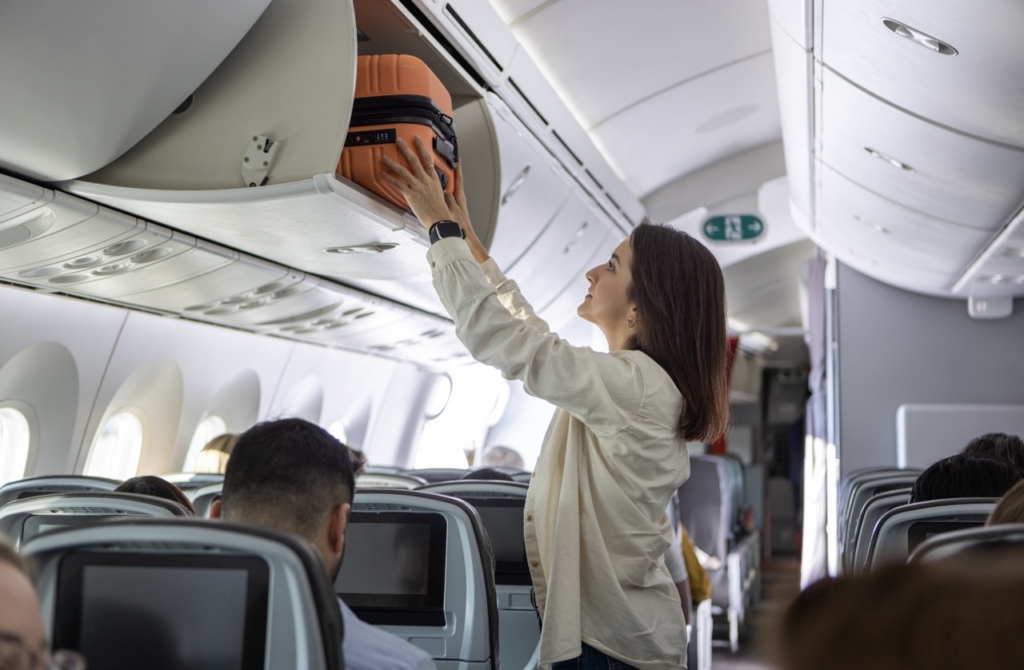
Jetstar is following a model already established by Ryanair, easyJet and Wizz Air in Europe. All three include a small underseat bag in their basic fares and charge passengers who want to put a larger bag in an overhead bin.
To soften the sting of the new fee, Jetstar bundles in priority boarding as a perk. It also suggests this new baggage policy will streamline the boarding process, improving the flying experience for all passengers.
Why overhead locker space has become valuable airline real estate
The economics of overhead lockers begin with a simple problem. An aircraft has a seat for every passenger, but it does not necessarily have enough overhead locker space for every passenger to bring a roller bag.
That makes locker capacity scarce, and scarcity creates economic value. Some airlines even restrict how many larger cabin bags they can sell because there is only so much space available.
In other words, airlines are increasingly managing overhead lockers as they do seat inventory.
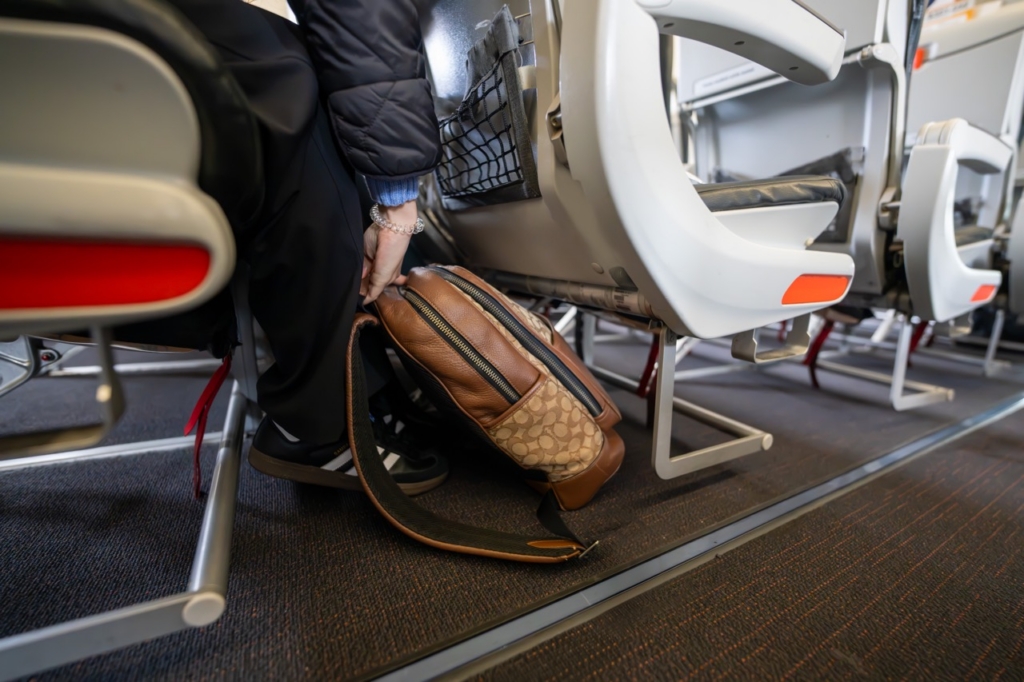
Low-cost airlines were among the first to turn that scarcity into a product. A small bag travelling under the seat effectively occupies space allocated to that passenger. A roller case takes up shared space above several passengers.
IdeaWorks argues that the distinction is important enough that the industry should reconsider its terminology. The consultancy suggests airlines could make their policies clearer by using “overhead bag” instead of “carry-on” and “under-seat bag” instead of “personal item”.
Changing the name would make it easier for passengers to understand what they’re getting when airlines sell the space above.
How much money do airlines make from baggage fees?
IdeaWorks estimates European airlines collected about $16 billion in baggage fees in 2025, with around 60% going to low-cost carriers. Baggage fees are estimated to contribute just under one-fifth of total revenue at European budget airlines.
The consultancy’s 2026 Field Guide to the Best of Airline à la Carte provides a useful example.
Transavia, Air France-KLM’s low-cost airline, introduced charges for overhead carry-on bags in April 2024. It subsequently disclosed more than €20 million in revenue from the fees during the fourth quarter alone. The airline carried almost five million passengers during that period. IdeaWorks calculated that the new charge produced an average of about €4 per passenger the airline carried, including those who did not buy an overhead bag.
Based on an average fee of €30, IdeaWorks estimated only around 13% of passengers needed to buy the product to produce that revenue.
Why airlines are encouraging passengers to pay for cabin bags
Airlines helped create the demand for overhead bins. Traditional carriers began introducing checked-baggage charges widely during the fuel-price crisis in 2008. Passengers responded by carrying more luggage into the cabin.
Flights could depart with passengers entitled to seats but without enough locker capacity for all their bags. Gate agents had to identify oversized luggage, collect fees or gate-check bags. Cabin crew then had to deal with passengers searching for the remaining space.
There is an operational cost when the system fails.
IdeaWorks says traditional airlines can face frustrated gate agents, overloaded cabin crews, delays and potentially hundreds of millions in waived revenue when passengers arrive at the gate with bags they have not paid to carry.

Charging for the overhead locker only works if the airline can control who uses it.
Pushing more passengers to check their larger bags also increases airlines’ expenses. IdeaWorks notes that during a US Senate investigation into airline fees, American Airlines disclosed that it cost $28 to check a bag.
Airlines must balance the potential gains from cabin baggage fees against the costs of handling more checked luggage and adjust other fees too.
IdeaWorks describes baggage compliance as the number one ancillary revenue challenge facing airlines.
Its research identifies six approaches airlines use to enforce the rules, ranging from automatically charging passengers at boarding to dedicated gate staff, roving fee-collection teams and incentives for gate agents.
“Frontier disclosed it paid $12,512,526 as incentives to managers, supervisors, and frontline staff during 2023. On a per-flight departure basis, this averaged about $66 and represented 1.4% of system baggage revenue. Frontier credited its program for an additional $40 million during its first year in 2022,” IdeaWorks states.
Why Air Canada and Lufthansa are following the low-cost carrier model
As low-cost carriers have become more creative in boosting their ancillary revenue by selling overhead bin space, full-service carriers have taken note.
Air Canada limits passengers travelling on some Economy Basic tickets to one personal item. Economy Basic fares purchased from January 2025 on some itineraries do not include a standard carry-on bag.
Lufthansa Group has also introduced a Basic fare on European routes built around a small personal item, with additional baggage available separately.
IdeaWorks says traditional carriers have spent more than a decade introducing bag fees, paid seat assignments and bundled or branded fares following the lead of low-cost rivals. As a result, the distinction between network and low-cost airline business models has narrowed.
Ancillary revenue in the airline industry reached an estimated $157 billion in 2025, up from $148.4 billion in 2024 and $67.4 billion in 2016. It now represents around 15.7% of total airline revenue.
For airlines without major co-branded credit card businesses, IdeaWorks says baggage, seat assignments and branded fares can generate more than 95% of ancillary revenue.
Not every full-service carrier has followed this route. British Airways and Qantas, for example, continue to include conventional cabin baggage allowances in their standard fares.
But passengers can no longer assume that an economy ticket automatically comes with overhead locker space.
Why airlines are installing bigger overhead lockers
Charging for locker space might seem to conflict with another major cabin trend: airlines are installing much larger overhead lockers.
Boeing’s 737 Space Bins can accommodate six standard bags per bin compared with four in the earlier large pivot bins.
Across an entire 737 MAX 8, Boeing says the Space Bin configuration increases capacity from 118 to 178 standard bags. On the MAX 9, capacity rises from 132 to 198.
Boeing explicitly promotes quicker boarding and aircraft turnaround as benefits of the extra capacity.
Airbus is also making more room for bags overhead. The new Airbus Airspace L Bins for the A320 family provide 60% more bag capacity than the previous-generation bins. Airbus also cites faster aircraft turnarounds as a benefit.

Larger lockers have two potential values: efficiency and revenue.
For airlines that include overhead bin space in the ticket price, larger bins improve the passenger experience and boost operational efficiency as fewer travellers are asked to check bags at the gate.
But more capacity means an airline can also accommodate — and potentially sell — more overhead bags, boosting ancillary revenue and reducing the costs of checked bags.
Just because airlines are adding more room in the overhead bins doesn’t mean the space is any less scarce or valuable. Unless and until overhead bins fly empty, airlines have an incentive to charge for that room.
The future of paid overhead locker space
Airlines have spent years separating products once included in an economy ticket. Seat selection, checked baggage, meals, priority boarding and ticket flexibility can all now be sold separately.
The overhead locker is another piece of the aircraft that can be unbundled from the fare.
IdeaWorks says the best performers can generate about $20 per passenger in baggage revenue when they charge for overhead bags. Larger bins can create more capacity, and potentially more revenue. Staff incentives for stricter enforcement ensure that passengers using that overhead capacity have paid for it.
The overhead locker has gone from an overlooked part of the aircraft’s interior to another revenue-generating element of the cabin’s valuable real estate.
Sign up for our newsletter and get our latest content in your inbox.


More from

October 17, 20265 min read


October 17, 20264 min read