


How sanctions turned Iran into a refuge for the world’s rarest passenger aircraft

7 min read
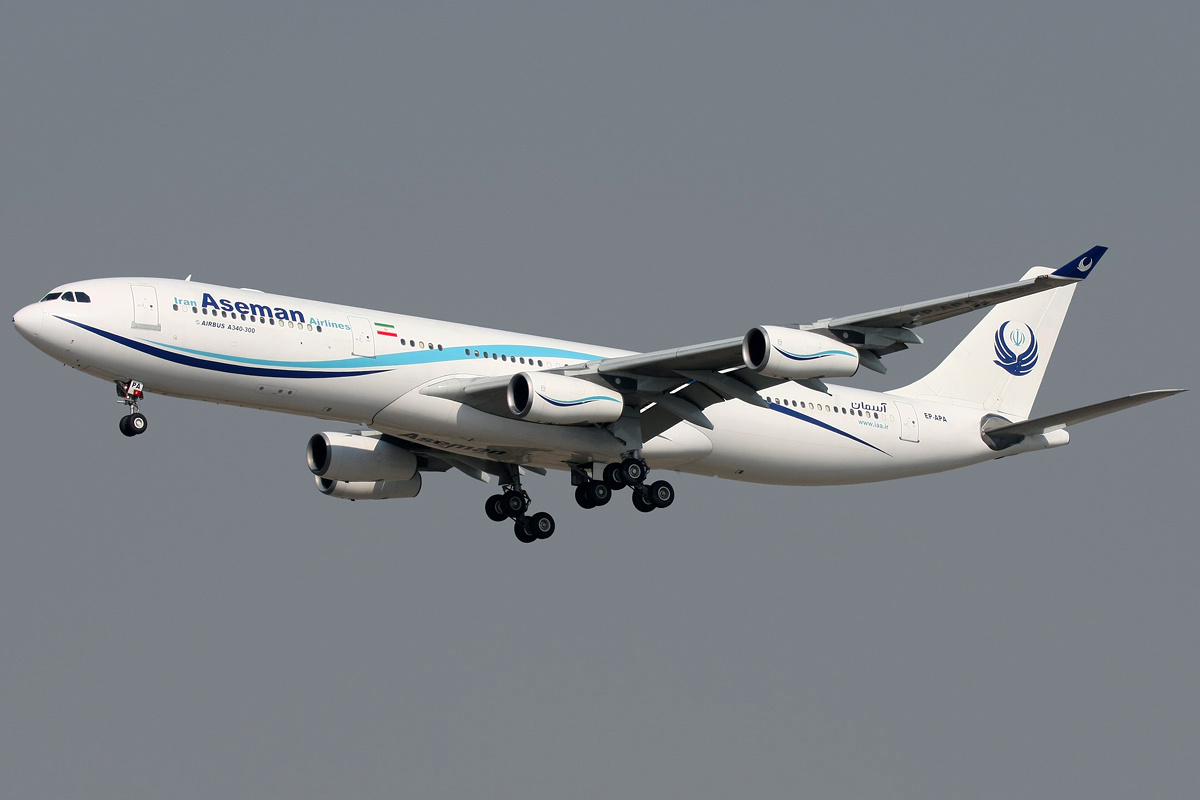
With more than half of Iran’s estimated 330 commercial aircraft reportedly grounded, the country’s airlines are no longer operating on efficiency or optimisation. They are operating on survival.
Unable to buy new aircraft, engines, or OEM-supported components, Iran has been forced into a parallel aviation ecosystem built around ageing airframes, scavenged parts, and aircraft long abandoned elsewhere.
To keep this ecosystem alive, Iran has to resort to novel tactics and sneaky strategies to smuggle items into the country, from engines and avionics to entire aircraft.
Iran’s ageing fleet is an avgeeks paradise
Sanctions mean Iran can’t purchase new Airbus, Boeing, Embraer, or ATR aircraft. Likewise, the country can’t buy new engines from Rolls-Royce, Pratt & Whitney, or GE Aerospace.
Because of this, Iran has become a haven for aircraft types rarely seen elsewhere in the world. Retro jets long since retired from other aircraft fleets are kept alive, providing essential air transport in the country.
| Type | Airlines |
|---|---|
| Boeing 737 Classic | Air1Air, ATA Airlines, Ava Airlines, Caspian Airlines, Fly Kish, FlyPersia, Iran Aseman, JSky, Karun Airlines, Pars Air, Saha Airlines, Sepehran Airlines, Varesh Airlines |
| McDonnell Douglas MD-82/83/87/88 | ATA Airlines, Atlas Air, Caspian Airlines, Chabahar Airlines, Fly Kish, Iran Airtour, Kish Air, Lad Airways, Sahand Airlines, Taban Airlines, Zagros Air |
| BAe Avro RJ | Atlas Air, Mahan Air, Mehr Airways, Qeshm Airlines, Yazd Airlines |
| Airbus A300/A310 | Ava Airlines, Iran Air, Iran Airtour, Mahan Air, Qeshm Airlines, Yazd Airways |
| Fokker 50/70/100 | Iran Air, Iran Aseman, Karun Airlines, Kish Air, Mahan Air, Qeshm Airlines |
| Airbus A340 | Iran Aseman, Mahan Air |
| Boeing 747 | Nasim Air |
Sanctions do not simply make new aircraft expensive; they effectively block access to the OEM support ecosystem that makes modern jets practical at scale: parts pipelines, approved repairs, software and avionics support, training, documentation updates, and finance.
That’s why Iran’s aviation system has settled into a pattern of keeping older aircraft flying for as long as possible, while replacing losses and retirements with other aircraft that are being discarded elsewhere.
There is also a practical point. Modern aircraft may be “easier to maintain” in a well-functioning support ecosystem, but when access to OEM support and approved supply chains is constrained, the advantage can invert.

A fleet that relies on a complex support network becomes more brittle under sanctions pressure. The experience of other sanctioned fleets has highlighted how quickly newer variants can become difficult to sustain without full access to engines, spares, and manufacturer support.
How Iran gets its hands on new aircraft and parts
Sanctions or not, there is still a flow of parts to Iran, and sometimes entire aircraft.
Iran has set up an extensive network of shell companies to purchase secondhand parts from cannibalised aircraft from some scrapyard in the world. It is almost impossible to completely shut this down by legal means alone.
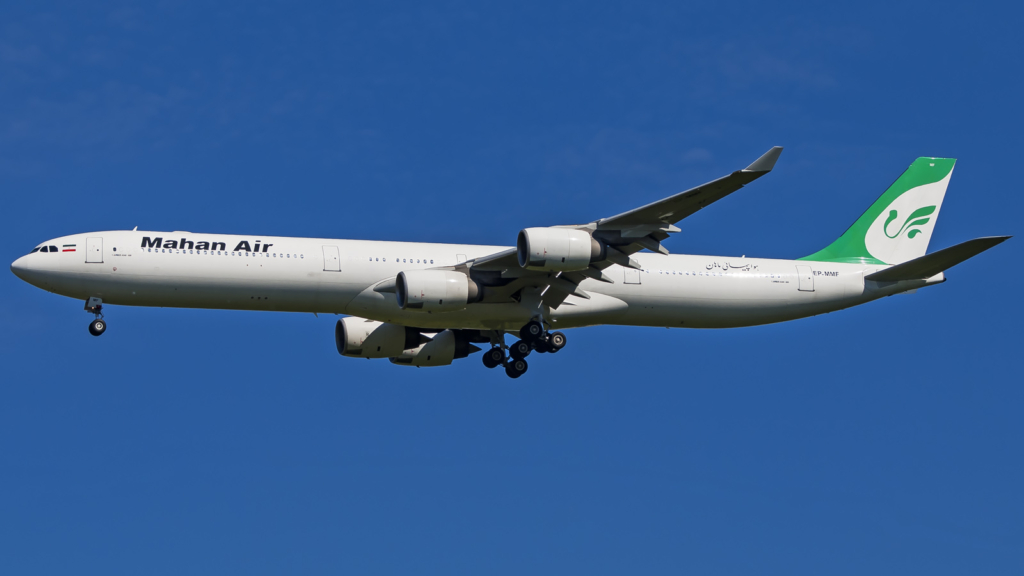
In 2022, Israel Hayom quoted an ex-A340 mechanic who said parts of two of Turkish Airlines A340s “were knowingly sold to us, and they were broken into pieces in Istanbul. These parts arrived in Iran first through Russia in 2021 and now they are coming directly by land from Turkey. They are purchased through intermediary companies.”
But Iran has also demonstrated an ability to pull in replacement widebodies too, using circuitous routes to get the aircraft into the country.
Get all the latest commercial aviation news on AGN here.
Sneaky tactics allow Iran to smuggle aircraft across continents
In 2025, Iran managed to acquire five ex-Singapore Airlines and ex-NokScoot Boeing 777-200ER aircraft using its network of shell companies and re-registration in Madagascar.
Also in 2025, Iran reportedly acquired two second-hand Airbus A330-200 from China’s Haokun Energy. These were bartered for Iranian oil. Because China doesn’t participate in Western-led sanctions, Iran can trade more freely without shell companies.
One of the favourites for Iran is the Airbus A340 family. These have been acquired in a range of opaque deals in recent years.
In 2024, Iran managed to acquire four ex-Turkish A340-300 aircraft that had been stored in South Africa awaiting a new buyer. These aircraft took off from South Africa ostensibly bound for Uzbekistan, although they diverted to their new home in Tehran en route.
Also in 2024, Iran Watch reported Iran’s Mahan Air had smuggled two Airbus A340s, owned by the Gambian leasing company, Macka Invest, to Iran.
Their official flight routes were from Lithuania to Sri Lanka and the Philippines. However, upon entering Iranian airspace, they switched off their transponders and landed in Iran.
[Post text here]
— OSINT613 (@Osint613) June 23, 2024
Iran Watch adds, “authorities at the Lithuanian airport prevented a third Macka Invest airplane, which carried spare parts, from taking off after learning that the first had diverted to Iran.”
#Iran's largest airline, #MahanAir, belongs to the #IRGC… (full text)
— Babak Taghvaee (@BabakTaghvaee1) July 9, 2024
According to Planespotters.net, Mahan Airlines has 15 A340s in inventory, giving it the second-largest fleet in the world. This includes one A340-200, nine A340-300s, and five A340-600s. Seven of these have been received from 2022 onwards.
JUST IN: Visual confirmation that the 4x ex-Turkish Airlines (red tail and wing tips) Airbus A340-300 from 🇿🇦Johannesburg arrived to 🇮🇷Mehrabad International Airport in Tehran, Iran.
— Gerjon | חריון | غريون | ኼርዮን (Deactivated) (@Gerjon_) December 29, 2022
Confirming identification, Sentinel-2 imagery shows that they were only recently parked here. pic.twitter.com/seotLTdUPl
Planespotters also lists Mahan Airlines as having a 777-200 in inventory that was received on 10th December 2025. Iran Air is listed as having four A330-200s, including two received in 2025.
Iran is also supplying Venezuela with aircraft
Alongside Iran, Venezuela is also facing major commercial aviation issues from sanctions.
Iran has settled into a sort of equilibrium with its 150-strong fleet of operational commercial aircraft kept together with a constant supply of newly acquired old aircraft, smuggled parts, and a whole load of duct tape.
But Venezuela appears to be in a different position. Venezuela’s operational fleet of commercial aircraft is tiny. Iran seems to be better able to get aircraft on the black market and supply them to Venezuela.
Venezuela’s largest airline is Conviasa, with 24 aircraft in service, of which only 13 are currently active.

Its fleet includes 16 Embraer ERJ-190s (seven active) and six Airbus A340s (four active). The A340s are made up of two A340-200s and two A340-600s. Of these, four (one -200 and three -600s) were received from Iran’s Mahan Air in 2022 and 2023.
Conviasa also has a subsidiary called Emtrasur Cargo, which previously operated a Boeing 747-300 (registered YV3531) that had been leased from Iran’s Mahan Air.
The aircraft was received in February 2020, but then, in June 2022, it was impounded in Argentina at the request of the United States. The US Department of Justice announced it had been ferried to the United States in 2024.
🚨BREAKING: US seized Venezuela Presidential plane and flew it to Fort Lauderdale, Florida.
— MenchOsint (@MenchOsint) September 2, 2024
🛩️ Falcon F900EX (reg. T7-ESPRT) pic.twitter.com/XDo4K09miT
Sanctioned aircraft are often seized at airports, so Venezuelan airlines are limited to flying to friendly countries.
Sanctions: Keeping older aircraft alive since 1979
Sanctions are highly effective at blocking access to new aircraft and tightly controlled OEM support networks. They are far less effective at stopping the circulation of older airframes and spare parts once aircraft are retired elsewhere.
As widebodies are phased out by major airlines, they create a steady supply of cheap jets and components that sanctioned states can exploit. For countries like Iran and Venezuela, fuel inefficiency and high maintenance costs matter less than availability.
Under sanctions, obsolete aircraft do not disappear; they survive, often far longer than intended.
Featured Image: Shahram Sharifi / Wikimedia Commons


