


Iran claims 60 commercial aircraft lost in US and Israeli strikes

4 min read
Iran’s Association of Iranian Airlines says the US and Israeli strikes have destroyed 60 Iranian aircraft. While it is impossible to confirm at this time whether that number is accurate, the assessment is consistent with what is known about the war.
The targeting of Iranian commercial aircraft points to the dual-use nature of such aircraft in Iran.
Iran: 60 commercial aircraft destroyed or damaged
Iranian reformist-leaning daily newspaper, Shargh newspaper, based in Tehran, reported, “60 aircraft have been taken out of operation / 30 trillion tomans in losses to airlines during the war.”
۶۰ هواپیما از چرخه پرواز خارج شدهاند / ۳۰ هزار میلیارد تومان خسارت به هواپیماییها در جنگ
— شرق (@SharghDaily) April 12, 2026
🔹در طول جنگ، به ۷ فرودگاه کشور حمله شد. همچنین، دبیر انجمن شرکتهای هواپیمایی کشور میگوید ۶۰ هواپیمای مسافربری هم از چرخه پرواز خارج شدند. به گفته او، این اتفاق خسارت عدم النفعی به ارزش…
Shargh elaborated, “During the war, 7 airports in the country were attacked. Additionally, the secretary of the national association of airline companies says that 60 passenger aircraft were also taken out of service.”
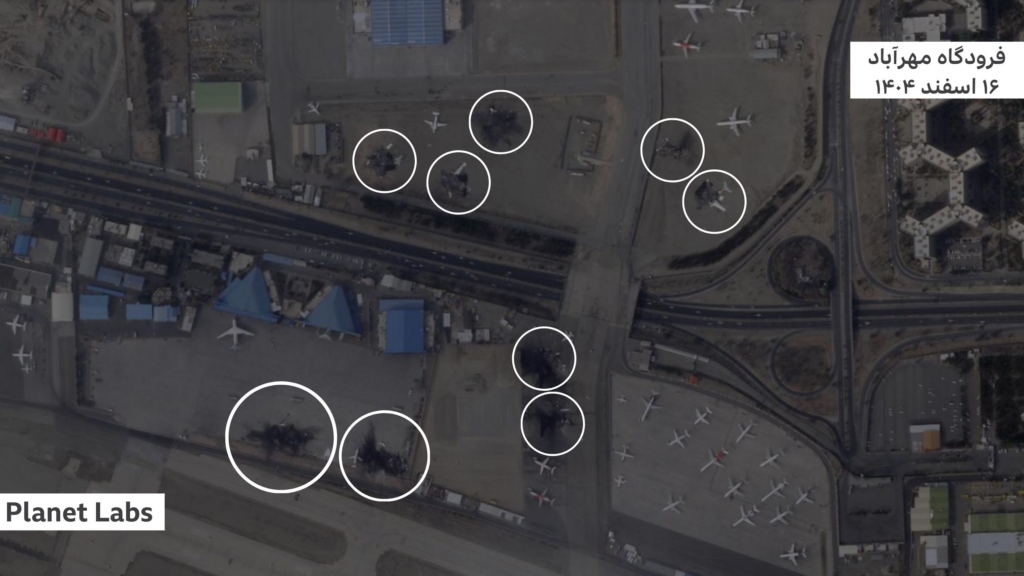
The newspaper did not add many more details to their post on X (formerly Twitter) but did add, “the airports of Mehrabad (Tehran), Tabriz, and Kashan suffered the most damage.”
It is unclear whether all of these aircraft were commercial or also included other types, such as government VIP aircraft.
A large share of Iran’s operational commercial fleet
If the number is accurate, then it would represent a significant share of Iran’s estimated pre-war fleet of commercial aircraft. Even before the war, Iran was struggling to keep enough aircraft proverbially duct-taped together to meet its commercial needs.
🎯STRUCK: 16 IRGC Quds Force aircraft used to transfer weapons to Hezbollah.
— Israel Defense Forces (@IDF) March 7, 2026
The IAF conducted a wave of precise strikes in Tehran, targeting military infrastructure at Mehrabad Airport, a central hub used by the IRGC to arm and fund its terror proxies across the Middle East.…
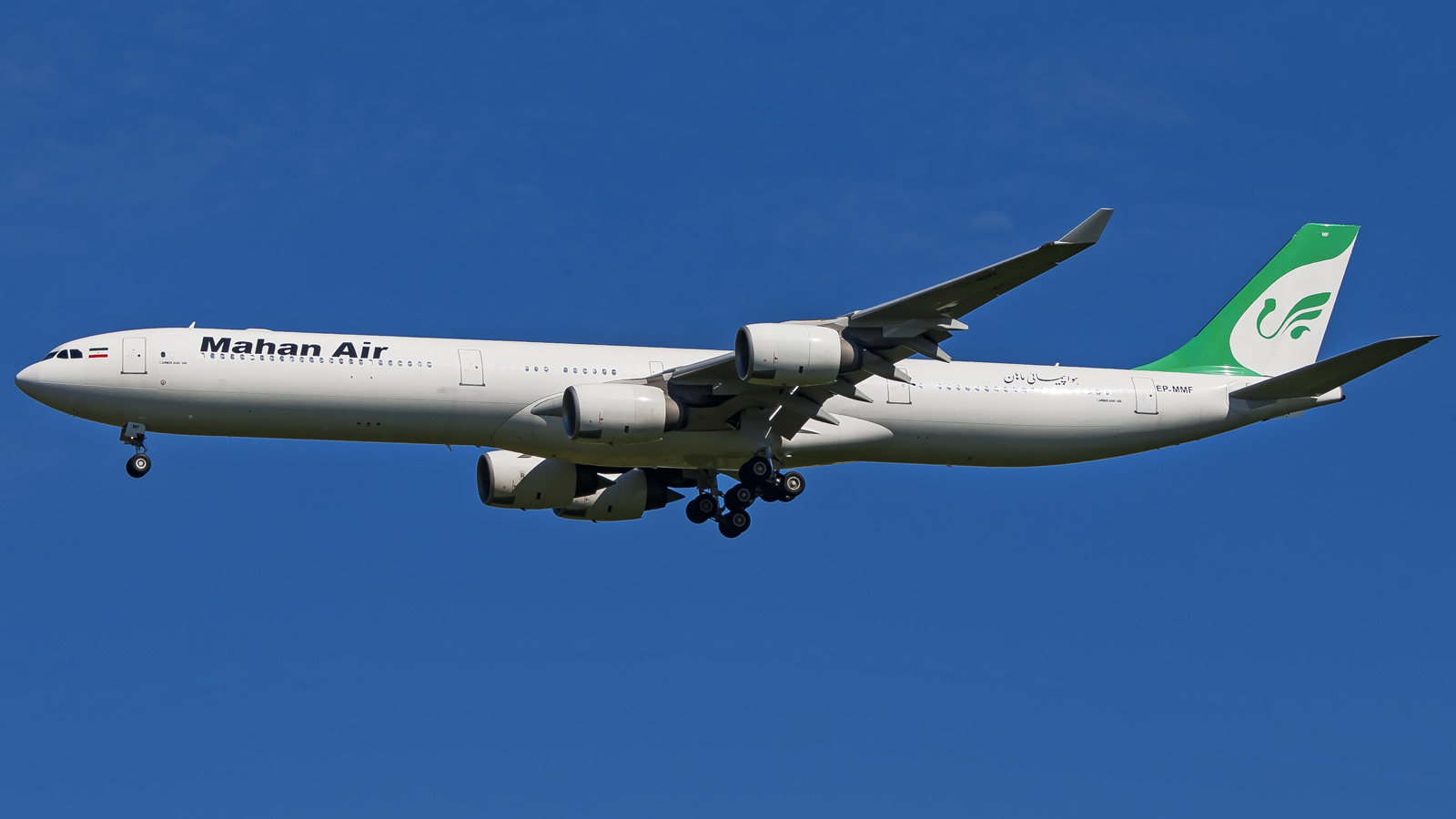
One of the more unusual aircraft types in Iran is the A340. As these are being retired around the world, they make their way to the Middle East and end up in airline fleets. They are comparatively straightforward to maintain, and parts can be purchased on the second-hand market.
In 2022, Radio Free Europe reported that while Iranian airlines had around 340 commercial aircraft, only 120 to 130 were operational. In April 2024, The Tehran Times reported Iran had received 66 aircraft over two years, often through shell companies to avoid sanctions.
BREAKING: Two passenger aircraft of Meraj Airlines are currently carrying a delegation of the Islamic regime of Iran, headed by Mohammad Bagher Ghalibaf, to Islamabad for peace negotiations with a U.S. government delegation led by JD Vance.
— Babak Taghvaee – The Crisis Watch (@BabakTaghvaee1) April 10, 2026
Due to the destruction of Iranian… pic.twitter.com/rxm1q7ULGM
The OSINT account, Babak Taghvaee – The Crisis Watch, reported, “Due to the destruction of Iranian government aircraft by the Israeli Air Force,” the Iranian delegation had to fly in Meraj Airlines Airbus A320/321 aircraft.
Israel’s strikes on Iranian commercial-type aircraft
In March, AGN reported that Israel had targeted around 16 commercial-type aircraft and destroyed them on the ground at Tehran’s Mehrabad International Airport. Satellite images at the time confirmed that around that number had been destroyed.
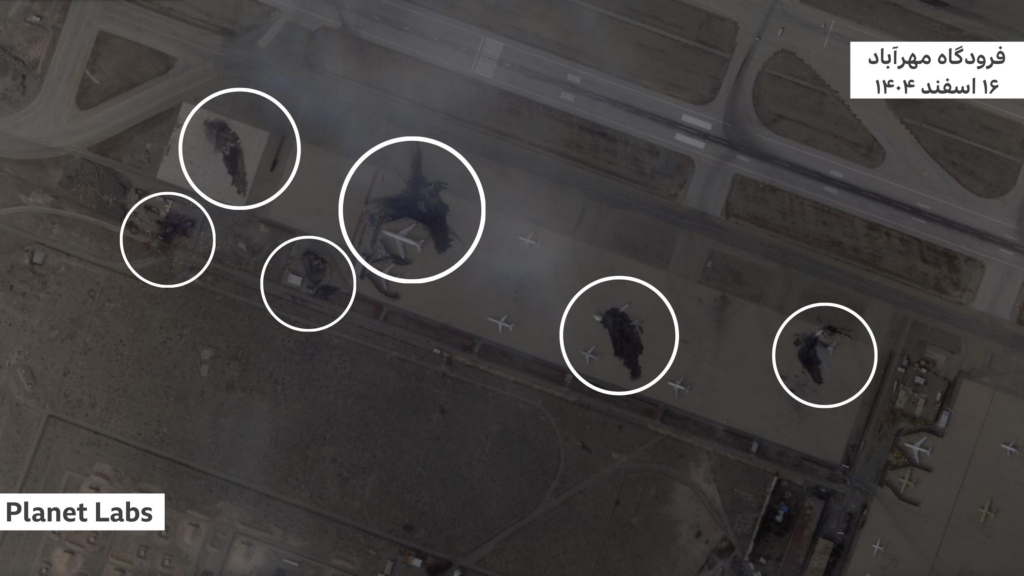
This article refers to these aircraft as “commercial-type” because it is unclear how many Boeing and Airbus aircraft were used by the Iranian Air Force or government. It is unclear if reporting and satellite imagery always distinguish between civil and military aircraft.
Among the aircraft destroyed over the duration of the conflict are reported to be the world’s only KC-747 tanker and a VIP government Airbus A340 aircraft.
Israel claimed these aircraft were affiliated with the terrorist-designated IRGC Quds Force. It has long been documented that some of Iran’s commercial aircraft have been used to smuggle weapons and cash to Hezbollah and other militant actors in the region over the years.
In 2024, European countries sanctioned Iran’s flag carrier, Iran Air, for transporting weapons to Russia for its invasion of Ukraine.
BREAKING: Unconfirmed reports from Israeli sources claim that the Israeli Air Force targeted a Boeing 777-212ER passenger aircraft of Iran’s largest airline, Mahan Air, at Mashhad International Airport in northeast Iran today.
— Babak Taghvaee – The Crisis Watch (@BabakTaghvaee1) March 29, 2026
They also claim that an Airbus A340-642 of the… pic.twitter.com/TWNNmconyl
OSINT accounts have been hampered by satellite imaging companies like Planet Labs, which withhold imagery of Iran and the region of conflict in the Middle East for 14 days. Satellite imagery has still been available from Chinese satellites, but it has significantly restricted the ability to rapidly assess damage.
Featured Image: Papas Dos / Wikimedia Commons


