Whoops! Iberia Airbus A350 sustains wing damage after water cannon salute goes wrong

5 min read
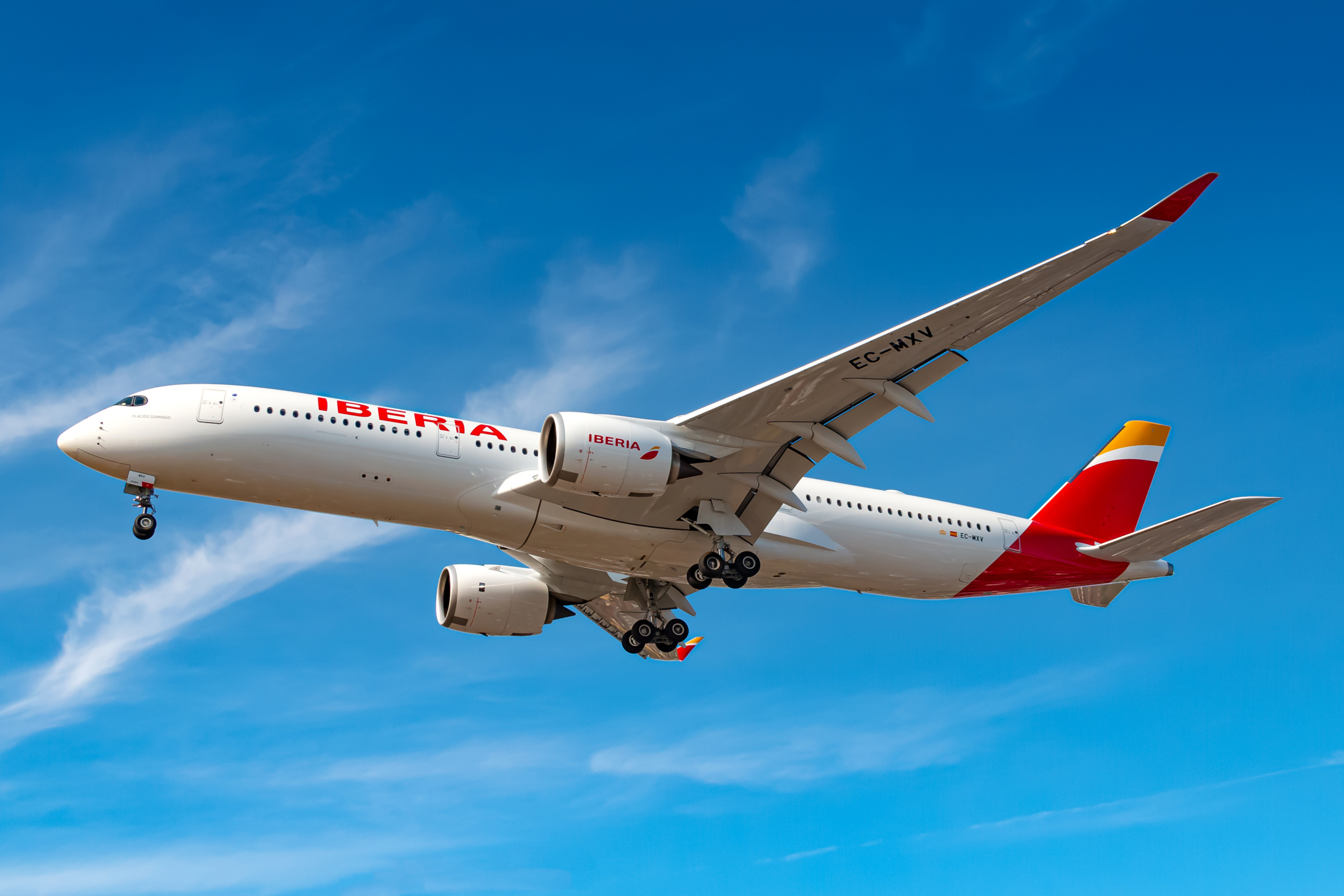
An Iberia Airbus A350 has sustained damage to its left wing in Ecuador after receiving a misjudged water cannon salute from the airport fire service. The aircraft involved now remains grounded, awaiting repairs, while the subsequent flight back to Madrid was cancelled.
Iberia A350 damaged by water cannon salute in Ecuador
The unfortunate incident unfolded on 4 June as the Iberia Airbus A350-900 (registered EC-NXD) was taxying for departure from José Joaquín de Olmedo International Airport (GYE) in Guayaquil, Ecuador.
The flight was scheduled to leave Guayaquil Airport at 11:25 local time on the airline’s four-times weekly flight to Madrid, where it was due to land at 05:30 on 5 June.
Videos posted online show that as the aircraft taxied out for departure, the fire truck on the left side of the aircraft was parked too close to the left-hand wing of the passing A350.
As the aircraft taxied under the water arc created by the two fire trucks on either side, the extendable nozzle of the fire truck was struck several times by the winglet of the aircraft.
WATCH: Iberia Airbus A350-941 hits a fire truck during a water salute incident at Guayaquil International Airport.
— Breaking Aviation News & Videos (@aviationbrk) June 4, 2026
The aircraft, EC-NXD, has been grounded while the damage is assessed by engineers.
pic.twitter.com/SJiwfWhsFK
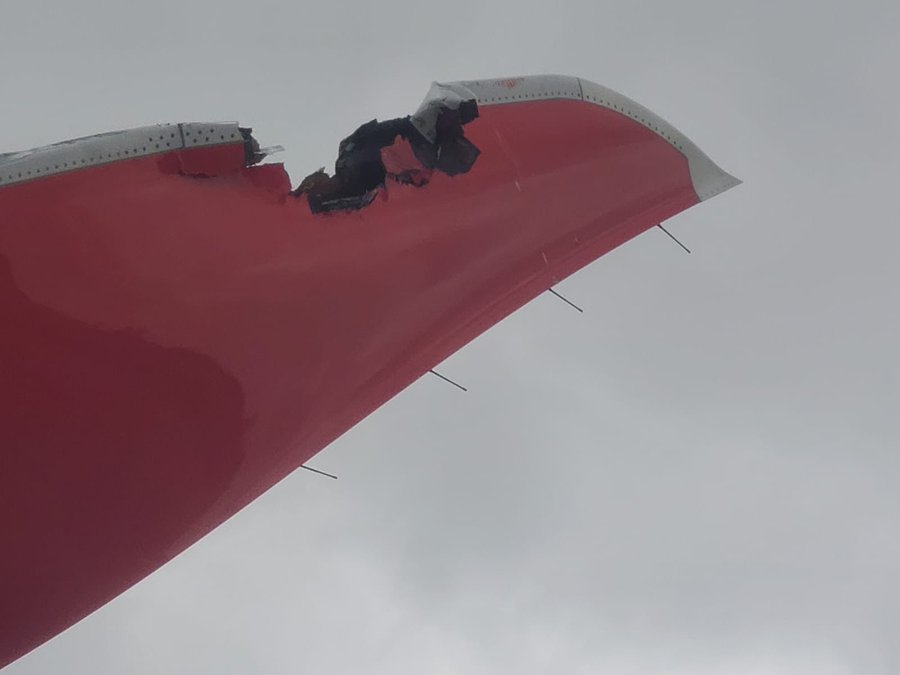
While the fire truck remained in an upright position after the impact, the left-hand winglet of the A350 received extensive damage. In one such video, sections of the winglet can be seen falling to the ground as the aircraft taxis by.
The subsequent flight back to Madrid (IB132) had to be cancelled due to the aircraft being declared unserviceable for the return sector back to its home base.
✈️ Exact moment when a fire truck hose strikes the winglet of an Iberia Airbus A350 in Guayaquil, Ecuador.
— SkyFrontier (@HelgaFi71622561) June 5, 2026
🚒 The traditional water salute was being performed to celebrate the jet’s first operation on the route to Madrid. pic.twitter.com/oFgVGcVx7D
At the time of writing, the aircraft remains at Guayaquil Airport awaiting a team of engineers and a spare winglet to be dispatched from Madrid.
While, in theory, the composite winglet is simply a fuel-saving device placed at the end of a wing to reduce drag, airlines prefer to operate with both winglets in place to avoid upsetting the handling characteristics of the aircraft in the air.
Ecuadorian aviation investigators, along with Iberia and its insurers, will now be keen to understand exactly what went wrong with this water cannon salute and where the fault lies for the damage caused.
While the winglet itself is relatively straightforward to replace, investigators will be keen to understand how the event unfolded so that future such incidents can be avoided.
Water cannon salutes do not always go according to plan
Water cannon salutes (ceremonial arches sprayed by fire trucks positioned on either side of a taxiing aircraft) are a long-standing tradition in aviation. Often used to commemorate special events such as retiring pilots, inaugural flights, or aircraft retirements, they have been used for many years to mark major events and usually pass off smoothly and without incident.
However, as in this latest case, such salutes do not always go according to plan. Fire trucks positioned too close to the passing aircraft are a surprisingly common occurrence, while in other incidents, fire retardant foam rather than water has been sprayed in error.
Both can cause delays and cancellations, with aircraft requiring costly engine and airframe inspections and possibly repairs as a result
In 2006, at Washington Dulles Airport, a United Airlines Boeing 777 sustained damage after an airport fire truck planning to salute a retiring pilot sprayed foam over the aircraft instead of water, prompting a lengthy engine overhaul for the Boeing 777.
Meanwhile, in 2015 in Manchester, a fire truck mistakenly sprayed fire-retardant foam over an entire Virgin Atlantic Airbus A330 as it inaugurated a new service to Atlanta.
The plane had to be grounded to undergo extensive, time-consuming maintenance to ensure the corrosive foam had not damaged essential engine and airframe components. Passengers faced a delay of 24 hours for their flight to the US as a result.
But using fire retardant instead of water has not been the only cause of aircraft groundings as a result of water cannon salutes going wrong.
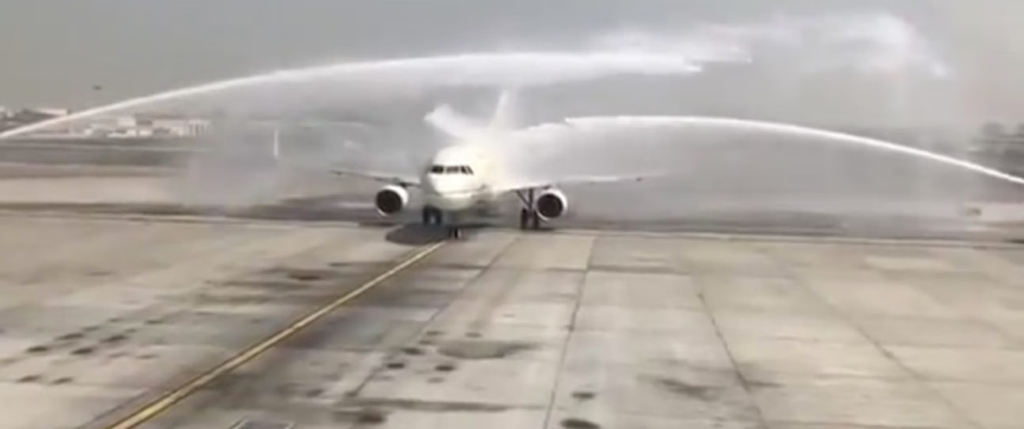
At Dubai Airport in 2018, a fire engine malfunctioned, sending a high-pressure jet directly into a Saudia Airbus A320’s forward emergency hatch. The hatch was forced open, fell into the cabin, and automatically deployed the over-wing emergency slide, causing minor injuries to a passenger and significant delays while the aircraft was taken out of service.
Additionally, in Turkey in 2020, a Corendon Airlines Boeing 737 sustained damage during a water cannon salute after the aircraft’s right wingtip physically struck the water cannon nozzle mounted on top of the fire appliance.
Water cannon salutes should always be carefully planned
While the sentiment behind water cannon salutes may be well-meaning, as with everything in aviation, they need to be meticulously planned and carried out by experienced professionals, the aircraft crew should be forewarned, and airport ground protocols followed.
Should any of these not be adhered to, then unfortunate incidents such as that seen at Guayaquil Airport will continue to happen, causing damage and a subsequent financial loss to airlines, and delays, cancellations and disruption to passengers as a result.
Featured image: Lukas Wunderlich / stock.adobe.com