


First responders: Meet the self-flying aircraft built to take rescue aviation beyond helicopters

9 min read
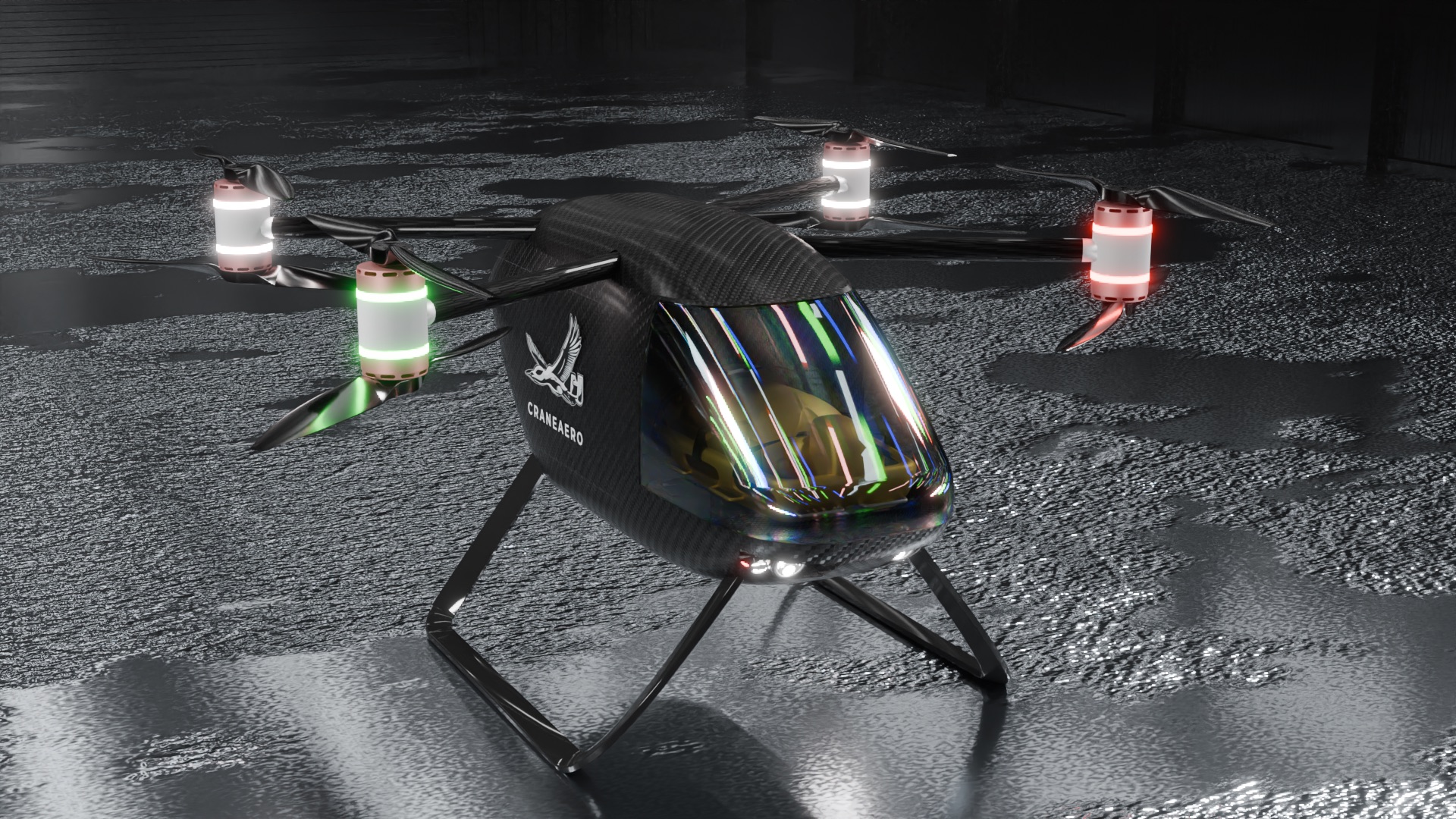
Autonomous helicopters, heavy-lift multicopters and student-built tilt-wings are now racing for a share of a $1.65 million prize pot in one of the most unusual competitions in aviation.
The GoAERO Prize is a three-stage, multi-year challenge to create Emergency Response Flyers – portable, robust, autonomy-enabled aircraft that can get first responders and critical supplies into places where helicopters or ambulances struggle to go.
The competition, backed by partners including NASA, Boeing, RTX and Honeywell, has attracted nearly 200 teams from 85 countries and more than $2 million in total prizes.
Stage 2 has now narrowed the field to eight prototype winners, each flying sub-scale or early full-scale demonstrators that blend drone autonomy with aviation-grade safety.
These finalists will now push on towards a 2027 fly-off at NASA Ames Research Center in California, where GoAERO plans a multi-day festival of missions, air displays and live trials to crown the overall Emergency Response Flyer champion.
The 8 breakthrough aircraft redefining emergency response aviation
From electric tilt-wings to multi-rotor heavy lifters, the GoAERO Stage 2 finalists showcase the most ambitious engineering in the competition so far.
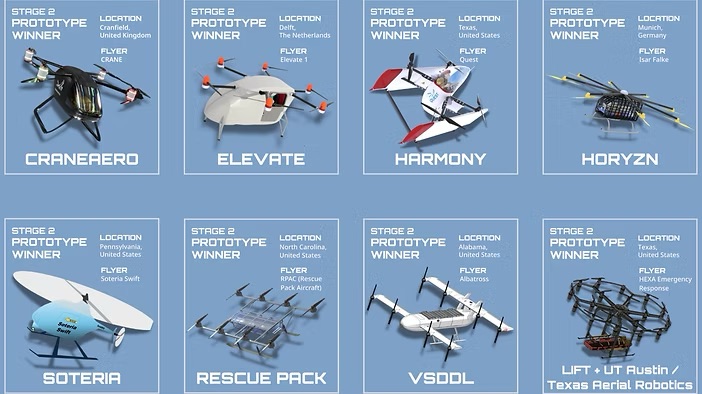
Each prototype has taken a different path to solving the same core challenge, with some interesting innovations on the table:
CraneAERO – CRANE (Cranfield Rapid Aerial Network for Emergency)
Cranfield University’s CRANE is perhaps the purest expression of GoAERO’s brief: a fully autonomous, electric quad-rotor VTOL designed to sit somewhere between a drone and a helicopter.
The aircraft is being developed as a robust, remotely piloted platform capable of carrying people, equipment and supplies into disaster zones and “ambulance deserts” that are hard to reach from the ground.
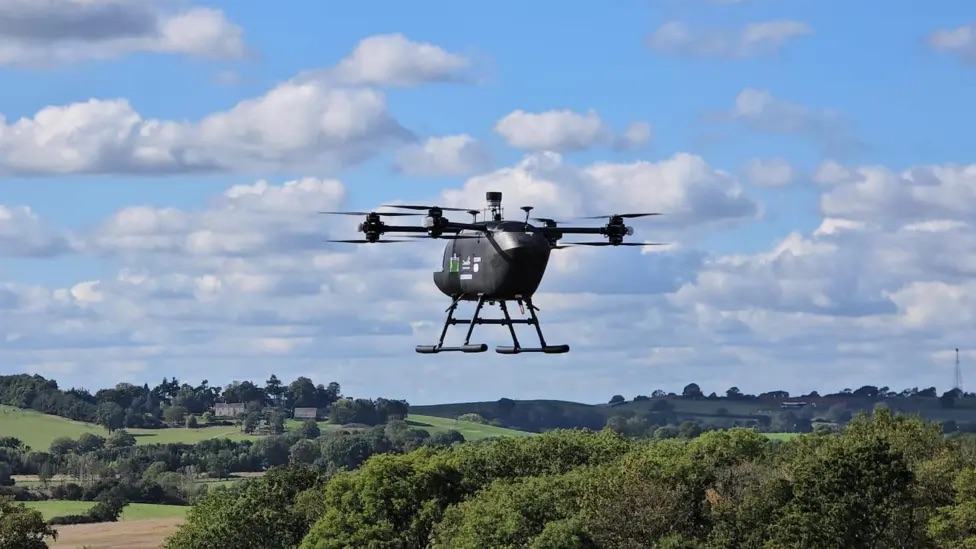
The team is building a sub-scale prototype first, using Cranfield’s airport, flight dynamics expertise and AI research to validate autonomous navigation, obstacle avoidance and contingency handling. The vision is a family of CRANE vehicles that can form a rapid aerial network, launching from simple pads near hospitals or fire stations to provide:
- Search-and-rescue reach well beyond road networks
- Faster medical evacuation from remote or flooded areas
- Autonomous shuttling of blood, drugs and equipment
By putting university-level flight controls and autonomy into a rugged, quad-rotor layout, CRANE aims to prove that eVTOL SAR platforms can be both highly capable and practical to operate from minimal infrastructure.
cranfield.ac.uk
Elevate – Elevate 1
Delft-based Elevate is taking a very different approach with Elevate 1, an eVTOL hexacopter designed as a kind of “rescue pickup truck in the sky.” It is a six-rotor electric aircraft with a central pod that can be configured for passengers, stretchers or cargo.
Technically, Elevate 1 is optimised for deployment as part of ground convoys. Foldable arms shrink its transport width from around 5.6 metres down to roughly 1.4 metres, allowing the aircraft to ride on a standard highway trailer or truck bed, then unfold and launch close to the incident scene.
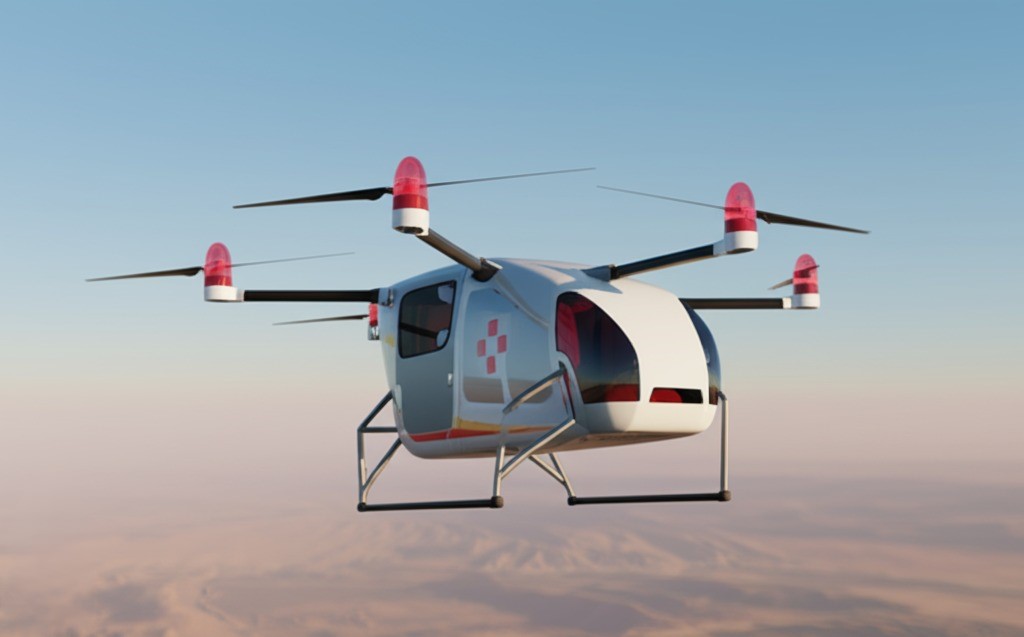
A prototype weighing about 146 kg has been quoted with a range of roughly 27 km, giving enough reach to hop over blocked roads, collapsed bridges or wildfire lines.
In the GoAERO context, Elevate 1 is pitched as:
- Rapidly deployable from ordinary road vehicles
- Capable of carrying either a medic, a casualty or high-value supplies
- Simple and robust enough for repeat missions in austere conditions
Where many eVTOL concepts imagine bespoke urban vertiports, Elevate is leaning into the gritty reality of disaster response – trailers, muddy fields and all.
HORYZN – Isar Falke
Munich-based student initiative HORYZN, rooted in the Technical University of Munich, is already well known for its fixed-wing eVTOL drones delivering defibrillators faster than an ambulance.
HORYZN’s earlier projects, such as Frankenstein and Kolibri, pioneered a hybrid layout with dedicated vertical-lift propellers and a separate cruise wing, blending quadcopter simplicity with fixed-wing efficiency.
For GoAERO, the team has evolved this work into Isar Falke, an autonomy-heavy emergency response flyer. Isar Falke builds on the team’s earlier architecture but pushes towards:
- Higher payloads for medical kits or rescue tools
- Longer range to cover rural regions and floodplains
- Full autonomous dispatch, with minimal operator input
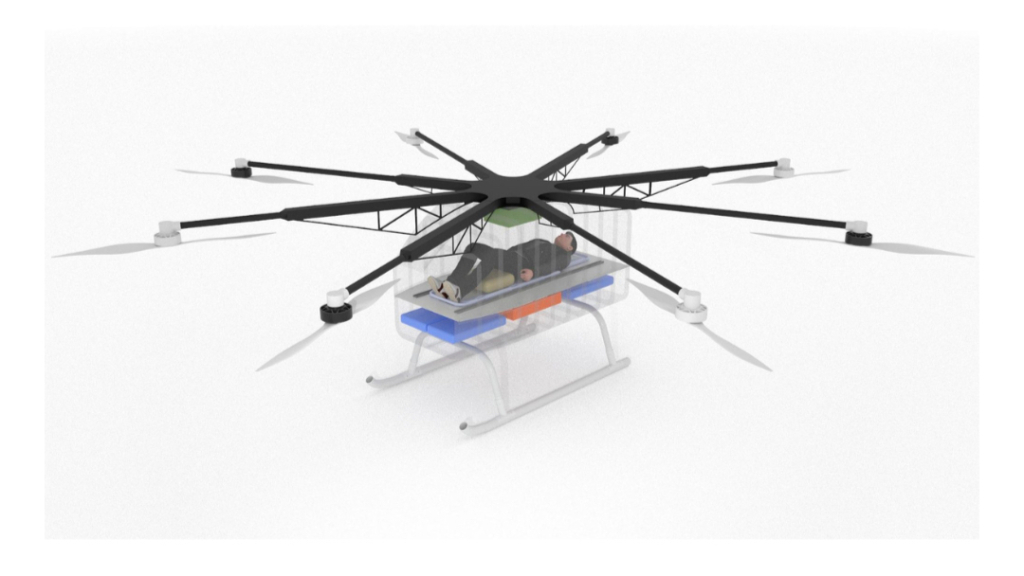
The concept is to get a life-saving payload, like an AED, to a patient within minutes, even in rural areas or when roads are blocked – and to do so with automatically planned routes, precision drops and quiet, battery-electric propulsion. HORYZN’s ambition is clear: make the “drone defibrillator” a standard part of emergency medicine rather than a research project.
LIFT + UT Austin/Texas Aerial Robotics – HEXA Emergency Response
If any aircraft in the line-up feels closest to a “flying rescue pod,” it is HEXA Emergency Response, a heavy-lift spin on LIFT Aircraft’s 18-rotor HEXA personal eVTOL.
The baseline aircraft uses 18 electric motors and propellers arranged in a circular frame around a central pod, is amphibious, and can be flown by the passenger or remotely.
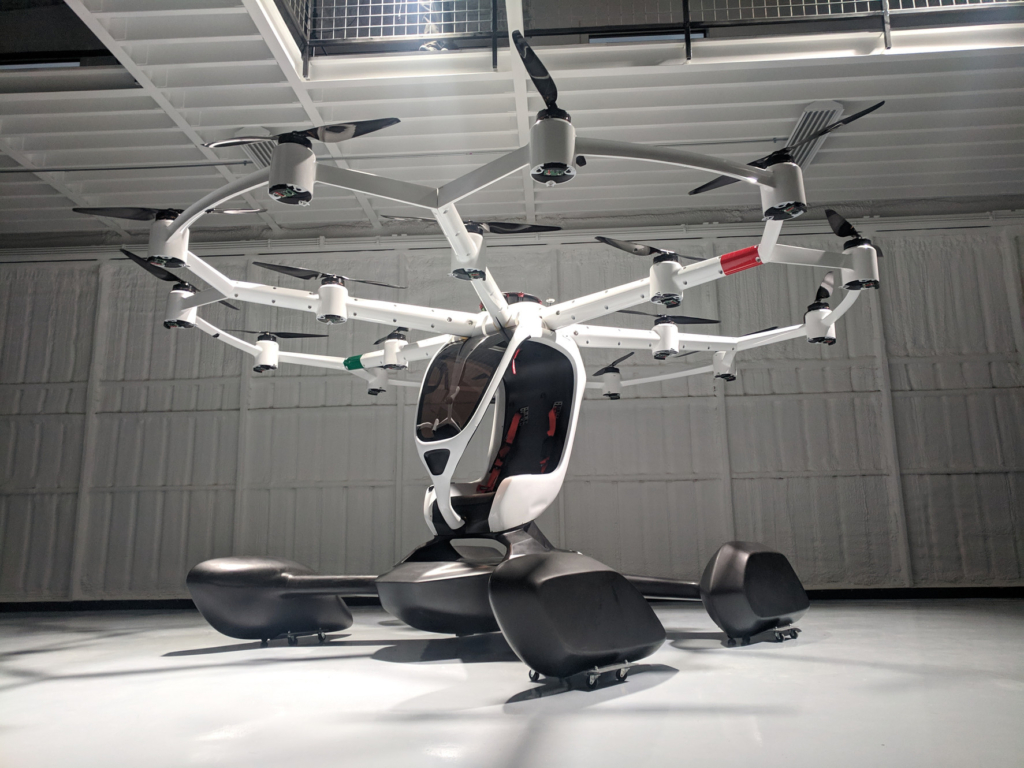
For GoAERO, LIFT and UT Austin have re-imagined HEXA as a remote or autonomous responder with a quoted payload of up to 400 lb, allowing it to winch supplies or even evacuate a person from flooded neighbourhoods.
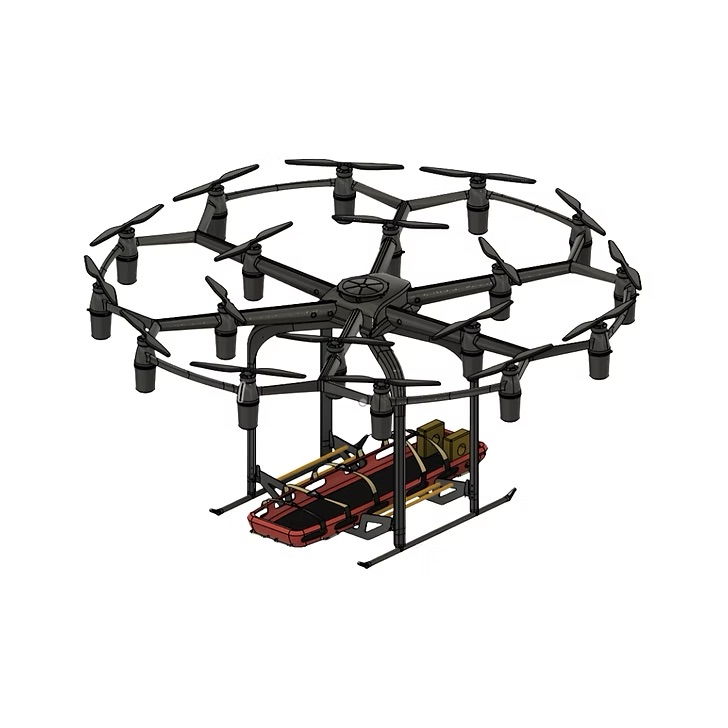
Key technical hooks include:
- Distributed electric propulsion with 18 rotors, giving strong redundancy
- Proven ultralight airframe and flight-control systems from the manned HEXA programme
- An emergency-response mission kit focused on heavy-lift hover and winch operations
The team’s experience flying HEXA with the US Air Force and in public demos gives this entry a rare advantage: this is a GoAERO contender derived from an aircraft that already flies with people on board.
Rescue Pack – Rescue Pack AirCraft (RPAC)
Rescue Pack’s RPAC is a brute-force solution to the payload problem: a 650 lb gross-weight, all-electric octocopter described as having autonomous capability for rescue missions.
Eight rotors give it the disc area and redundancy to lift significant loads, while the electrical architecture keeps maintenance simple compared with a turbine helicopter.
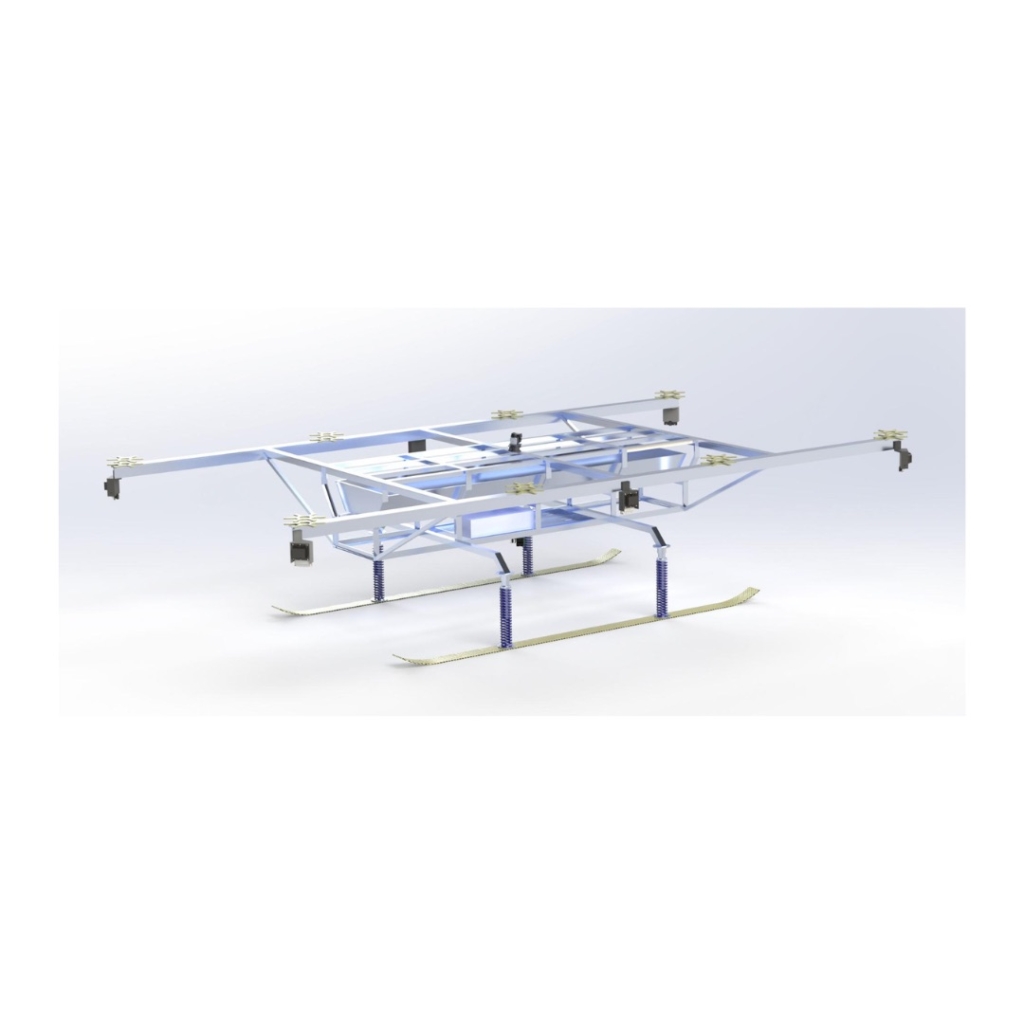
The North Carolina-based team has its roots in university research supported by NASA, and has aimed RPAC squarely at missions such as:
- Short-range evacuation of casualties from hazardous zones
- Delivery of sandbags, tools or generators into disaster sites
- Automated shuttle runs between a forward landing zone and a safer rear base
By keeping the configuration relatively simple – multiple rotors, fixed under-slung payload bay, autonomous flight control – RPAC seeks to offer something responders can deploy quickly without a full-blown heliport or specialist pilot cadre.
Harmony – Quest
Quest is Harmony Aeronautics’ GoAERO platform, led by Texas A&M’s advanced vertical flight lab. GoAERO describes it as an autonomous eVTOL capable of long-range, agile, high-speed flight and rapid deployment, combining quick-launch VTOL capability with efficient cruise for extended missions.
Harmony’s background is in ultra-quiet rotors and hybrid configurations such as quadrotor-biplane demonstrators and coaxial low-noise propeller systems.
That heritage suggests Quest will emphasise:
- Low acoustic footprint, to operate closer to communities and wildlife
- High aerodynamic efficiency compared with pure multicopters
- Strong autonomy and precise control, informed by years of GoFly and military research
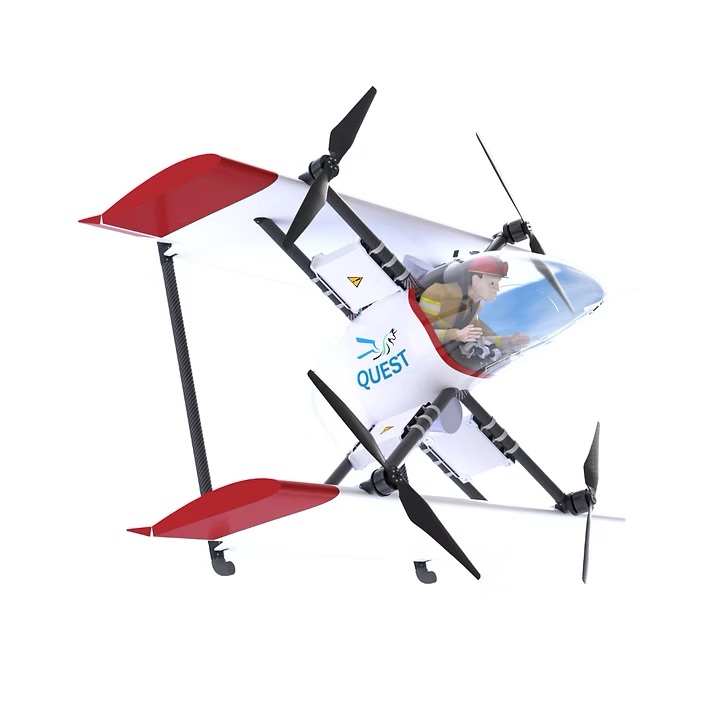
In practical terms, Quest is aimed at getting a medic to a scene fast, then orbiting quietly or returning autonomously while the responder focuses on the patient. For GoAERO, Harmony is effectively testing whether next-generation rotor tech can make emergency eVTOLs that are both neighbour-friendly and battlefield-capable.
Soteria Flight Technologies – Soteria Swift
Soteria Swift, from a Penn State-linked team, takes a systems-thinking approach. Rather than a “hero vehicle”, it is conceived as a heavy-lift unmanned aircraft system that becomes a force multiplier for public safety agencies.
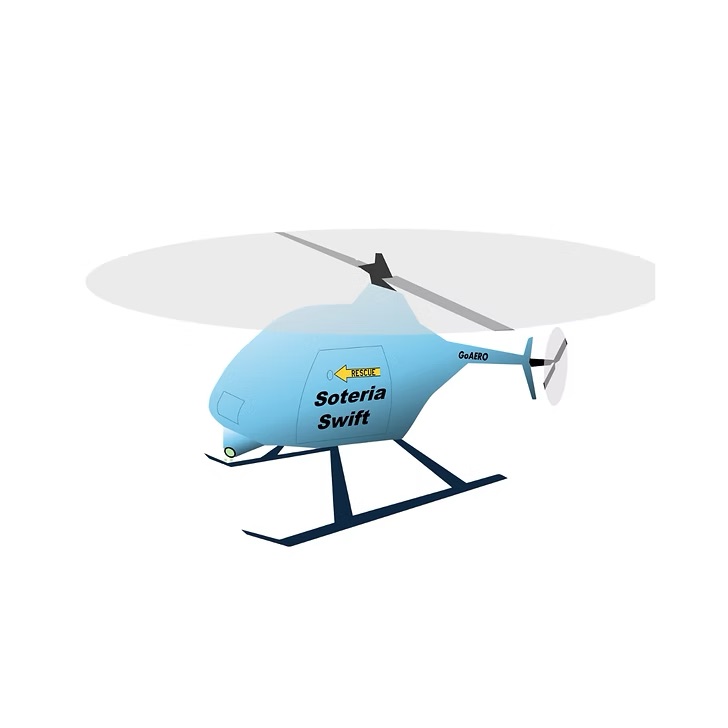
Swift is designed to be easy to deploy and operate, with fully autonomous waypoint following, collision-avoidance, and automatic landing-zone selection. The aircraft is meant to push sensors and payloads into places responders cannot safely go, operating in smoke, low visibility and cluttered urban environments while maintaining precise paths for drops or deliveries.
Crucially, the team has already fielded drone systems in NIST’s UAS First Responder Challenges, working directly with firefighters and law enforcement.
Swift is therefore less of a lab toy and more an evolution of equipment that first responders have already stress-tested and critiqued.
Vehicle Systems, Dynamics and Design Laboratory – Albatross
Albatross, from Auburn University’s VSDDL, may be the most “airplane-like” of the finalists. The Stage 2 prototype, TW-04-s Albatross, is described by its creators as their first tandem tilt-wing aircraft, using multiple ducted fans in a vectored-thrust arrangement.
The Stage 1 description of the underlying VT-04 Hexa-Hauler outlines the architecture: a ducted-fan hexacopter whose central row of fans can tilt forward and aft, allowing precise acceleration and deceleration without large pitch changes.
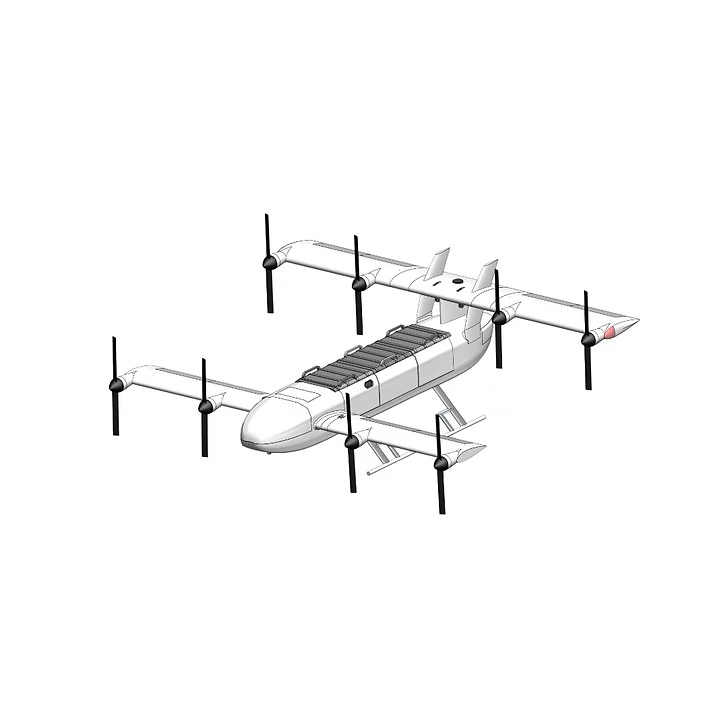
Payloads are housed in a central bay with side doors and an aft hatch, and the whole system is designed to be transported on a standard pickup and trailer, assembled by a three-person team in minutes.
For Stage 2, VSDDL has wrapped this technology into the tandem tilt-wing Albatross prototype and flown it under autonomous waypoint control, right up against the 55 lb test weight limit.
In a full-scale guise, the concept could offer:
- Higher cruise efficiency and range than a pure multicopter
- Excellent low-speed handling and hover precision
- A generous cargo bay and slung-load capacity for medevac and supply missions
It is a very “research-grade” design, but one that aligns closely with tilt-wing and tilt-prop work at NASA and others – a useful proving ground for how well such architectures might slot into real emergency operations.
What happens next for the GoAERO finalists?
Stage 2 was about moving from CAD to controlled flight, and GoAERO has awarded a total of $320,000 in prototype prizes across the eight winning teams to fuel the next phase of development.
From here, all eyes turn to the Final Fly-Off at NASA Ames in 2027. There, teams will have to demonstrate their aircraft in a series of mission profiles that mimic real-world emergencies, including:
- Adversity Missions, stressing reliability, autonomy and performance in challenging conditions
- Manoeuvrability Missions, showcasing precision flying and obstacle-rich operations
- Productivity Missions, measuring how much useful work – people moved, supplies delivered – each flyer can actually get done
To qualify, teams must show controlled flight with a full payload, build out safety cases and, in many cases, scale from today’s sub-scale demonstrators to much larger, human-carrying craft. Along the way, GoAERO and its partners are offering mentoring, software, insurance and access to FAA liaisons to help teams chart certification pathways.
Even before a winner is named, the impact is clear. Tilt-wings, multicopters and novel rotor systems that might once have stayed in university labs are now flying real missions and gathering feedback from first responders.
If GoAERO succeeds, the legacy will be more than a single aircraft; it will be an ecosystem of emergency flyers, from defibrillator drones to heavy-lift rescue pods, ready to sit alongside the helicopter in the rescue aviation toolkit.
Featured image: CraneAERO
Sign up for our newsletter and get our latest content in your inbox.




More from


September 17, 20265 min read

September 17, 20263 min read


September 18, 20263 min read

