Boom to begin assembling Symphony engine within weeks as manufacturing ramps up

5 min read
Boom Supersonic is set to begin assembling its first Symphony engine within weeks, marking a key step forward in the manufacturing phase of its Superpower turbine programme and a critical milestone in the company’s engine-first strategy.
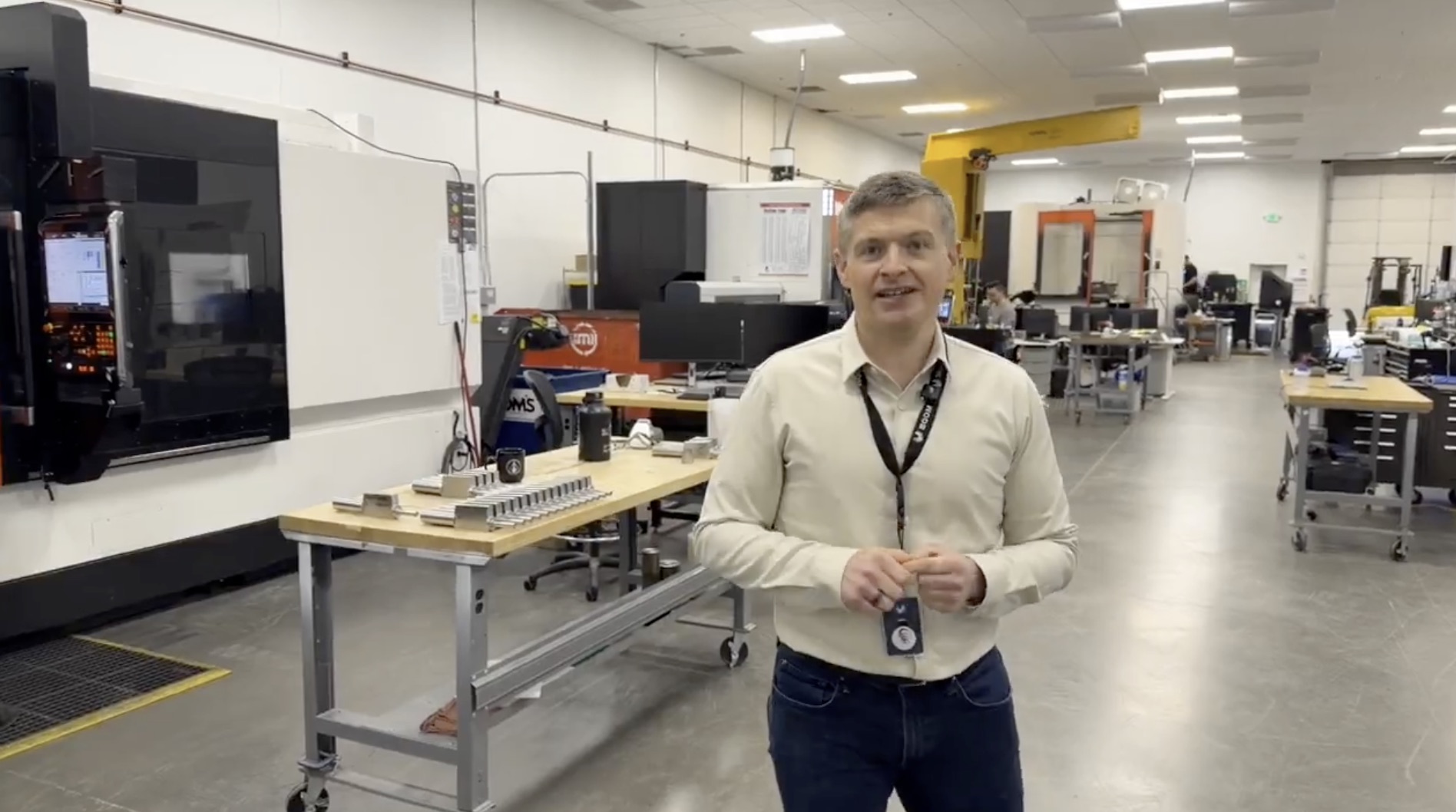
Speaking in a video update from Boom’s R&D supercenter, founder and CEO Blake Scholl said the company is entering a new phase of execution.
“We are literally standing where we’re going to be building the first engine starting in about two weeks,” he said. “We are going to assemble 200 megawatts of turbines next year for shipment to our first launch customer.”
As we enter the build phase for our first engine, Boom is moving to video updates for our investors.
— Blake Scholl 🛫 (@bscholl) April 10, 2026
Here is our most recent investor update (financial info redacted).
Hint: there is an Easter egg 🥚 pic.twitter.com/RyE1syw6Pn
The milestone signals a shift from design and development into physical production, as Boom moves to validate both its propulsion technology and its vertically integrated manufacturing model.
First Symphony engine assembly set to begin, but it’s not for the Overture aircraft
The first engine being assembled is not intended for flight, but forms part of Boom’s ground-based Superpower turbine programme, first outlined in December 2025.
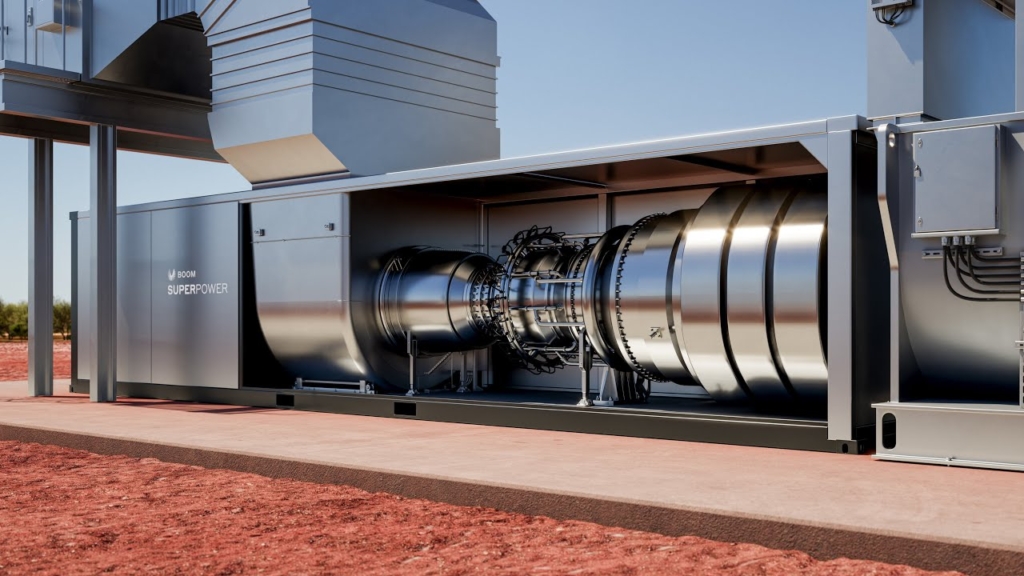
At the core of the effort is the Symphony engine architecture, originally designed for Boom’s Overture supersonic airliner, but now being adapted into a 42 MW industrial gas turbine.
Scholl confirmed that the initial build will focus on what the company calls the “sprint core”, encompassing the most complex elements of the engine.
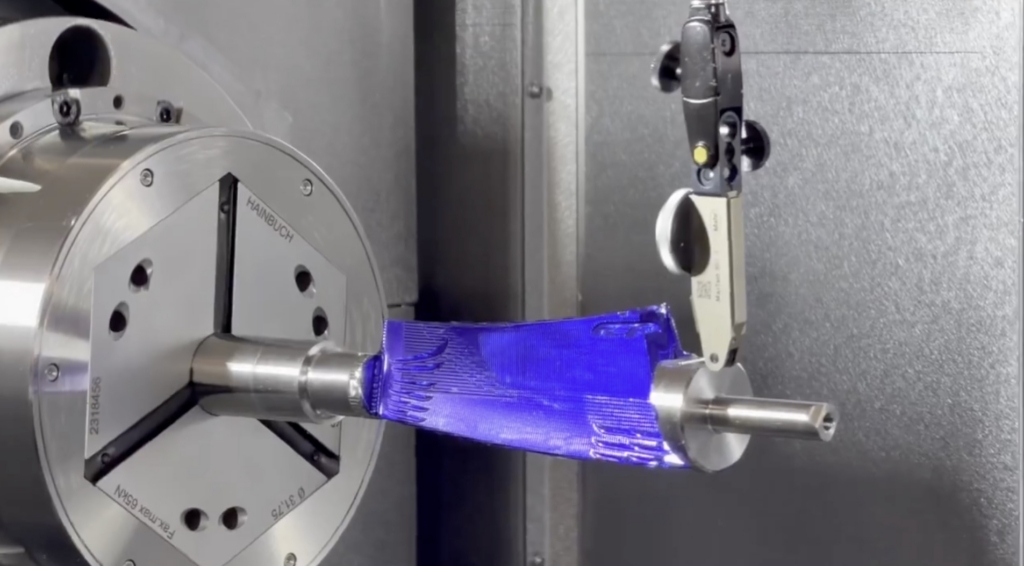
“It is the high spool, the high compressor, the combustor, the high turbine, the hardest parts of the engine to make,” he said.
The sprint core is expected to be assembled mid-year and then transferred to Boom’s test facility for a validation campaign later in 2026.
Superpower turbine programme underpins Boom’s engine-first strategy
While the concept of Superpower is not new, the latest update provides greater clarity on execution timelines and scale.
Boom expects to complete its first full test cycle of the core engine components in the third quarter of this year, with a fully integrated 42 MW pre-production turbine targeted for assembly by the end of 2026 and operational readiness in the first half of 2027.
Deliveries to launch customer Crusoe remain on track for the end of 2027, with five units planned, representing around 200 MW of installed capacity.
Scholl said demand has already exceeded expectations.
“When we announced this in December, my inbox got flooded with demand,” he said. “We were planning to manufacture a total of seven and a half gigawatts between now and 2030. We’ve got way more than seven and a half gigawatts in inbound demand.”
The scale of that demand reinforces Boom’s rationale for developing a near-term revenue stream through turbine production, while continuing work on its supersonic aircraft.
Boom scales vertically integrated engine manufacturing at R&D supercenter
Central to this strategy is Boom’s push for vertical integration, bringing engine manufacturing capabilities in-house rather than relying on the traditional, highly fragmented supply chain.
Scholl described the company’s R&D machine shop as unique within the industry.
“This is a room that does not exist at any other engine company,” he said. “This is where we go from raw materials to completed jet engine parts under one roof.”
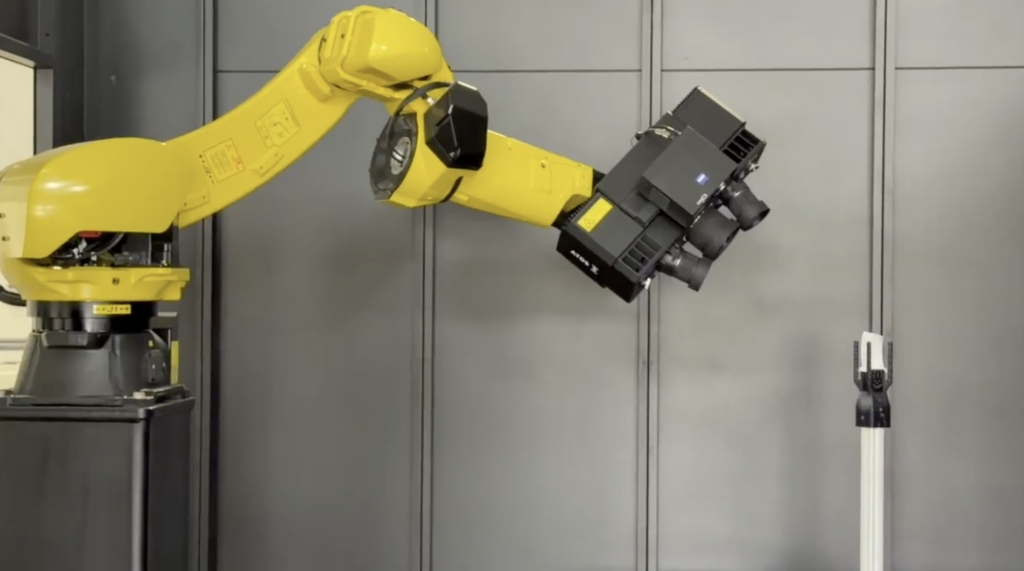
The facility is equipped with advanced manufacturing and quality assurance systems, including high-precision scanning equipment that allows engineers to generate detailed QA data for every component.
“This allows us to create incredibly precise QA data for every engine component we manufacture… and QA every part individually,” Scholl said.
Boom is also installing a range of machining equipment, including dual spindle systems for compressor components and large-scale “mill-turn” machines capable of shaping multi-tonne metal structures.
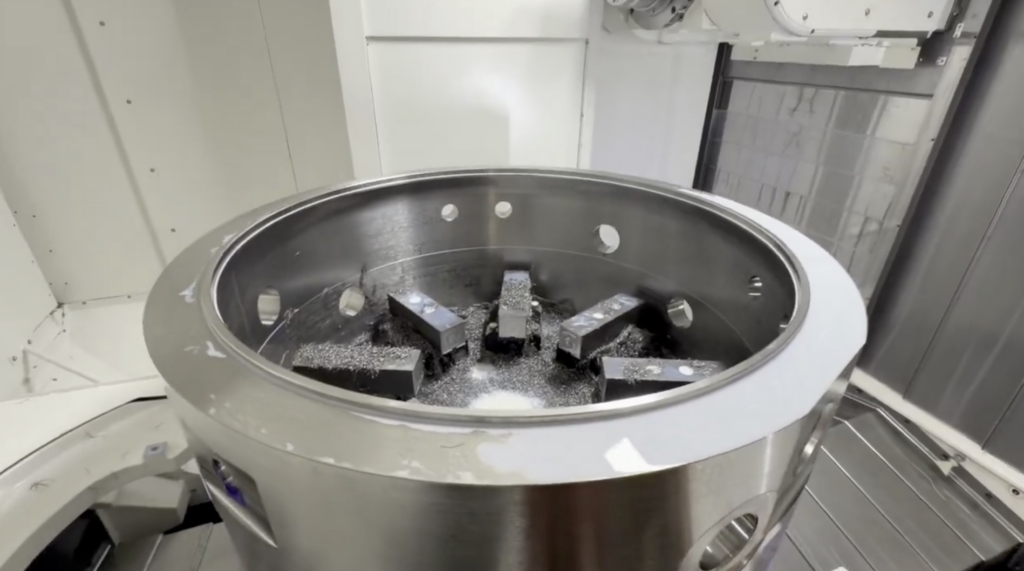
In one example, Scholl described machining a 5,000-pound metal casting down to a finished component weighing closer to 3,000 pounds.
These capabilities are intended to reduce both cost and lead time, while enabling rapid iteration.
“This optimises not just the cost, but more importantly the time, because we can do all the processes under one roof,” he said. “This is how we move really fast and how we iterate really quickly.”
Gigawatt-scale turbine production targeted as demand surges
Boom’s manufacturing ambitions extend far beyond initial prototypes.
The company plans to assemble 200 MW of turbines next year before scaling production significantly, supported by a new 200,000 sq ft manufacturing campus located near the R&D supercenter.
Scholl said the long-term goal is to reach between one and two gigawatts of annual production, increasing to four gigawatts by the end of the decade.
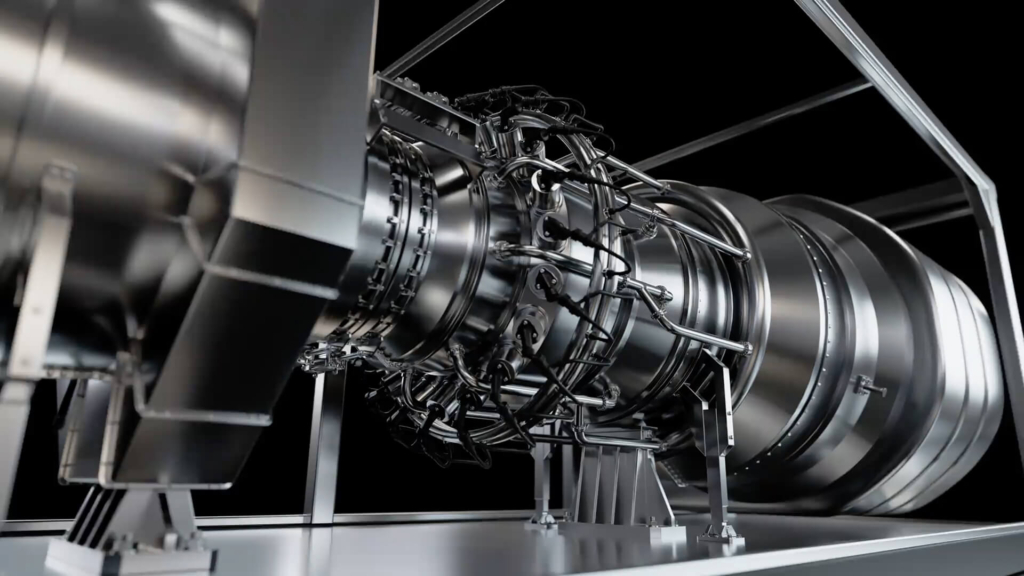
“We scale to one to two gigawatts of annual production… and then four gigawatts in 2030,” he said, adding that demand could force further acceleration.
“There’s so much demand that we might need to accelerate that production timetable and produce even more product even more quickly.”
While these targets are ambitious, they underline the scale of Boom’s intended transition from prototype development to high-volume manufacturing.
What about the Overture supersonic aircraft?
The engine programme is now the primary focus for Boom, with Scholl stating that approximately 90% of the company’s efforts are currently dedicated to propulsion development, while the remainder continues work on the Overture airliner.
However, he rejected the idea that the company has pivoted away from supersonic flight.
“A lot of people talk about Superpower as a pivot, and I don’t think of it as a pivot,” he said. “What we’re doing… I’m going to call it a boomerang.”
Under this approach, Boom aims to generate revenue and validate its engine technology through industrial turbine deployments before returning to the aircraft programme.
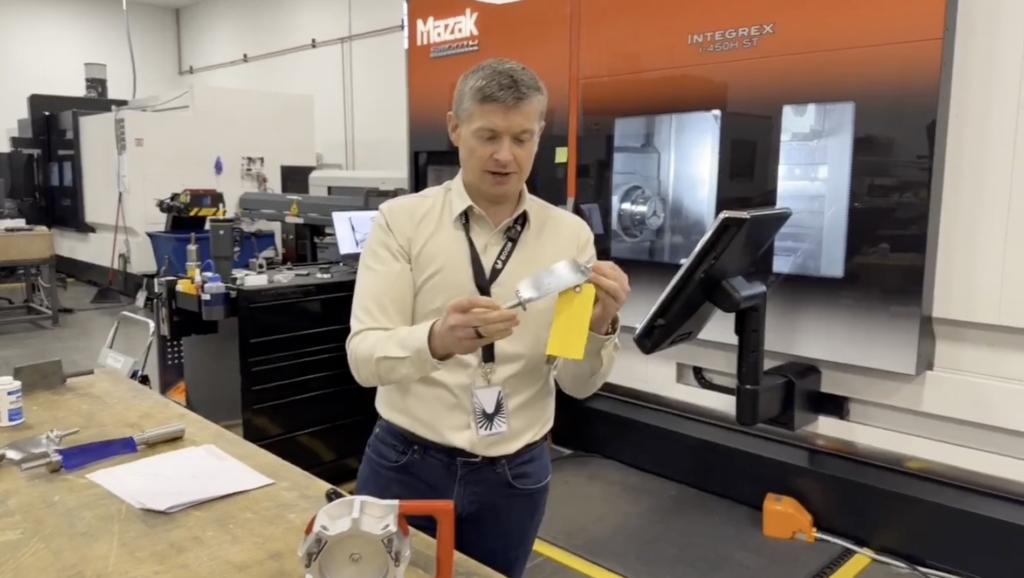
“We’re still doing supersonic. Before we do the supersonic airliner, we’re developing the engine first, we’re shipping it to revenue customers on the ground… and then we’re going to come right back and finish what we started on the supersonic airliner.”
If successful, the approach could provide both the financial and technical foundation needed to support the development of the Overture supersonic airliner.
For now, the focus is firmly on proving that Boom can move from design ambition to industrial reality.
As Scholl put it: “Our job is to go through this zero to one on engine development, and then go from the one to many as quickly as possible.”
Featured image: Boom Supersonic
Sign up for our newsletter and get our latest content in your inbox.


More from


October 11, 20263 min read