Blue Origin New Glenn explosion raises questions over NASA lunar mission timeline

6 min read

Blue Origin’s powerful New Glenn rocket exploded during a routine pre-launch engine test at Cape Canaveral Space Force Station in Florida on 28 May (Thursday) night, destroying the vehicle and potentially causing significant damage to its only operational launch pad just days before a planned satellite mission.
The explosion occurred during a static-fire test at Launch Complex 36, where engineers were preparing the 98-metre-tall rocket for its fourth flight, scheduled for 4 June. Dramatic footage captured a massive fireball engulfing the launch complex and lighting up Florida’s Space Coast.
No injuries were reported.
Blue Origin confirmed that all personnel were safely accounted for after what it described as an “anomaly” during the hot-fire test.
“We experienced an anomaly during today’s hotfire test. All personnel have been accounted for. We will provide updates as we learn more,” the company said on X.
The accident immediately raised questions about the future schedule of Blue Origin’s flagship launch vehicle, which sits at the centre of the company’s commercial, national security and lunar exploration plans.
New Glenn explosion hits Blue Origin’s bid to challenge SpaceX
The loss of a New Glenn vehicle represents a major setback for Jeff Bezos’ space company at a critical point in the programme.
Blue Origin has spent nearly a decade and billions of dollars developing New Glenn as a heavy-lift rocket capable of competing directly with SpaceX’s Falcon 9, Falcon Heavy and eventually Starship systems.
Named after astronaut John Glenn, the first American to orbit Earth, New Glenn is designed as a partially reusable launch vehicle with a reusable first stage intended for at least 25 missions.
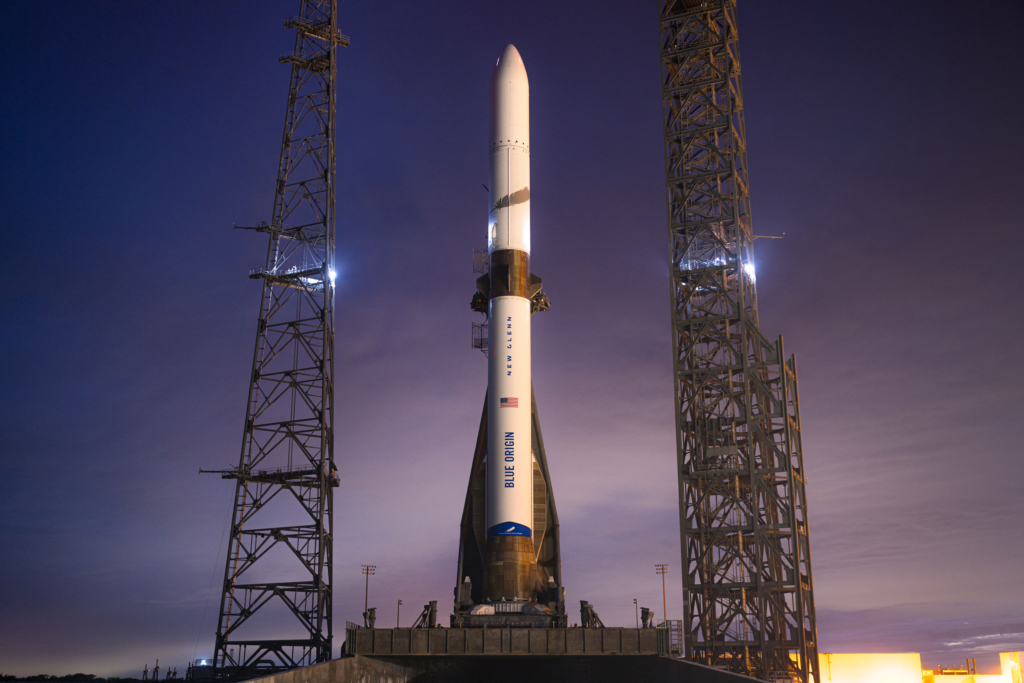
The rocket stands more than 320 feet tall and can deliver more than 45 metric tonnes to low-Earth orbit and over 13 metric tonnes to geostationary transfer orbit.
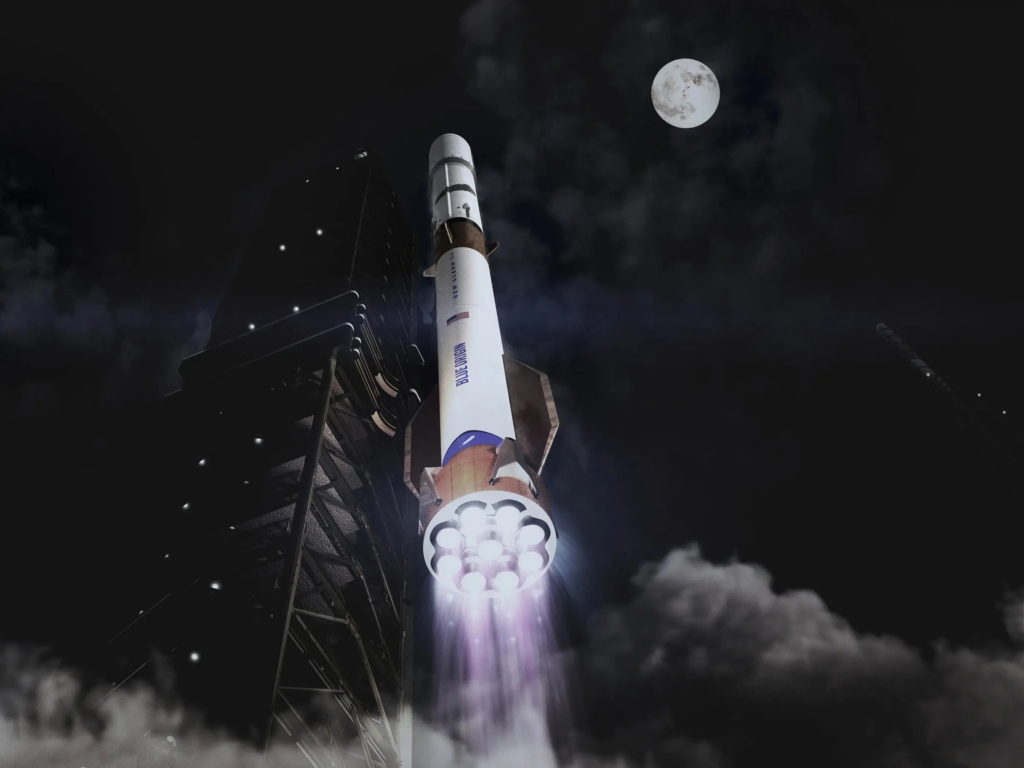
Its first stage is powered by seven BE-4engines, among the most powerful methane-fuelled rocket engines ever flown. Each engine generates roughly 640,000 pounds of thrust at sea level.
The vehicle is central to Blue Origin’s long-term strategy of building what Bezos has frequently described as a “road to space” capable of supporting large-scale commercial activity beyond Earth.
Thursday’s explosion occurred while the company was preparing the rocket for a mission carrying satellites for Amazon’s broadband constellation, one of the key commercial customers expected to generate a steady launch cadence for New Glenn.
Blue Origin setback follows recent mission problems and FAA scrutiny
The accident comes only weeks after New Glenn encountered difficulties on its third flight.
That April 19 mission successfully launched but failed to place AST SpaceMobile’s BlueBird 7 communications satellite into its intended orbit.
The incident prompted a Federal Aviation Administration (FAA) review and a temporary grounding of the vehicle while investigators examined the anomaly.
The FAA said Thursday’s explosion occurred during a ground test that was not part of licensed flight activities.
“This test was not within the scope of FAA-licensed activities,” the agency said, adding that there was no impact on air traffic.
Whether the latest incident triggers a new regulatory review remains unclear.
The extent of damage to Launch Complex 36 could prove equally significant.
LC-36 is currently the only launch facility configured to support New Glenn operations. If the pad has suffered major structural damage, Blue Origin may face months of repairs before the rocket can return to flight.
The company had planned an ambitious launch campaign this year, with multiple commercial, government and national security missions lined up.
NASA’s lunar plans now face fresh uncertainty
The implications extend beyond Blue Origin itself.
New Glenn is a critical part of NASA’s Artemis architecture and future lunar exploration plans.
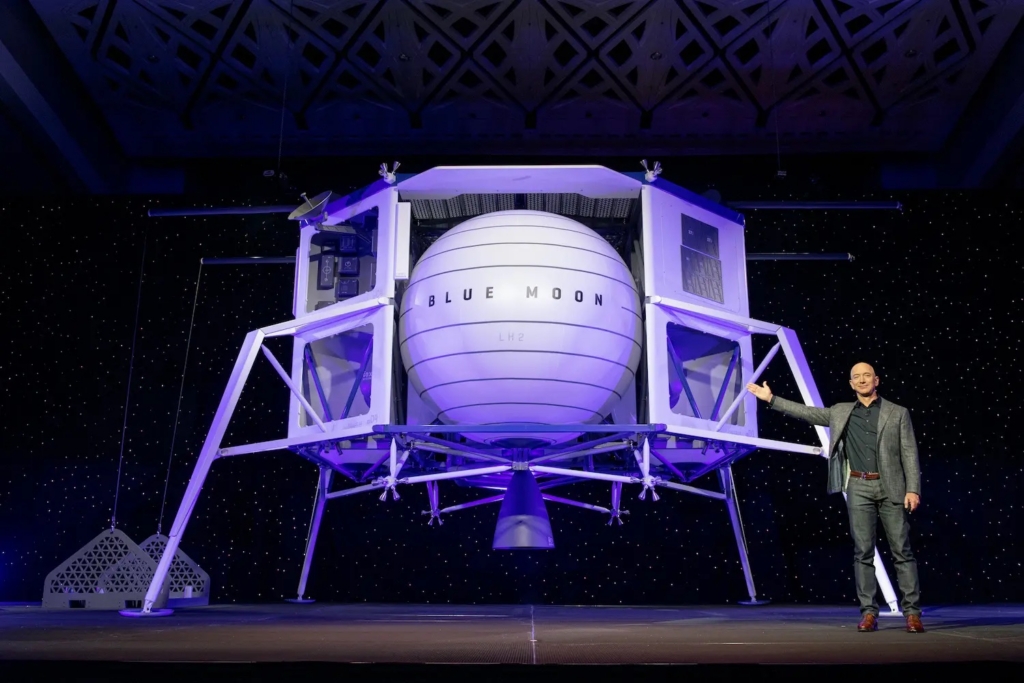
The rocket is expected to launch Blue Origin’s Blue Moon lunar lander, one of two commercial landing systems selected by NASA to support future Artemis missions. The lander is intended to carry cargo and eventually astronauts to the lunar surface as part of America’s return to the Moon.
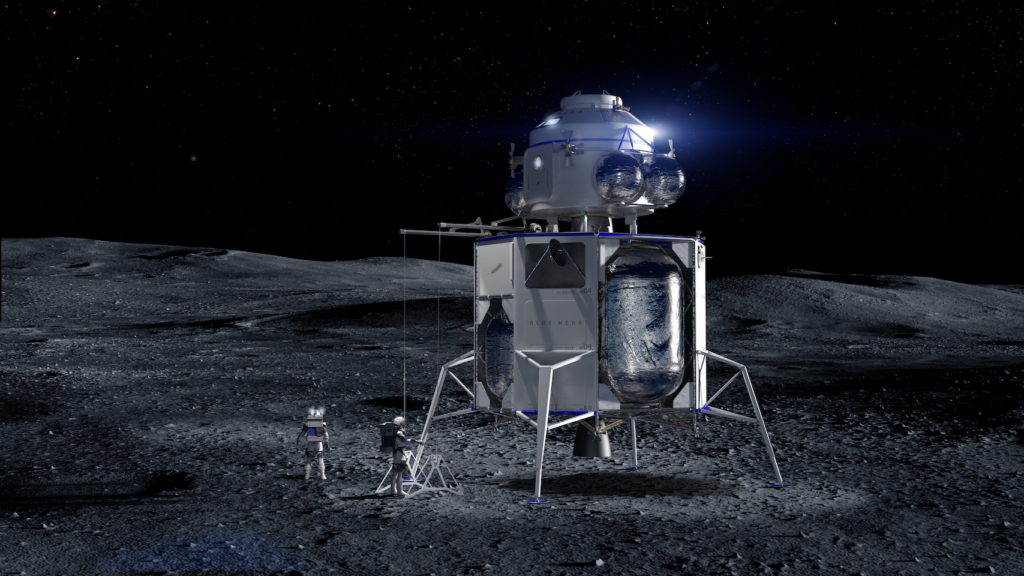
Only days before the explosion, NASA announced plans involving Blue Moon missions that will help establish infrastructure around a future lunar outpost near the Moon’s south pole.
NASA Administrator Jared Isaacman acknowledged the significance of the incident shortly after the explosion.
“Spaceflight is unforgiving, and developing new heavy-lift launch capability is extraordinarily difficult,” Isaacman wrote. “We will work with our partners to support a thorough investigation of this anomaly, assess near-term mission impacts, and get back to launching rockets.”
“We will provide information on any impacts to the Artemis and Moon Base programs as it becomes available,” he added.
Blue Origin had been preparing to fly a robotic version of the Blue Moon lander later this year as a key demonstration mission ahead of future Artemis operations.
Any prolonged grounding of New Glenn could affect that schedule.
Jeff Bezos vows Blue Origin recovery after New Glenn explosion
Jeff Bezos moved quickly to reassure employees and customers after the accident.
“It’s too early to know the root cause but we’re already working to find it,” Bezos wrote on social media. “Very rough day, but we’ll rebuild whatever needs rebuilding and get back to flying. It’s worth it.”
Even rival Elon Musk offered a brief message of support.
“Sorry to see this, I hope you recover quickly,” Musk posted.
The response reflected a reality well understood throughout the launch industry: developing a new heavy-lift rocket remains one of the most difficult engineering challenges in aerospace.
Both SpaceX and Blue Origin have experienced explosions, failed tests and launch setbacks during development of their major launch systems.
New Glenn remains central to Blue Origin’s future growth plans
Despite the setback, New Glenn remains the cornerstone of Blue Origin’s future.
The rocket is designed to serve commercial satellite operators, US government customers, national security missions and deep-space exploration programmes.
The vehicle’s large seven-metre payload fairing provides roughly twice the volume of conventional five-metre-class launch systems, allowing it to carry larger payloads and satellite constellations.
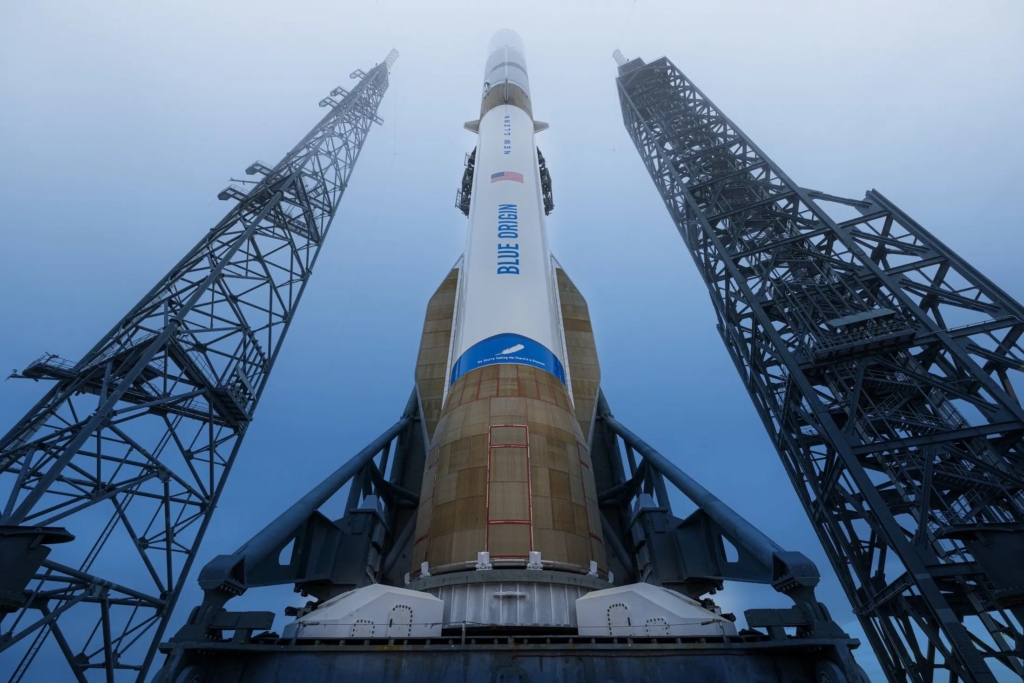
Blue Origin is also developing an even larger New Glenn 9×4 variant capable of carrying up to 70 metric tonnes to low-Earth orbit and supporting future lunar and deep-space missions.
The company sees New Glenn as the foundation for a broad space transportation network supporting commercial infrastructure, lunar exploration and eventual human expansion beyond Earth.
For now, however, attention will focus on determining what caused Thursday night’s explosion and how quickly Blue Origin can recover from one of the most serious setbacks in the programme’s history.
The investigation’s findings are likely to shape not only the future of New Glenn, but also the timetable for some of NASA’s most ambitious lunar exploration plans.
Featured image: Space Coast Live
Sign up for our newsletter and get our latest content in your inbox.



More from


October 11, 20263 min read