


Air Canada and Airbus team up to accelerate aviation decarbonisation

2 min read

The two aviation giants have launched a jointly funded Sustainability Co-Investment Platform, marking a new phase in their shared drive toward a greener future for flight.
An agreement between Air Canada and Airbus, announced on Monday 20 July at Farnborough International Airshow, sees the two companies underline their shared commitment to scale up domestic sustainable aviation fuel (SAF) production in Canada and help reduce the life-cycle emissions of corporate travel.
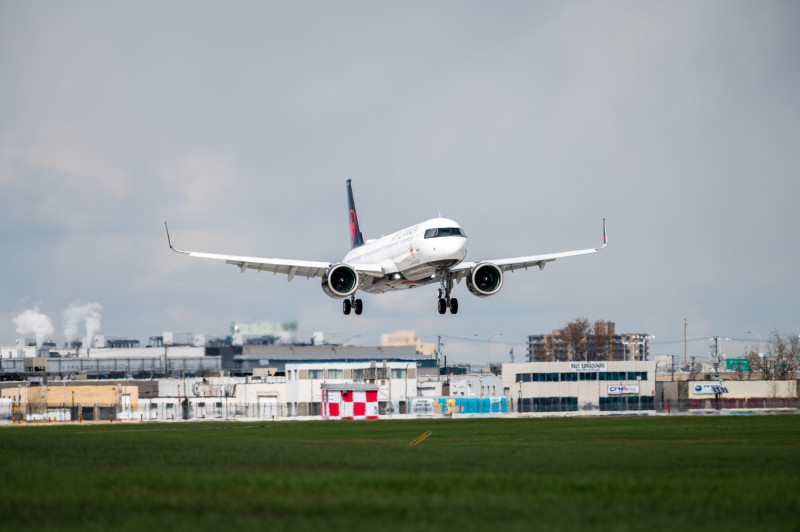
The companies have confirmed their intention to invest up to CAD 13.7 million through the platform to support a commercial-scale SAF industry in Canada.
Air Canada and Airbus’ meaningful steps towards scaling domestic SAF production
“Air Canada is proud to help advance aviation’s energy transition in Canada,” said Valerie Durand, Vice President, Airport Affairs, Corporate Real Estate and Sustainability at Air Canada. She added that the joint initiative demonstrates how the two companies are taking meaningful steps towards scaling SAF production and helping corporate customers address the emissions associated with business travel.
“With industry collaboration and a supportive policy environment, we are confident this momentum can accelerate,” Durand said.
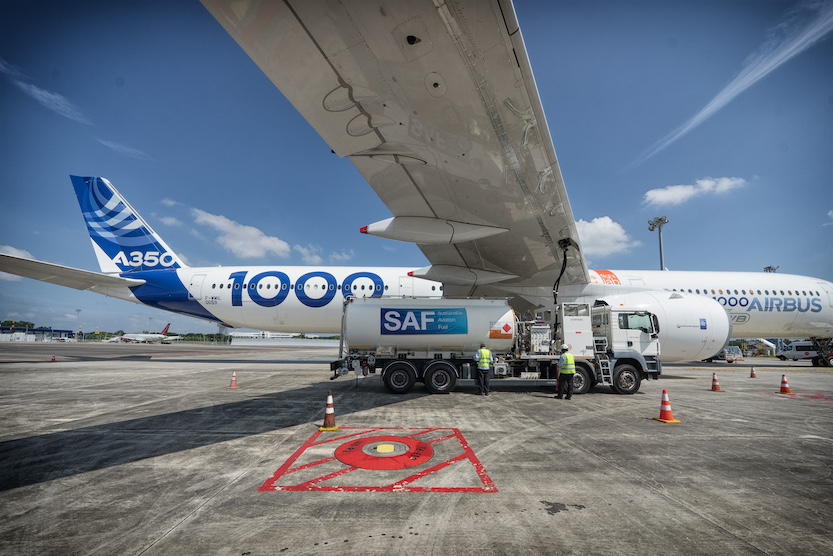
Key focus areas for the scheme include advancing a Final Investment Decision (FID) for the Canadian SAF project and advancing efforts with government partners to establish the structural frameworks needed to support SAF production. The initiative is also supported by the Canadian Council for SAF (C-SAF), which is working with federal and provincial governments to accelerate domestic SAF production and price competitiveness, while preserving the affordability of travel.
Acknowledging that decarbonising aviation will require deep industry collaboration and major investment in new sources of renewable energy, Julie Kitcher, Airbus Chief Sustainability Officer, said: “By launching this co-investment platform and making a long-term commitment to Air Canada’s Leave Less Travel Programme, we will help to stimulate the production of, and demand for, SAF in Canada.”
Canada has a vast feedstock potential, which “when combined with a supportive policy framework, can contribute to the sector’s decarbonisation ambitions and create significant economic growth and job creation.”
Reducing emissions for corporate travel
As part of the Leave Less Travel Programme, for which Airbus has signed a long-term 5-year commitment, the airframe manufacturer will purchase SAF environmental attributes associated with over 60,000 litres of SAF for its first allocation.
Air Canada will then track Airbus’ greenhouse gas (GHG) emissions associated with its corporate travel and remove verified SAF environmental attributes.
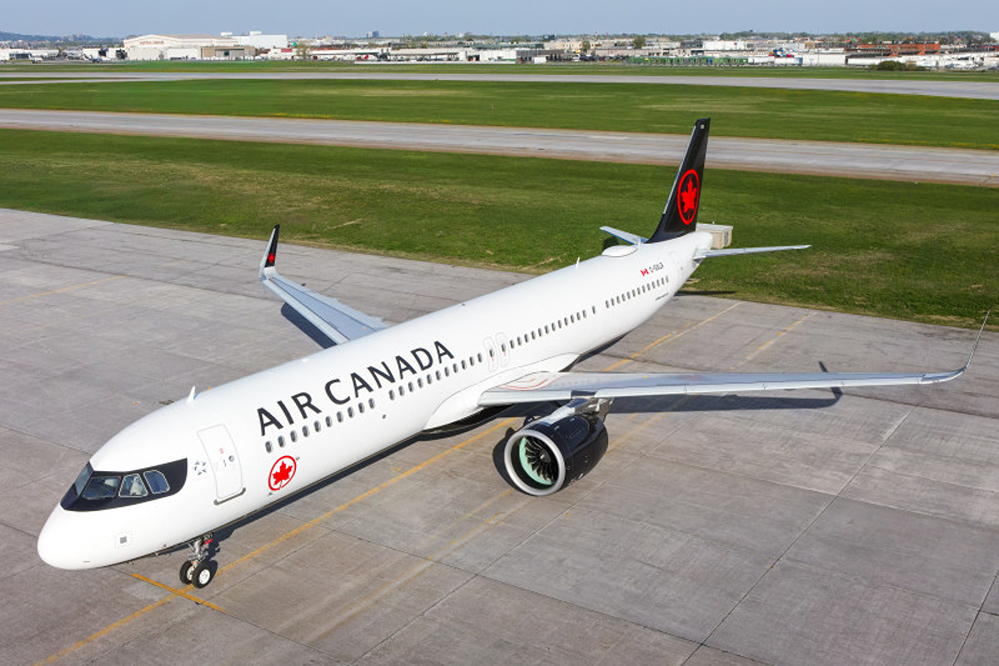
Beyond reducing life-cycle emissions, building a strong domestic SAF ecosystem could set off a wave of economic benefits across Canada. A recent macroeconomic analysis conducted by Airbus and ICF points to Canada’s strong potential as a leader in biofuels production, finding that if domestic SAF were scaled up to cover 40% of the country’s aviation fuel needs by 2040, it could contribute $32 billion to national GDP and generate 140,000 jobs. The new platform launched by Airbus and Air Canada serves as an immediate driver for capturing these substantial economic gains, while also accelerating the growth of a domestic SAF ecosystem.
Sign up for our newsletter and get our latest content in your inbox.


More from


September 25, 20264 min read

September 25, 20264 min read

September 24, 20262 min read


