The narrowbody revolution: How the Airbus A321XLR is redrawing the transatlantic map

6 min read
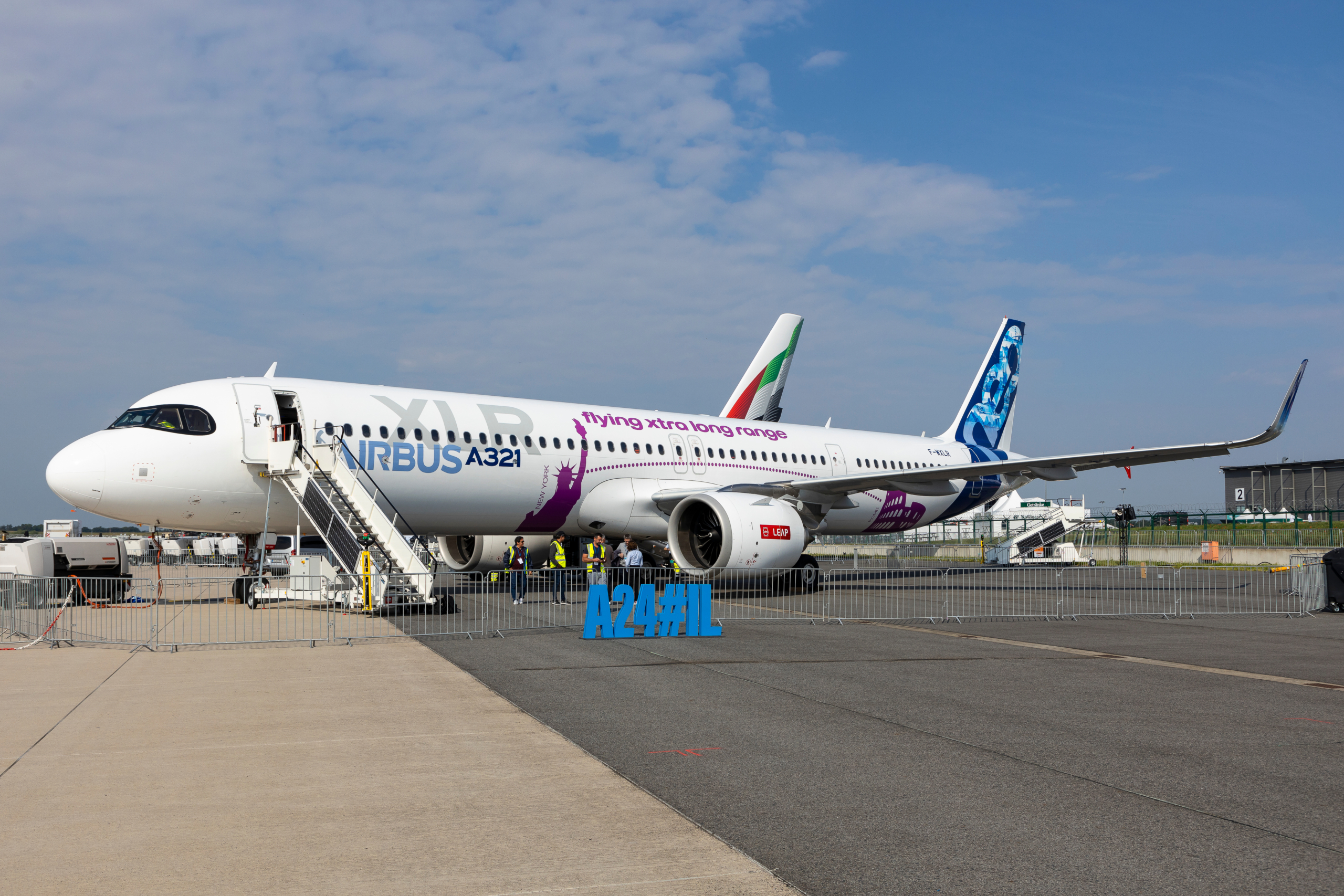
The Airbus A321XLR was introduced into transatlantic commercial service at the end of last year with much fanfare. The aircraft is revolutionising travel, allowing airlines to open new routes connecting secondary cities on either side of the pond.
Airlines have been quick to capitalise on the new risk-averse opportunity that is Airbus’ latest narrowbody venture. It is also an instrument of frequency upgrades, allowing airlines like Iberia to annualise otherwise seasonal routes, such as Madrid to Washington, thanks to reduced per-flight capacity and costs.
During the company’s half-year 2025 earnings call, International Airlines Group CEO Luis Gallego praised its ability to open up “highly profitable flying through frequency, seasonality and point-to-point network opportunities.”
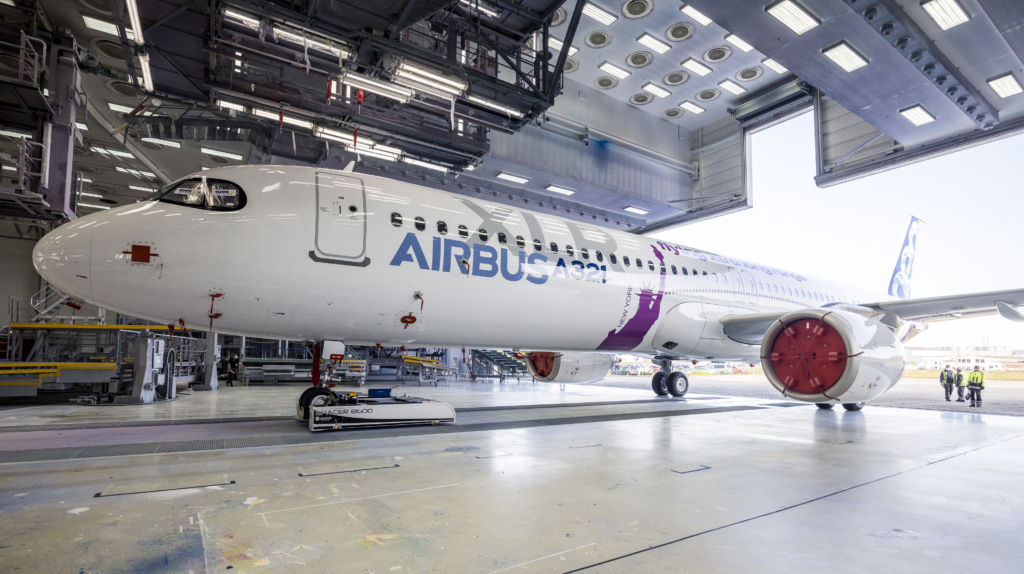
The A321neo family is a new driving force for smaller airports in the United States, an Aerospace Global News analysis of the country’s fastest-growing gateways for transatlantic routes shows.
Aer Lingus, Iberia and Icelandair are providing incremental capacity to the market with their narrowbody planes. For Iberia, this relates to the A321XLR, while for Icelandair, this concerns its new A321LRs. Aer Lingus operates both.
The USA’s fastest-growing transatlantic gateways
According to data from aviation analytics firm Cirium, a handful of airports are experiencing double-digit growth during the first half of next year.
For now, it’s difficult to compare the entirety of 2026 to this year, as that data is not yet available yet as airlines continue to iron out their schedules (particularly for winter next year). The following data, therefore, looks at only the first six months of 2026.
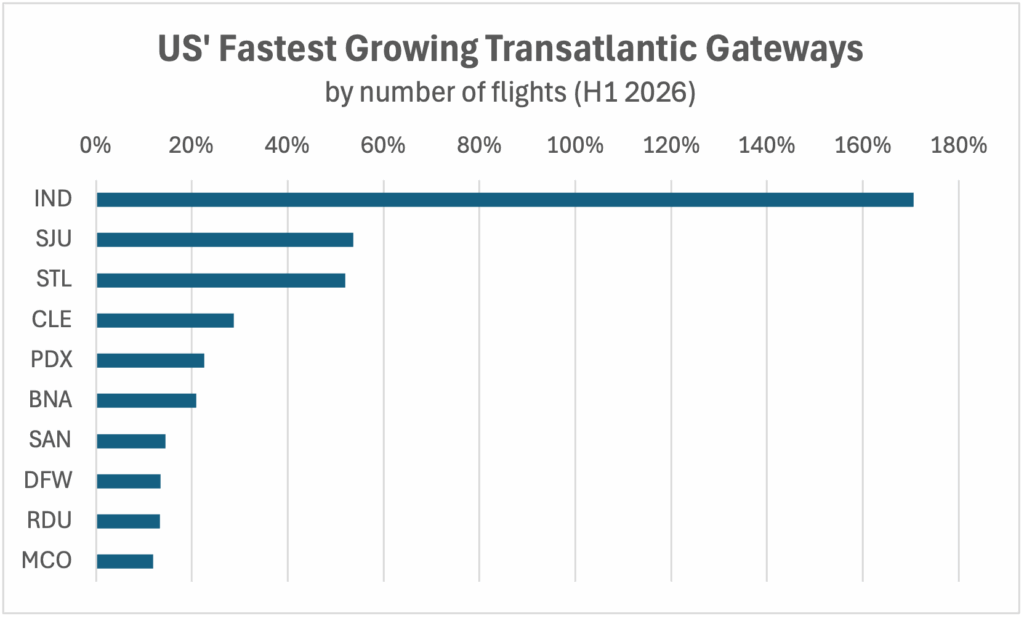
1) Indianapolis (+171%)
Indianapolis is gearing up for continued growth next year. The absolute increase is only 58 in terms of flights and is driven entirely by its only transatlantic service with Aer Lingus to Dublin.
The Airbus A321XLR that flies the route has given Indianapolis a new lease on life when it comes to flights to Europe, after Delta Air Lines suspended its route to Paris in 2020.
As the flight to the Irish capital began on May 3 this year, operating year-round, the increase is largely due to the incremental capacity from January until May. During the summer season from April 2026, it will add a fifth weekly flight.
2) San Juan (+54%)
Lining Puerto Rico’s Atlantic coastline is San Juan de Puerto Rico Airport (SJU). It will see increases driven by Iberia and its upgraded operation to the island. As of the end of this month on 28 October, Iberia will be supplementing its existing San Juan route with an Airbus A321XLR. In total, it will fly 11 times per week during the winter season.
As this overflows into 2026, the increases are reflected in San Juan’s transatlantic growth. Complementing the daily A330-200 flight, Iberia will operate up to three weekly A321XLR services this winter.
From the start of next year, the narrowbody will fly the majority of the weekly frequencies. In January, it will fly daily, and in February and March, this will increase to 11 weekly. From April, the route returns to the A330-200 completely, Cirium data shows.
3) St. Louis (+52%)
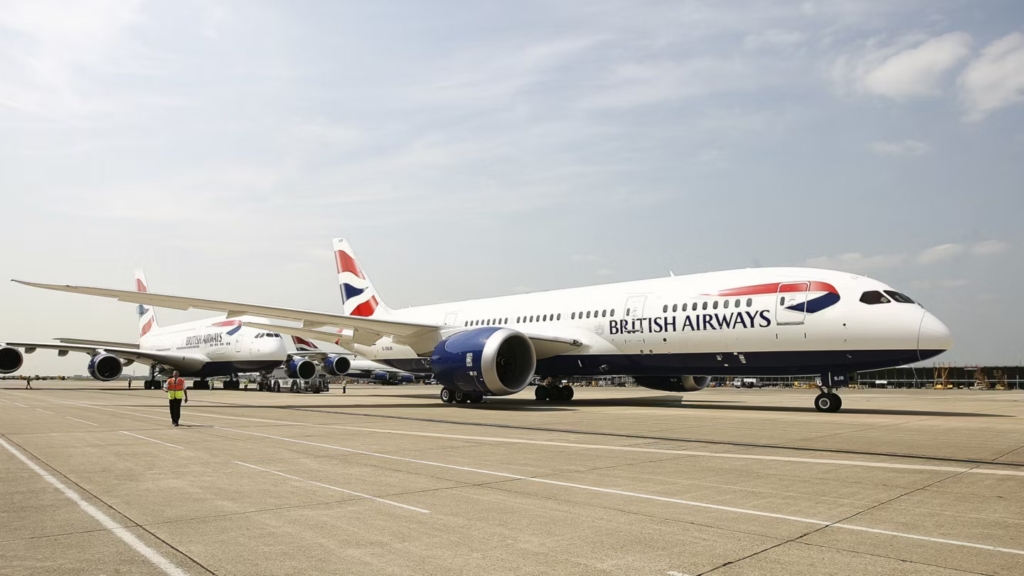
British Airways announced a new service to St. Louis at the start of this month. It plans to launch the route in April 2026 and brings the airline’s US network to 27 destinations.
The summer seasonal flights will operate with a Boeing 787, four times per week. The new route –incentivised by a $4.5 million (£3.4 million) subsidy from the St. Louis Port Authority– is expected to cater to both leisure but also growing business demand.
Separately, Lufthansa is also increasing flights to St. Louis from three to five weekly from June next year with its Airbus A330-300 fleet.
No narrowbody announcements have been revealed just yet, though St. Louis was rumoured to be in talks with Aer Lingus. Local media framed the airline’s Indianapolis launch as an attempt to skirt St. Louis.
However, as both British Airways and Aer Lingus are owned by the International Airlines Group, it seems unlikely that both would fly the route at the same time as the transatlantic STL market is only so big.
Even without Aer Lingus, St. Louis is the third US airport by transatlantic growth for 2026 thus far.
4) Cleveland (+29%)
Aer Lingus features once more as its service to Dublin is powering Cleveland’s transatlantic growth. It launched flights to the Ohio city with its Airbus A321LRs in May 2023. Since then, the carrier has increased service from year-round four weekly flights offering six weekly frequencies during the summer season.
The carrier remains committed to the route, which has had a considerable impact on the surrounding US community. Local media estimate the impact to be around $28 million (£21 million).
The route was also incentivised by an $11.8 million (£8.8 million) minimum revenue guarantee from JobsOhio, the economic development authority for the State. The package was meant to expire in 2026 but was extended through 2027.
5) Portland (+23%)
Several routes are driving Portland’s transatlantic growth in 2026. This includes Icelandair’s continued expansion from Reykjavík with its A321LR, and KLM’s decision to boost service from Amsterdam.
Icelandair shifted to the A321LR as of this month, replacing the Boeing 757-200. Interestingly, the A321LR provides slightly more capacity than the older-generation Boeing aircraft.
As for KLM, it announced its intention to upgrade its Amsterdam flights to Portland earlier this year. It will fly up to four weekly services during the winter season, increasing to daily for the first time as of April 2026. During the summer season, five weekly frequencies will use the 787-10 and a Boeing 777-200 will be deployed for the remaining two.
How the Airbus A321neo is driving growth
The Airbus A321neo is driving a lot of this growth. Other routes that rank on the list of the fastest-growing US airports for transatlantic flights include Nashville and Raleigh-Durham. Both of these feature thanks to A321neo growth.
Aer Lingus’ new service to Raleigh-Durham will operate on the carrier’s Airbus A321XLR. This will be the airline’s fourth destination in the US with the type, complementing Indianapolis and Nashville. Just under half of Aer Lingus’ US routes use narrowbody planes.
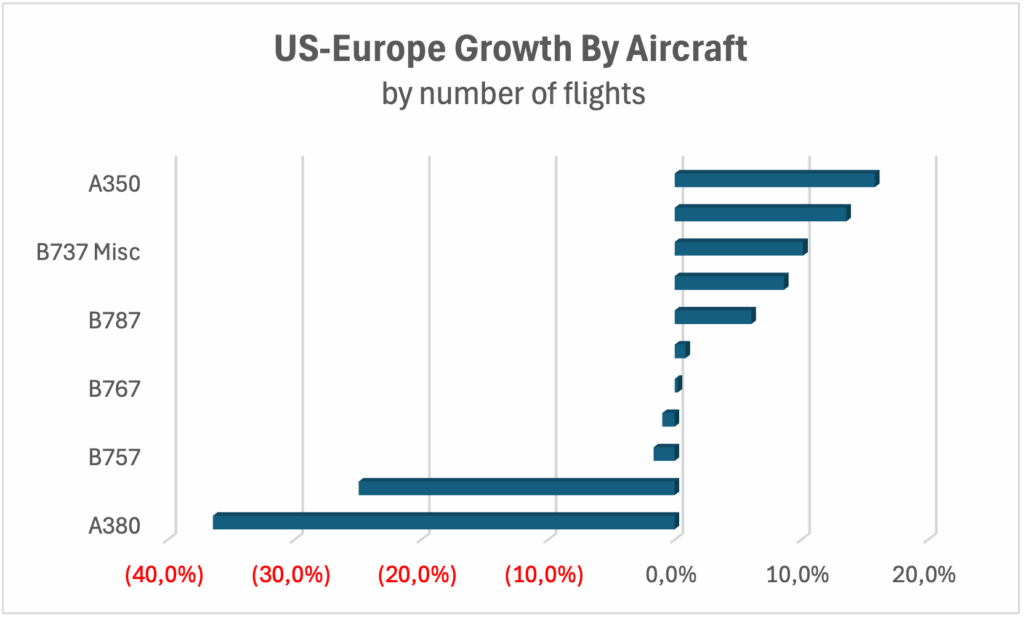
It is no secret that the A321neo’s favourable economics make it an ideal plane for flights between the two sides of the Atlantic. Europe’s airlines are having to balance their interests in generally higher-yielding transatlantic traffic with overarching political and economic uncertainty that has affected travel demand to the USA.
With lower capacity and overall operating costs when compared to a widebody aircraft, the Airbus A321XLR seems like the perfect tool.
Featured image: Photofex / stock.adobe.com