


FAA suspends router upgrades after failure grounded thousands of US flights

4 min read
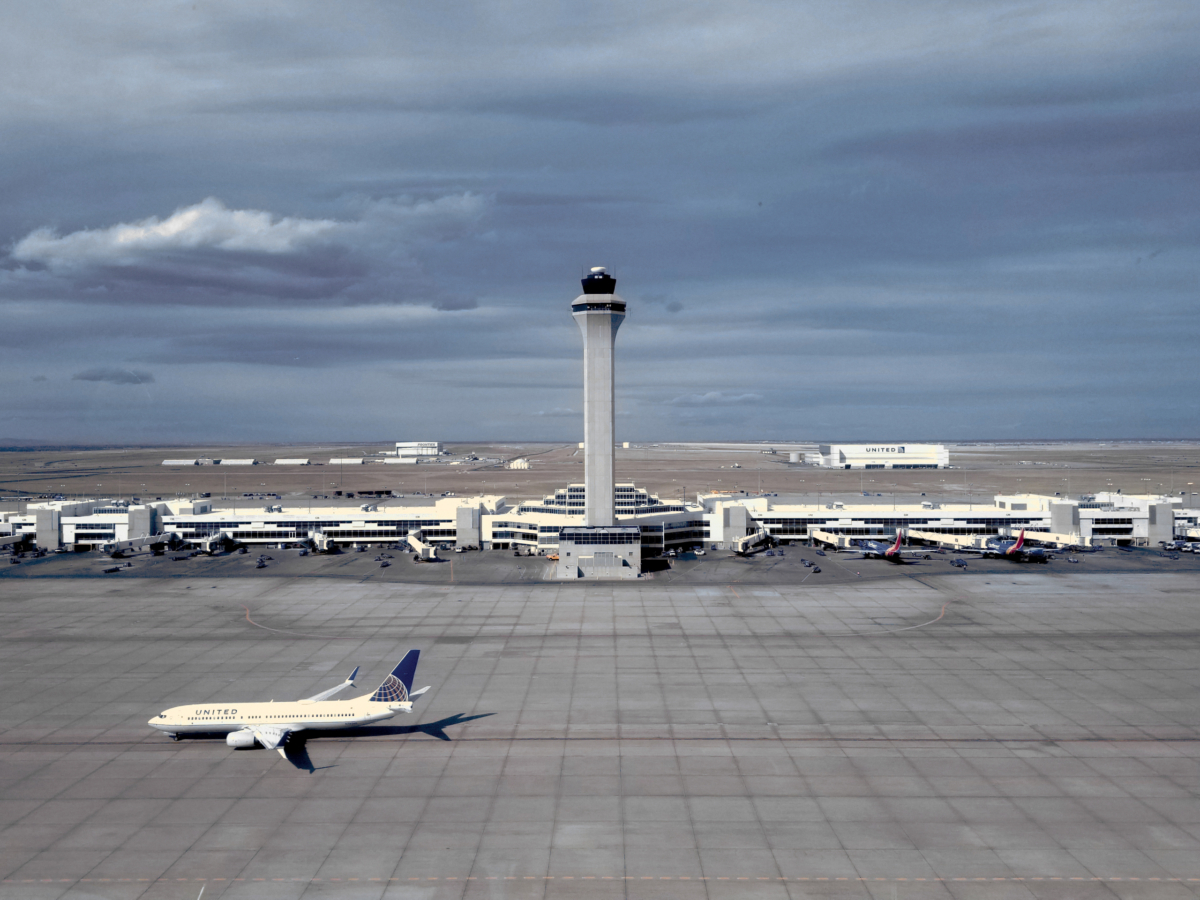

The US Federal Aviation Administration has paused installation of new Juniper routers while it investigates the telecommunications failure that halted departures nationwide on 13 November.
The suspension leaves thousands of planned router replacements on hold. Senators have asked the agency to demonstrate that the equipment can operate safely before deployment resumes.
The FAA confirmed the pause in its account of the outage, saying it had also disabled the same function on more than 60 other Juniper routers as a precaution.
As AGN reported on Monday, investigators traced the disruption to traffic from facilities in Arkansas and Texas. The regulator is investigating the cause of the router failure with L3 Harris but has not yet established why the network became unstable.
Two facilities remain under investigation
The FAA said bursts of about 1,000 connection attempts every four to five seconds disrupted aircraft communications and radar feeds. Instability affected 17 of its 22 en route control centres and spread to several approach control facilities.
The two locations under investigation are a radio communications site in El Dorado, Arkansas, and a radar site in Amarillo, Texas. L3Harris blocked both locations on Friday, stabilising the network.
The nationwide ground stop began at about 3:30 pm Eastern Time and ended at 8:15 pm. Some radio frequencies and radar feeds remained available throughout, according to the FAA.
This was only the third nationwide ground stop the FAA has issued in its history. The first occurred during the terrorist attacks on 9/11, and another nationwide ground stop was issued in January 2023, when a failure of the FAA’s pilot safety notification system halted departures across the US.

The FAA recorded approximately 12,462 flight cancellations on Friday, including 9,082 by major airlines. It cautioned that not all flight cancellations were caused by the ground stop.
In a Department of Transportation update on 15 November, Transportation Secretary Sean Duffy said the router was at an L3Harris laboratory in Florida, where FAA staff were examining both the equipment and the installation process.
The department described the work as routine maintenance on the legacy network. It said the incident occurred as the administration pursued a wider air traffic control overhaul, supported by $12.5 billion approved by Congress.
The FAA and L3Harris continue to investigate why the disruption spread across the network.
Senators question router testing
Democratic members of the Senate Commerce Committee, led by ranking member Maria Cantwell, wrote to Transportation Secretary Sean Duffy and FAA Administrator Brian Bedford seeking answers about router testing and safeguards.
The letter, dated 16 November and released on 17 November, requested an immediate pause in further Juniper deployments. The FAA has confirmed that installations are on hold pending testing, though it is unclear whether this is in response to the senators’ letter.
Citing information from L3Harris, the senators said the copper-to-fibre transition involves converting 3,648 routers to Juniper devices. The senators said about 400 have been installed, and 69 are operational.
“With thousands of conversions remaining, FAA must address outstanding safety and reliability concerns before expanding installation,” the senators wrote.
‼️ UPDATE: The router behind Friday’s nationwide US ground stop was a brand-new Juniper unit at a remote FAA radio site in Arkansas. US defence contractor L3Harris had just installed it. FAA officials believe a feature that broadcast data more widely than needed flooded the network. The FAA has switched that feature off on every router of that type. HPE, which owns Juniper, says the routers "did not fail."
— International Cyber Digest (@IntCyberDigest) November 16, 2026
The letter states that a sample of Juniper devices passed pre-deployment testing at the FAA Technical Centre. The subsequent network failure raised questions about whether those tests reflected operating conditions and covered all potential failure modes. Investigators have not established whether the equipment itself was defective.
“The ground stop demonstrated a breakdown in a system Americans rely on, and Congress was left to piece together critical facts. We expect accurate information as soon as it is available. Concerningly, the DOT attributed the November 13 network disruption to ‘old switches [and] old routers,’ when in fact the deployment of the new Juniper routers seem [sic] to be the problem,” the senators wrote.
Senators challenge $50 billion ATC funding request
The senators also challenged Duffy’s call for $50 billion in funding to modernise the US’ ageing air traffic control infrastructure, made on the evening of 13 November as officials briefed reporters on the nationwide disruption.
“The DOT and FAA have assigned blame to L3 Harris and used this moment to call for $50 billion in funding for Brand New Air Traffic Control System (BNATCS). This is notably $20 billion more than the request from DOT and the Office of Management and Budget (OMB) that was sent on Thursday, November 12. DOT, FAA and OMB must provide Congress with a complete account of what happened and how additional funding would address the vulnerabilities presented on November 13.”
The senators sought improved operational testing, independent validation, verified backup capability and rollback procedures before deployment resumes. They requested a joint briefing with the FAA, L3Harris and Juniper, and information by 23 November on shared vulnerabilities, network redundancy and recovery procedures.
They also asked how local telecommunications faults could cause widespread disruption and what safeguards were in place after earlier outages in Philadelphia and Minneapolis.
Sign up for our newsletter and get our latest content in your inbox.