


This glowing paint could help build safer, more efficient aircraft

5 min read
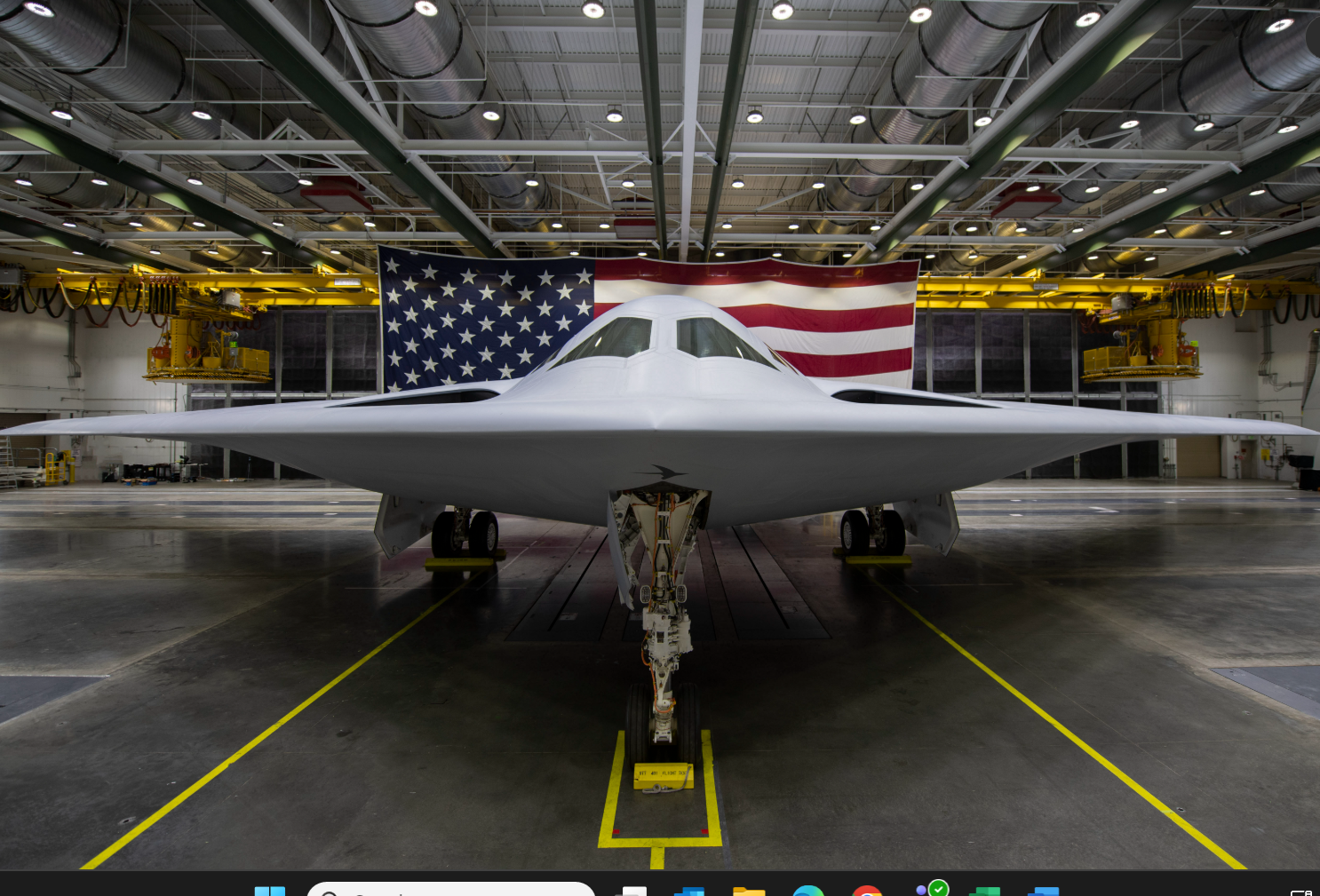
Aircraft designers could get a clearer picture of how air behaves around wings and other surfaces during high-speed flight, following tests of a new pressure-sensitive paint that reduces one of the main sources of error in wind tunnel measurements.
Researchers at the University of Manchester found that the paint was 25% less sensitive to temperature than the current industry benchmark. During tests in a wind tunnel where airflow can exceed Mach 5, it accurately mapped pressure across a model despite sharp temperature differences over its surface, with the measurements closely matching computer simulations.
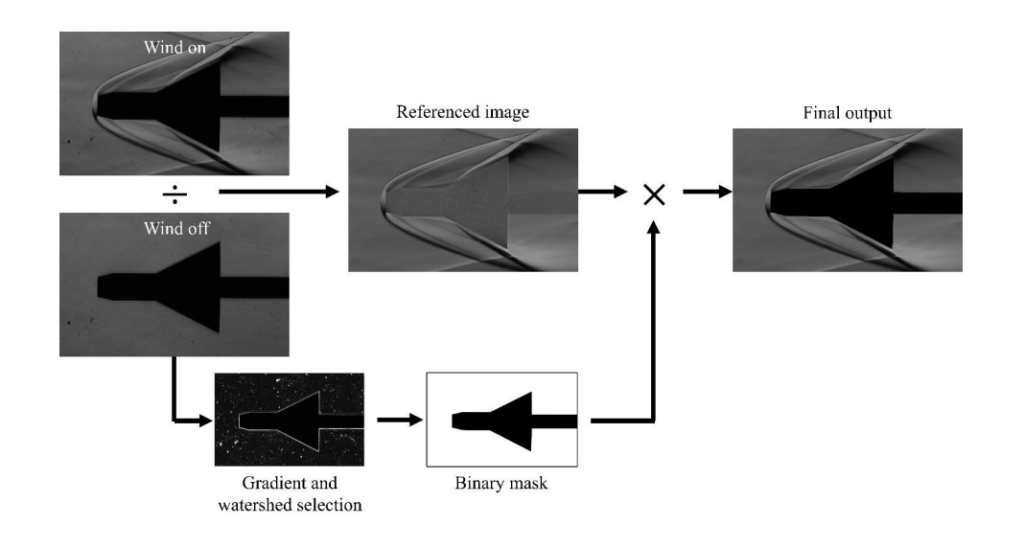
The research, published in the peer-reviewed journal ACS Applied Engineering Materials, was detailed by the University of Manchester and subsequently reported by Tech Xplore.
For aircraft designers, better pressure measurements can provide a more reliable picture of how a design will work before it ever flies. Air pressure across an aircraft affects aerodynamic performance, handling, fuel efficiency and the loads placed on its structure.
How can paint measure air pressure?
Aircraft designers need to know how air behaves as it passes over wings, the fuselage and other surfaces. Differences in pressure can affect handling, fuel efficiency and the loads placed on the aircraft structure.
One way of measuring this is surprisingly simple: paint a scale model before putting it into a wind tunnel.
Pressure-sensitive paint contains molecules that emit light when illuminated. The brightness changes according to the pressure acting on the surface. Cameras record those changes, allowing researchers to build a picture of how pressure varies across the model.
In simple terms, the glowing paint allows engineers to see differences in air pressure that would otherwise be invisible. There is, however, a problem. The paint can react to temperature as well as pressure.
That matters during high-speed testing because parts of a model can become much hotter or colder than others. The resulting temperature changes can alter the brightness of the paint, introducing errors into the pressure measurements.
Engineers then have to work out how much of the change was caused by air pressure and how much came from temperature.
Manchester researchers change the chemistry
Researchers from the university’s Departments of Mechanical and Aerospace Engineering and Chemistry developed a new formulation designed to reduce that problem.
The material uses a light-emitting platinum-based compound locked into a specially engineered plastic. Tests found that the new paint’s temperature sensitivity fell to 0.3% per degree Celsius, which the researchers said was 25% below the current industry benchmark.
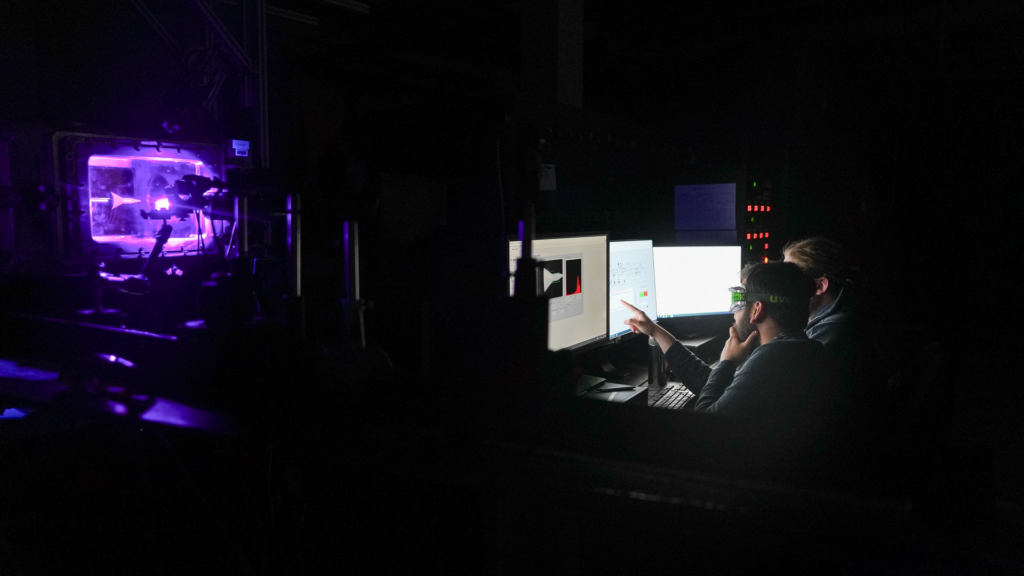
Dr Elliott Nunn, from the University of Manchester’s Department of Chemistry and first author of the study, said temperature changes can be substantial when vehicles are tested at high speeds. “When you’re testing a vehicle at high speed it can heat and cool dramatically based on its aerodynamic design,” Nunn said.
By developing pressure-sensitive paint that reacts less strongly to heat, he said, researchers can get closer to measuring what they actually want to measure. “Our hope is that this will really help the engineers designing the next generation of high-performance and more sustainable aircraft and spacecraft, to make better-informed decisions through cleaner data,” Nunn added.
Why the new paint behaves differently
The improvement comes from changing what happens to the light-emitting molecules inside the paint. In many existing pressure-sensitive paints, these molecules can cluster together. According to the Manchester team, that clustering can make the paint more sensitive to temperature.
The researchers instead anchored the active molecules directly into a tough plastic similar to Teflon. Holding them in place makes them less likely to cluster and reduces the paint’s response to changes in temperature.
Dr Louise Natrajan, a reader in the university’s Inorganic Chemistry Group, said the work brought together expertise from chemistry and aerospace engineering. “Getting this chemistry right was thanks to a creative collaboration between our chemistry group and the aerospace engineering team – basically, they knew what the paint needed to do in a wind tunnel, and we knew how to create something that could do it,” Natrajan said.
Tested in airflow above Mach 5
The team tested the new paint on a cone-shaped model designed to produce complex airflow. The model was placed in a supersonic wind tunnel where airflow can exceed Mach 5, or five times the speed of sound.
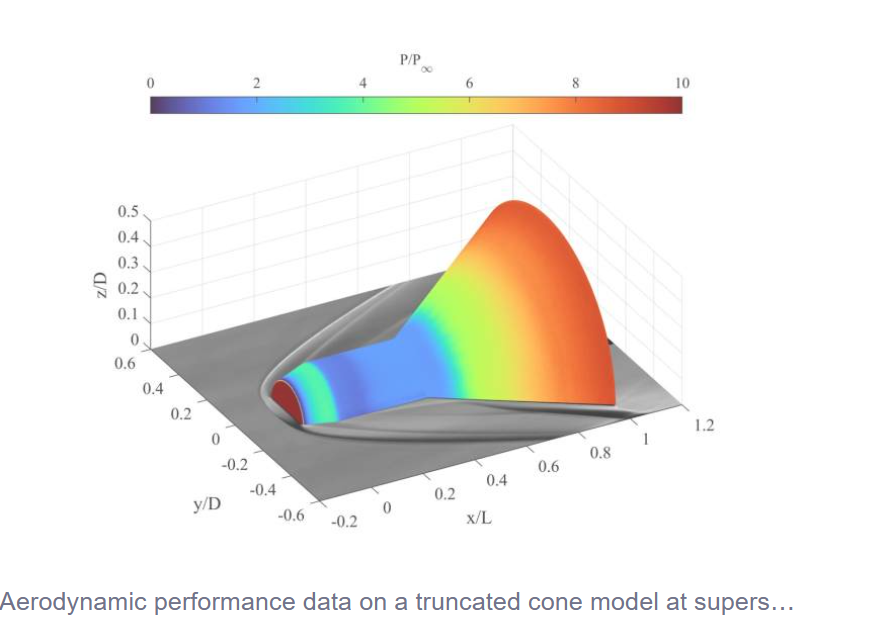
Under those conditions, temperatures varied sharply across the surface of the model. The researchers said the paint continued to measure pressure accurately, with the results closely matching values predicted by computer simulations.
The test also allowed researchers to visualise what are known as Gortler vortices. These are corkscrew-shaped swirls of air that can form along curved, concave surfaces. They are important because they help researchers understand the behaviour of the thin layer of air immediately next to a surface as it moves at speed.
What happens next?
The researchers are not claiming that the temperature problem has been eliminated. Instead, the new formulation reduces one source of error and could provide engineers with cleaner aerodynamic data.
That could be particularly useful as aircraft and spacecraft designs move towards higher speeds, where temperature differences during testing can become more pronounced.
More accurate pressure measurements could also help engineers assess aerodynamic designs before committing to expensive prototypes or flight tests.
The Manchester team now plans to test the paint across a wider range of temperatures and airflow conditions to establish how reliably it performs.
The study, titled Low-Temperature Dependency Pressure-Sensitive Paints for Wind Tunnel Testing Based on Luminescent Polymer-Bound Porphyrins, was published in ACS Applied Engineering Materials.
Sign up for our newsletter and get our latest content in your inbox.


More from

September 29, 20263 min read


September 25, 20264 min read


