


SpaceX sends Starship into orbit for the first time on Flight 14

6 min read
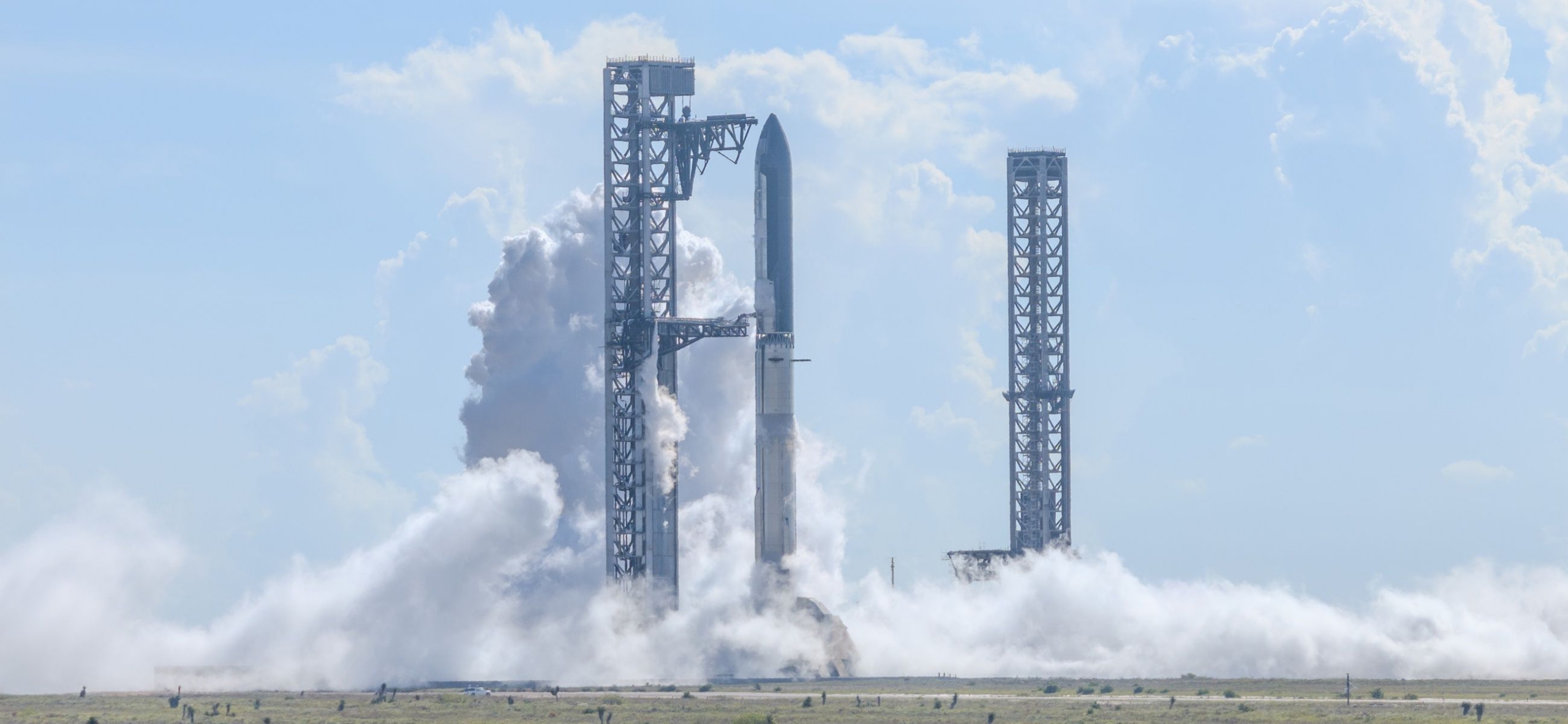
SpaceX launched Starship into Earth orbit for the first time on 28 September, moving the world’s most powerful launch vehicle beyond the suborbital test flights that have defined its development since 2023.
The 124-metre Starship/Super Heavy vehicle lifted off from SpaceX’s Starbase facility in South Texas at 8:48 a.m. EDT (1246 GMT), beginning a flight planned to last nearly 10 hours and complete about six orbits of Earth.
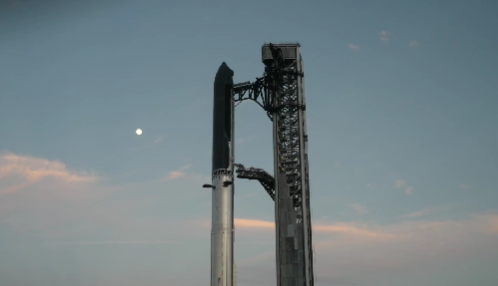
SpaceX said Starship performed its orbital insertion burn and entered orbit of Earth for the first time.
Half an hour into launch, Starship deployed its payload of 26 Starlink V3 satellites.
“The Starlink team has made contact with all 26 satellites,” SpaceX announced.
Starship then performed its orbital insertion burn and entered Earth orbit for the first time.
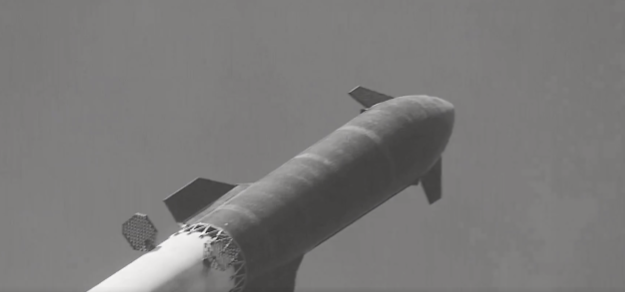
The mission also marked the first time Starship carried an operational payload to orbit. SpaceX planned to deploy 26 of its new Starlink V3 broadband satellites, giving the flight a commercial purpose alongside its extensive test programme.
Flight 14 represents a significant change in the Starship programme. The previous 13 integrated flights deliberately followed suborbital trajectories, allowing SpaceX to test the vehicle without placing it into a sustained Earth orbit.
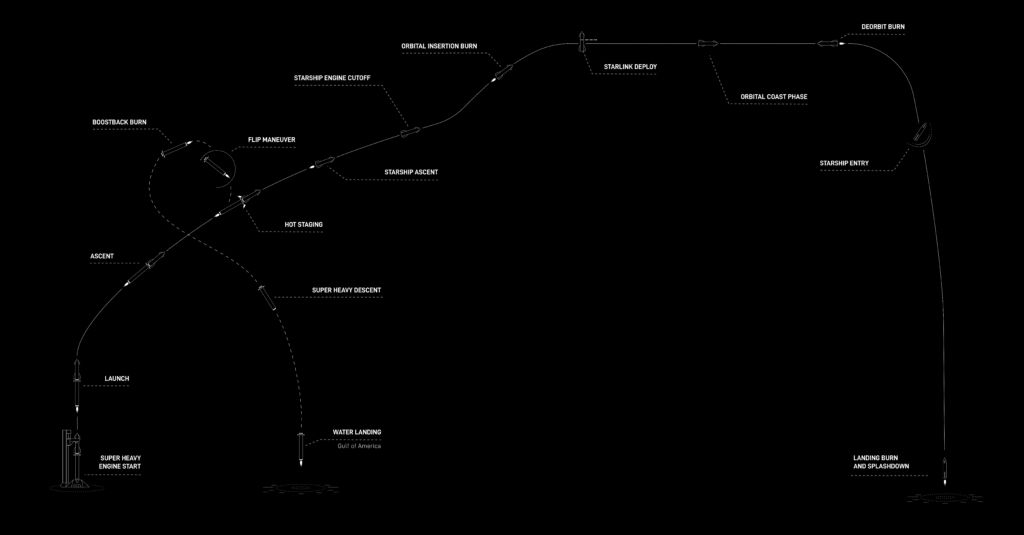
This time, Ship 41 was expected to enter an orbit at an altitude of about 275 km and remain there for almost 10 hours before conducting a deorbit burn and attempting a controlled splashdown in the Pacific Ocean west of Chile.
First real payload for Starship
The 26 Starlink V3 spacecraft are more than demonstration payloads.
SpaceX said each satellite is designed to add 1 Tbps of capacity to Starlink, giving the 26-spacecraft batch a combined 26 Tbps. According to the company, that is around 10 times the capacity added by a Falcon 9 launch carrying the current V2 Mini satellites.

After separation from Starship, the satellites are designed to unfold their antennas and solar arrays before establishing radio-frequency and laser links with the existing Starlink constellation. Their onboard propulsion systems will then raise them from the initial deployment orbit.
SpaceX expects the satellites to begin serving customers within weeks after completing their orbital checkouts.
The deployment is important for Starship for another reason. SpaceX has always intended the vehicle to become a working launch system rather than remain an experimental rocket.
At 124 metres tall and nine metres in diameter, the complete Starship system consists of the Super Heavy first stage and Starship upper stage. SpaceX says the fully reusable configuration is designed eventually to carry more than 100 tonnes to orbit.
Falcon 9 has so far carried the bulk of SpaceX’s Starlink deployment campaign. Starship’s much larger payload capacity is intended to support deployment of the heavier and more capable V3 generation at considerably greater scale.
A very different Flight 14
Reaching orbit was only one of several major objectives on Monday’s flight.
After the initial ascent, Starship was scheduled to shut down its engines about eight minutes after liftoff. The crucial orbital insertion burn was planned for about 25 minutes into the mission.
SpaceX said it would only command that burn after flight controllers had established that critical systems had sufficient redundancy to perform the deorbit manoeuvre later in the flight.
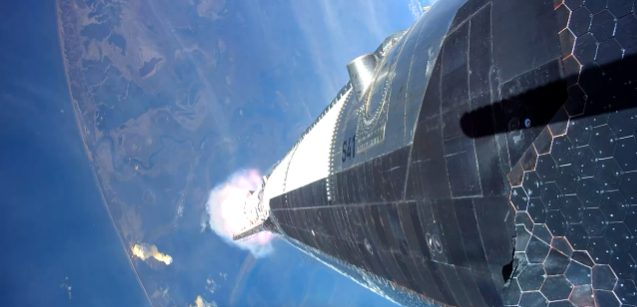
The 26 satellites were scheduled to begin deployment about 34 minutes after launch, with deployment continuing for roughly half an hour.
Nearly nine hours into the mission, Starship was due to restart a single Raptor engine for its deorbit burn. Atmospheric entry was planned roughly 36 minutes later, followed by the familiar flip and landing burn before splashdown in the Pacific.
Starship’s Raptor engines ignited during hot-staging separation and the Super Heavy boosted back towards its splashdown site in the Gulf of America.
The long duration is itself a departure from earlier Starship flights. Previous missions remained on suborbital trajectories and ended in the Indian Ocean or before reaching their planned splashdown points.
Super Heavy tests fixes after Flight 13
SpaceX also used Flight 14 to address problems encountered by Super Heavy during Flight 13.
On that mission, the booster successfully fired all 33 Raptor engines during its boostback burn for the first time. But towards the end of the manoeuvre, SpaceX said its three centre engines showed signs of ice clogging, causing the burn to terminate early.
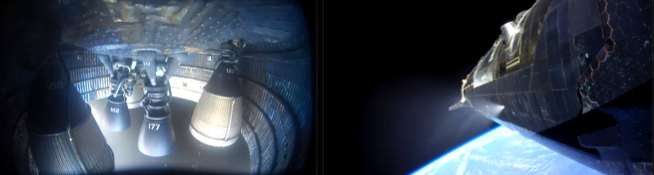
Only eight of the 13 engines planned for the subsequent landing burn then reignited, and Super Heavy made a hard splashdown.
The Flight 14 booster incorporated hardware changes intended to improve engine filtering and software changes designed to increase relight reliability.
For Monday’s flight, SpaceX was not attempting to catch Super Heavy at Starbase. Instead, the booster was programmed to conduct its boostback and landing burns before descending to an offshore splashdown point about seven minutes after launch.
The company has previously caught Super Heavy with the mechanical arms on its launch tower, but catching both stages remains part of the longer-term plan for making Starship rapidly reusable.
Heat shield faces another test
Ship 41 also carried a series of changes to the thermal protection system, which remains one of the major engineering challenges SpaceX must solve before Starship can routinely return from orbit.
Some of the changes were based on information recovered from Flight 13 after its upper stage reached the Indian Ocean.
SpaceX added retention mechanisms to tiles in areas considered particularly vulnerable during ascent and modified sections where engineers had identified possible paths for superheated plasma to move behind the heat shield.
The vehicle was also flying several areas fitted with curved tiles intended to reduce heating in the gaps between them.
Two tiles recovered from Ship 40 were installed on Ship 41, the first time SpaceX has reused Starship heat-shield tiles on another vehicle.
Three of the Starlink V3 satellites carried cameras specifically positioned to observe Starship’s heat shield after deployment. The imagery is intended to help SpaceX assess the condition of the thermal protection system in orbit and develop methods for determining whether a vehicle is ready to return to its launch site on future missions.
That makes the re-entry portion of Flight 14 almost as important as reaching orbit. SpaceX ultimately wants both Starship and Super Heavy to return to the launch site, be caught by the tower and fly again with minimal turnaround work. The company describes the system as being designed for full and rapid reusability.
Starship still has bigger tests ahead
An orbital Flight 14 would remove one important hurdle, but several of the technologies required for Starship’s longer-term missions remain to be demonstrated.
SpaceX must show that Starship can return reliably from orbit and ultimately be recovered for reuse. It must also demonstrate large-scale cryogenic propellant transfer in space, a capability needed for missions beyond low Earth orbit.
That technology is particularly important to NASA.
NASA selected a lunar version of Starship as a Human Landing System for its Artemis programme. The spacecraft is intended to transport astronauts between lunar orbit and the Moon’s surface, with an uncrewed lunar landing demonstration required before its first crewed mission. NASA says Starship HLS is being developed for Artemis III and Artemis IV. NASA
Starship is designed as a fully reusable transportation system for cargo and crew missions to Earth orbit, the Moon and eventually Mars. SpaceX lists a payload capability of more than 100 tonnes to orbit in its fully reusable configuration.
Flight 14 therefore does not complete Starship’s development programme. It changes the type of testing SpaceX can undertake.
Until now, Starship’s integrated flights have largely been about getting farther through ascent, staging, re-entry and recovery. With an orbital flight and the deployment of Starlink V3 spacecraft, SpaceX can begin testing the vehicle as something closer to the launch system it ultimately intends to operate.
Sign up for our newsletter and get our latest content in your inbox.


More from


September 25, 20264 min read

September 25, 20264 min read

September 24, 20262 min read


